
Introduction
Step into the streets of any Dutch city, town, or village, and you’ll notice something immediately: the sheer dominance of bicycles. Not a few scattered here and there, not just tourists wobbling unsteadily on rented bikes, but streams of locals—children with schoolbags strapped to their backs, professionals in business attire, grandparents with groceries, parents balancing toddlers on front seats—all gliding effortlessly along a seamless network of bike paths. The Netherlands is not simply a country where people cycle; it is a nation where the bicycle is so deeply woven into daily life that it has become both a cultural identity and a way of seeing the world.
Cycling here is not limited to weekend leisure rides or fitness goals, as it often is in other countries. Instead, it is everyday life. A trip to work, the supermarket, a dinner with friends, a date, or even a wedding—there is almost always someone arriving by bike. In Dutch cities, rush hour looks less like a tangle of cars and more like a calm, orderly flow of cyclists moving in unison. In rural towns, bikes are lifelines connecting villages, schools, and shops.
Cycling in the Netherlands is more than just a practical way to get from point A to point B. It is about equality, since nearly everyone—regardless of age, wealth, or status—owns a bike. It is about sustainability, since bicycles have long been a response to the challenges of urban density and environmental responsibility. And it is about freedom, a sense of mobility and independence that starts in childhood and lasts for a lifetime.
But how did this small, flat country become the world’s cycling capital? And why does the bike mean so much more to the Dutch than to almost any other culture? To answer these questions, we need to dive into history, politics, city planning, and daily life, while also looking at the symbolic and emotional role the bicycle plays in Dutch society.
📌 Dutch Vocabulary
fiets = bicycle
fietsen = to cycle
fietspad = bike path
fietsenstalling = bike parking/garage
The History of Cycling in the Netherlands
The Bicycle Boom of the 19th Century
Bicycles first appeared in the Netherlands in the mid-1800s, introduced from France and Germany. At first, they were a novelty for the wealthy—an exciting new machine but not yet a practical tool. But by the late 19th century, bicycles became sturdier, cheaper, and easier to ride. The Dutch quickly recognized their potential.
Why so fast in the Netherlands? Geography played a huge role. The land is famously flat, with short distances between towns and villages. Unlike mountainous countries, the Dutch could easily cycle long distances without exhausting themselves. By the early 20th century, bikes were everywhere—used by farmers to get to markets, workers commuting to factories, and families for outings.
📌 Dutch Vocabulary
stadsfiets = city bike
omafiets = “grandma bike,” the classic upright Dutch bike
bakfiets = cargo bike with a box in front
Post-War Decline and the Rise of Cars
After World War II, Dutch society modernized quickly. Cars became symbols of progress and prosperity, and many Dutch cities redesigned streets to accommodate automobiles. In Amsterdam, for example, entire neighborhoods were restructured with wider roads and fewer bike lanes. Cycling declined, and by the 1960s, many feared the Netherlands was becoming just another car-centered society.
The Turning Point: 1970s Protests
But the Dutch spirit of activism changed everything. The 1970s saw two forces converge:
The oil crisis of 1973, which highlighted the vulnerability of car-based economies.
Public outrage over traffic deaths, especially among children. The campaign Stop de Kindermoord (“Stop the Child Murder”) became a rallying cry.
Parents, activists, and communities demanded safer streets. Unlike other countries that doubled down on highways, the Netherlands pivoted back to cycling. The government invested heavily in protected bike lanes, traffic calming measures, and laws that favored cyclists in accidents.
Today, those decisions are seen as visionary. Instead of letting cars dominate, the Dutch built cities where bicycles and people come first.
Infrastructure: Built for Bikes
Cycling in the Netherlands feels natural not because of geography alone but because of infrastructure designed for bikes from the ground up.
35,000 km of dedicated bike paths separate from car traffic.
Traffic lights just for bikes, often giving them priority.
Roundabouts designed for cyclists, where cars yield to bikes.
Multi-story bike garages, like the famous one at Utrecht Central Station, with space for over 12,000 bicycles.
Integration with trains: Most Dutch train stations allow bikes on board (with a small ticket fee) and offer vast bike parking facilities.
The result? Cycling is not just safe, but often the fastest and most convenient way to travel.
📌 Dutch Vocabulary
fietsstraat = “bike street” (cars allowed but considered guests)
voorrang = priority (right of way)
fietsknooppunt = cycling junction (part of the national network)
Cycling as a Cultural Identity
The Great Equalizer
One of the most striking aspects of Dutch cycling culture is its egalitarian nature. In many countries, cycling is divided: in some, it’s seen as a poor person’s transport; in others, it’s tied to expensive sports gear. In the Netherlands, everyone cycles. The prime minister famously bikes to work. University students use second-hand bikes. Parents pedal bakfietsen with multiple children. Pensioners ride electric bikes to stay mobile.
A Childhood Rite of Passage
For Dutch children, cycling is independence. Learning to ride a bike is a milestone as important as a first day of school. Children start with loopfietsen (balance bikes) and graduate to real bikes by age 5 or 6. By 10, most are confidently cycling to school alone. Schools even test this with the verkeersexamen (traffic exam), where children must demonstrate road safety skills.
📌 Dutch Vocabulary
verkeersexamen = traffic exam (for schoolchildren)
zijwieltjes = training wheels
loopfiets = balance bike
Normal, Not a Hobby
In the Netherlands, cycling is so integrated into daily life that it doesn’t need Lycra, helmets, or special gear. People wear suits, skirts, clogs, or jeans while cycling. Bikes have upright frames, chain guards, and baskets designed for everyday use. Cycling isn’t a lifestyle—it’s just life.
Cycling in Dutch Urban Life
Rush Hour on Two Wheels
In cities like Amsterdam and Utrecht, rush hour is a sea of bicycles. Instead of honking horns and traffic jams, you hear the soft hum of chains and bells. Entire bike highways lead into city centers, carrying thousands of cyclists daily.
Social Cycling
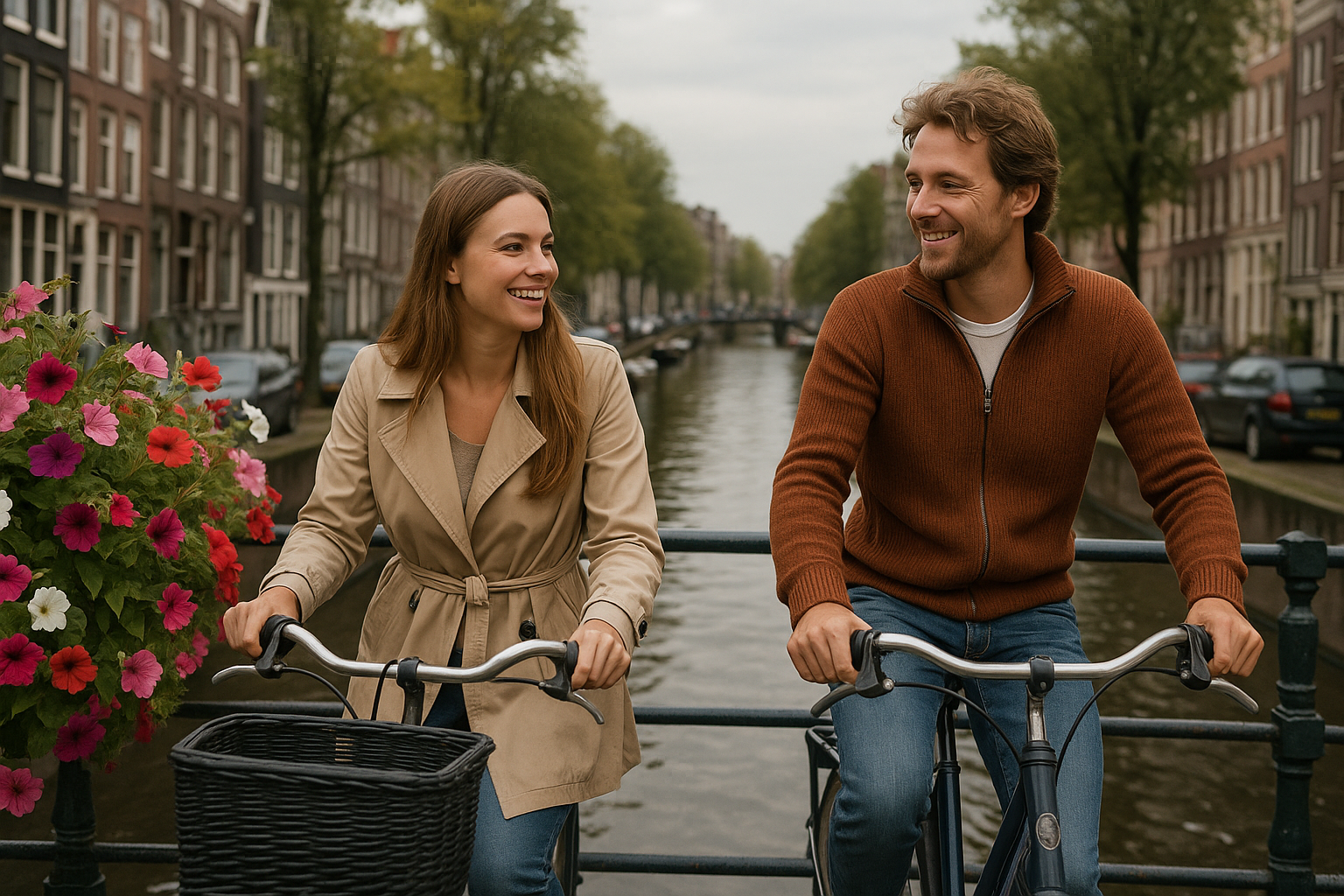
Cycling is often social. Friends cycle side by side, chatting as they ride. Families pedal together, children perched on child seats front and back. Couples ride home from dates on one bike, one pedaling while the other balances on the back rack.
Space for People, Not Cars
Dutch urban design is about human scale. Many city centers are car-free zones. Streets are narrower, public squares are pedestrian- and cycle-friendly, and cars are often considered “guests.” This creates cities that feel calmer, safer, and more welcoming.
📌 Dutch Vocabulary
gezellig fietsen = cycling together in a cozy, pleasant way
bromfiets = moped (shares some bike paths)
fietshelm = bike helmet (rare in everyday cycling)
Beyond Daily Life: Cycling for Leisure and Tourism
Recreational Cycling
The Dutch don’t stop at commuting. The country has thousands of kilometers of scenic cycle routes through dunes, forests, riversides, and tulip fields. Families often take weekend fietstochten (bike trips), packing picnics and exploring the countryside.
Cycling Holidays
Cycling vacations (fietsvakanties) are hugely popular. Dutch families and retirees cycle across their own country—or even abroad—using panniers and camping gear. Germany, Belgium, and France are favorite destinations.
Tourism by Bike
For tourists, biking is the best way to experience the Netherlands. Amsterdam, with its canals and narrow streets, is nearly impossible to enjoy fully without a bike. Rentals are easy, and guided bike tours cover everything from cheese farms to WWII history sites.
📌 Dutch Vocabulary
fietstocht = bike trip
fietsvakantie = cycling holiday
fietsen huren = to rent bikes
The Symbolism of Cycling in Dutch Culture
Cycling reflects Dutch values:
Pragmatism: The Dutch ask, “Why complicate life when a bike is faster?”
Equality: Bikes cut across social classes.
Sustainability: Biking aligns with Dutch environmental priorities.
Independence: Cycling gives everyone—from kids to grandparents—freedom.
Community: Bikes create public spaces where people connect rather than compete.
FAQs: Cycling in the Netherlands
1. Why do so many Dutch people cycle?
Because infrastructure, culture, and geography all support it. Cycling is safe, fast, and practical.
2. Do Dutch people wear helmets?
No, not usually. Cycling is safe enough that helmets aren’t seen as necessary.
3. How do Dutch people cycle in bad weather?
With ponchos, umbrellas, and a shrug. Rain is no excuse.
4. What is a bakfiets?
A cargo bike, often used to carry children, pets, or groceries.
5. Do tourists find cycling difficult?
At first, yes. Dutch cycling is fast-paced and rules-based. But rentals and clear signage make it easy to adjust.
6. How important is cycling for kids?
Very. It represents freedom, independence, and social life.
7. Do Dutch cities ban cars?
Not completely, but many restrict them heavily in city centers.
8. Is it expensive to cycle?
No. Most people ride simple, sturdy bikes that last for years.
Conclusion: More Than Just a Bike Ride
Cycling in the Netherlands is not simply about getting from point A to point B—it is about who the Dutch are. It’s about a society that values equality, freedom, sustainability, and practicality. A bike isn’t just a tool here—it’s a symbol of life well-balanced, where mobility is available to all.
And if you enjoyed this article, don’t miss our other posts: