
Why the Dutch Are So Proud of Their Windmills
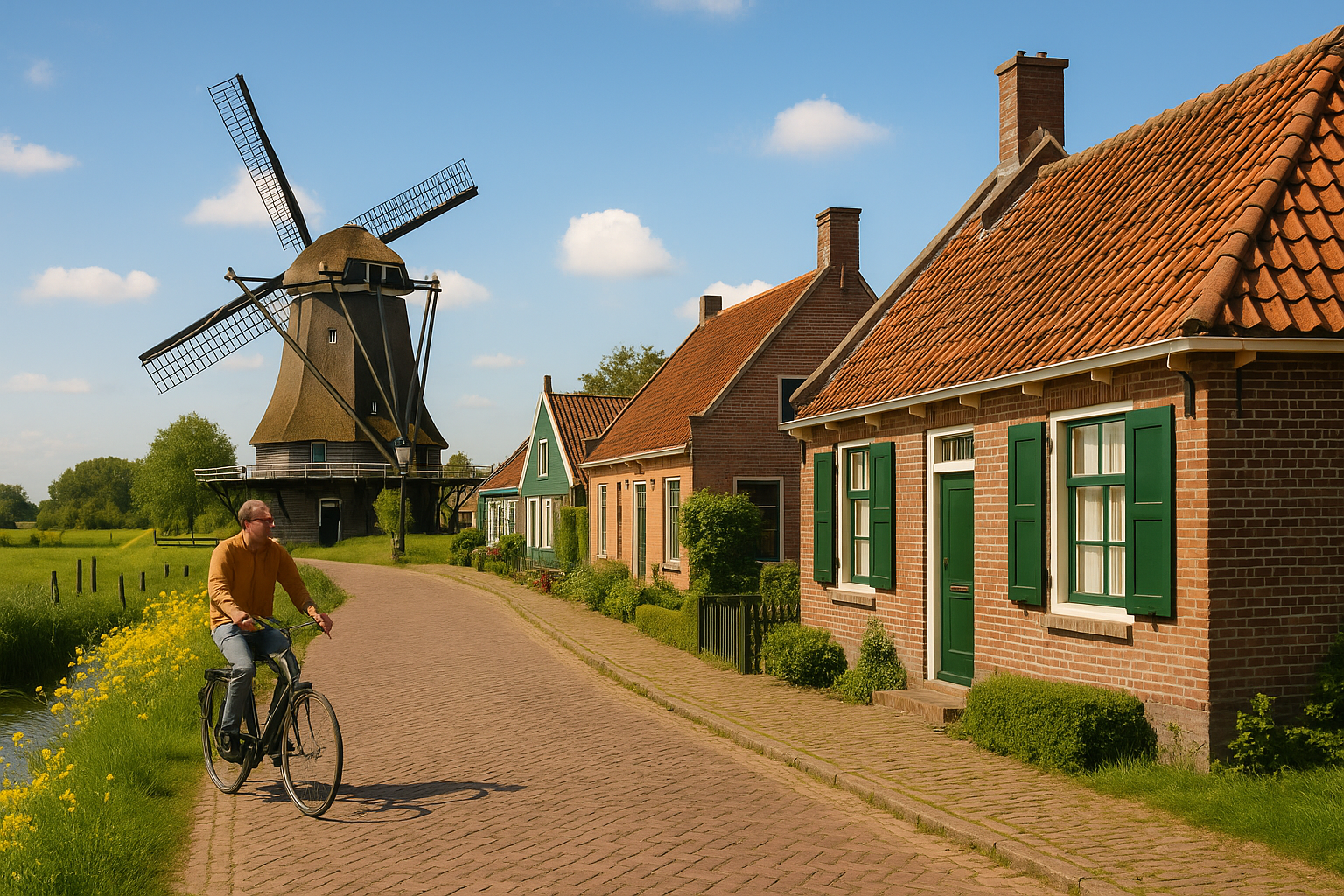
The first time you see a Dutch windmill rising from the flat, watery horizon, it’s hard not to feel that you’re looking at something ancient and quietly powerful — a symbol that has seen storms, revolutions, and centuries of human resilience. These wooden and stone towers, turning their sails against the open sky, have stood guard over the Netherlands for generations. And while tourists today often see them as postcard-perfect icons, for the Dutch they are something much deeper: an embodiment of national identity, engineering genius, and an enduring relationship with water, land, and wind.
Windmills aren’t just part of Dutch scenery — they are part of the Dutch story. Every blade, every canal-side structure, every rhythmic rotation tells of a people who refused to yield to geography. In a country where much of the land lies below sea level, windmills were never decoration; they were survival. They drained lakes, kept villages from flooding, powered sawmills, and drove the machinery that fueled an empire built on trade and craftsmanship. Without them, the Netherlands — as we know it — might never have existed.
So why, centuries later, are the Dutch still so proud of their windmills? What makes these historic structures such potent national symbols in a country that now leads in ultra-modern wind turbines and climate innovation? Let’s take a deep dive into the cultural, historical, and emotional currents that make the Dutch windmill more than a relic — but rather a living emblem of the nation’s spirit.
1. The Land Below the Sea: A Nation Shaped by Water
To understand the Dutch love of windmills, you first need to understand the geography that made them necessary.
The Netherlands is famously flat and famously wet. Nearly a third of the country lies below sea level. For centuries, the Dutch fought a constant battle against the sea, with tides threatening to reclaim the land. But unlike many cultures that might have retreated inland, the Dutch did the opposite: they fought back — and won, using one of the simplest yet most ingenious forces in nature — the wind.
In the Middle Ages, the lowlands of the Netherlands were dotted with peat bogs and shallow lakes. As populations grew, people drained these wetlands for agriculture. But once the peat was removed, the land sank even lower, flooding again. The cycle was endless — until the Dutch began using windmills to pump water out of these low-lying “polders” and into canals and rivers.
Each mill acted as a kind of mechanical heart, tirelessly beating to keep the land dry. Imagine: a wooden machine, powered only by wind, lifting tons of water every hour, allowing villages, fields, and entire communities to exist below sea level. It was nothing short of a miracle of human ingenuity.
By the 17th century, the Dutch had built thousands of these windmills — not just for drainage, but for grinding grain, sawing wood, pressing oil, and milling dyes and spices brought back from their colonial trade routes. These mills became the engines of the Golden Age — the silent, creaking machinery that powered Dutch art, trade, and prosperity.
2. The Golden Age of Windmills
The 17th century is often called the Dutch Golden Age — an era when Amsterdam was the heart of world trade, Dutch artists were reshaping European art, and scientists were exploring the frontiers of knowledge. But behind this flourishing culture stood windmills — the unsung heroes of progress.
The sawmills of the Zaan region near Amsterdam revolutionized shipbuilding. Before the invention of wind-powered sawmills, planks had to be cut by hand — a slow and grueling process. When Dutch engineer Cornelis Corneliszoon van Uitgeest designed a mechanism to connect a windmill’s rotating sails to a vertical saw blade, production speeds multiplied. The Dutch could now build ships faster than any rival nation, fueling the global expansion of the Dutch East India Company (VOC).
The drainage mills transformed watery marshlands into fertile farmland, creating entire provinces like Flevoland that didn’t even exist before.
The grain mills turned harvested crops into food efficiently enough to sustain a growing population.
The oil mills pressed linseed oil for paints, including those used by Rembrandt and Vermeer — giving Dutch art its luminous textures.
Windmills were the beating mechanical hearts of a modernizing nation. For every beautiful canal house in Amsterdam or Haarlem, there was a mill somewhere spinning its sails, helping to make that prosperity possible.
Even today, when you walk through areas like Kinderdijk or Zaanse Schans — where dozens of traditional windmills are preserved — you feel that you’re walking through an industrial landscape from another time. Yet these were not quaint or romantic buildings; they were state-of-the-art engineering marvels.
3. How the Windmill Became a Symbol of Dutch Identity
Over time, the windmill came to represent much more than its practical function. It became a metaphor for the Dutch character itself: inventive, hardworking, collaborative, and always in dialogue with the forces of nature.
The Dutch word molenaar (miller) was once a respected profession — part engineer, part craftsman, part weatherman. Millers had to read the sky, predict the winds, maintain the gears and sails, and operate complex systems of levers and pulleys. Their success determined whether the local polder stayed dry or flooded. In many ways, they were the unsung civil engineers of their time.
This deep connection between humans, wind, and water created a national mythology. The miller wasn’t just a worker; he was a guardian. And the windmill itself became a symbol of persistence against adversity — a small, human-scale machine holding back the mighty sea.
That’s why, even today, the windmill appears on everything from souvenirs to national logos. It’s not nostalgia — it’s gratitude. The Dutch are proud of their windmills because they represent centuries of collective survival.
4. Windmills as Cultural Icons
Today, the Dutch cherish windmills much the way the French cherish their vineyards or the Japanese their temples. They’re not just historical structures — they’re emotional landmarks.
Kinderdijk, a UNESCO World Heritage site, is perhaps the most famous ensemble of traditional windmills in the world. Located near Rotterdam, it features 19 mills built in the 18th century to drain the Alblasserwaard polder. These are not museum pieces; they are still functional, lovingly maintained by millers who live and work inside them.
Zaanse Schans, near Amsterdam, showcases a fully reconstructed 18th-century industrial landscape. The smell of sawdust, the sound of grinding stones, and the turning sails create an immersive time capsule of Dutch ingenuity.
Schiedam, near Rotterdam, boasts the tallest traditional windmills in the world — over 40 meters high — once used to grind grain for jenever (Dutch gin).
These sites aren’t just tourist attractions; they’re living reminders of what it means to be Dutch. The mills connect people to their ancestors, their craft, and their national story. They also symbolize the unique Dutch blend of tradition and innovation — a society that preserves the old while pioneering the new.
5. The Modern Heirs: From Windmills to Wind Turbines
The Dutch relationship with wind didn’t stop with wooden mills. It evolved.
In the 20th and 21st centuries, as the world began searching for clean energy, the Netherlands once again turned to the wind — this time through sleek, modern wind turbines. The same country that once drained its polders with wooden sails is now one of Europe’s leaders in offshore wind energy.
Wind turbines in the North Sea — towering, white, and futuristic — might look very different from the rustic mills of Kinderdijk, but their essence is the same: harnessing nature to sustain human life. The continuity is striking. The Netherlands was once famous for taming the wind; now it’s famous for transforming it into sustainable energy.
To many Dutch people, this connection between past and present feels seamless. The pride they feel for their historical windmills extends naturally to their modern wind parks. Both represent the Dutch mastery of engineering, their dialogue with the elements, and their pragmatic creativity.
6. The Aesthetic of the Windmill: Art, Language, and Literature
Windmills are not just mechanical wonders — they are cultural muses.
In Art
Dutch painters have long been fascinated by windmills. From Jacob van Ruisdael’s dramatic landscapes in the 17th century to modern photographers capturing their reflections in twilight canals, windmills symbolize the poetry of the Dutch landscape. Their geometry — elegant yet simple — embodies balance and order, much like the Dutch sense of design.
In Language
The Dutch language itself carries traces of the windmill’s influence. Expressions like de molen draait goed (“the mill is turning well”) can metaphorically describe success or good progress. The word molensteen (millstone) appears in idioms about burdens or persistence. And the very sound of molen, with its soft vowels, evokes calm continuity.
In Literature
From old folk tales to modern novels, the windmill often symbolizes endurance, patience, and wisdom. In contrast to Spain’s Don Quixote tilting at windmills — symbols of futile struggle — the Dutch version of the windmill is one of triumph over chaos.
7. The Craft of Restoration and Preservation
Windmills require care — a lot of it. The Dutch take this responsibility seriously.
Organizations like De Hollandsche Molen (The Dutch Windmill Society), founded in 1923, are dedicated to preserving and maintaining historical mills across the country. Volunteers, craftsmen, and millers collaborate to restore old mills to working order, often using original materials and methods.
Becoming a certified molenaar (miller) is still a respected skill in the Netherlands today. It requires technical training, knowledge of mechanics, and a feel for the wind. There’s even a national miller’s exam. This dedication ensures that traditional windmills remain operational, not just decorative.
Every year on National Mill Day (Nationale Molendag), hundreds of mills open their doors to visitors. Families climb the narrow ladders, feel the vibration of the gears, and watch the sails turn. It’s a celebration of national heritage that feels both festive and humble — a reminder that what once saved the land now unites its people.
8. Windmills as a Symbol of Sustainability
The modern Dutch pride in windmills isn’t just historical — it’s also environmental.
In an age of climate change, the Netherlands sees its wind heritage as a model for sustainability. The same spirit that once built mechanical pumps to manage water is now channeled into renewable energy.
The Dutch government has set ambitious goals for wind energy — both onshore and offshore — as part of its transition to a low-carbon economy. Companies like Vattenfall and Shell (ironically, once oil giants) are now investing heavily in wind projects in the North Sea.
Thus, when Dutch people see windmills — old or new — they don’t just see nostalgia. They see continuity. They see a culture that has always faced challenges with creativity and engineering, from floods to energy crises.
9. A Living Symbol in Everyday Life
Walk through any Dutch village and you’ll find the windmill not far away — in logos, bakery names, beer labels, festivals, and souvenirs. The windmill has become an unofficial national brand, instantly recognizable worldwide.
Yet, to the Dutch, it’s not a cliché. It’s a friend — familiar, functional, and always quietly present. There’s comfort in that image: a reminder that through storms, wars, and changing times, the sails keep turning.
Children learn about windmills early in school. Artists reinterpret them in modern sculpture and design. Even city planners reference windmill silhouettes when shaping skylines.
And for many Dutch people, the sound of creaking wood and the sight of slow-turning blades still bring a sense of home.
10. Why Pride Persists
Why, in a world of skyscrapers and satellites, do the Dutch still care so deeply about these old wooden machines?
Because the windmill tells a story that never gets old — the story of human cooperation with nature. It’s about balance, not domination. It’s about the quiet intelligence of working with the wind, not against it.
In the end, pride in windmills is pride in what they represent: perseverance, ingenuity, and harmony. They remind the Dutch of where they came from and hint at where they are going.
FAQs About Dutch Windmills
Q1: How many traditional windmills are there in the Netherlands today?
There are around 1,200 traditional windmills still standing across the country, many of them in working condition thanks to restoration efforts. Some are used for drainage, others for grain, oil, or as museums.
Q2: What’s the best place to see traditional windmills?
The top destinations include Kinderdijk, Zaanse Schans, and Schiedam, but there are beautiful regional mills throughout Friesland, Zeeland, and Noord-Holland.
Q3: When were most Dutch windmills built?
Most surviving mills date from the 17th to 19th centuries, though the technology dates back to the 13th century in Europe and even earlier in Persia.
Q4: What powers the windmills today?
Traditional mills are still powered purely by wind. Modern ones sometimes have electric motors for demonstration or safety, but the classic mechanism remains intact.
Q5: Can you visit the inside of a windmill?
Yes! On National Mill Day (usually in May), hundreds of mills open to the public. Sites like Kinderdijk and Zaanse Schans have year-round access.
Q6: Are modern wind turbines replacing the old ones?
No — they complement them. Traditional windmills are preserved as heritage monuments, while wind turbines provide renewable energy. Together, they represent the old and new faces of Dutch innovation.
Q7: What do windmills symbolize in Dutch culture?
They symbolize perseverance, engineering skill, sustainability, and the Dutch ability to adapt and thrive in a challenging landscape.
Q8: Are there any windmill festivals?
Yes! Besides National Mill Day, many local villages celebrate Molendag (Mill Day) with tours, music, and traditional food.
Final Thoughts
Windmills are more than wooden giants standing in green fields. They are monuments to a people’s will to survive and thrive against the odds. They mark a continuous line from the medieval miller pumping polders dry to the modern engineer managing offshore wind farms.
When Dutch people see a windmill, they see themselves — practical dreamers who found a way to make the wind their ally.
At Polyglottist Language Academy, we believe that understanding a culture begins with understanding its symbols — and few symbols express the Dutch spirit better than the windmill. If you’ve ever wanted to explore the Netherlands beyond the surface, to learn the Dutch language in a way that connects you with its history, humor, and ingenuity — our Dutch classes are the perfect place to start. You’ll not only learn how to speak Dutch but also how to think Dutch — with that same creative, can-do energy that built windmills and keeps their sails turning to this day.
Join our Dutch courses online and discover how language and culture intertwine.