
Introduction
The story of the Netherlands is, at its core, a story about water — both its greatest threat and its greatest resource. For centuries, the Dutch have lived on land that by all logic should be uninhabitable: a low-lying delta where rivers like the Rhine, Maas, and Scheldt meet the North Sea, where much of the terrain sits below sea level, and where storms and floods could, without human intervention, swallow entire communities. Yet rather than surrendering to the elements, the Dutch have learned to outsmart them. They became masters of water management, developing systems of dikes, canals, pumps, and polders that turned swamps into farmland, lakes into cities, and dangerous coasts into thriving trade hubs.
It is no exaggeration to say that without water management, the Netherlands as we know it would not exist. The very word Netherlands means “low lands,” and this small country has become globally renowned for its ability to keep the sea at bay. The Dutch did not just adapt to their geography; they reshaped it, and in doing so, they created one of the most innovative water management systems in the world. Their success is not only about engineering but about culture, cooperation, and collective responsibility. Centuries of fighting floods gave rise to a uniquely Dutch mindset — pragmatic, collaborative, and solution-driven.
In this article, we’ll dive into why the Dutch are considered masters of water management. We’ll explore the history of their struggle against floods, the ingenious technologies they developed, the role of community cooperation, and the modern innovations that keep them ahead in a world facing climate change and rising sea levels. By the end, you’ll see that the Dutch achievement is not just a matter of survival but also a symbol of human resilience and ingenuity.
The Geography That Demanded Innovation
More than a quarter of the Netherlands lies below sea level, and around two-thirds of the population lives in areas at risk of flooding. From the earliest settlements, water was both a blessing and a curse: fertile soils made agriculture possible, but constant flooding destroyed homes and livelihoods. Villages clustered on natural sand ridges and artificial mounds called terpen in the north, but even these were not enough to protect against the sea’s power.
The location of the Netherlands — at the mouth of major European rivers and facing the North Sea — made it a natural hub for trade but also exposed it to storm surges and river floods. This geography forced the Dutch to confront water management earlier and more consistently than most nations, turning necessity into innovation.
Early Solutions: Dikes, Canals, and Windmills
By the Middle Ages, communities began constructing dikes — raised embankments of earth — to protect farmland and settlements. These early dikes were modest, but they represented the first collective defense against the sea. Canals and drainage ditches were dug to control water levels, and over time, more advanced networks formed.
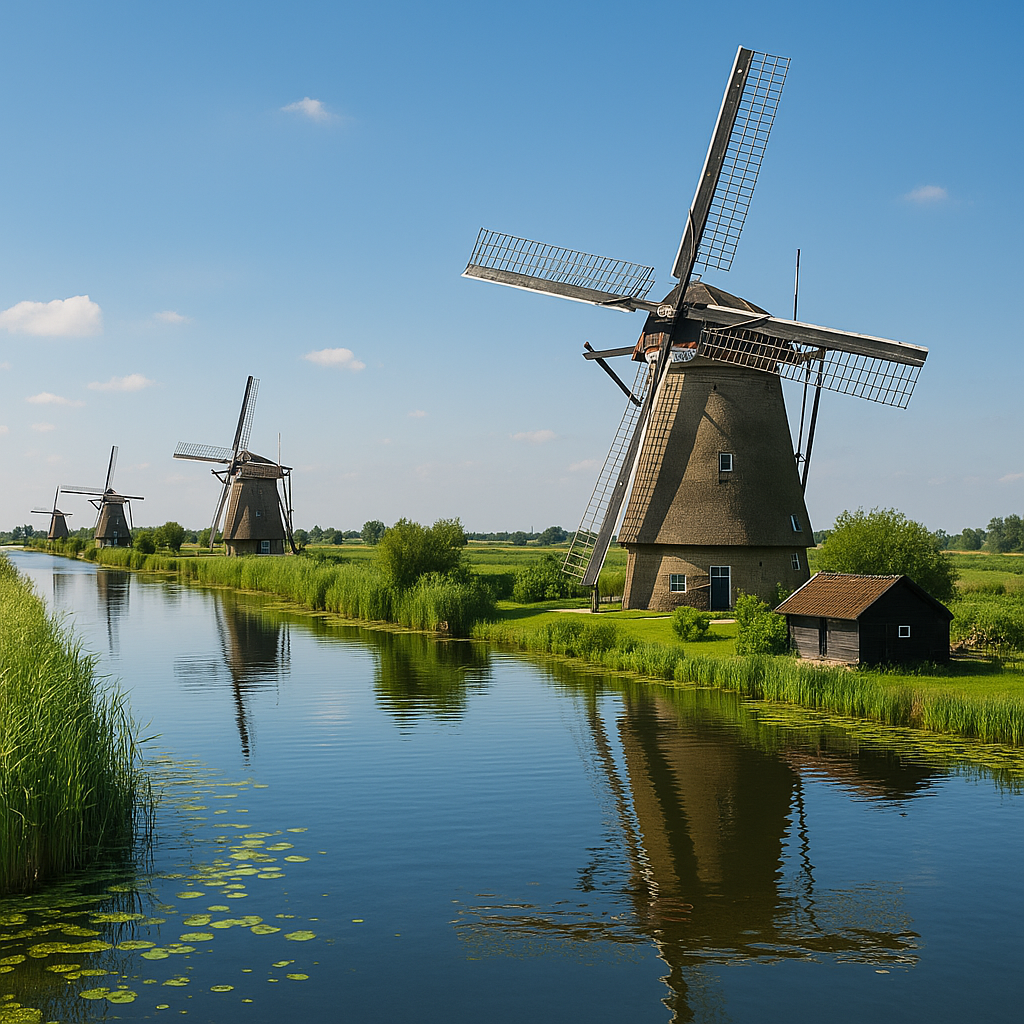
The introduction of the windmill in the 15th century revolutionized Dutch water management. Windmills were not just for grinding grain; they were adapted into pumping stations, lifting water from low-lying land and channeling it into rivers or canals. This technology made it possible to drain entire lakes, transforming them into polders — reclaimed land below sea level that could be used for farming or settlement. Famous examples include the Beemster Polder, drained in the early 1600s, now a UNESCO World Heritage Site.
Water Boards: The Birth of Dutch Democracy
One of the most remarkable aspects of Dutch water management is not just its technology but its governance. As early as the 12th century, local communities established water boards (waterschappen), institutions responsible for maintaining dikes, managing drainage, and resolving disputes.
Water boards operated independently of feudal lords, giving communities a direct say in their survival. Every landowner had a stake in the water system, and therefore everyone contributed taxes and labor. Decisions were made collectively, often by consensus. Historians often point to water boards as the origin of Dutch democratic traditions, emphasizing cooperation over hierarchy. The motto was simple: “He who does not contribute, is not protected.”
Famous Floods and Their Impact
Despite their best efforts, floods repeatedly devastated the Netherlands, leaving a deep imprint on national memory.
The St. Elizabeth Flood (1421): One of the worst medieval floods, killing thousands and permanently altering landscapes.
The Christmas Flood (1717): Swept across northern provinces, claiming more than 10,000 lives.
The North Sea Flood (1953): A modern tragedy when storm surges overwhelmed dikes in Zeeland, killing over 1,800 people and displacing 100,000.
Each disaster spurred innovation. After 1953, the Dutch launched the Delta Works, one of the most ambitious engineering projects in history.
The Delta Works: Modern Marvel of Engineering
The Delta Works, completed over decades after the 1953 flood, is often called one of the “Seven Wonders of the Modern World.” It consists of a system of dams, sluices, locks, dikes, and storm surge barriers designed to protect the southwestern provinces from the sea.
The most famous element is the Oosterscheldekering, a massive storm surge barrier with movable gates that can be closed during storms but remain open most of the time to preserve the delicate tidal ecosystem. This combination of protection and environmental sensitivity reflects the Dutch balance between engineering might and ecological awareness.
Living with Water, Not Against It
A key shift in Dutch philosophy has been moving from fighting water to living with it. Rather than endlessly raising dikes, modern projects emphasize “room for the river” strategies — creating overflow zones, wetlands, and side channels where excess water can safely spread. Cities like Rotterdam now incorporate water plazas that double as recreational spaces in dry weather and flood basins during storms.
This pragmatic acceptance — that water will always be part of life — has shaped a national culture of resilience and creativity. The Dutch see water not just as a problem but as an opportunity: for recreation, urban beauty, renewable energy, and international expertise.
Dutch Water Expertise Around the World
The Dutch are not only masters at home but also consultants abroad. From New Orleans after Hurricane Katrina to Jakarta, Bangladesh, and even Venice, Dutch engineers and urban planners are sought after for their expertise in flood prevention and sustainable water management. Their knowledge is one of the country’s most valuable exports.
Cultural Reflections: Water in Dutch Identity
Water permeates Dutch art, literature, and language. Seascapes and canal scenes fill the canvases of Golden Age painters like Jacob van Ruisdael. The Dutch language is filled with idioms about water and dikes, reflecting how central these concepts are to daily life. Even the national psyche — pragmatic, cooperative, and wary of excess — is tied to centuries of negotiating with nature.
Challenges Ahead: Climate Change and Rising Seas
Despite their reputation, the Dutch face new challenges. Climate change is raising sea levels and intensifying storms, putting even the best defenses to the test. At the same time, rivers bring more unpredictable floods, and subsidence (sinking land) worsens the problem. The Netherlands continues to innovate, but its future safety depends on global action as much as national planning.
FAQs About Dutch Water Management
Q: Why is so much of the Netherlands below sea level?
A: Because of centuries of land reclamation and natural geography — the Netherlands is a river delta where sediments created low, flat land prone to flooding.
Q: What is a polder?
A: A polder is land reclaimed from water (lake, marsh, or sea) and protected by dikes.
Q: Are the water boards still active today?
A: Yes! There are still 21 water boards in the Netherlands, making them one of the oldest continuous democratic institutions in the world.
Q: What was the worst flood in Dutch history?
A: The North Sea Flood of 1953, which killed over 1,800 people, is often considered the most devastating in modern history.
Q: What are the Delta Works?
A: A system of dams, dikes, and storm surge barriers built after 1953 to protect the southwest Netherlands from flooding.
Q: Do the Dutch only build dikes?
A: No. Modern approaches also include creating floodplains, building floating houses, and integrating water into urban design.
Q: Can the Dutch system work elsewhere?
A: Yes, but it must be adapted to local geography. Dutch experts help cities worldwide with custom solutions.
Q: How is climate change affecting the Netherlands?
A: Rising sea levels and increased rainfall make flood management more urgent. The Dutch are constantly innovating to stay ahead.
Conclusion
The Dutch are masters of water management not by choice but by necessity. Living in one of the world’s most vulnerable landscapes, they turned survival into art, science, and culture. Their system of dikes, polders, water boards, and engineering marvels like the Delta Works stands as a testament to human ingenuity and cooperation. But beyond the technology, what truly makes the Dutch masters is their mindset: a willingness to work together, adapt, and see water not just as a threat but as a partner in shaping life.
Explore More on Our Blog
If you enjoyed this article, check out more of our deep dives into Dutch culture and language: