
How the Dutch Language Influenced English (And Vice Versa)
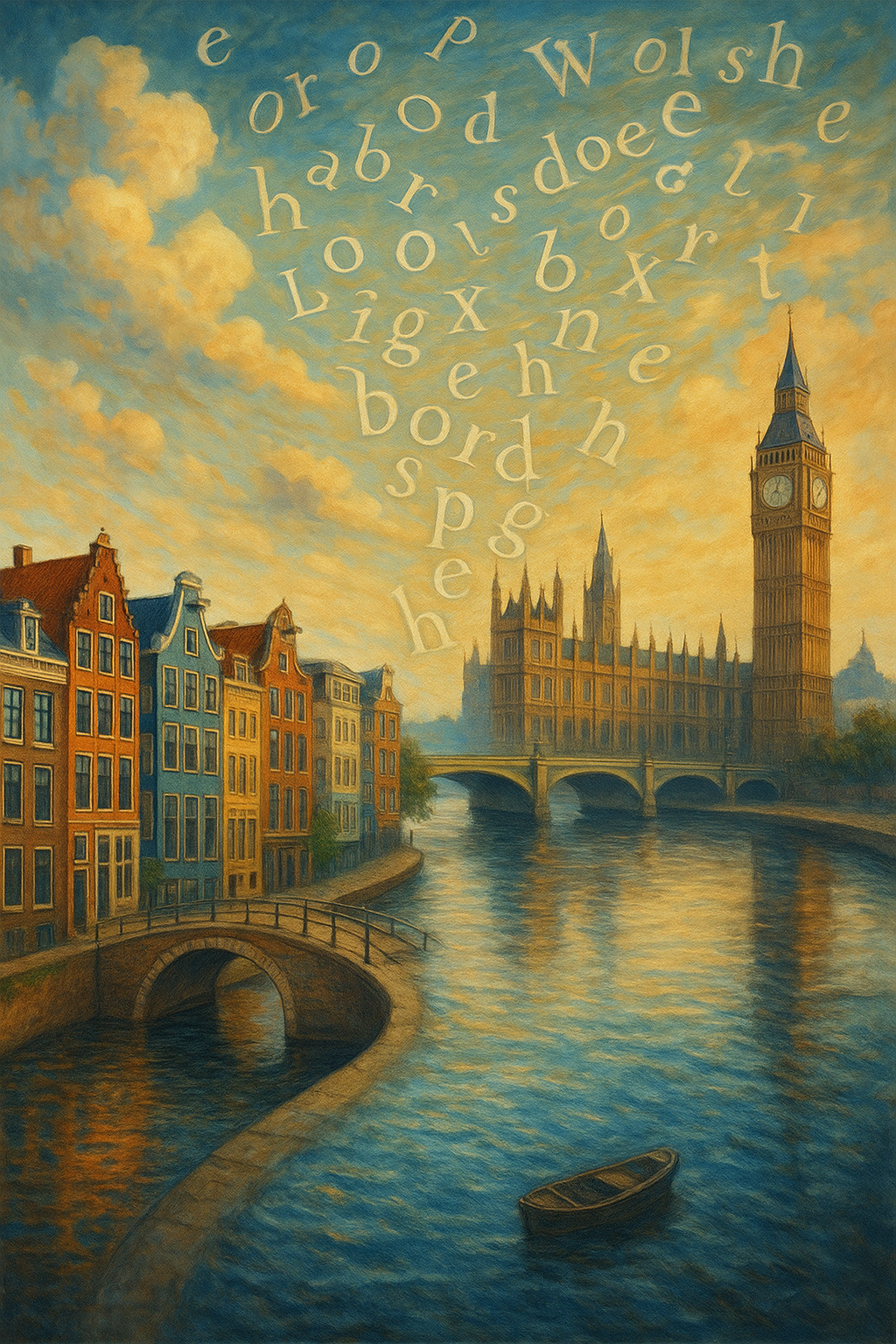
The first time you spot the word stoop on a brownstone step in Brooklyn, hear someone order coleslaw at a diner, or watch a skipper steer a yacht into a New England harbor, you’re brushing up against an old and busy linguistic border where Dutch and English have traded words, meanings, and habits for centuries—across medieval marketplaces on the North Sea, in the bustling printing houses of Antwerp and London, on the decks of merchant fleets, and along the streets of a 17th-century trading post once called Nieuw Amsterdam and now known as New York. That exchange never really stopped: it carried on through the age of exploration, the industrial revolution, two world wars, and the internet, and it still shapes how we speak at work (meeting, deadline, manager), online (updaten, streamen, downloaden), and at home (waffle, cookie, boss).
Understanding this two-way influence does more than satisfy etymology curiosity. It gives learners an immediate leg up. If you’re an English speaker learning Dutch, the history explains why so many words look familiar and why Dutch compounds, verb placement, and that famous g/ch sound still feel different. If you’re a Dutch speaker using English daily, the story reveals how English seeped into modern Dutch—from verbs like updaten to subtle calques like een issue hebben—and helps you keep what’s natural in each language while borrowing wisely. This article is your guided tour: the trade routes, the loanwords, the myths, and the very practical ways you can use the overlap to learn faster and communicate better.
The North Sea Highway: Why Dutch and English Kept Bumping Into Each Other
Before there were passports and cheap flights, there were rivers, estuaries, and the North Sea—and people who lived by them. England and the Low Countries faced each other across busy waters. From the Middle Ages onward, merchants, sailors, and artisans traveled back and forth with wool, cloth, fish, timber, books—and language. Three big historical engines powered the exchange:
Trade and Shipping.
Hanseatic and later Dutch merchant networks connected English ports to cities like Bruges, Antwerp, Amsterdam, and Rotterdam. Maritime contact creates technical vocabulary that travels well: skipper, deck, sloop, yacht in English; ferry, container, and later port-related anglicisms in Dutch.Printing, Art, and Scholarship.
Early modern Antwerp and Amsterdam were European publishing capitals; English printers and scholars studied there and vice versa. Artistic and technical terms moved with engravers, painters, and scientists: etch and easel(from Dutch ets(en) and ezel, literally “donkey,” the stand that “carries” a canvas).Colonization and Migration.
The Dutch founded New Netherland in North America (1614–1664). Even after the English took over and renamed it New York, a deep layer of Dutch remained in local English, especially household and street life. Later, global English fed back into Dutch in the 19th–21st centuries through industry, entertainment, and technology.
Dutch → English: The Words That Stuck
Let’s start with some of the clearest, most widely accepted Dutch loanwords in English. Many originated in shipping and daily life; many came through New York.
Maritime and Trade
skipper ← schipper
yacht ← jacht (originally a fast light vessel)
sloop ← sloep
deck ← Middle Dutch dec
dock ← Middle Dutch dok
boom (on a ship) ← boom (pole)
freight (commonly traced to Middle Dutch vrecht/vrachte)
cruise (often linked to Dutch kruisen, “to cross; to sail back and forth,” though the path may include other languages)
Household, Food, and City Life
cookie ← koekje (little cake)
coleslaw ← koolsla (cabbage salad)
waffle ← wafel
stoop (front steps/porch) ← stoep
boss ← baas
spook ← spook (ghost)
landscape ← landschap
easel ← ezel (donkey → the frame that “carries” a canvas)
yankee (often hypothesized from Jan Kees, “John Cornelius/John Cheese,” but its origin is debated; treat as a fun possibility, not settled fact)
santa claus (American cultural figure) ← Sinterklaas (Saint Nicholas), via Dutch settlers
Tools, Crafts, and Art
etch ← etsen
sketch (path likely via Dutch schets from Italian schizzo; Dutch/Flemish artists helped route the term into English)
block (printing) has Dutch/Low German ties in some uses
Why these stuck: Dutch speakers were experts in the domains that coined them—ship design, urban domestic life, printing, painting. When a community leads an industry, its vocabulary travels.
New Amsterdam, Old Words: How Dutch Shaped American English
Nowhere is Dutch’s imprint clearer than in the mid-Atlantic United States:
Place names: Brooklyn (Breukelen), Harlem (Haarlem), Coney Island (Conyne Eylandt → “Rabbit Island” is a popular folk reading), Flushing (Vlissingen), Staten Island (Staten Eiland), The Bowery (from bouwerij, farm).
Everyday terms: stoop, cookie, coleslaw, waffle, boss, yankee (again, debated).
Civic culture: Dutch traditions around Sinterklaas blended into the figure of Santa Claus; New York’s pragmatic, mercantile ethos mirrored Dutch urban life, and words of trade and governance filtered into local English.
Even when words didn’t survive nationally, they left traces in regional speech and customs (think St. Nicholas Dayfestivities or the architecture and layout of early farms and streets).
English → Dutch: The Modern Flood of Anglicisms
The traffic runs both ways, and in the last century English has had the upper hand. Globalization, American/British media, and tech made English the dominant donor language. Dutch borrowed in several predictable ways:
1) Direct Loans (often with Dutch spelling, morphology, or pronunciation)
business & office: manager, meeting, deadline, target, deal, feedback, sales, team, job, performance
tech: computer, server, app, streamen, updaten, downloaden, scrollen, printen
marketing & culture: brand, design, cool, vibe, storytelling, community, challenge
sports & fitness: fitness, workout, coach, team, match, goal
These words behave like Dutch once adopted: verbs get -en (updaten, printen), past participles take ge- when appropriate (geüpdatet is a common (and much-discussed) spelling with a diaeresis to mark the vowel break), plurals take -s or -endepending on form (e-mails/emails).
2) Calques (loan translations)
That makes sense → Dat maakt sense (informal hybrid) or the more native Dat is logisch
To have an issue → een issue hebben (hybrid) vs. een probleem hebben
Hands-on → hands-on (loan) or praktisch/aanpakgericht (native renders)
Time management → timemanagement (compound), tijdsbeheer exists but is less common in business circles
3) Code-Switching and Register Play
You’ll hear Dutch sentences with English plugs in offices, universities, and media:
“Kun jij die deck even reviewen en een short update sturen voor end of day?”
Purists wince; professionals shrug. Knowing when to lean native and when to accommodate the Anglicisms is a social skill.
What Didn’t Change: Structure and Sound
Borrowing vocabulary is easy; changing grammar is hard. Despite English influence, Dutch keeps its Germanic backbone:
Verb-second in main clauses: Morgen ga ik…
Verb-final in subordinate clauses: … omdat ik vroeg moet opstaan
Separable verbs: opbellen, meegaan, vastmaken
Particles & diminutives: even, maar, toch, hoor and -je/-tje remain vibrant
Sound system: Dutch hasn’t remodeled its vowel inventory or g/ch because of English loans; Dutch pronunciations adapt the English originals, not the other way around
In other words, English poured a lot of new words into Dutch, but Dutch still thinks and sounds like Dutch.
Side-by-Side: Friendly Pairs and Sneaky Traps
Comfortable Cognates (Go Ahead and Trust These… mostly)
EnglishDutchNotewaterwaterSame spelling, similar soundhandhandSamelandlandSamehousehuisVowel shift ou → uilightlichtgh → chbreadbroodea → oobutterboterVowel u → o patternshipschipsh → sch (s + fricative)saltzouts → z pattern common
How Borrowed Words Change: Stress, Plurals, Verbs
Borrowing is a process, not a snapshot. A few patterns to notice:
Stress: Dutch often keeps English stress in loans (déadline, méeting), though over time some shift to Dutch patterns.
Plurals: Dutch toggles between -s and -en; modern loans favor -s (meetings), but compounds still behave Dutch-y (jaarverslagen).
Verbs: English bases pick up -en and Dutch conjugation (updaten, geüpdatet). Some hybrid spellings appear before a norm settles; dictionaries and official spelling lists catch up later.
This is where good teaching helps: you’ll learn what’s normal now and what’s fading or domain-specific.
Myths, Debated Etymologies, and What to Do with Them
Language histories collect legends. A few you’ll hear:
“Yankee = Jan Kees.” It’s a popular explanation; etymologists debate it. Treat as plausible folklore, not fact.
“Booze is Dutch.” Sometimes linked to buizen (to drink from a tube), but the path is murky and may be slang-driven.
“Many New York quirks are Dutch.” Some are, many aren’t. Enjoy the stories, keep your skepticism.
Rule of thumb: celebrate the neat narratives, verify before you teach them, and don’t overclaim in professional or academic contexts.
Practical Payoff for Learners
If You’re an English Speaker Learning Dutch
Start with the obvious cognates to build a big base fast (water, hand, land, huis, licht, brood, boter, vader, moeder).
Conquer the “big three” sounds early: ui, ij/ei, g/ch.
Drill verb frames (V2 main clauses; verb-final subclauses; separables in both).
Learn the high-value particles (even, maar, toch, hoor). They make you sound friendly and natural.
Read compounds left → right like LEGO; never panic at long words.
If You’re a Dutch Speaker Polishing English
Distinguish true friends from false friends (eventueel ≠ eventually).
Reduce code-switch crutches in formal English (I have an issue with… is fine; I have an attention point is a calque—try concern or point to address).
Tune prepositions (classic pitfalls: on/in/at; depend on, not depend of).
Pronounce endings (worked /t/, needed /ɪd/), and watch th sounds.
Replace Dutch sentence rhythm with English’s stress-timed flow; stretch vowels in content words.
Mini-Activities You Can Do Today
Loanword Scavenger Hunt:
Walk through your office Slack or email and list 20 English words in Dutch sentences (deadline, team, brainstorm). Try writing the same message in fully native Dutch (streefdatum, ploeg/afdeling, ideeënsessie). You’ll feel the register shift.New York Dutch Day:
Make a sentence using five Dutch-origin English words: The skipper moored the yacht by the stoop, then served waffles and coleslaw. Now translate to Dutch and tweak meanings where needed.Compound Breakdowns:
Take 10 long Dutch compounds from the news (zorgverzekering, stikstofbeleid, jaarverslag). Split into pieces and gloss each part. Repeat next week; you’ll read faster.False-Friend Flashcards:
Pair eventueel/possibly, brief/letter, sympathiek/likeable, raar/odd, winkel/shop, actueel/current. Review for 5 minutes a day.
Frequently Asked Questions
Q1: What are the most common Dutch words in everyday American English?
The big, undisputed ones include cookie, coleslaw, waffle, boss, stoop, yacht, skipper, dock, deck, landscape, easel, and spook. In New York and the mid-Atlantic, these feel especially at home.
Q2: Did Dutch influence English grammar too?
Not in any major, lasting, structural way. English grammar evolved through contact with Norse and French more than Dutch. Dutch mainly contributed lexicon (words), plus some regional idioms in areas of settlement.
Q3: Why do businesspeople in the Netherlands mix English into Dutch?
Global industries set English as the default for tools, docs, and cross-border teams. Borrowing saves effort and signals membership in a professional community. That said, in public communication and education, there’s growing discussion about keeping Dutch robust and clear.
Q4: Are Dutch and English mutually intelligible?
Not by default. You’ll recognize many written words, and slow Dutch with lots of shared vocabulary can feel approachable to English speakers, but pronunciation, particles, and word order make spontaneous comprehension tough without exposure.
Q5: How do I pronounce Dutch loans in English correctly?
English has naturalized pronunciations (yacht with a /jɒt/). If you’re speaking Dutch, switch to Dutch sounds (jacht with a fricative ch). Keep contexts separate; don’t hypercorrect English with Dutch phonetics.
Q6: Are Anglicisms in Dutch “wrong”?
They’re normal in many domains. Style guides differ: journalism and government often prefer native terms; tech and business tolerate or prefer English. Good rule: know two ways to say it, and match your audience.
Q7: What’s a good strategy to avoid false friends?
Keep a living list, highlight in reading, and practice replacement sentences. For instance, rewrite Dat is eventueel mogelijkas Dat is misschien mogelijk or Dat kan zo nodig.
Q8: Which loanwords are most useful for beginners?
Start with transparent international words (university, project, information), then the Dutch-in-English classics (cookie, boss, dock), then domain-specific terms you actually use (meeting, deadline, spreadsheet → werkblad).
Final Thoughts: Two Languages, One Conversation
English and Dutch are siblings who grew up in neighboring houses, learned different hobbies, and borrowed tools when needed. The result is a long record of shared vocabulary, shared urban and maritime culture, and—especially in New York—a shared civic history. For learners, this is great news: you don’t start from zero. You have a ready-made bridge of cognates, a map of false friends to avoid, and a living sense of how modern Dutch and English travel together through offices, universities, and the internet.
Use the bridge, but don’t stop in the middle. Cross over: master Dutch sounds, sentence frames, and particles; learn when to be proudly Dutch in Dutch and cleanly English in English. The more you understand the exchange, the more confidently you’ll navigate both shores.
Learn with Polyglottist Language Academy
Ready to turn etymology into everyday confidence? At Polyglottist Language Academy, we teach Dutch and English with this two-way history in mind.
Join a supportive cohort, learn from expert instructors, and start using both languages with clarity and ease. Seats fill quickly—sign up today to claim your spot.
Keep Reading: Related Articles on Our Blog
The Fastest Way To Learn Dutch According To Language Teachers
Do You Really Need To Learn Dutch If You Live In The Netherlands?
Dutch Classes In Oakland: Learn Dutch Online With Local Instructors
How Long Does It Take To Learn Dutch – Realistic Timelines By Level
Best Online Dutch Classes In The Bay Area: Oakland, Berkeley, San Francisco & San Jose