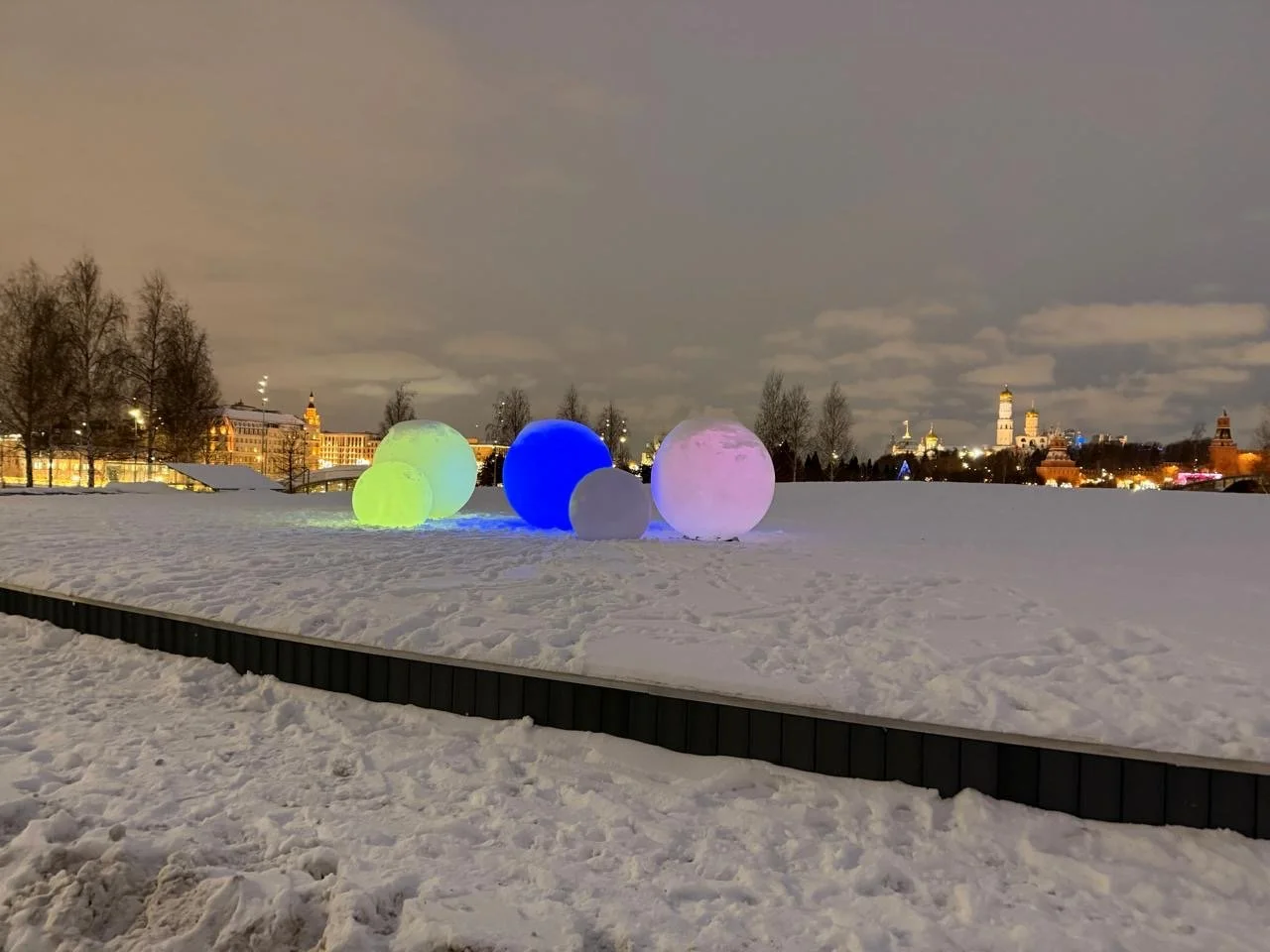
Moscow: The Most Beautiful Winter City I’ve Ever Walked Through
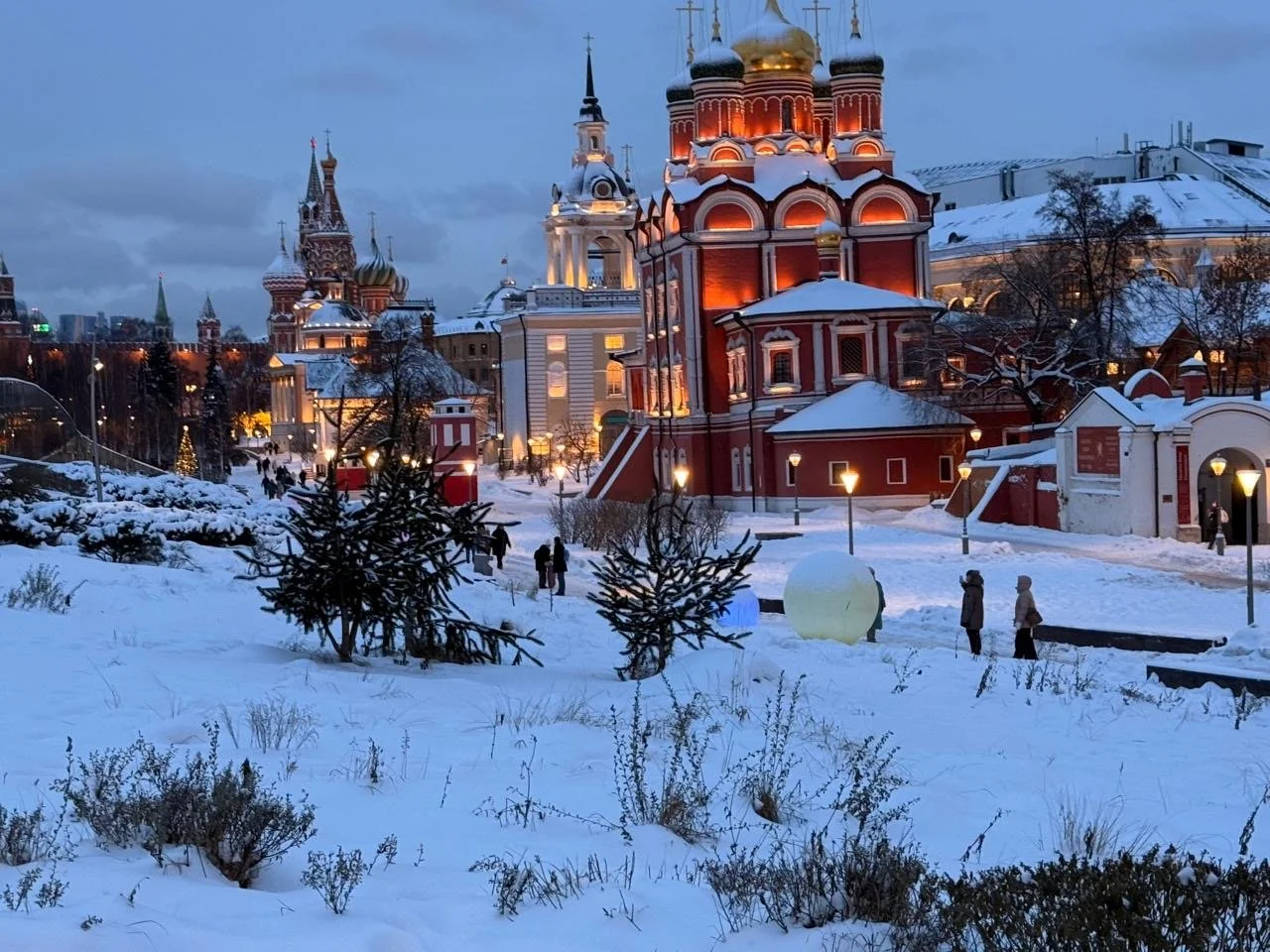
As soon as I stepped off the train that had brought me from Saint Petersburg to Moscow, I felt a completely different energy.
I arrived at Leningradsky Railway Station, which was under full renovation at the time. Instead of a grand, cinematic arrival, I had to navigate narrow temporary corridors leading from the platform to the station exit. Passengers moved quickly, pulling heavy suitcases behind them, weaving through tight hallways with quiet determination. I struggled to keep up with their speed.
That was my first clue: Moscow operates on a different rhythm.
And I had just stepped into it.
Settling In: Living in the Heart of Moscow
For longer stays, I almost always choose an apart-hotel rather than a traditional hotel. I prefer having a separate bedroom, a small kitchen, and the feeling of living — even temporarily — in a real apartment. It allows me to inhabit a city instead of simply observing it.
In Moscow, these apartments are more expensive than in Saint Petersburg, but still relatively affordable compared to other major European capitals. Prices typically range from $20 to $140 per night, depending on location and level of comfort. I stayed in the upper range — a well-designed four-star apartment in the very heart of the city.
From there, Moscow unfolded quickly.
First Impressions: What Is Moscow Like in Winter?
My first real glimpse of Moscow came during the taxi ride from the station to my apartment.
Wide avenues. Monumental buildings. Dramatic lighting.
But what struck me most was not the architecture — it was the speed.
Moscow feels fast. Not merely busy, but intense. Focused. Determined.
It was December, yet there was surprisingly little snow in the city center. Later, I learned that municipal services operate around the clock to remove snow from downtown streets. The result is a winter city that feels almost polished — clean sidewalks, clear roads, efficient movement.
The number of people and cars was overwhelming. Traffic flowed constantly. Sidewalks were full. And yet everything functioned with remarkable precision.
The city was already decorated for winter — primarily for New Year’s, the most important holiday in Russia. Lights, ornaments, and large installations transformed the streets into something theatrical and luminous.
But I didn’t want to see it from behind a taxi window.
I wanted to walk.
The First Walk: Moscow at Night
That evening, I decided not to unpack. I put my coat back on and went outside.
The apartment was warm — almost too warm after the journey — and the contrast pulled me toward the door. I wanted to experience Moscow at street level, where its character reveals itself.
The air hit me first. Sharp. Metallic. Unmistakably winter. My breath turned visible immediately, dissolving into the glow of streetlights.
The pavement was dry — another sign of Moscow’s relentless winter maintenance — and my boots made a firm, rhythmic sound against the stone. Around me, people walked quickly but not nervously. Purposefully. Couples in long wool coats. Women in structured silhouettes and elegant boots despite the cold. Men moving briskly, phones in hand, conversations concise.
The lights were everywhere — suspended above streets in golden arches, wrapped around trees, cascading from façades like luminous curtains. The decorations did not aim for subtlety. They aimed for spectacle.
And yet, it was refined.
The city glowed.
Every few steps revealed another composition: a grand façade illuminated in warm tones, a boutique window arranged like a stage set, taxis reflecting streaks of red and white across the asphalt.
I paused in front of a café. Through the fogged glass, I saw people sitting with tea and coffee, faces softened by yellow light. Someone laughed. Someone typed on a laptop. Someone leaned in to speak across the table.
Outside, the air bit at my cheeks. Inside, everything looked golden and intimate.
That contrast defined the walk: disciplined cold outside, cultivated warmth inside. Moscow does not hide from winter — it frames it.
As I continued walking, I realized something subtle but powerful: in Saint Petersburg, I often look upward — at façades, at sky, at reflections in water. In Moscow, I looked forward.
The city pulls your gaze ahead.
Down the avenue.
Toward what is next.
That first night walk was when Moscow stopped being an idea and became an experience.
Moscow vs. Saint Petersburg in Winter: A Tale of Two Cities
I could not help but compare Saint Petersburg and Moscow constantly.
It was elegance wrapped in history; it was momentum wrapped in steel.
The comparison reminded me of A Tale of Two Cities by Charles Dickens, set between London and Paris during the French Revolution. Dickens famously opens with “It was the best of times, it was the worst of times,” capturing two cities existing in the same era yet shaped by entirely different emotional climates.
Saint Petersburg feels like a conversation about ideas. Its beauty is almost fragile, like porcelain under winter light. There is space to think there. Space to pause.
Moscow feels like a negotiation with the future. It rises vertically and moves horizontally at once. It glows not with nostalgia, but with intention.
In Saint Petersburg, I felt invited to observe.
In Moscow, I felt invited to act.
Moscow: A City Engineered to Function
After the lights and comparisons, another realization formed: Moscow is not just beautiful — it is engineered.
With over twelve million residents, it is one of Europe’s largest cities. Yet what impressed me most was not its scale, but its precision.
Everything works.
Snow is removed methodically, around the clock. Streets are cleared before morning. Sidewalks remain accessible. The city appears composed — almost rehearsed.
Then there is the metro.
The Moscow Metro feels less like transportation and more like an underground palace. Marble columns. Chandeliers. Mosaics. Stations that resemble museums. But beyond aesthetics, it is astonishingly efficient. Trains arrive every few minutes. Crowds move with instinctive choreography.
You descend underground and re-emerge exactly where you need to be.
Above ground, the same logic applies. Digital payments are seamless. Taxis arrive quickly. Restaurants operate smoothly.
Infrastructure becomes invisible because it functions so well.
Moscow gives the impression of a city that does not tolerate inefficiency.
And yet, it does not feel sterile.
It feels ambitious.
Is Moscow Beautiful in Winter? My Honest Answer
If you are wondering whether Moscow is worth visiting in winter, my answer is simple: yes.
But not because of snow-covered romance.
Moscow in winter is beautiful because of scale, light, movement, and intention.
It is architectural beauty.
It is engineered beauty.
It is illuminated ambition.
Winter does not slow Moscow down.
It sharpens it.
Final Reflection: What Moscow Did to Me
By the end of my stay, I noticed something subtle.
I walked faster.
I thought more decisively.
I felt sharper.
Cities influence you quietly. Moscow does not whisper inspiration; it accelerates it.
And perhaps that is why, when I think about the most beautiful winter city I have ever walked through, I do not remember only the lights or the architecture.
I remember the feeling of forward motion.
Moscow does not ask you to admire it.
It asks you to keep up.
From Observation to Understanding
Walking through Moscow at night, watching people move with such purpose, I was reminded that travel is never only about architecture or lights. It is about patterns. Tone. Pace. The subtle social choreography that reveals how a city thinks.
You can admire Moscow without speaking Russian. You can order coffee, take the metro, navigate your way around.
But without the language, you remain slightly outside of it.
Russian is not only a tool for communication — it is a key to decoding atmosphere. The speed of conversation. The humor that sounds dry but isn’t. The directness that can feel abrupt until you understand its cultural roots. The small shifts in tone that signal respect, irony, or familiarity.
In a city like Moscow — ambitious, structured, forward-moving — language reflects that same energy.
At Polyglottist Language Academy, our Russian programs are built around this exact experience. We teach the language alongside the culture that shapes it. Students learn how Russian actually sounds in real-life interactions — in cities like Moscow, in daily conversations, in situations where nuance matters.
Our online classes are designed for adults who want practical, usable Russian — whether for travel, cultural understanding, or deeper connection.
If moments like these spark something in you — if you find yourself wanting to understand more than you can translate — learning Russian becomes more than a hobby.
It becomes participation.
👉 Discover Russian classes at Polyglottist Language Academy
Continue Exploring Russia with Greta
If you’re curious to explore more of Russia beyond guidebooks and landmarks, you can continue following Greta’s journey through both Moscow and Saint Petersburg.
Each article focuses not on checklists, but on lived moments — settling into an apartment, noticing how winter shapes a city, observing how people move, speak, and interact.
You might enjoy:
Traveling From St. Petersburg To Moscow By Train: A First-Hand Account
What It’s Like To Take The Saint Petersburg Metro For The First Time
Why Russian Bakeries Matter In St. Petersburg: Pekarni, Rum Baba, And Everyday Life
A DAY AT DOM KNIGI: BOOKSTORES, COFFEE, AND KAZAN CATHEDRAL IN ST. PETERSBURG
Where To Stay In Downtown St. Petersburg: A Real Apart Hotel Experience
Walking In Saint Petersburg In December: A Winter City That Has Adapted
My First Morning In St. Petersburg: Snow, Silence, And The Smell Of Fresh Bread
MY FIRST 24 HOURS IN ST. PETERSBURG: NEVSKY PROSPECT, TOO MUCH TEA, AND RUSSIAN DONUT “PISHKA”
Together, these stories build a portrait of Russia that goes beyond headlines — one grounded in daily rhythms, small observations, and the quiet details that make a place unforgettable.
About Greta
Greta is Polyglottist’s traveler-in-residence, sharing first-person observations on language, culture, and everyday life as she moves from city to city. Her travel diaries focus on atmosphere, psychology, and the subtle ways places influence how we think, walk, and speak.