
Learn German in Napa: Flexible Classes for Adults
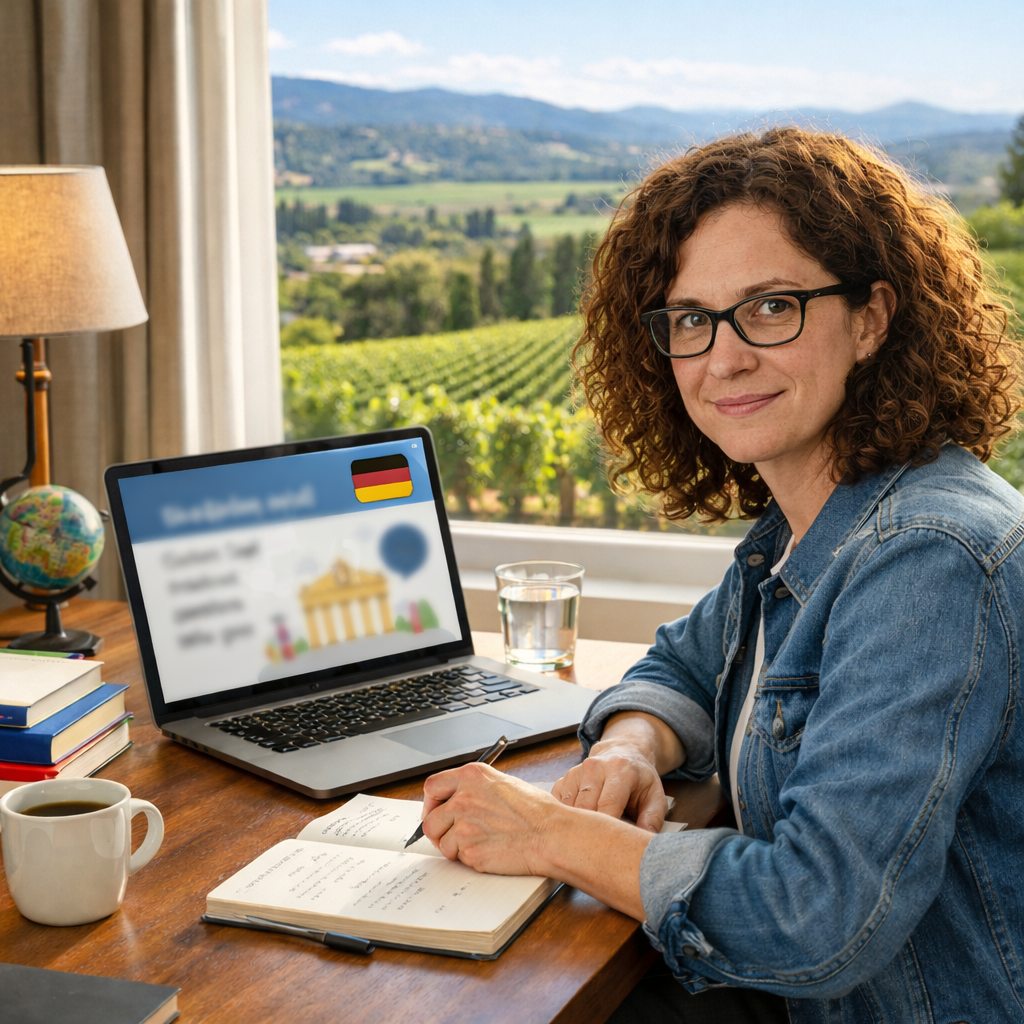
The idea of learning German often begins with a practical goal—a business connection, a planned trip to Central Europe, a fascination with philosophy or classical music—but for many adult learners, it quickly becomes something deeper: a doorway into a culture known for precision, intellectual tradition, engineering brilliance, and a way of thinking that values clarity, structure, and substance over surface.
In a place like Napa, where life moves between vineyards, professional networks, and weekend escapes, learning a language may not seem like an obvious priority at first. But increasingly, adults are turning to language study as a way to sharpen their minds, open new doors professionally, and connect with a wider world beyond Northern California. German, in particular, offers a unique blend of practicality and cultural depth. It is the most widely spoken native language in Europe, the language of Europe’s largest economy, and a gateway to countries like Germany, Austria, and Switzerland—destinations known for high quality of life, efficient infrastructure, and rich cultural heritage.
For adults in Napa, flexible German classes provide a structured, engaging, and intellectually stimulating way to add something meaningful to their routine. Whether your interest is professional, cultural, academic, or simply personal curiosity, learning German can become one of the most rewarding projects you take on.
Why Learn German as an Adult?
German is not just another European language. It is the language of major global industries, scientific research, philosophy, literature, and engineering. It is spoken by over 100 million native speakers and used widely across Germany, Austria, Switzerland, and parts of Belgium and Luxembourg.
For adults in Napa, the reasons to learn German often fall into several key categories.
Professional Opportunities
Germany has the largest economy in Europe and is home to major multinational companies in fields like:
Automotive engineering
Renewable energy
Pharmaceuticals
Finance
Technology
Manufacturing
Many American professionals work with German clients, partners, or subsidiaries. Even a basic knowledge of German can set you apart in international environments.
Travel and Cultural Access
German-speaking countries offer:
Alpine landscapes
Historic cities
Classical music festivals
Christmas markets
Culinary traditions
Efficient and safe public transport
Knowing even basic German transforms the travel experience. You move from being a passive visitor to an engaged participant in daily life.
Intellectual and Cultural Curiosity
German is the language of:
Goethe and Schiller
Nietzsche and Kant
Freud and Einstein
Bach, Beethoven, and Wagner
Many adults are drawn to German for its intellectual heritage. Even if you never read philosophy in the original, studying the language offers insight into the culture that produced these thinkers.
Why German Is a Great Language for English Speakers
One of the most encouraging facts for adult learners is that German is considered one of the easier languages for English speakers to learn.
Both languages belong to the Germanic language family, which means they share:
Similar vocabulary roots
Comparable sentence structures
Many cognates (similar-looking words)
For example:
EnglishGermanHouseHausWaterWasserFriendFreundHandHandBookBuch
Even complete beginners often feel a sense of familiarity when they start German. This reduces the psychological barrier and builds confidence early on.
The Real Challenge: Structure, Not Vocabulary
German’s reputation for difficulty usually comes from its grammar. But the truth is that German grammar is logical, consistent, and systematic.
Unlike English, which is full of irregular forms and silent exceptions, German tends to follow clear patterns.
Key features include:
Gendered nouns (der, die, das)
Four grammatical cases
Verb placement rules
Compound words
At first, these may seem intimidating. But with the right teacher and structured lessons, most adult learners find German grammar surprisingly satisfying. It is like solving a puzzle: once the system becomes clear, everything begins to click.
What Makes Adult German Classes Different
Adult learners are not the same as school-aged students. They bring:
Life experience
Clear goals
Limited time
Strong motivation
That is why adult German classes are designed differently.
Focus on Practical Communication
Instead of memorizing endless vocabulary lists, adult classes focus on:
Real conversations
Useful phrases
Everyday situations
Clear grammar explanations
From the very beginning, students learn how to:
Introduce themselves
Order food
Ask for directions
Talk about work and hobbies
Navigate travel situations
Structured Yet Flexible Learning
Adult learners need structure, but also flexibility. A good German program offers:
Small-group classes
Clear level progression
Flexible schedules
Online options
This allows students in Napa to fit language learning into busy professional and personal lives.
Small-Group Classes: The Ideal Format for Adults
Small-group classes offer one of the most effective environments for language learning.
Why Small Groups Work
In a group of 3–6 students:
Everyone speaks regularly
Teachers give individual attention
Lessons move at a comfortable pace
Students learn from each other’s questions
This creates a supportive and interactive atmosphere that is difficult to replicate in large classes or self-study programs.
Motivation and Accountability
Learning alone requires constant self-discipline. In a group class:
You have a fixed schedule
You build relationships with classmates
You stay motivated week after week
Many adult learners find that the social aspect of a small group is what keeps them consistent.
Flexible Scheduling for Busy Adults
Adults in Napa often juggle:
Work schedules
Family responsibilities
Travel
Social commitments
Flexible German classes make it possible to learn without disrupting your routine.
Typical options include:
Evening classes after work
Morning classes for flexible schedules
Weekend sessions
Online classes accessible from anywhere
This flexibility is especially important for professionals whose schedules change frequently.
What You’ll Learn in a Beginner German Class
If you are starting from zero, a complete beginner German class usually covers:
Basic Communication
Greetings and introductions
Numbers and dates
Talking about yourself
Everyday vocabulary
Core Grammar
Present tense verbs
Articles (der, die, das)
Simple sentence structure
Question formation
Practical Situations
Ordering at a café
Shopping
Asking for directions
Making simple plans
By the end of a beginner course, most students can:
Handle basic travel situations
Understand simple conversations
Introduce themselves confidently
Moving Beyond the Beginner Level
After the beginner stage, students progress through:
Low Beginner (A1+)
Talking about routines
Describing people and places
Expanded vocabulary
More verb forms
High Beginner (A2)
Past tense
More complex sentences
Expressing opinions
Everyday conversations
Intermediate (B1)
Detailed conversations
Work-related topics
Travel scenarios
Cultural discussions
Each level builds logically on the previous one, creating a clear path to fluency.
The Cultural Side of Learning German
Language learning is not just about grammar and vocabulary. It is also about culture.
German-speaking cultures are known for:
Punctuality
Precision
Intellectual debate
Strong traditions
High-quality craftsmanship
In a good German class, you will also explore:
German food and café culture
Holiday traditions
Social etiquette
Travel tips
Regional differences
This cultural dimension makes the language come alive.
Online German Classes: A Perfect Fit for Napa Adults
Online classes have transformed language learning.
Advantages of Online Learning
No commute
Access from home or office
Consistent schedule
Small, interactive groups
Screen sharing and digital materials
For adults in Napa, this means you can attend a high-quality German class without leaving your home.
Many students even find online classes more comfortable and efficient than in-person ones.
How Long Does It Take to Learn German?
This depends on:
Your starting level
Study frequency
Practice outside class
Personal goals
A realistic timeline for adults:
LevelTime EstimateBeginner (A1)3–6 monthsElementary (A2)6–12 monthsIntermediate (B1)1–2 years
Consistency matters more than speed. One class per week over a long period is often more effective than short bursts of intense study.
Tips for Success in German Classes
1. Be Consistent
Attend every class and review material weekly.
2. Speak From Day One
Don’t wait until you feel “ready.” Mistakes are part of learning.
3. Listen to German Regularly
Try:
German music
Podcasts
Simple TV shows
4. Keep a Vocabulary Notebook
Write down:
New words
Example sentences
Useful phrases
5. Stay Curious About the Culture
Language sticks better when connected to real-life context.
Why Adults in Napa Are Choosing German
More adults are turning to German because it offers:
Career advantages
Intellectual stimulation
Travel confidence
Cultural enrichment
A structured, logical language system
In a region like Napa, where people value quality, craftsmanship, and international experiences, German feels like a natural fit.
FAQs: Learn German in Napa
Are German classes suitable for complete beginners?
Yes. Most adult German programs offer complete beginner classes designed for students with no prior experience.
How big are the classes?
Small-group classes typically have 3–6 students, allowing for more speaking time and personalized attention.
Are classes offered online or in person?
Many programs offer flexible online classes, making them accessible to students in Napa and beyond.
How long are the courses?
A typical course runs for about 6 weeks, with one class per week.
Do I need to buy a textbook?
Some classes use textbooks, while others use custom materials provided by the instructor.
Can I switch levels if I’m not sure where I belong?
Yes. Many schools offer placement guidance and allow students to move to a more appropriate level if needed.
Is German really difficult to learn?
German has a reputation for being difficult, but for English speakers it is one of the more accessible foreign languages due to shared roots and logical grammar.
How soon will I be able to speak German?
Most students can handle simple conversations after one beginner course.
Learn German with Polyglottist Language Academy
If you are ready to start learning German in Napa, Polyglottist Language Academy offers small-group German classes designed specifically for adult learners.
Our classes feature:
Small groups (3–6 students)
Clear level progression
Practical conversation focus
Experienced, engaging instructors
Flexible online schedules
Whether you are learning for travel, work, or personal enrichment, our German classes provide a structured and supportive environment to help you succeed.
Ready to begin?
Join one of our upcoming German classes and take the first step toward speaking the language with confidence.
Continue Exploring Languages and Cultures
If you enjoyed this article, you may also like: