
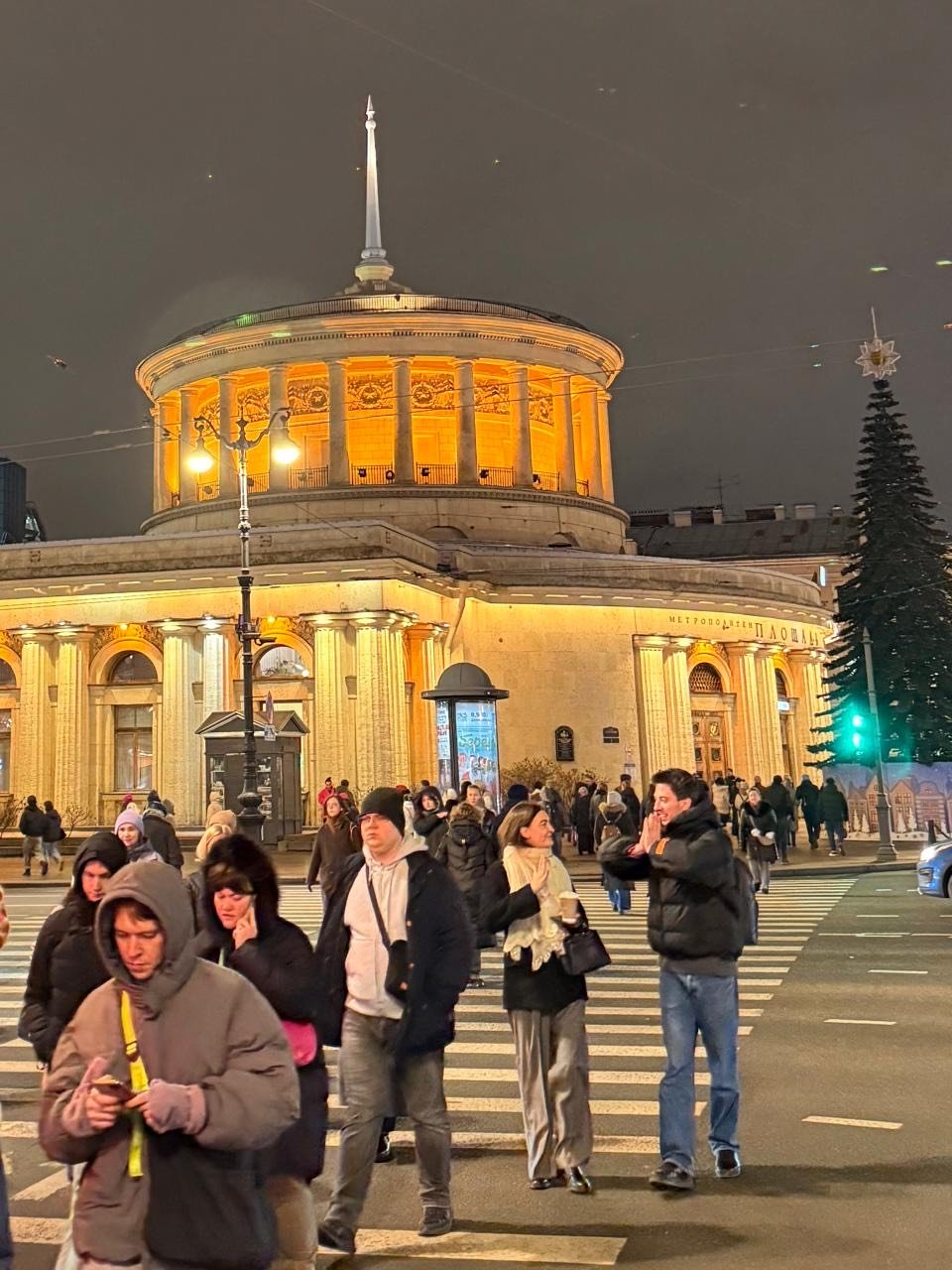
Today, I decided to be brave enough to take the Saint Petersburg metro to a completely different part of the city.
My apart-hotel is only an eight-minute walk from Ploshchad Vosstaniya metro station, right near the heart of Saint Petersburg. At first, I didn’t even realize it was a metro entrance. The building looked more like a museum or a cultural institution than a place where trains rush in and out every few minutes. Then it clicked—this is Russia. Here, even everyday infrastructure is treated with a certain seriousness, almost reverence.
Taking the metro wasn’t strictly necessary. It was a choice. An act of curiosity.
How I’d Been Getting Around Until Now
Until today, I had been moving through the city mostly by Yandex Taxi, which, surprisingly, works exceptionally well for visitors.
Within downtown Saint Petersburg:
rides usually cost $5–10 (Comfort+ category)
cars arrive within five minutes
the trip from Pulkovo Airport to my apart-hotel cost just $25
Yes, there are traffic jams—especially in the evenings—but overall, it’s an efficient, economical way to move around. I still don’t quite understand why anyone would want to own a car here.
But today wasn’t about efficiency. It was about understanding the city from underneath.
Nevsky Prospekt and the Fastest Buses I’ve Ever Seen
Before heading underground, I spent time watching traffic on Nevsky Prospekt. The number of buses surprised me—and the way they drive even more.
They move fast. Almost comically fast.
Suddenly, I remembered the Knight Bus from Harry Potter and the Prisoner of Azkaban—that chaotic, triple-decker purple bus that squeezes between buildings, lamp posts, and cars while ignoring every known law of physics. Watching Saint Petersburg buses dart through traffic felt strangely similar.
The best part? They arrive every three to five minutes, as if the city itself refuses to let you wait too long.
Entering the Saint Petersburg Metro
Eventually, I stepped inside the metro station and bought a ticket from the machine. To my surprise, the process was simple and intuitive. A small relief.
The moment I scanned my ticket and stepped onto the escalator, something else took over:
a sense of descent—not just physical, but psychological.
As the escalator carried me downward, one question kept returning:
Why is the Saint Petersburg metro so deep?
Why the Saint Petersburg Metro Is Built So Deep
The City Beneath the City
Saint Petersburg was built on:
marshland
river deltas
water-saturated soil
Near the surface, the ground is soft, unstable, and prone to flooding. Shallow tunnels would be risky, even dangerous. Engineers had no choice but to dig deep, reaching stable layers of clay and rock where tunnels could safely exist.
The result: metro stations far deeper than those in most cities.
The Neva River and a City of Canals
Saint Petersburg is crisscrossed by:
the Neva River
dozens of canals
underground waterways
Building shallow stations would mean constantly intersecting water channels. By going deep, engineers could pass safely beneath rivers and avoid leaks and seasonal flooding.
This depth explains the city’s famously long escalators, some of which feel endless.
Stations That Feel Like Museums
When I finally reached the platform, I almost forgot I was in a metro station.
The space felt monumental—more like a museum than a transportation hub. Marble, granite, chandeliers, carefully designed details everywhere. It made me wonder how someone, at some point in history, decided that ordinary people deserved to move through spaces like this every day.
Here, the metro isn’t hidden or purely functional. It’s ceremonial.
Observing People Underground
There were many people around me, yet something felt different. No one seemed rushed.
I noticed this on my very first day in Saint Petersburg. As soon as you move away from the train station areas—where travelers cluster—you begin to adopt the city’s unhurried rhythm.
People walk with a quiet dignity. They observe. They talk slowly with friends. Yes, many scroll through their phones, but I also noticed something unexpected and deeply romantic:
people reading books. Some held old, worn paperbacks, as if time moved differently down here.
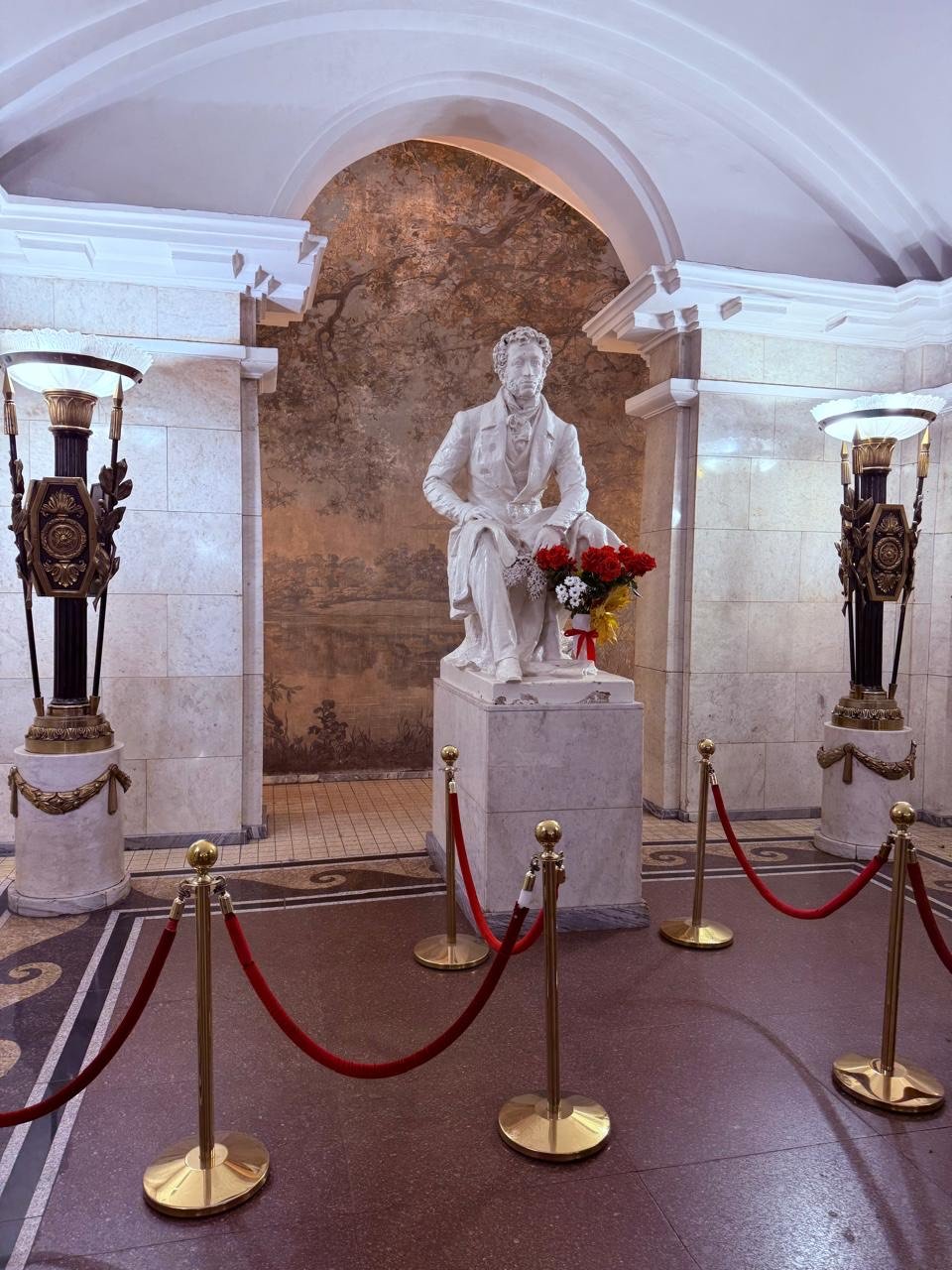
I passed statues embedded into the stations themselves, including a large sculpture of Alexander Pushkin, Russia’s most famous poet—watching silently as commuters passed beneath him.
Back to the Surface
Eventually, I found myself ascending again, carried upward by another long escalator that seemed determined to test my patience.
When I finally stepped back onto the street, daylight returned abruptly, as if nothing extraordinary had happened below.
But it had.
I know now that I’ll be returning to the Saint Petersburg metro—not just to get somewhere, but to understand the city better, one descent at a time.
About Greta
Greta is a traveler who pays attention to the small, often overlooked moments that reveal how a place truly works—from the rhythm of its streets to the silence of its underground spaces. She appears regularly on the Polyglottist Language Academy blog, exploring language, culture, and everyday life through lived experience.
Continue Exploring Saint Petersburg with Greta
If you’re curious to see more of Saint Petersburg through everyday experiences rather than checklists and highlights, you can continue following Greta’s journey through the city. Each article focuses on a different layer of daily life—from walking the streets in winter to settling into an apartment, noticing routines, and observing how the city reveals itself slowly over time.
Why Russian Bakeries Matter In St. Petersburg: Pekarni, Rum Baba, And Everyday Life
MY FIRST 24 HOURS IN ST. PETERSBURG: NEVSKY PROSPECT, TOO MUCH TEA, AND RUSSIAN DONUT “PISHKA”
A DAY AT DOM KNIGI: BOOKSTORES, COFFEE, AND KAZAN CATHEDRAL IN ST. PETERSBURG
Where To Stay In Downtown St. Petersburg: A Real Apart Hotel Experience
Walking In Saint Petersburg In December: A Winter City That Has Adapted
My First Morning In St. Petersburg: Snow, Silence, And The Smell Of Fresh Bread
From Curiosity to Communication
Travel often awakens curiosity—not only about places, but about the language that shapes everyday life within them. Understanding Russian opens doors to cultural details that remain invisible otherwise: tone, humor, habits, and unspoken rules.
At Polyglottist Language Academy, our Russian programs combine language instruction with cultural context, helping students move from passive observation to active participation. Classes are available online and designed for adults who want meaningful, usable Russian.
If stories like these spark your interest in Russian culture, language learning can be a natural continuation of that curiosity.