
The Sweet Taste of Russia: Exploring Famous Russian Cakes
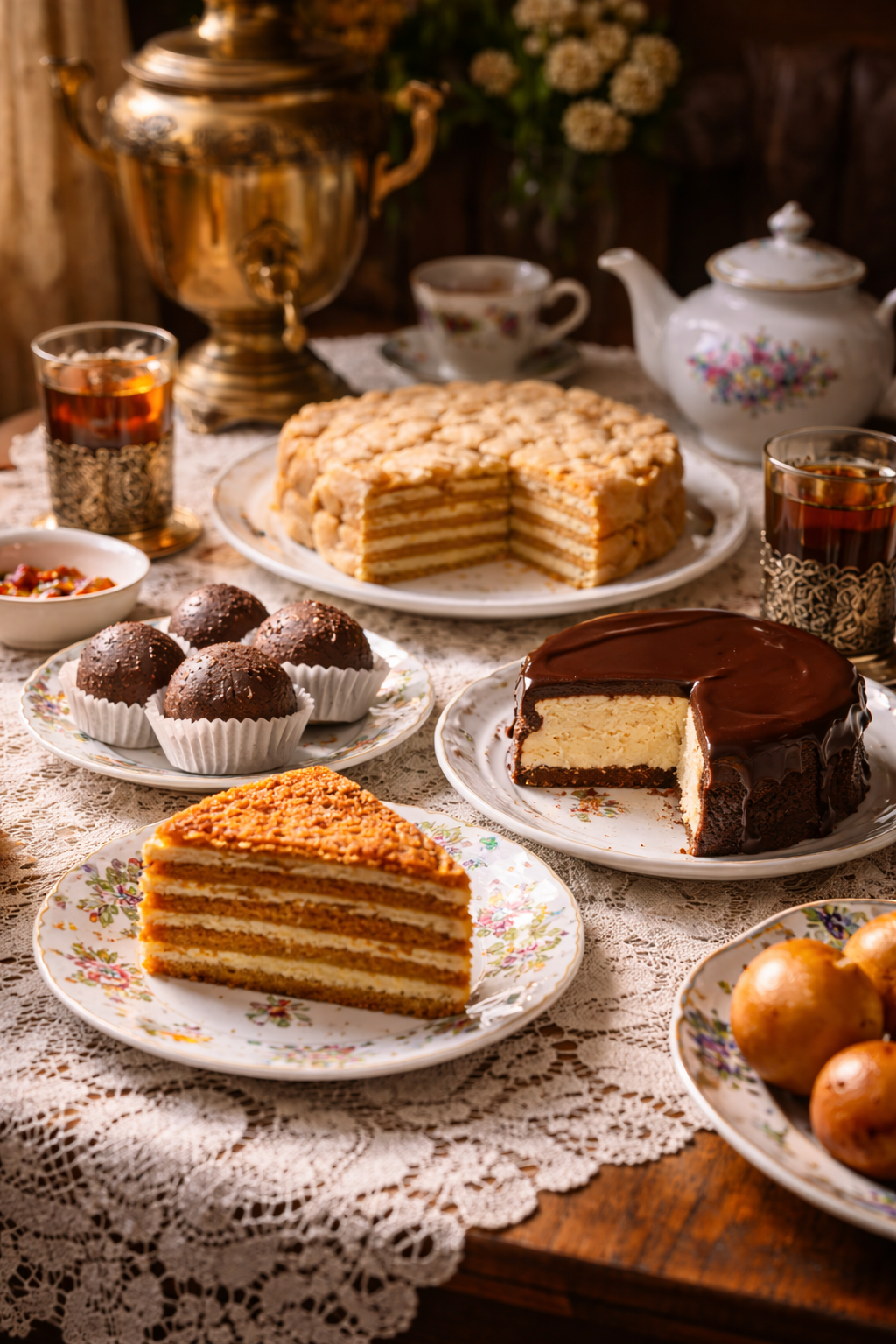
Discover the 5 most iconic Russian cakes—from honey-layered Medovik to the legendary Ptichye Moloko. Learn their history, flavors, cultural meaning, and where they fit into Russian celebrations. Perfect for food lovers, travelers & Russian learners in the Bay Area.
Russian Cakes Are More Than Desserts — They’re Stories on a Plate
Russia is famous for onion-domed cathedrals, world-changing literature, and grand opera stages — but if you’ve ever sat at a Russian family celebration, you know the real star of the table might just be the cake.
Russian cakes aren’t just sweet treats. They are rituals, memories, and love expressed in layers. Every slice contains something uniquely Russian:
slow, careful preparation
European techniques blended with Slavic soul
rich creams, honey, nuts, and delicate pastry
festive traditions passed from babushkas to young bakers
Whether you’re learning about Russian culture, planning a themed dinner, or simply craving something indulgent, exploring Russian cakes is one of the sweetest ways to understand the country.
At Polyglottist Language Academy, we love connecting food with language — because the best way to learn a culture is to taste it.
Below are the 5 most iconic Russian cakes, their histories, and why they’ve survived war, revolution, and generations of changing tastes.
1. Medovik (Медовик) — The Legendary Russian Honey Cake
Why It’s Iconic
Few cakes capture the essence of Russian hospitality as perfectly as Medovik. Soft, thin layers of honey dough alternate with a silky cream of sour cream or condensed milk. Over 24 hours, the layers meld together into a melt-in-your-mouth cloud of caramelized honey.
A Cake Born in the Imperial Court
Legend says a young chef created Medovik in the 19th century for Empress Elizabeth — unaware she disliked honey. One bite changed her mind. The rest was history.
What Makes It Special
Thin honey layers
Creamy tangy filling
Soft texture that improves with time
Looks simple, tastes divine
Perfect For:
Birthdays, tea time, or impressing any Russian guest.
2. Napoleon Cake (Наполеон) — Russia’s Flaky, Creamy Showstopper
The Cake With 1,000 Layers (Almost)
Napoleon is Russia’s take on the French mille-feuille — but with a twist that Russians perfected over decades:
crispy puff pastry
luscious vanilla custard
time to soften and blend
The result? Elegance meets comfort.
A Patriotic Symbol
The cake became popular after Russia’s victory over Napoleon in 1812. Its many layers symbolized the many battles Russia endured.
Why You Should Try It
Light & flaky
Creamy & luxurious
Found at every major celebration (especially New Year’s Eve!)
3. Ptichye Moloko (Птичье молоко) — “Bird’s Milk” and Soviet Magic
A Cake Inspired by Legend
In Slavic folklore, “bird’s milk” was a mythical ingredient of happiness. Soviet confectioners turned the myth into a real product: a delicate soufflé cake coated in chocolate.
The Flavor Will Surprise You
air-light vanilla soufflé
thin sponge layer
glossy chocolate glaze
It’s elegant, modern, and unlike any cake in the West.
Why Russians Love It
It’s the perfect not-too-sweet dessert — balanced, airy, and refreshing.
4. Kartoshka (Картошка) — The Humble Soviet Treat That Feels Like Childhood
The Cutest “Potato” You’ll Ever Eat
Despite the name, Kartoshka contains zero potatoes. It’s made from scraps: leftover cake crumbs, butter, cocoa, and condensed milk.
Soviet households mastered this dessert when ingredients were scarce — making it a nostalgic favorite.
Why It Endures
no baking
kid-friendly
deeply nostalgic
cocoa + condensed milk = happiness
These little “potatoes” are ridiculously addictive.
5. Smetannik (Сметанник) — The Creamy Staple of Every Russian Home
Sour Cream + Cake = Russian Comfort
Sour cream (smetana) is the secret weapon of Russian baking. In Smetannik, it transforms simple layers of sponge into a soft, tangy, rich masterpiece.
What Makes It Irresistible
tangy sour cream frosting
soft, moist cake
optional nuts, cocoa, or berries
tastes like a Sunday at a Russian grandmother’s house
If Medovik is imperial elegance, Smetannik is the heart of Russian home cooking.
People Also Ask
What is the most famous Russian cake?
Medovik and Napoleon are the two most iconic cakes in Russia, found in almost every bakery.
What cakes do Russians eat for birthdays?
Napoleon, Medovik, Smetannik, and fruit-based layered cakes are the most common.
Which Russian cake is the easiest to make?
Kartoshka (“potato” cakes) are the easiest—no baking required!
What cake should I try first if I'm new to Russian desserts?
Start with Medovik: it’s soft, sweet, and uniquely Russian.
Bringing a Taste of Russia to Your Table
Russian desserts are more than recipes—they’re cultural touchstones, shaped by history, family traditions, and the spirit of celebration.
If you want to explore Russia more deeply, don’t stop at desserts—language and culture go hand in hand.
At Polyglottist Language Academy, we offer:
Small-group in person Russian classes in Berkeley, Oakland, San Francisco & across the Bay Area
Online classes for learners worldwide
Lessons that blend language, culture, food, and history
👉 Start learning Russian today — and taste the culture from the inside.
Keep Exploring Russian Culture — Recommended Articles
Why Russian Bakeries Matter In St. Petersburg: Pekarni, Rum Baba, And Everyday Life
My First Morning In St. Petersburg: Snow, Silence, And The Smell Of Fresh Bread
MY FIRST 24 HOURS IN ST. PETERSBURG: NEVSKY PROSPECT, TOO MUCH TEA, AND RUSSIAN DONUT “PISHKA”
Pryaniki (Russian Spice Cookies): Sweet Treats With A Long History
Charlotte Russe: The 19th-Century Dessert Russia Borrowed And Made Its Own
Pirozhki, Pies, And Coulibiac: The Art Of Russian Stuffed Dough
Blini Through The Seasons: From Maslenitsa To Modern Brunch Tables
Russian Holidays And Celebrations: Traditions You Should Know