
Essential Russian Phrases for Travelers
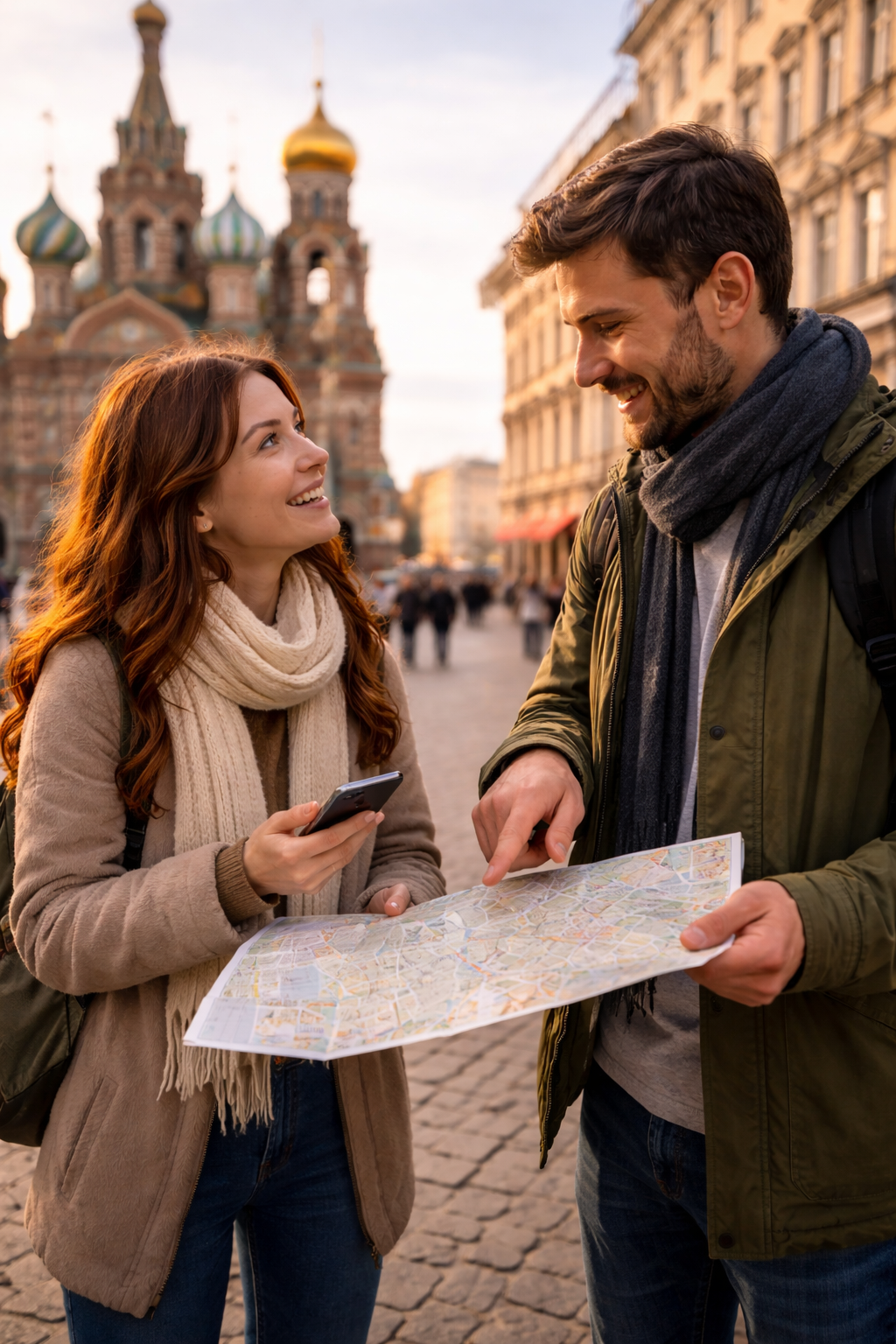
Travel has a remarkable way of transforming ordinary moments into unforgettable stories, and nowhere is this more true than in Russia, a country where grand imperial history meets everyday warmth, where conversations unfold slowly over tea, and where even a simple exchange at a bakery counter can turn into a memorable cultural encounter if you know just a few words of the local language. For many travelers, Russia feels both fascinating and mysterious — its alphabet looks unfamiliar, its sounds seem complex at first, and its cultural rules appear subtle and unspoken — yet the moment you greet someone in Russian, barriers dissolve, smiles appear, and the country suddenly feels far more welcoming than its reputation suggests.
Traveling to Russia is an exciting adventure filled with breathtaking architecture, world-class museums, rich literary traditions, and vibrant urban life. From the colorful domes of Moscow’s Red Square to the elegant canals of Saint Petersburg and the vast landscapes stretching toward Siberia, Russia offers experiences unlike anywhere else in the world. However, navigating a new country becomes significantly easier when you can communicate, even at a basic level.
While English is increasingly spoken in major cities — especially among younger Russians — many daily interactions still happen primarily in Russian. Taxi drivers, shop assistants, café staff, and older locals may not speak English confidently. Knowing essential Russian phrases will not only help you solve practical problems but will also demonstrate respect for the culture, often leading to warmer interactions and unexpected kindness.
The good news? You do not need fluency to travel comfortably in Russia. A small set of well-chosen phrases can transform your experience entirely.
In this guide, you’ll learn the essential Russian phrases every traveler should know, along with pronunciation tips, cultural insights, and practical situations where each phrase becomes useful.
Why Learning Basic Russian Matters When Traveling
Before diving into phrases, it helps to understand why even minimal language knowledge has such a powerful effect in Russia.
Russian culture places strong value on effort and sincerity. Locals generally appreciate when foreigners try to speak Russian, even imperfectly. Unlike some countries where English dominates tourism, Russians often see language attempts as a sign of genuine curiosity rather than convenience.
Knowing a few phrases helps you:
Navigate transportation confidently
Order food without confusion
Ask for help politely
Avoid misunderstandings
Connect with locals beyond transactional interactions
Feel less like an outsider
Many travelers report that the moment they say “Спасибо,” conversations instantly soften.
Basic Russian Greetings and Politeness
1. Saying Hello and Goodbye
Greetings set the tone for every interaction in Russia, and choosing the correct form matters more than many travelers expect.
Здравствуйте (Zdravstvuyte) – Hello (formal)
Привет (Privet) – Hi (informal)
Доброе утро (Dobroye utro) – Good morning
Добрый день (Dobryy den’) – Good afternoon
Добрый вечер (Dobryy vecher) – Good evening
До свидания (Do svidaniya) – Goodbye (formal)
Пока (Poka) – Bye (informal)
Cultural Tip
Russian distinguishes clearly between formal and informal speech. When addressing strangers, service staff, or older people, always use Здравствуйте. Switching too quickly to “Привет” may feel overly familiar.
In shops or cafés, greeting first is considered polite. Walking up silently and speaking immediately can feel abrupt.
2. Essential Politeness Phrases
Politeness vocabulary is arguably the most important language tool you can carry.
Пожалуйста (Pozhaluysta) – Please / You’re welcome
Спасибо (Spasibo) – Thank you
Большое спасибо (Bol’shoye spasibo) – Thank you very much
Извините (Izvinite) – Excuse me / Sorry (formal)
Простите (Prostite) – I’m sorry (stronger apology)
Ничего страшного (Nichego strashnogo) – No problem / It’s okay
Cultural Insight
Russians may appear serious in public, but politeness phrases dramatically change interactions. Saying thank you sincerely often results in noticeably warmer responses.
A powerful combination:
“Спасибо большое!” (Thank you very much!)
You will hear this constantly across Russia.
Asking for Directions and Navigating Cities
Russian cities are large, dynamic, and sometimes confusing for first-time visitors. Knowing directional vocabulary reduces stress significantly.
3. Key Directional Phrases
Где находится…? (Gde nakhoditsya…?) – Where is…?
Как мне добраться до…? (Kak mne dobrat’sya do…?) – How do I get to…?
Я заблудился / Я заблудилась – I am lost (male/female)
Вы можете мне помочь? – Can you help me?
Направо (Napravo) – Right
Налево (Nalevo) – Left
Прямо (Pryamo) – Straight ahead
Practical Travel Tip
Even if someone answers entirely in Russian, you will often understand directions just by recognizing these key words.
Many Russians will go surprisingly far to help lost travelers — sometimes even walking you part of the way.
Transportation and Getting Around
Russia’s transportation system is efficient and affordable, especially in large cities.
4. Using Public Transport
Где здесь метро? – Where is the metro?
Какой автобус едет в центр? – Which bus goes to the city center?
Сколько стоит билет? – How much is the ticket?
Остановка (Ostanovka) – Bus stop
Мне нужен билет до… – I need a ticket to…
Cultural Insight
The Moscow Metro is famous not only for efficiency but also for its architecture — many stations resemble underground palaces.
Locals move quickly during rush hour, so having phrases ready helps avoid stress.
Ordering Food and Drinks
Food is central to Russian culture. Meals are social experiences rather than quick transactions.
5. At a Restaurant or Café
Меню, пожалуйста – The menu, please
Я хочу заказать… – I’d like to order…
Что вы рекомендуете? – What do you recommend?
Счёт, пожалуйста – The bill, please
Можно заплатить картой? – Can I pay by card?
Я вегетарианец / Я вегетарианка – I am vegetarian
Dining Culture Tip
Unlike in some countries, servers may not rush to bring the bill. Asking directly for it is normal and expected.
Russian hospitality often includes generous portions — sharing dishes is common.
Shopping and Markets
From souvenir shops to local markets, shopping interactions become smoother with a few phrases.
6. Useful Shopping Phrases
Сколько это стоит? – How much does this cost?
У вас есть размер поменьше / побольше? – Smaller/larger size?
Можно примерить? – Can I try it on?
Мне это нравится – I like this
Cultural Tip
Bargaining is uncommon in modern stores but sometimes acceptable in open markets. Politeness and friendliness matter more than negotiation skills.
Checking Into Hotels and Accommodation
Many travelers overlook accommodation vocabulary, yet it’s incredibly useful.
У меня бронь – I have a reservation
На одну ночь – For one night
Во сколько завтрак? – What time is breakfast?
Есть Wi-Fi? – Is there Wi-Fi?
Hotels in major cities often speak English, but smaller guesthouses may not.
Making Small Talk
Small talk opens doors in Russia more than many expect.
Как вас зовут? – What is your name?
Меня зовут… – My name is…
Я из… – I am from…
Очень приятно – Nice to meet you
Russians may initially seem reserved, but conversations often become deep quickly once rapport is established.
Emergency Situations
Safety phrases are essential for any international trip.
7. Getting Help in an Emergency
Помогите! – Help!
Мне нужна помощь – I need help
Вызовите полицию – Call the police
Где ближайшая больница? – Where is the nearest hospital?
Я потерял(а) паспорт – I lost my passport
Emergency number in Russia: 112
Save it on your phone before traveling.
Pronunciation Tips for Beginners
Russian pronunciation looks intimidating but follows logical rules.
Key tips:
Stress matters — emphasis changes meaning.
“Р” is rolled slightly.
Consonants may sound softer before certain vowels.
Speak slowly and clearly rather than trying to sound native immediately.
Russians are very patient listeners when foreigners try.
Common Cultural Mistakes Travelers Make
Understanding culture is just as important as vocabulary.
1. Not greeting first
Always say hello before asking a question.
2. Smiling constantly at strangers
In Russian culture, smiles are more meaningful and reserved for genuine interactions.
3. Assuming directness equals rudeness
Russian communication tends to be straightforward, not impolite.
4. Switching immediately to English
Try Russian first — even one word changes the interaction.
How Many Russian Words Do You Actually Need?
Surprisingly few.
With around 30–50 phrases, you can:
Travel independently
Order food confidently
Ask for help
Navigate cities
Create positive interactions
Language learning for travel is about functionality, not perfection.
Building Confidence Before Your Trip
Here are simple preparation strategies:
Practice phrases aloud daily
Listen to Russian pronunciation videos
Label objects at home in Russian
Learn Cyrillic basics (takes only a few hours!)
Many travelers discover that learning the alphabet alone dramatically reduces anxiety.
FAQs: Essential Russian Phrases for Travelers
Do I need to learn the Russian alphabet before visiting?
It helps enormously. Cyrillic looks intimidating but can be learned in a few hours and makes reading signs possible.
Is English widely spoken in Russia?
In Moscow and Saint Petersburg, yes — especially among younger people. Outside major cities, much less.
Are Russians friendly toward tourists?
Yes. While first impressions may seem reserved, Russians are often extremely helpful once interaction begins.
What is the most important phrase to learn?
“Спасибо” (Thank you). It instantly improves interactions.
Is Russian difficult to pronounce?
It feels challenging at first, but pronunciation becomes manageable quickly with practice.
Can I travel comfortably knowing only basic phrases?
Absolutely. Many travelers do so successfully every year.
Should I learn formal or informal speech first?
Start with formal forms — they are safer in all situations.
How long does it take to learn travel Russian?
With focused study, you can learn essential phrases in 2–4 weeks.
Final Thoughts: Language Turns Travel Into Connection
Learning even a handful of Russian phrases transforms your journey from passive sightseeing into genuine cultural participation. Instead of observing Russia from the outside, you begin interacting with it — ordering confidently, asking questions, sharing laughter, and discovering moments that guidebooks never mention.
Russian may initially appear complex, but travelers consistently discover that the effort required to learn basic phrases is small compared to the rewards it brings. A simple greeting, a sincere thank-you, or a polite request often opens doors to conversations, kindness, and memorable experiences that last long after the trip ends.
So when you arrive in Russia, take a breath, smile naturally, and say:
Здравствуйте.
You may be surprised how far those few syllables take you.
Learn Russian Before Your Trip with Polyglottist Language Academy
If you’re planning to travel to Russia — or simply want to experience the language more deeply — structured learning can make a huge difference.
At Polyglottist Language Academy, we offer:
Online Russian classes for beginners and travelers
Small-group interactive lessons
Experienced instructors with advanced linguistic training
Practical conversation-focused curriculum
Flexible online learning from anywhere in the world
Our courses are designed specifically to help students gain real-world confidence, not just memorize grammar rules.
👉 Ready to start speaking Russian before your next adventure?
Join our Russian classes today and begin your journey with expert guidance and a supportive learning community.
Check Out Our Other Russian Language Articles
If you enjoyed this guide, you may also like
Traveling From St. Petersburg To Moscow By Train: A First-Hand Account
Moscow: The Most Beautiful Winter City I’ve Ever Walked Through
Where To Stay In Downtown St. Petersburg: A Real Apart Hotel Experience
What It’s Like To Take The Saint Petersburg Metro For The First Time
MY FIRST 24 HOURS IN ST. PETERSBURG: NEVSKY PROSPECT, TOO MUCH TEA, AND RUSSIAN DONUT “PISHKA”
My First Morning In St. Petersburg: Snow, Silence, And The Smell Of Fresh Bread