
Japanese vs American Culture: 10 Differences That Still Surprise People
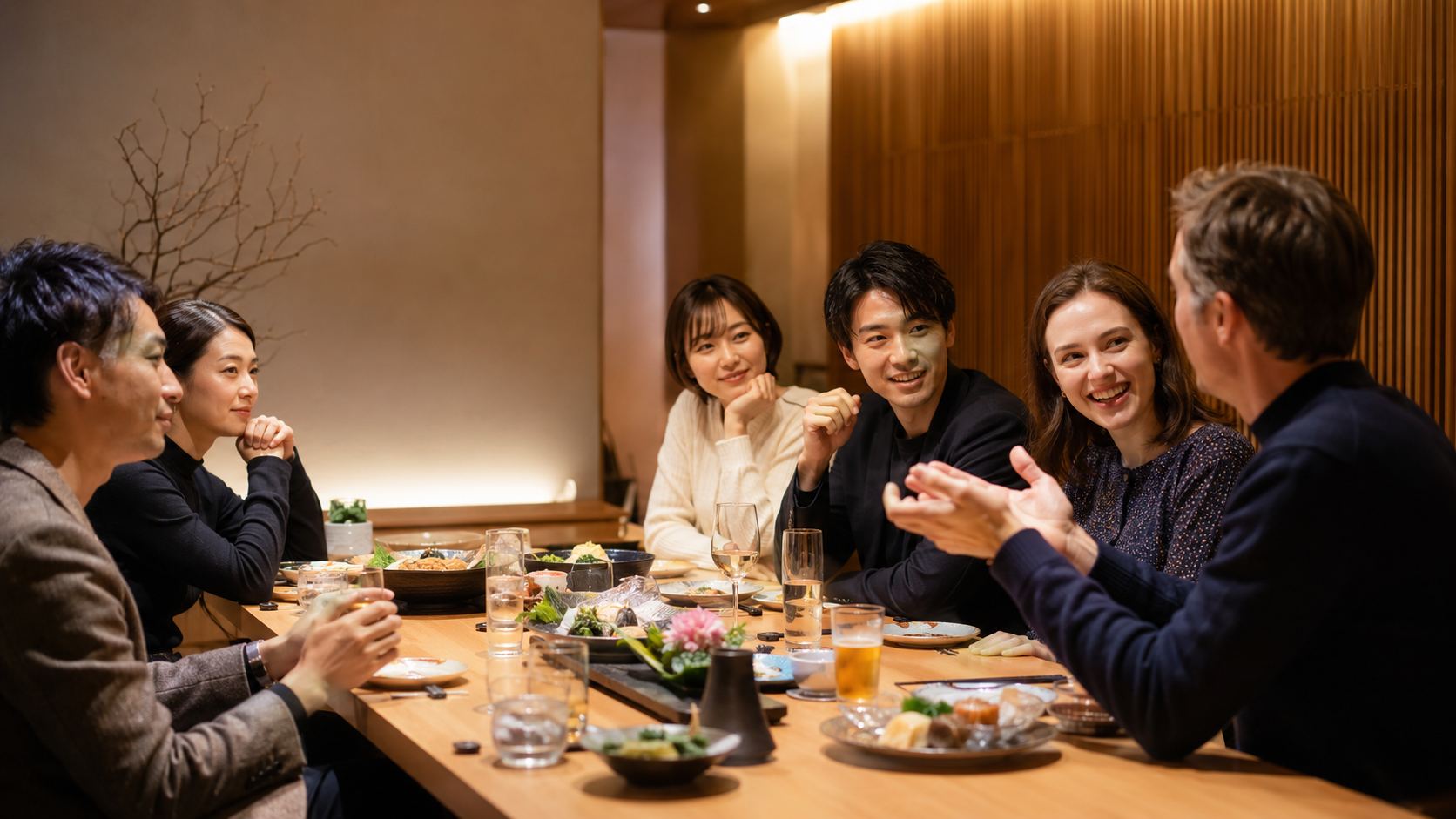
An American colleague presents an idea during a meeting in Tokyo.
When she finishes, a Japanese coworker pauses and says, “That may be a little difficult.”
She hears: There are a few problems, but perhaps we can work through them.
He means: This proposal is unlikely to be approved.
Nobody is being dishonest. Nobody is trying to create confusion. The two colleagues simply rely on different assumptions about how clearly disagreement should be expressed.
This is one of the most useful ways to think about Japanese and American culture: people on both sides may want cooperation, respect, fairness, and good relationships, but they often use different social tools to achieve those goals.
Americans may communicate respect through honesty and openness. Japanese speakers may communicate it by softening criticism and avoiding embarrassment. Americans may show friendliness by asking personal questions. Japanese people may show it by anticipating what someone needs without discussing feelings directly.
These are tendencies, not rigid rules. A young designer in Osaka may be more direct than a senior executive in San Francisco. Personality, age, region, family background, profession, and international experience all matter.
Still, certain differences continue to surprise travelers, expatriates, students, and professionals. They also help explain why studying Japanese involves much more than memorizing vocabulary.
1. A Polite “No” May Never Include the Word “No”
American communication often rewards clarity. People are encouraged to say what they think, state what they need, and identify problems directly.
In many Japanese settings, especially formal ones, communication depends more heavily on context, tone, facial expression, hesitation, and what remains unsaid.
A sentence such as:
ちょっと難しいです。
Chotto muzukashii desu.
“It is a little difficult.”
may sound like a temporary obstacle. In context, however, it can function as a polite refusal.
The word chotto, literally “a little,” often softens uncomfortable information. A restaurant employee who says a request is chotto… may be telling you that it cannot be accommodated. A colleague who says a deadline is chotto muzukashii may be signaling that it is unrealistic.
This relates to the expression:
空気を読む — kūki o yomu
Literally, it means “to read the air.” It describes the ability to notice the mood, understand unspoken expectations, and adjust one’s behavior accordingly.
American visitors sometimes interpret this indirectness as vague or evasive. Japanese people may interpret blunt American feedback as unnecessarily confrontational.
For language learners, the practical lesson is not to assume that every important message will be stated explicitly. Listen for pauses, softening words, changes in tone, and polite hesitation. When something is unclear, ask gently:
難しいということですか。
Muzukashii to iu koto desu ka?
“Do you mean that it would be difficult?”
The goal is clarification without forcing the other person into a sharper refusal than the situation requires.
2. Silence Is Not Necessarily an Awkward Gap
Many Americans learn that successful conversation should keep moving. Silence can feel like evidence that someone is bored, uncomfortable, or waiting to be rescued.
In Japan, silence may be interpreted more neutrally. It can signal thoughtfulness, respect, agreement, uncertainty, or simply comfort with quiet.
Imagine an American student meeting a Japanese language partner. The American asks where the person grew up, what they do, how they feel about their job, and where they hope to travel.
The questions are meant warmly. In an American context, asking about someone’s life often demonstrates interest.
The Japanese partner answers politely but briefly. After several questions, the conversation becomes quiet.
The American worries: Does this person dislike me?
The Japanese partner may be thinking: I need time to answer in English. These questions are becoming personal. I hope I am not disappointing them.
Adult students often become more comfortable in Japanese conversations when they stop treating every pause as a failure. Silence gives people time to choose words, especially when they are communicating in a second language.
It also helps to notice nonverbal signs of connection. A person who says little but remembers your preferences, brings you something useful, or invites you to another gathering may be showing considerable warmth.
In other words, emotional closeness is not always measured by the number of personal details exchanged during the first conversation.
3. An Apology Can Acknowledge Trouble Without Admitting Fault
Americans often connect apologies with responsibility.
When someone says, “I’m sorry,” the next question may be: What exactly are you admitting?
This can make people cautious. They may explain the circumstances before apologizing:
“I’m sorry you were inconvenienced, but the delay was caused by the shipping company.”
In Japan, apologies frequently have a broader social function. A person may apologize because a difficult situation affected someone else, even when they did not personally cause it.
すみません — sumimasen
can mean “I’m sorry,” but it can also express gratitude, acknowledge inconvenience, or attract someone’s attention.
A Japanese manager might apologize to a team for a problem created by another department. The apology does not necessarily mean, “I accept personal blame.” It may mean, “I recognize that this caused you trouble, and I care about repairing the relationship.”
This connects to the concept of:
迷惑 — meiwaku
Meiwaku means trouble, burden, or inconvenience caused to others. The phrase 迷惑をかける — meiwaku o kakeru means “to cause trouble for someone.”
American visitors can sometimes find the number of apologies excessive. Japanese people, meanwhile, may find an explanation without an apology emotionally incomplete.
In cross-cultural situations, a simple order can make an enormous difference:
Acknowledge the inconvenience.
Apologize briefly.
Explain what happened.
Describe what will happen next.
That sequence satisfies both the need for relational repair and the need for practical clarity.
4. “What Do You Want?” Is Not Always an Easy Question
American culture frequently celebrates individual preference.
Children are asked what flavor they want, students are encouraged to express opinions, and employees may be rewarded for demonstrating initiative. “Be yourself” is treated as positive advice.
Japanese social life often places more emphasis on adjusting personal behavior to the needs of the group. This is associated with:
和 — wa
Wa means harmony. It does not mean that everyone agrees or lacks individual opinions. It refers to preserving workable, smooth relationships and avoiding unnecessary conflict.
Consider a group of Japanese and American friends planning dinner.
The Americans ask, “What does everyone feel like eating?”
Several Japanese participants answer, “Anything is fine.”
To an American, that response may sound indifferent or unhelpful. But the speakers may be trying not to dominate the decision or inconvenience the group.
The difficulty comes when everyone is being considerate in a different way. The Americans believe that openly expressing preferences makes planning easier. The Japanese participants believe that holding back preferences makes cooperation easier.
A better question may be more concrete:
“Would you prefer sushi or Italian food?”
Offering two or three possibilities makes it easier for someone to express a preference without feeling that they are controlling the group.
This difference is also why enthusiastic American advice such as “Just speak up!” may not solve the entire problem. Speaking up is not simply a linguistic act. It is connected to cultural ideas about how much space a person should occupy in a group.
5. The Meeting May Not Be Where the Decision Happens
An American employee attending a meeting in Japan may be surprised by how little open debate occurs.
Everyone listens. Questions are restrained. Nobody strongly challenges the most senior person. The meeting ends without the energetic exchange the American expected.
This does not necessarily mean that nobody examined the proposal critically.
Important discussion may already have happened privately through a process often called:
根回し — nemawashi
The literal meaning comes from preparing the roots of a tree before transplanting it. In professional life, it refers to building support, discussing concerns, and developing consensus before a formal decision.
Japanese workplaces may also reflect senpai–kōhai relationships:
先輩 — senpai: a more senior or experienced person
後輩 — kōhai: a more junior person
These relationships can involve mentoring and loyalty, but they can also make public disagreement complicated.
Many American workplaces describe themselves as relatively informal. Employees may call managers by their first names, joke with supervisors, or openly question decisions. Power differences still exist, but casual language can make the hierarchy appear flatter.
A direct statement such as “I don’t think this plan will work” may sound engaged and responsible in an American meeting. In a more traditional Japanese environment, publicly saying this to a senior colleague could cause embarrassment and disrupt trust.
A more effective approach might be:
“Could we also consider another possibility?”
or:
“I have one concern about the schedule. May I explain?”
Younger employees and international companies are changing workplace communication in Japan. Remote work has also weakened some traditional signals of hierarchy. Even so, knowing when to raise a concern privately rather than publicly remains an important intercultural skill.
6. Five Minutes Late Can Carry More Than Five Minutes of Meaning
Punctuality matters in American professional life, but social interpretations of lateness vary. A few minutes may be overlooked, especially when traffic, parking, children, or unpredictable transportation are involved.
In Japan, arriving on time often means being ready before the scheduled time.
The issue is not only efficiency. Making someone wait can be understood as causing meiwaku.
An American arriving five minutes late may say, “Sorry—traffic was terrible,” and move on. A Japanese person may wonder why the traveler did not leave earlier or send a message before the meeting time.
This does not mean every Japanese person is perfectly punctual. Nor does it mean Americans do not value time. The difference lies partly in how lateness is interpreted.
In one culture, a short delay may be treated as an ordinary inconvenience. In another, it may suggest insufficient preparation or consideration.
Travelers should therefore treat train departures, restaurant reservations, tours, appointments, and formal meetings as firm. When a delay is unavoidable, send a message as soon as possible and apologize when you arrive.
A useful phrase is:
遅れてすみません。
Okurete sumimasen.
“I’m sorry for being late.”
Sometimes one sincere sentence matters more than an elaborate excuse.
7. Shared Space Requires More Self-Editing
First-time visitors frequently notice how quiet Japanese trains can be.
People certainly talk, laugh, and use their phones in Japan. But on many commuter trains, loud conversations and phone calls are discouraged.
These behaviors reflect a strong awareness that public space belongs to everyone.
American public life tends to allow more visible individual expression. People may eat while walking, speak loudly on the phone, play audio, or have animated conversations in public without viewing their behavior as a serious intrusion.
In Japan, the absence of confrontation does not necessarily mean nobody minds.
A commuter may not tell a loud visitor to lower their voice. The social expectation is that the visitor will observe everyone else and adjust.
This is another form of reading the air.
For travelers, one of the best cultural strategies is simply to pause before acting. Notice whether other people are eating, talking, taking calls, standing on one side of an escalator, or lining up in a particular way.
Not every rule will be posted in English. Often, the behavior of the people around you is the clearest guide.
The same principle appears in cleanliness. Japanese cities are not magically clean, and litter certainly exists. However, many people grow up with practices that reinforce shared responsibility, including schoolchildren helping to clean their classrooms.
The broader message is subtle but powerful: your personal convenience should not automatically become someone else’s problem.
8. Warmth Can Look Formal
American customer service often tries to feel friendly and personal.
A server may introduce themselves, make jokes, ask how the customers’ day is going, and check the table repeatedly. Because tips form a significant part of income in many American restaurants, the interaction also has a financial dimension.
Japanese service may feel more formal, consistent, and restrained.
This is often discussed through the concept:
おもてなし — omotenashi
Omotenashi is commonly translated as hospitality, but it suggests careful attention that anticipates a guest’s needs. Warmth may be expressed through precision rather than conversation: a beautifully arranged room, a glass refilled at the right moment, an umbrella cover offered on a rainy day, or a package wrapped with extraordinary care.
To an American customer, formal phrases and standardized gestures may initially feel impersonal. To a Japanese customer, they can signal professionalism and respect.
Tipping is another major difference. In most ordinary situations in Japan, tipping is not expected. Leaving cash on a restaurant table may cause an employee to chase after you because they believe you forgot it.
Gratitude is better expressed through words:
ありがとうございます。
Arigatō gozaimasu.
“Thank you very much.”
Visitors sometimes assume that service without tipping must be effortless. It is not. Omotenashi can require considerable emotional discipline and preparation. The fact that care is built into the service does not mean it should be taken for granted.
9. A Small Box of Sweets May Carry a Large Social Meaning
An American returning from vacation may show photographs to coworkers.
A Japanese employee returning from a trip may arrive with a box of individually wrapped regional sweets.
These souvenirs are called:
お土産 — omiyage
Omiyage are not always deeply personal gifts. They often function as small acknowledgments of the group: “I was away, I thought of you, and I recognize that my absence may have affected the workplace.”
The packaging matters. Regional identity matters. Ease of distribution matters. The gift is part of maintaining relationships.
Gift-giving in the United States is often framed as spontaneous generosity. People may insist that nothing is expected in return.
Japanese gift culture can involve stronger expectations of balance and reciprocity. After receiving a significant gift, a person may later offer:
お返し — okaeshi
Okaeshi means a return gift or reciprocal gesture.
Americans may find this cycle stressful: “Why can’t I simply accept something?”
Japanese participants may feel equally uncomfortable receiving without eventually restoring balance.
Travelers do not need to master an elaborate gift system. A small, thoughtful item from one’s hometown is usually enough. The gesture matters more than the price.
When giving something, people may modestly say:
つまらないものですが。
Tsumaranai mono desu ga.
“It is nothing special, but…”
The phrase should not be interpreted literally. It expresses modesty rather than dissatisfaction with the gift.
10. Is a Rule a Fixed Boundary or the Beginning of a Conversation?
Americans often admire problem-solving that bends a rule to fit an individual situation.
A customer asks for an exception. An employee calls a supervisor. A creative workaround is found. The result may be celebrated as flexible and fair.
Japanese institutions can place greater emphasis on procedures that apply consistently to everyone. A rule may be viewed as protection against confusion, favoritism, and disruption.
This can be frustrating for American visitors.
“What difference does it make if I enter five minutes early?”
“Why can’t this form be accepted without the exact stamp?”
“Why can’t the restaurant change one ingredient?”
From the American perspective, the exception seems harmless. From the Japanese perspective, granting it may create inconsistency, place an employee in an unauthorized position, or cause problems for others later.
The expression:
しょうがない — shōganai
means “It cannot be helped” or “There is nothing we can do about it.”
Sometimes it reflects practical acceptance. Sometimes it communicates endurance. Sometimes it is used to close a discussion that an American would prefer to continue.
Its companion concept is:
我慢 — gaman
Gaman means enduring difficulty or discomfort without excessive complaint.
These qualities can support resilience and social stability. They can also discourage people from challenging unfair or outdated systems. Many younger Japanese people actively question rules involving work hours, gender expectations, school policies, and social conformity.
Neither flexibility nor consistency is automatically more humane. Flexible systems can become arbitrary. Consistent systems can become rigid.
The important question is what each culture fears more: unfair exceptions or inflexible rules.
The Comparison Becomes Misleading When It Turns Into a Scorecard
It is easy to turn cultural comparison into competition.
Japan is quieter. America is friendlier. Japan is more respectful. America is more honest.
None of those statements is sufficient.
Quietness can be considerate, but it can also conceal disagreement. Friendliness can create quick connection, but it can also feel intrusive. Directness can prevent confusion, but it can also embarrass people. Group harmony can protect relationships, but it can also pressure individuals to remain silent.
Even the familiar contrast between “collectivist Japan” and “individualistic America” is more complicated than popular articles often suggest. Japanese people can be highly individualistic in personal taste and private life. Americans regularly demonstrate powerful loyalty to families, companies, political groups, communities, and social identities.
Both societies are changing. Japanese young adults encounter global media, international workplaces, social platforms, and changing ideas about careers and relationships. American communication is also becoming more culturally diverse, especially in cities and international organizations.
Culture influences behavior, but it does not write a complete script for every person.
The most respectful approach is to treat these patterns as clues rather than conclusions.
How Cultural Knowledge Helps You Speak More Naturally
Japanese grammar can tell you how to build a sentence. Cultural awareness helps you decide whether the sentence fits the moment.
Should you state a refusal directly or soften it?
Should you fill the silence or allow the other person to think?
Should you defend yourself immediately or begin by acknowledging the inconvenience?
Should you express your preference or first ask what works for the group?
These are language questions because language is social behavior.
In our work with adult learners, we often see that confidence grows when students stop searching for a perfect translation of every English sentence. Instead, they begin asking: “How would a Japanese speaker normally handle this situation?”
That shift—from translating words to interpreting relationships—is one of the most rewarding parts of studying the language.
Polyglottist Language Academy’s online Japanese classes help students develop grammar, vocabulary, listening skills, and cultural awareness together. Understanding daily expressions, food customs, hospitality, indirect communication, and etiquette allows learners to participate more comfortably rather than simply observe from the outside.
Related Reading
Why Do Japanese People Remove Shoes Inside? The Cultural Logic Explained
8 Japanese Customs That Will Save You From Embarrassment As A Tourist
What Is Anime? A Complete Beginner's Guide To Japanese Animation
Frequently Asked Questions
Do Japanese people always hide their true feelings?
No. Japanese people express honest feelings in many situations, particularly with close friends, family members, and trusted colleagues. However, people may separate honne, or private feelings, from tatemae, the socially appropriate response expected in a particular setting.
How can I recognize an indirect refusal?
Listen for hesitation, long pauses, vague language, and expressions such as chotto… or muzukashii desu. A response like “We will consider it” may not always indicate genuine possibility. Context and tone matter.
Is direct communication considered rude in Japan?
Not automatically. Clear communication can be appreciated, especially in international environments. Problems arise when directness causes public embarrassment, ignores hierarchy, or sounds more forceful than the relationship allows.
Should visitors tip in Japan?
Generally, no. Tipping is not customary in most restaurants, taxis, salons, or hotels. Some specialized tourist services may follow different policies, but ordinary service charges are normally included.
Should I bring a gift when visiting someone in Japan?
A small gift is thoughtful, especially when visiting someone’s home. Food from your region, neatly packaged sweets, or another modest item is usually appropriate. Expensive gifts can create pressure to reciprocate.
Are younger Japanese people less traditional?
Many younger people communicate more casually, question workplace hierarchy, and adopt global habits. Nevertheless, expectations surrounding punctuality, public behavior, gift-giving, politeness, and group awareness remain influential.
How can I avoid making cultural mistakes?
Observe first, ask respectful questions, and apologize briefly when necessary. Most people do not expect visitors to understand every custom. Genuine attention and willingness to adjust matter more than flawless etiquette.
A bowl of matcha may appear simple: green tea, hot water, a whisk, a quiet moment.
But the way it is prepared, offered, received, tasted, and appreciated can reveal an entire network of cultural ideas—hospitality without performance, attention without interruption, formality that creates calm rather than distance.
That is what language study can offer at its best. It teaches us not only how to name what is in front of us, but how to notice the values contained within an ordinary gesture.