
Why Learning Japanese Is Worth It for Adults
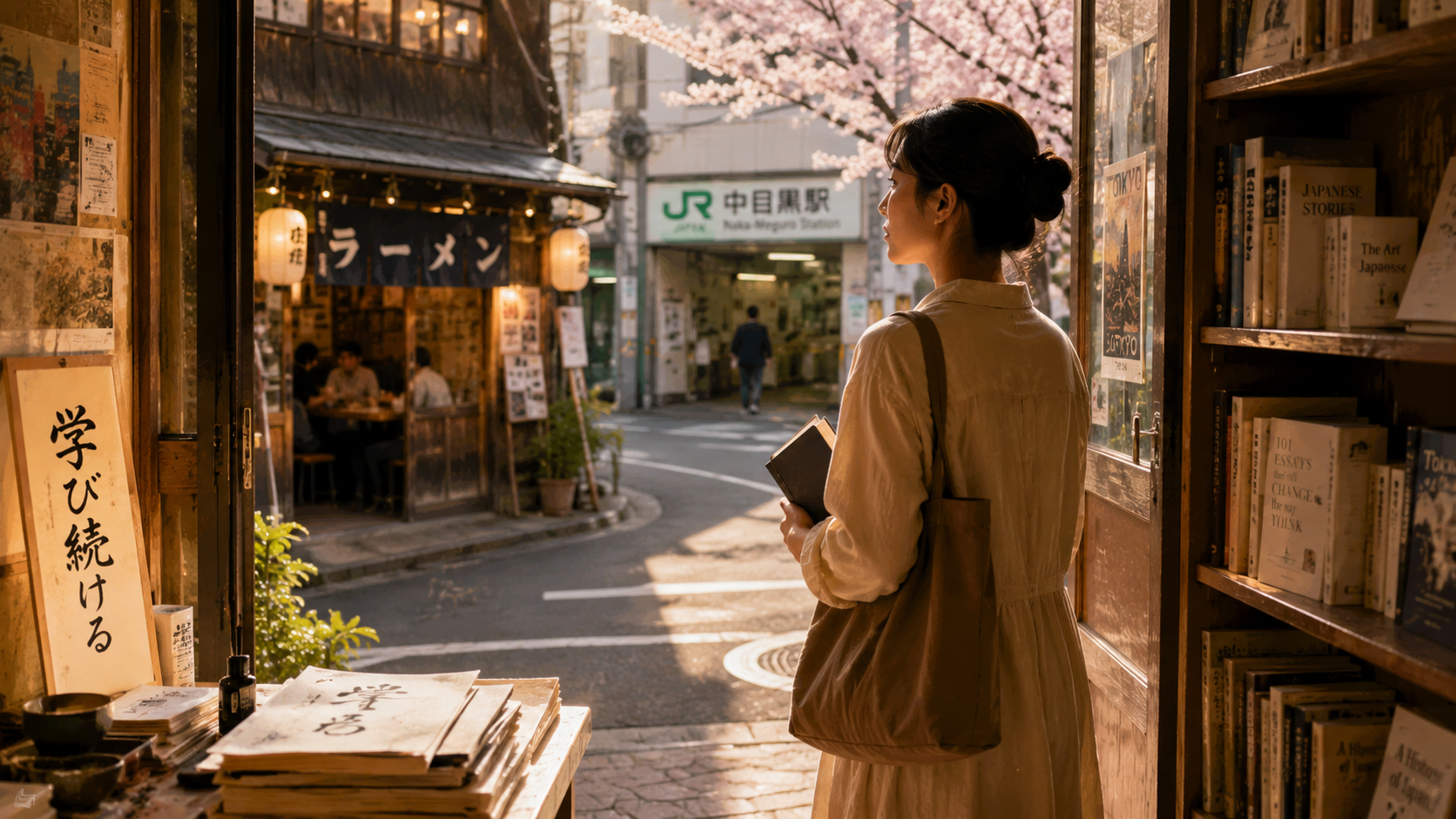
If you have ever watched a Japanese film and felt that something important was happening beneath the subtitles, eaten at a Japanese restaurant and wondered what the menu was really saying, listened to a Japanese song and wished you could understand the emotion without translation, or dreamed of walking through Tokyo, Kyoto, Osaka, or a quiet mountain town with the confidence to speak even a little of the local language, then learning Japanese as an adult may be one of the most rewarding decisions you can make.
Many adults are drawn to Japanese for deeply personal reasons. Some are fascinated by Japanese food, design, film, literature, anime, manga, martial arts, tea ceremony, architecture, gardens, fashion, or technology. Others are interested in travel, business, family heritage, relocation, or professional opportunities. Some simply love the sound of the language. Japanese feels elegant, precise, rhythmic, and expressive. It has layers of politeness, subtlety, silence, emotional restraint, humor, and beauty that do not always come through in translation.
And yet, many adults hesitate.
They ask themselves: Am I too old to learn Japanese? Is Japanese too hard? Do I really have time? Will I ever be able to read kanji? What if I start and quit? What if everyone else in the class is younger, faster, or better at memorizing? What if I embarrass myself when I speak?
These worries are normal. Adult learners often carry a heavy mental load before they even begin. They compare themselves to children, college students, polyglots on YouTube, or people who seem to absorb languages effortlessly. They imagine that if they cannot study for hours every day, there is no point in starting. They think Japanese is a language you either master completely or do not learn at all.
But that is the wrong way to think about Japanese.
Learning Japanese is not valuable only if you become perfectly fluent. It is valuable from the beginning. The first time you understand a greeting, recognize hiragana, read a menu item, introduce yourself, catch a phrase in a show, understand why a sentence ends with です or ます, or realize that Japanese grammar has its own elegant logic, you have already gained something real.
For adults, Japanese is worth learning not only because it opens doors to Japan, but because it changes the way you pay attention. It teaches you to notice context, tone, indirectness, social relationship, formality, and silence. It gives you access to culture in a deeper way. It challenges your brain. It gives structure to curiosity. It turns passive interest into active participation.
Japanese is not easy, but it is incredibly worth it.
Japanese Gives You a Deeper Connection to Culture
Many people first become interested in Japanese through culture. Maybe it starts with anime, manga, film, food, travel, video games, literature, design, music, architecture, or history. Japan has an extraordinary global cultural presence, and for many adults, Japanese culture has been part of their lives for years before they ever decide to study the language.
But experiencing culture through translation is not the same as experiencing it through the original language.
Translation can be excellent, but it always involves choices. A translator must decide how to render humor, politeness, ambiguity, emotional tone, slang, silence, dialect, wordplay, and cultural references. Something is always adjusted. Something is always interpreted. When you begin learning Japanese, you start seeing what was hidden behind the English version.
You begin to understand why a character speaks formally in one scene and casually in another. You notice when someone avoids saying “no” directly. You hear when a phrase is humble, affectionate, distant, childish, masculine, feminine, old-fashioned, or deliberately rude. You begin to sense the emotional texture of the language.
This is especially powerful in Japanese because so much meaning depends on context. A simple phrase can carry different emotional weight depending on who says it, to whom, in what situation, and with what level of politeness. Japanese teaches you that language is not just vocabulary. It is relationship.
For adults who already love Japanese culture, learning the language transforms the experience. Anime becomes richer. Films become more subtle. Songs become more emotional. Travel becomes more personal. Food culture becomes easier to navigate. Literature becomes less distant. Even small discoveries feel exciting.
You do not need to become a literary translator to benefit. Even beginner Japanese changes how you experience culture. Recognizing a few phrases, reading kana, understanding basic sentence endings, and noticing levels of politeness can make Japanese media feel more alive.
Japanese Makes Travel to Japan Far More Meaningful
Japan is one of the most fascinating countries in the world to visit, but traveling in Japan with some Japanese is a completely different experience from traveling with none.
Yes, it is possible to travel in Japan without speaking Japanese. Major cities have English signs, translation apps are helpful, and many people are patient with foreign visitors. But even a modest amount of Japanese can dramatically change your trip.
When you can greet people politely, thank them properly, ask simple questions, order food, read basic signs, understand train station words, and recognize menu items, you feel less dependent and more present. You are no longer just moving through Japan as an observer. You are participating, even in a small way.
Japanese also helps you show respect. A simple ありがとうございます, すみません, お願いします, or こんにちは can soften interactions and make daily travel smoother. You do not need perfect grammar to communicate goodwill. In fact, many Japanese speakers appreciate the effort even when your language is basic.
For adult travelers, this matters. Travel is not only about sightseeing. It is about connection, awareness, and confidence. Learning Japanese before visiting Japan allows you to notice more and panic less. You can understand whether a sign says entrance, exit, reserved, cash only, closed, open, platform, transfer, or ticket machine. You can ask for help. You can apologize if you make a mistake. You can interact with people in a more human way.
Even if your Japanese remains at a beginner level, it changes the emotional quality of travel. You feel less like a helpless tourist and more like a respectful guest.
Japanese Is Useful for Work, Business, and Professional Growth
Not every adult learns Japanese for career reasons, but Japanese can be a valuable professional asset. Japan remains influential in technology, design, engineering, gaming, automotive industries, robotics, architecture, food, fashion, education, tourism, research, and the arts. Even when English is used in international business, Japanese knowledge can help build trust, understand cultural expectations, and communicate more thoughtfully.
For professionals, learning Japanese signals patience, discipline, and cultural intelligence. It shows that you are willing to invest in long-term understanding rather than surface-level communication. This matters in fields where relationships, respect, detail, and trust are important.
Japanese can be especially useful for people working in:
International business
Technology
Gaming
Animation and media
Translation and localization
Tourism and hospitality
Education
Design and architecture
Food and beverage
Academic research
Cultural organizations
Import/export
Marketing and branding
Even if you never use Japanese as your main working language, it can make you more culturally competent. You may better understand Japanese clients, colleagues, partners, products, and communication styles.
For adults considering a career shift, Japanese can also become part of a long-term personal brand. It is not a language everyone learns. Because it requires commitment, it can make you stand out.
Japanese Trains Your Brain in a Completely Different Way
One of the great benefits of learning Japanese as an adult is that it forces your brain out of familiar patterns.
If you speak English, Spanish, French, Italian, German, or Dutch, you are used to languages that share many structural assumptions. Japanese works differently. The word order is different. The writing system is different. The politeness system is different. The way information is introduced, implied, softened, or omitted is different.
This can feel difficult at first, but it is also intellectually exciting.
Japanese teaches you that there are many ways to organize thought. In English, we often put the subject early and move directly toward the action. In Japanese, the verb usually comes at the end. This means you must listen differently. You wait for the sentence to complete itself. You pay attention to particles. You learn to hold information in your mind before the meaning fully lands.
Japanese also uses particles such as は, が, を, に, で, と, へ, and から to show the relationships between words. These small markers are essential. They train you to think about grammar in a new way.
Then there is the writing system: hiragana, katakana, and kanji. At first, this looks intimidating. But it also creates a powerful form of mental training. You learn to associate sound, shape, meaning, and context. Kanji can be challenging, but it is also one of the most fascinating parts of Japanese. Each character carries history, structure, and visual logic.
For adults, this kind of learning is deeply stimulating. It keeps the mind flexible. It builds memory, attention, pattern recognition, and patience. It gives you something meaningful to practice over time.
Japanese Is Not as Impossible as It Looks
Japanese has a reputation for being extremely difficult, especially for English speakers. There is some truth to this. Japanese takes time. The writing system is complex. Kanji requires long-term study. Grammar is unfamiliar. Politeness levels can be subtle. Listening can be challenging because natural spoken Japanese often sounds very different from textbook Japanese.
But the “Japanese is impossible” idea is misleading.
Japanese pronunciation is relatively manageable compared to many languages. The sound system is not full of extremely difficult consonant clusters or tones. Once you learn the basic sounds, you can begin speaking simple Japanese fairly quickly.
Basic Japanese grammar is also quite regular. Verbs do not conjugate differently for every person the way they do in many European languages. You do not have grammatical gender like in French, Spanish, Italian, or German. You do not have noun cases like in Russian or German. In many ways, the difficulty of Japanese is not that it is chaotic, but that it is different.
Adult learners often do better when they stop asking, “Is Japanese hard?” and start asking, “What kind of hard is it?”
Japanese is hard because it requires a new system. But once you accept the system, the language becomes much less frightening. Hiragana and katakana are learnable. Basic grammar is learnable. Everyday conversation is learnable. Kanji is a long-term project, but it does not have to be mastered all at once.
The key is not to rush. Japanese rewards steady progress.
Adult Learners Bring Strengths to Japanese
Many adults assume children have an advantage in language learning. Children are often less self-conscious and may absorb pronunciation naturally in immersive environments. But adults have powerful advantages too.
Adults understand why they are learning. They have motivation. They have life experience. They can compare grammar systems. They can appreciate cultural nuance. They can set goals. They can choose materials that match their interests. They can understand explanations that would be too abstract for children.
Adult learners also bring emotional depth. When an adult studies Japanese, it is often connected to a meaningful dream: a trip to Japan, a love of film, a connection to family, a fascination with literature, a career goal, or a desire to keep learning throughout life.
That motivation matters.
An adult may not learn exactly like a child, but adults can learn very effectively when they have structure, consistency, and realistic expectations. The biggest obstacle is usually not age. It is self-doubt.
You are not too old to learn Japanese. You simply need a method that respects your adult life.
Japanese Gives You Access to a Different Way of Communicating
One of the most interesting reasons to learn Japanese is that it teaches you a different communication style.
English often values directness. Japanese often places more emphasis on context, relationship, implication, and social harmony. This does not mean Japanese people never speak directly, and it does not mean English speakers are always blunt. But Japanese communication often asks you to listen for what is not said as much as what is said.
This can be fascinating for adult learners.
You begin to notice how people soften requests, avoid imposing, show respect, express gratitude, apologize, and adjust their speech depending on the relationship. You learn that politeness is not just a list of formal words. It is a way of positioning yourself in relation to others.
For example, Japanese has different levels of formality. The way you speak to a teacher, a stranger, a customer, a friend, a child, or a colleague may change. This can feel complicated, but it also teaches social awareness.
Learning Japanese helps you become more sensitive to tone. It makes you think before speaking. It teaches humility. It reminds you that language is not only about expressing yourself; it is also about understanding the space between people.
Japanese Makes Media More Enjoyable
Many adults want to learn Japanese because they love Japanese media. This is a completely valid reason. In fact, passion for media can be one of the strongest motivators for language learning.
If you enjoy anime, manga, film, drama, music, games, or literature, Japanese gives you a more direct connection to the original work. You begin to hear character voice, humor, wordplay, emotion, and social dynamics in a new way.
Subtitles are useful, but they cannot capture everything. A character’s speech style may reveal age, personality, social background, mood, or relationship. A phrase may be funny because it is too formal, too casual, too childish, too dramatic, or intentionally indirect. These details often disappear in translation.
For manga readers, learning Japanese opens another dimension. You begin recognizing sound effects, casual expressions, handwritten notes, honorifics, and emotional reactions. For music lovers, lyrics become more meaningful. For film lovers, silence and understatement become easier to appreciate.
You do not need advanced Japanese to enjoy this process. Even beginner and lower-intermediate learners can start recognizing repeated words and patterns. Over time, media becomes both entertainment and study.
Japanese Helps You Understand Japan Beyond Stereotypes
Japan is often viewed through simplified images: cherry blossoms, sushi, samurai, anime, technology, politeness, minimalism, temples, neon cities, bullet trains, and quiet gardens. These images may be beautiful, but they are incomplete.
Learning Japanese helps you move beyond stereotypes.
Language gives you access to everyday Japan: how people speak to friends, how signs are written, how advertisements sound, how menus describe food, how people apologize, how customer service works, how humor functions, how people discuss ordinary life.
You begin to see Japan not only as an aesthetic or destination, but as a living society full of complexity, contradiction, warmth, frustration, creativity, routine, and change.
This is one of the most important reasons adults should learn languages. Language prevents culture from becoming decoration. It turns culture into relationship.
Japanese Builds Discipline and Long-Term Confidence
Japanese is not a language you “hack” in a few weeks. That is part of its value.
In a world where everything is sold as fast, easy, instant, and optimized, Japanese teaches patience. You learn hiragana one row at a time. You learn katakana through repetition. You learn particles slowly. You learn kanji gradually. You make mistakes. You return. You remember something you forgot. You understand something that once seemed impossible.
This builds a kind of confidence that shortcuts cannot provide.
Adult life often becomes repetitive. Work, bills, responsibilities, errands, family, screens, and routines can make it feel as if we are no longer growing. Learning Japanese gives you visible evidence that you can still develop. You can still be a beginner. You can still surprise yourself.
There is something powerful about starting something difficult as an adult and staying with it. You prove to yourself that your brain is not finished. Your curiosity is not finished. Your ability to learn is not finished.
Japanese gives you a long path, and that is exactly why it can be so meaningful.
You Do Not Have to Become Fluent for Japanese to Be Worth It
One of the biggest mistakes adults make is believing that a language is only worth learning if they become fluent.
But Japanese is useful and rewarding at every level.
At the beginner level, you can read hiragana, introduce yourself, understand greetings, recognize menu items, and enjoy the feeling of decoding a new writing system.
At the elementary level, you can handle simple travel situations, talk about your hobbies, understand basic conversations, and begin reading simple texts.
At the intermediate level, you can watch easier shows with subtitles, read simple manga or graded readers, have conversations, and express opinions.
At the advanced level, you can engage deeply with literature, film, work, travel, and complex social situations.
Every stage has value.
You do not need to wait until fluency to benefit. In fact, if you wait to enjoy Japanese until you are fluent, you will miss years of pleasure. Enjoy the small wins. They are not small at all.
Japanese Is Especially Good for Curious Adults
Some adults learn a language mainly because it is practical. Others learn because they are curious. Japanese rewards both types, but it is especially rich for curious learners.
There is always another layer. You can study grammar, calligraphy, kanji history, dialects, honorifics, poetry, food vocabulary, business etiquette, film dialogue, manga sound effects, tea ceremony terms, Buddhist vocabulary, fashion slang, travel phrases, or classical references.
Japanese never becomes boring because it is connected to so many worlds.
For someone who enjoys culture, detail, and lifelong learning, Japanese is an ideal language. It gives you endless paths to explore.
The Writing System Is a Challenge, But Also a Joy
Many learners fear the Japanese writing system. Hiragana, katakana, and kanji can seem overwhelming at first. But the writing system is also one of the most beautiful parts of the language.
Hiragana gives you the soft, flowing foundation of native Japanese words and grammar endings. Katakana opens the door to loanwords, foreign names, emphasis, and modern vocabulary. Kanji connects words to meaning visually and historically.
At first, reading Japanese feels slow. Then one day you recognize a word without sounding it out. Then you recognize a kanji in a sign. Then you notice the same character in different words. Gradually, the page becomes less mysterious.
Kanji is not learned in one dramatic breakthrough. It is learned through repeated encounters. This is why adults should approach it calmly. You do not need to learn every character immediately. You need to build a relationship with the writing system over time.
Japanese Can Fit Into a Busy Adult Life
Many adults are busy. They work, commute, manage households, care for children or parents, run businesses, study, travel, and handle endless responsibilities. The idea of learning Japanese can feel unrealistic.
But Japanese does not require a perfect schedule. It requires a consistent one.
A busy adult can make progress with small, regular habits:
10 minutes reviewing kana
15 minutes listening to beginner audio
20 minutes practicing vocabulary
30 minutes doing homework
One weekly class
One short speaking practice session
One Japanese video with subtitles
One page of a graded reader
The key is rhythm. Japanese works best when it becomes part of your week, not a rare event you return to once a month.
A structured class can help because it gives you accountability. You know what to review. You know what comes next. You have a teacher to ask. You have classmates who are also learning. You are not trying to build the entire path alone.
Why Classes Help Adult Japanese Learners
Some people can teach themselves Japanese successfully, but many adults benefit enormously from classes. Japanese has enough unfamiliar features that guidance can save months of confusion.
A good Japanese class helps you understand pronunciation, kana, particles, sentence structure, verb forms, politeness, listening, and basic conversation in the right order. It prevents you from collecting random information without knowing how to use it.
Classes also give you speaking practice. This is important because many self-study learners become good at recognizing Japanese but nervous about producing it. They can understand grammar explanations, but they freeze when asked a question.
Speaking in a supportive class helps break that fear early. You learn that mistakes are normal. You learn to respond, ask, repeat, and try again. You become less embarrassed. That confidence matters.
Adult learners often need not only information, but encouragement. A class gives you both.
Japanese Makes You a More Thoughtful Language Learner
Even if Japanese is not your first foreign language, it may change how you approach language learning. Because Japanese is structurally different from English, it forces you to let go of direct translation.
You cannot simply translate English word for word into Japanese. You must learn Japanese patterns. You must accept that sentences are built differently. You must observe before assuming.
This makes you a better learner.
You begin to understand that language is not a code where every English word has an exact equivalent. Language is a system of habits, values, structures, and choices. Japanese teaches this beautifully.
Once you learn this lesson, it helps with every other language too.
Learning Japanese Is a Form of Personal Enrichment
Not every valuable thing needs to be justified by career advancement. Some things are worth doing because they make life richer.
Learning Japanese gives you a private source of joy. It gives you something to look forward to. It gives you a way to connect with art, people, travel, and ideas. It gives your mind a challenge that is not tied to work productivity. It gives you a sense of progress that belongs to you.
For adults, this is important.
Many adult learners spend years doing things for other people: employers, clients, children, partners, families, obligations. Learning Japanese can be something you do because your curiosity matters.
That alone makes it worth it.
FAQs About Learning Japanese as an Adult
Is Japanese worth learning as an adult?
Yes. Japanese is worth learning as an adult because it gives you deeper access to Japanese culture, travel, media, food, literature, business, and communication. It also challenges your brain and provides a meaningful long-term learning project.
Am I too old to learn Japanese?
No. Adults can absolutely learn Japanese. You may learn differently from a child, but you also bring motivation, discipline, cultural awareness, and the ability to understand grammar explanations. Age is not the main obstacle. Consistency matters much more.
Is Japanese too hard for beginners?
Japanese is challenging, but it is not impossible. The writing system and sentence structure are unfamiliar, but pronunciation is manageable, basic grammar is fairly regular, and beginners can start speaking simple Japanese early.
How long does it take to learn Japanese?
It depends on your goals and study schedule. Basic beginner Japanese can be learned in a few months. Conversational Japanese usually takes longer, often one to two years or more of steady study. Advanced Japanese requires several years of consistent practice.
Do I need to learn kanji right away?
You do not need to master kanji immediately, but you should gradually become familiar with it. Beginners usually start with hiragana and katakana, then slowly add essential kanji over time.
Can I learn Japanese if I only have one class per week?
Yes, especially if you review between classes. One weekly class gives structure and guidance, but Japanese needs repetition. Even short study sessions during the week can make a big difference.
Is Japanese useful for travel?
Absolutely. Even basic Japanese makes travel in Japan easier and more meaningful. You can greet people, ask simple questions, read signs, order food, and show respect through language.
Is Japanese useful for business?
Yes. Japanese can be useful in fields such as technology, gaming, design, tourism, education, food, media, research, and international business. Even basic knowledge can improve cultural understanding and professional communication.
Can I learn Japanese online?
Yes. Online Japanese classes can be very effective when they include live instruction, speaking practice, structure, feedback, and homework. For busy adults, online learning can make Japanese much more realistic.
What is the best way to start learning Japanese?
Start with pronunciation, basic greetings, hiragana, katakana, simple sentence patterns, and useful everyday phrases. A structured beginner class is one of the best ways to avoid confusion and build confidence from the beginning.
Learn Japanese with Polyglottist Language Academy
At Polyglottist Language Academy, we offer language classes for adults who want a serious but supportive learning experience. Our Japanese classes are designed to help students build a strong foundation step by step, with clear explanations, guided practice, cultural context, and plenty of encouragement.
If you are ready to start learning Japanese, we invite you to explore our current and upcoming Japanese classes at Polyglottist Language Academy and sign up for the level that fits you best.
Continue Exploring Japanese Language and Culture
How To Practice Japanese Every Day Even With A Busy Schedule
Hiragana, Katakana, And Kanji: What Japanese Learners Need To Know First
Why Japanese Feels Difficult At First—And How To Push Through
Is Japanese Hard To Learn? An Honest Guide For English Speakers
How Long Does It Take To Learn Japanese? A Realistic Timeline