
Sushi vs Sashimi: What's Actually the Difference?
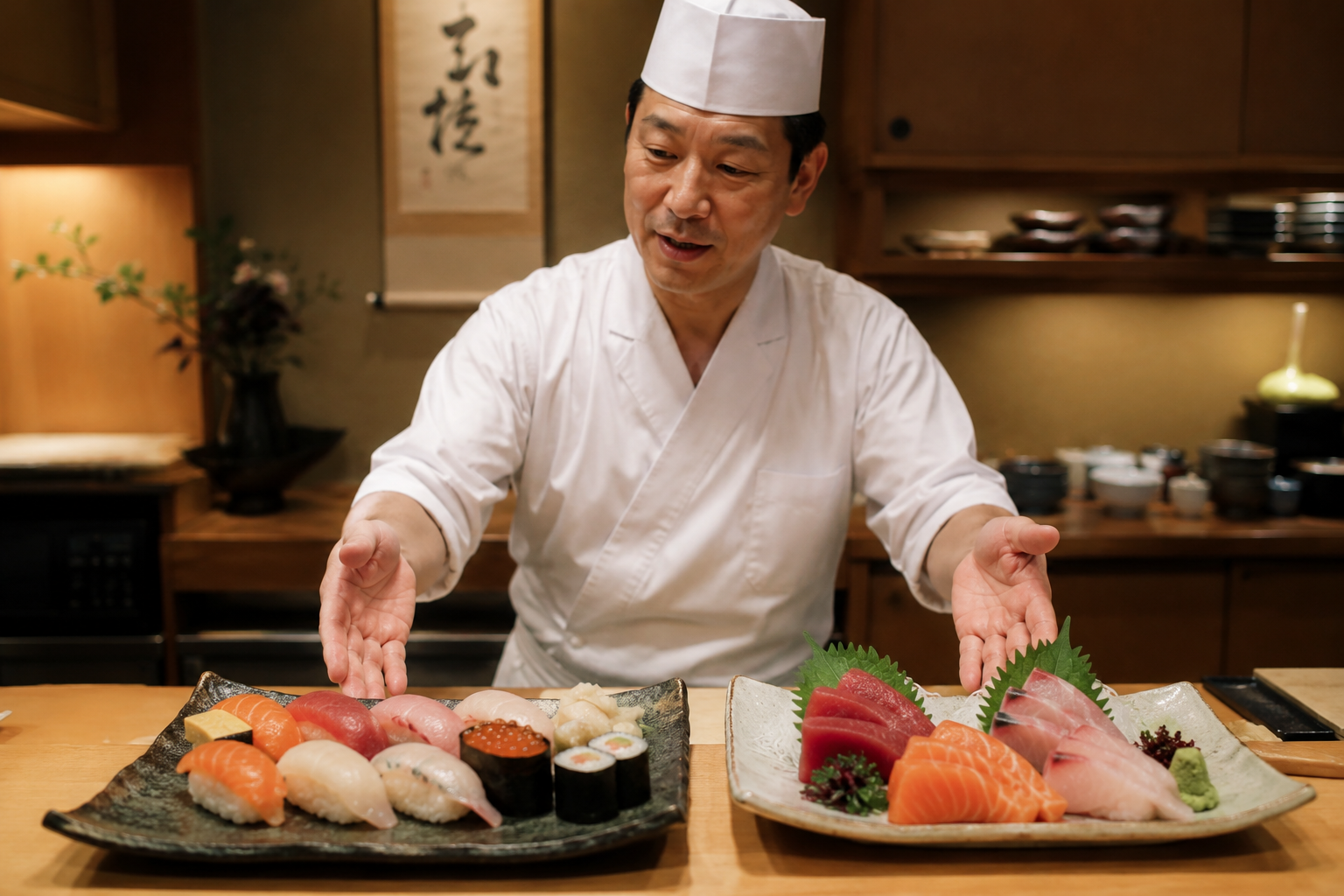
If you have ever sat down at a Japanese restaurant in the United States, opened a glossy menu full of colorful rolls, raw fish, rice, seaweed, wasabi, ginger, soy sauce, and mysterious words like nigiri, maki, sashimi, and omakase, and quietly wondered whether “sushi” simply means “raw fish” or whether “sashimi” is just a fancier version of the same thing, you are absolutely not alone. For many Americans, sushi and sashimi are two of the most recognizable Japanese food words — and two of the most commonly confused.
The confusion makes sense. In many American restaurants, sushi and sashimi appear on the same menu. They are often served with the same condiments: soy sauce, wasabi, pickled ginger, daikon, and shiso. They may feature the same fish: tuna, salmon, yellowtail, sea bream, scallop, squid, or shrimp. They are both associated with Japanese cuisine, raw seafood, careful presentation, and the slightly intimidating etiquette of chopsticks and dipping sauce. To a beginner, it can easily look as if sushi and sashimi are two versions of one category.
But in Japanese food culture, the difference is very clear.
Sushi is built around vinegared rice. Sashimi is sliced raw fish or seafood served without rice.
That is the simplest answer. But like many simple answers in Japanese culture, it opens the door to a much richer world. Once you understand the difference between sushi and sashimi, you also begin to understand something deeper about Japanese cuisine itself: the importance of rice, seasonality, knife skills, balance, presentation, restraint, and respect for ingredients.
For American diners, this distinction is especially useful because sushi in the United States has evolved in its own direction. American-style sushi menus often feature large rolls with avocado, spicy mayo, cream cheese, tempura shrimp, imitation crab, jalapeños, sweet sauces, and crunchy toppings. These rolls can be delicious, but they can also blur the meaning of traditional sushi. In Japan, sushi is often much simpler and more focused: seasoned rice, carefully selected fish or toppings, and precise balance in each bite.
Sashimi, meanwhile, is even more minimalist. It removes the rice entirely and places the focus on the fish itself: its cut, temperature, freshness, texture, fat content, and seasonal quality. For some people, sashimi is the purest expression of Japanese seafood culture. For others, especially beginners, it can feel a little intimidating at first. But with the right guidance, sashimi becomes less mysterious and much more approachable.
This article will explain the real difference between sushi and sashimi, the most common types of each, how they are eaten, what Americans often misunderstand, and what to order if you are new to Japanese food. Along the way, we will also explore what these dishes reveal about Japanese culture and why learning the language can deepen your appreciation of the food.
The Basic Difference Between Sushi and Sashimi
The key difference between sushi and sashimi comes down to one ingredient: rice.
Sushi is any dish made with seasoned vinegared rice, usually combined with toppings or fillings such as fish, vegetables, egg, tofu, seaweed, or cooked seafood. The rice is not ordinary plain rice. It is short-grain Japanese rice seasoned with rice vinegar, sugar, and salt. This rice is called sushi-meshi or shari, and it is the foundation of sushi.
That means sushi does not have to include raw fish. A cucumber roll is sushi. An avocado roll is sushi. A piece of egg omelet over rice is sushi. A sweet tofu pouch filled with rice is sushi. A California roll is sushi. A piece of cooked shrimp on rice is sushi. The defining feature is not rawness. The defining feature is vinegared rice.
Sashimi, on the other hand, contains no sushi rice. It is usually thinly sliced raw fish or seafood, served on its own with garnishes such as shredded daikon radish, shiso leaves, wasabi, and soy sauce. In Japan, the word sashimi can sometimes refer to other thinly sliced raw meats as well, though seafood is by far the most common association for most diners.
So here is the easiest way to remember it:
Sushi = vinegared rice, sometimes with raw fish, sometimes without.
Sashimi = sliced raw fish or seafood, no rice.
This distinction matters because it changes the whole dining experience. Sushi is a composed bite. The rice, topping, wasabi, soy sauce, and temperature all work together. Sashimi is more direct. It asks you to focus on the fish itself.
Why Americans Often Think Sushi Means Raw Fish
One of the biggest misconceptions about Japanese food in the United States is that sushi means raw fish. This misunderstanding is so common that many people say, “I don’t eat sushi,” when what they really mean is, “I don’t eat raw fish.”
But sushi can be raw, cooked, vegetarian, simple, elaborate, traditional, or fusion. The word sushi is connected to the seasoned rice, not the raw fish.
Why did this confusion become so widespread? One reason is that many of the most visually famous sushi images feature raw fish: salmon nigiri, tuna nigiri, sashimi platters, and elegant omakase counters. American sushi restaurants also often group sushi and sashimi together on menus, which makes beginners assume they belong to the same category.
Another reason is that sushi entered American food culture as something exotic, sophisticated, and slightly daring. For many diners, eating sushi became associated with being brave enough to try raw fish. Over time, that image stuck — even though many popular American sushi rolls contain cooked ingredients or no fish at all.
The irony is that some of the most common sushi items in the United States are not especially traditional Japanese sushi. The California roll, for example, is an American-born adaptation using ingredients such as crab or imitation crab, avocado, and cucumber. Spicy tuna rolls, dragon rolls, rainbow rolls, and cream cheese rolls are also examples of how sushi changed in North America.
These adaptations helped make sushi popular in the United States. They gave Americans a friendly entry point into Japanese food. But they also made the word “sushi” more confusing.
What Is Sushi?
Sushi is a broad category of Japanese food made with vinegared rice. It can be elegant and traditional, casual and affordable, or creative and modern. It can be served at a high-end sushi counter, bought from a supermarket, packed into a lunchbox, or eaten at a neighborhood restaurant.
The rice is central. Good sushi rice should be slightly warm or at room temperature, gently seasoned, and shaped carefully. It should not be mushy, cold, dry, or packed too tightly. In traditional sushi, the rice is as important as the fish. A skilled sushi chef pays close attention to the rice’s texture, temperature, acidity, and balance.
There are many types of sushi, but here are the most important ones for beginners to know.
Nigiri: The Classic Sushi Bite
Nigiri is one of the most traditional and recognizable forms of sushi. It consists of a small hand-formed mound of vinegared rice topped with a slice of fish or another ingredient. There may be a small dab of wasabi between the rice and the topping.
Common nigiri toppings include tuna, salmon, yellowtail, shrimp, eel, squid, scallop, sea bream, and tamago, a slightly sweet Japanese omelet. Some toppings are raw, while others are cooked or lightly prepared.
Nigiri is usually meant to be eaten in one bite. The beauty of nigiri is its balance: rice, topping, wasabi, temperature, texture, and sometimes a light brush of sauce. It looks simple, but simplicity is exactly what makes it difficult to perfect.
For beginners, salmon nigiri, tuna nigiri, shrimp nigiri, and tamago nigiri are often good choices.
Maki: Rolled Sushi
Maki refers to rolled sushi. It is made with rice and fillings rolled in nori seaweed, then sliced into bite-sized pieces. This is the type of sushi many Americans immediately picture when they think of sushi rolls.
Traditional maki can be very simple: tuna roll, cucumber roll, pickled radish roll, or salmon roll. In Japan, many rolls are smaller and cleaner than the large American specialty rolls covered in sauce and toppings.
In the United States, maki has expanded dramatically. Rolls may include avocado, spicy mayo, tempura shrimp, cream cheese, crab salad, jalapeños, mango, eel sauce, crunchy flakes, or multiple kinds of fish. These rolls can be fun and flavorful, but they are often more American-style than traditional Japanese.
Uramaki: Inside-Out Rolls
Uramaki are “inside-out” rolls, where the rice is on the outside and the nori is inside. The California roll is the most famous example.
Uramaki became popular in North America partly because some Western diners were hesitant about eating seaweed on the outside of the roll. By hiding the nori inside and putting rice outside, sushi became more approachable to American palates.
This is a perfect example of culinary adaptation. Uramaki may not be the most traditional form of sushi in Japan, but it played a huge role in introducing sushi to American diners.
Temaki: Hand Rolls
Temaki are cone-shaped hand rolls made with nori, rice, and fillings. They are not sliced like maki. Instead, they are held in the hand and eaten soon after being made, while the seaweed is still crisp.
Temaki feels casual and fun. It is often easier for beginners to understand because it looks almost like a Japanese food cone. Fillings may include fish, cucumber, avocado, roe, or other ingredients.
Chirashi: Scattered Sushi
Chirashi means “scattered sushi.” It is usually served as a bowl or box of sushi rice topped with assorted fish, vegetables, egg, and garnishes. Instead of being shaped into individual pieces, the ingredients are arranged over the rice.
Chirashi is beautiful, colorful, and often seasonal. It is a great choice if you want variety without ordering many separate pieces of sushi. It also helps beginners understand that sushi does not always have to be rolled or shaped by hand.
Inari Sushi: Sweet Tofu Pouches
Inari sushi is made from sweet fried tofu pouches filled with vinegared rice. It is often vegetarian and has a gentle sweet-savory flavor. The tofu pouch is soft, slightly juicy, and comforting.
This is one of the best examples of why sushi does not mean raw fish. Inari sushi contains no fish at all, yet it is absolutely sushi because it contains seasoned rice.
For Americans who are nervous about raw fish, inari can be a wonderful first step into Japanese sushi culture.
Oshizushi: Pressed Sushi
Oshizushi is pressed sushi, often associated with Osaka and other regional traditions. Rice and toppings are pressed into a mold, then sliced into neat rectangular pieces.
This style is less common in many American sushi restaurants, but it is an important reminder that sushi has many regional forms. Not all sushi looks like rolls or nigiri.
What Is Sashimi?
Sashimi is a dish of thinly sliced raw fish or seafood served without rice. It is often arranged beautifully on a plate with garnishes such as shredded daikon radish, shiso leaves, wasabi, and sometimes edible flowers or seaweed.
Because sashimi has no rice, the focus is entirely on the seafood. The quality of the ingredient matters enormously. So does the way it is cut. A skilled chef chooses the thickness, angle, and style of slicing depending on the fish’s texture and fat content.
Sashimi can feel more intense than sushi because there is no rice to soften the flavor. For people who already enjoy raw fish, this is the appeal. For beginners, it may be better to start with mild, buttery options before moving to chewier or stronger-tasting fish.
Common Types of Sashimi
Tuna
Tuna, or maguro, is one of the most popular sashimi choices. Lean tuna has a clean, firm texture and a deep red color. Fattier cuts, such as chutoro and otoro, are richer, softer, and almost buttery.
For beginners, tuna is one of the safest and most familiar places to start.
Salmon
Salmon sashimi is especially popular with American diners because it is mild, fatty, smooth, and slightly sweet. Its texture is soft and silky, making it very beginner-friendly.
Although salmon is now common in sushi and sashimi restaurants worldwide, it became popular in Japanese raw preparations more recently than some people assume. Today, however, it is one of the most beloved options.
Yellowtail
Yellowtail, or hamachi, has a smooth texture and a slightly richer flavor than lean white fish. It is mild but satisfying, making it a good next step after salmon and tuna.
Sea Bream
Sea bream, or tai, is a delicate white fish with a clean flavor and firmer texture. It is often appreciated for subtlety rather than richness. Beginners who prefer mild flavors may enjoy it, though the texture can be more noticeable than salmon.
Squid
Squid, or ika, has a chewy texture and mild sweetness. It is more adventurous because of the texture, not necessarily because of the flavor. If you are texture-sensitive, you may want to try it after becoming comfortable with softer sashimi.
Octopus
Octopus, or tako, is often lightly cooked before being served and has a dense, chewy texture. It is not usually the first sashimi choice for beginners, but it is worth trying if you enjoy seafood and want to explore Japanese textures.
Scallop
Scallop, or hotate, is soft, sweet, and almost creamy. It can be an excellent sashimi option for beginners who like delicate seafood.
Sweet Shrimp
Sweet shrimp, or amaebi, has a soft texture and natural sweetness. It is delicious but texturally unique, so it may feel adventurous to some first-time diners.
Sushi vs Sashimi: Taste and Texture
Sushi and sashimi offer different eating experiences.
Sushi is balanced. You taste the rice, vinegar, fish or filling, seaweed, wasabi, and sometimes sauce. It is usually more filling because of the rice. It can be mild, rich, sweet, salty, tangy, or creamy depending on the type.
Sashimi is more direct. You taste the fish first. The texture is more noticeable. The flavor is cleaner and often more subtle. Since there is no rice, sashimi is lighter but also more dependent on ingredient quality.
If sushi is a composed sentence, sashimi is a single carefully chosen word.
That is one reason sashimi can feel more refined or more intimidating. There is nowhere for the fish to hide. No rice, no roll, no sauce-heavy topping. Just the ingredient, the cut, and the freshness.
Sushi and Sashimi Etiquette
You do not need perfect etiquette to enjoy sushi or sashimi, especially in the United States. But knowing a few basic rules can make the experience more enjoyable and respectful.
For nigiri, it is acceptable to use either chopsticks or your hands. If dipping in soy sauce, try to dip the fish side rather than the rice side. Rice absorbs soy sauce quickly and can fall apart or become too salty.
Use wasabi sparingly. In traditional sushi, the chef may already place the right amount of wasabi between the fish and rice. If you want more, add a small amount. Mixing a huge lump of wasabi into soy sauce is common in the United States, but it is not considered the most refined approach.
Pickled ginger is a palate cleanser. It is meant to be eaten between pieces, not piled on top of sushi like a topping.
Sashimi is usually eaten with chopsticks. Pick up one slice, add a small amount of wasabi if desired, and dip lightly in soy sauce. You can also eat some of the garnish, such as shredded daikon or shiso, if it is served with the fish.
The main principle is simple: do not overwhelm the flavor. Japanese cuisine often values balance and restraint. Soy sauce, wasabi, and ginger are there to support the food, not bury it.
Is Sushi Healthier Than Sashimi?
The answer depends on what kind of sushi or sashimi you order.
Sashimi is usually lower in carbohydrates because it does not contain rice. It is mostly protein and fat, depending on the fish. Salmon, tuna, and yellowtail can provide healthy fats, including omega-3 fatty acids. However, sashimi is not automatically “healthier” in every situation. Portion size, fish type, mercury content, and food safety all matter.
Sushi contains rice, so it has more carbohydrates. Simple nigiri or basic rolls can still be relatively light. But many American-style specialty rolls are much heavier because they include fried ingredients, mayonnaise-based sauces, cream cheese, sweet glazes, and large portions of rice.
For example, a simple tuna roll is very different from a tempura shrimp roll covered in spicy mayo and eel sauce. Both may appear on a sushi menu, but nutritionally they are not the same.
Mercury is another consideration. Larger predatory fish, especially some tuna species, can contain higher mercury levels. For most healthy adults, sushi and sashimi can be enjoyed in moderation, but pregnant people, young children, and those with specific health concerns should be more careful with raw fish and high-mercury seafood.
Food safety is also important. Raw fish should be eaten only from reputable restaurants that handle seafood properly.
American Sushi vs Japanese Sushi
One of the most fascinating parts of sushi culture is how differently it developed in Japan and the United States.
In Japan, traditional sushi often emphasizes simplicity: seasoned rice, high-quality fish, careful preparation, and minimal garnish. A piece of nigiri may look simple, but it reflects years of training. The chef considers the rice temperature, the cut of fish, the amount of wasabi, and the order in which pieces are served.
In the United States, sushi became more experimental. American sushi restaurants helped popularize rolls with avocado, crab, spicy mayo, tempura flakes, cream cheese, and colorful sauces. These rolls made sushi less intimidating to people who were unsure about raw fish or seaweed.
This does not mean American sushi is “bad.” Food changes when it travels. The California roll helped introduce millions of Americans to Japanese food. Fusion rolls can be creative and delicious. But they are not the same as traditional Japanese sushi.
Understanding the difference allows you to enjoy both. You can appreciate a spicy tuna roll in California and still understand why a simple piece of tuna nigiri in Tokyo is a completely different experience.
What Should Beginners Order?
If you are new to sushi and sashimi, start gently.
For sushi beginners, try a California roll, cucumber roll, avocado roll, shrimp nigiri, tamago nigiri, salmon nigiri, or tuna nigiri. These options are approachable and not too challenging in texture or flavor.
If you do not like raw fish, order cooked or vegetarian sushi: eel, shrimp, crab, tempura rolls, inari sushi, cucumber rolls, avocado rolls, or egg sushi.
For sashimi beginners, start with salmon, tuna, yellowtail, or scallop. These are usually mild and pleasant. Save squid, octopus, mackerel, or stronger-flavored fish for later.
If you want a more authentic Japanese experience, try sitting at the sushi counter and ordering a few pieces of nigiri recommended by the chef. You do not have to order the most expensive omakase menu. Even a small selection of seasonal nigiri can teach you a lot about Japanese food.
Why This Difference Matters for Language Learners
For language learners, food vocabulary is one of the most enjoyable ways to enter a culture. When you learn the difference between sushi and sashimi, you are not just learning menu terms. You are learning how Japanese categorizes food.
You begin to notice that sushi is connected to rice. You learn that sashimi refers to sliced raw ingredients. You recognize words like maki for roll, nigiri for hand-formed sushi, temaki for hand roll, inari for tofu pouch sushi, and chirashi for scattered sushi.
You also begin to understand the cultural values behind the food: precision, freshness, restraint, seasonality, and respect for ingredients.
Food gives language emotional meaning. A word becomes easier to remember when you have tasted it, ordered it, or shared it with someone. That is why studying Japanese through food can be so powerful. It turns vocabulary into experience.
FAQs About Sushi vs Sashimi
Is sushi the same as raw fish?
No. Sushi is not the same as raw fish. Sushi refers to dishes made with seasoned vinegared rice. Some sushi includes raw fish, but many types use cooked seafood, vegetables, tofu, or egg.
What is the main difference between sushi and sashimi?
The main difference is rice. Sushi includes vinegared rice. Sashimi does not. Sashimi is sliced raw fish or seafood served without rice.
Is sashimi a type of sushi?
No. Sashimi is usually served in sushi restaurants, but it is not technically sushi because it does not include vinegared rice.
What is nigiri?
Nigiri is a type of sushi made with a small mound of vinegared rice topped with fish or another ingredient. It may look similar to sashimi because it often uses sliced fish, but the rice makes it sushi.
Can sushi be vegetarian?
Yes. Vegetarian sushi can include cucumber, avocado, pickled vegetables, tofu pouches, egg omelet, mushrooms, or other plant-based ingredients. As long as it includes vinegared rice, it is sushi.
Is sashimi always raw?
Sashimi usually refers to raw sliced fish or seafood, although some items, such as octopus, may be lightly cooked before serving. In Japan, sashimi can sometimes refer to thinly sliced raw meats as well.
Is sashimi healthier than sushi?
Sashimi is usually lower in carbohydrates because it does not contain rice. However, whether it is healthier depends on the type of fish, portion size, mercury content, and overall meal. Sushi can also be healthy, especially when it is simple and not covered in heavy sauces.
What sushi should I try if I do not like raw fish?
Try shrimp nigiri, eel nigiri, tamago sushi, cucumber rolls, avocado rolls, inari sushi, or tempura rolls. These give you the sushi experience without raw fish.
What sashimi is best for beginners?
Salmon, tuna, yellowtail, and scallop are good beginner-friendly options because their flavors are mild and their textures are generally pleasant.
Do Japanese people eat California rolls?
California rolls originated in North America, not Japan. They can be found in some places in Japan, especially where international-style sushi is served, but they are not traditional Japanese sushi in the same way as nigiri, maki, or chirashi.
Should I use chopsticks or my hands for sushi?
Both can be acceptable for nigiri. Many people eat nigiri with their hands. Rolls are often eaten with chopsticks or fingers. Sashimi is usually eaten with chopsticks.
What is the ginger for?
Pickled ginger is a palate cleanser. It is meant to be eaten between different pieces of sushi or sashimi, not placed on top as a topping.
Learn Japanese Through Food, Culture, and Conversation
At Polyglottist Language Academy, we believe language learning is never just about memorizing grammar rules. It is about culture, conversation, travel, food, art, history, and the everyday experiences that make a language come alive. Our Japanese classes help students build practical language skills while also exploring the cultural world behind the words.
Whether you want to learn Japanese for travel, food, anime, literature, business, or personal enrichment, our small-group and private classes can help you start with confidence. We also offer language classes in French, Italian, Spanish, German, Russian, Portuguese, Dutch, Korean, Vietnamese, Thai, Mandarin, and more.
If Japanese cuisine has made you curious about the Japanese language, now is the perfect time to begin. Sign up for a class with Polyglottist Language Academy and start discovering Japan through its words, flavors, customs, and traditions.
Keep Exploring Japanese and Asian Culture on Our Blog
If you enjoyed this article, you may also like these related posts from the Polyglottist Language Academy blog: