
10 Traditional Japanese Dishes Every American Should Try at Least Once
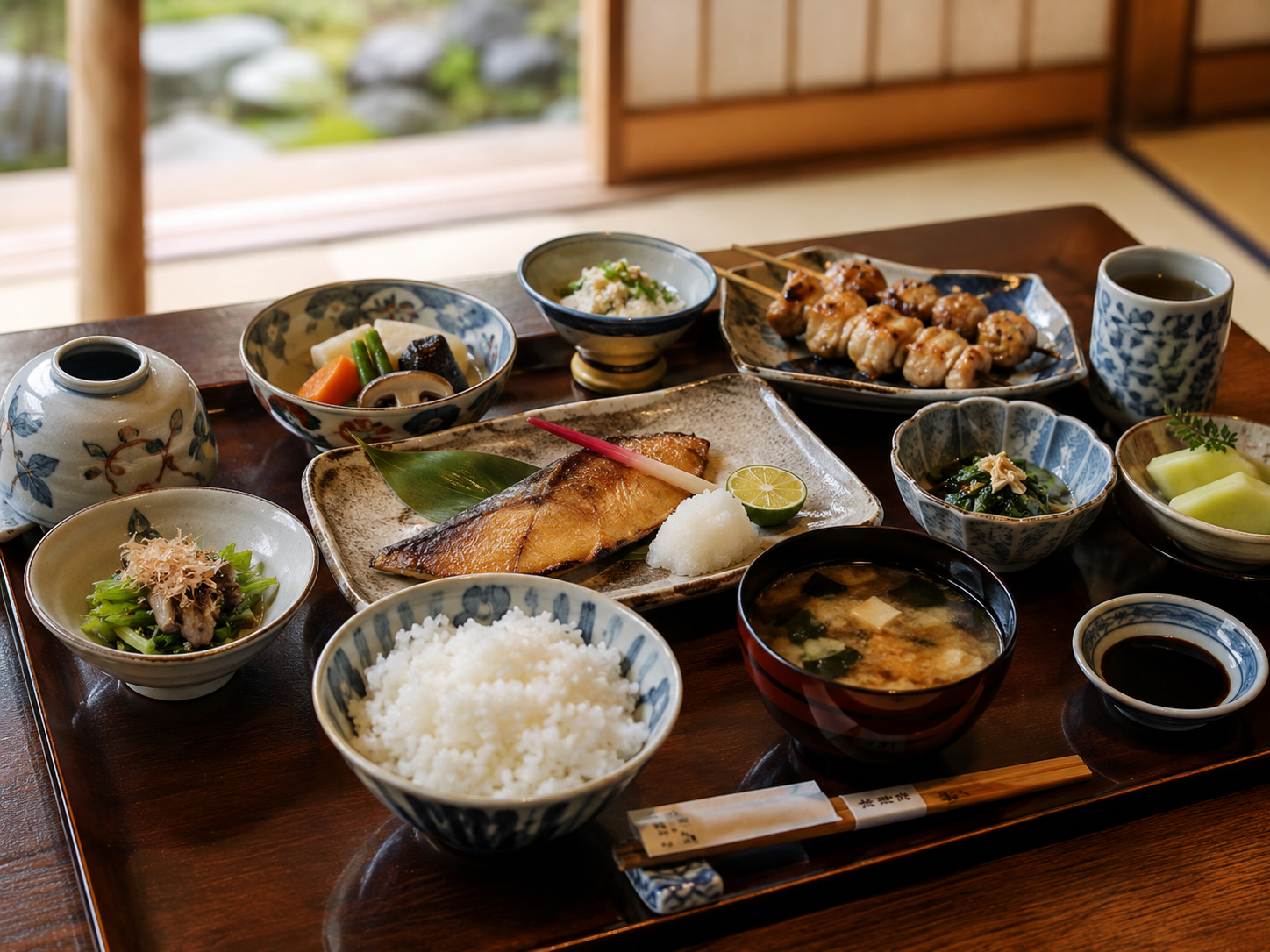
If your idea of Japanese food begins with sushi, continues with ramen, and ends somewhere around a California roll dipped in soy sauce, then you have only opened the first door into one of the world’s most beautiful, balanced, seasonal, comforting, and quietly surprising food cultures. Japanese cuisine is not just a collection of dishes. It is a way of thinking about nature, hospitality, restraint, craftsmanship, texture, temperature, beauty, and even silence. A bowl of noodles can express regional identity. A skewer of grilled chicken can reveal the pleasures of simplicity. A rice ball wrapped in seaweed can show how Japanese food turns practicality into art. A simmering hot pot shared at the table can teach you more about social life in Japan than a guidebook ever could.
Many Americans know the Japanese foods that became famous internationally: sushi, ramen, teriyaki chicken, miso soup, and maybe tempura. But once you begin exploring traditional Japanese dishes more deeply, you quickly discover that Japanese cuisine is much broader than raw fish or noodle soup. It includes crisp fried vegetables, smoky grilled meats, handmade buckwheat noodles, savory pancakes, bubbling hot pots, portable rice snacks, delicate broths, festival foods, comfort foods, and elegant meals designed around the changing seasons.
One of the most important ideas in Japanese cuisine is washoku, the traditional food culture of Japan. Washoku emphasizes balance: rice, soup, seasonal ingredients, vegetables, fish or meat, pickles, and careful presentation. It also values harmony between food and nature. A meal should not simply fill you up; it should make you aware of the season, the region, and the care of the person who prepared it. Even the colors on the plate matter. A traditional Japanese meal often balances different cooking methods, flavors, and textures: something grilled, something simmered, something pickled, something fresh, something crisp, something warm.
For American travelers, language learners, and food lovers, trying traditional Japanese dishes is one of the easiest and most enjoyable ways to understand Japanese culture. Food teaches vocabulary, manners, geography, history, and social habits all at once. You learn why noodles are slurped, why rice is treated with respect, why seasonal ingredients matter, and why a simple meal can still feel deeply thoughtful.
Here are ten traditional Japanese dishes every American should try at least once.
1. Tempura: Light, Crisp, and More Delicate Than You Expect
Beginner-friendly level: Very beginner-friendly
Category: Fried seafood and vegetables
Best for: Americans who enjoy fried food but want something lighter and more elegant
Tempura is one of the most familiar Japanese dishes outside Japan, but many Americans have only tasted heavy, greasy versions of it. True Japanese tempura is completely different. It is light, crisp, delicate, and carefully balanced. Seafood, vegetables, mushrooms, eggplant, sweet potato, squash, shrimp, and white fish are dipped in a thin batter and quickly fried so that the outside becomes crisp while the inside stays tender and flavorful.
Although tempura is now considered a classic Japanese dish, its history reflects Japan’s long relationship with foreign influence. Portuguese missionaries and traders introduced frying techniques to Japan in the 16th century, and over time Japanese cooks transformed the method into something distinctively Japanese: lighter, more refined, and deeply connected to seasonal ingredients.
The flavor of tempura depends on freshness and restraint. It is not supposed to be buried under sauce. Traditionally, tempura may be served with tentsuyu, a dipping sauce made from dashi, soy sauce, and mirin, often with grated daikon radish. Sometimes it is eaten simply with salt, especially when the ingredient itself is especially flavorful.
For Americans, tempura is a perfect entry point into traditional Japanese food because it feels familiar and unfamiliar at the same time. It has the satisfying crunch of fried food, but without the heaviness of many American fried dishes. It also introduces a major Japanese culinary principle: the cooking method should highlight the ingredient, not hide it.
Etiquette tip: Dip tempura lightly, rather than soaking it in sauce. If salt is provided, sprinkle or dip gently. The goal is to taste the shrimp, mushroom, or vegetable itself.
Common misconception: Many people assume tempura is supposed to be thick and heavily battered. In Japan, excellent tempura is admired for its thin, crisp coating and clean flavor.
2. Okonomiyaki: Japan’s Savory Comfort-Food Pancake
Beginner-friendly level: Good intermediate option
Category: Savory pancake
Best for: Americans who love comfort food, casual dining, and interactive meals
Okonomiyaki is often described as a Japanese savory pancake, but that simple description does not quite capture its personality. The name roughly means “grilled as you like it,” which tells you a lot about the dish. It usually includes a batter mixed with cabbage, flour, eggs, and various ingredients such as pork, seafood, green onion, or cheese. It is cooked on a hot griddle and topped with okonomiyaki sauce, Japanese mayonnaise, bonito flakes, and dried seaweed powder.
Okonomiyaki is especially associated with Osaka and Hiroshima, and the two styles are quite different. Osaka-style okonomiyaki mixes the ingredients into the batter before cooking, creating a thick, hearty pancake. Hiroshima-style okonomiyaki is layered rather than mixed and often includes noodles, making it even more substantial.
For Americans, okonomiyaki is a wonderful dish because it shows that Japanese cuisine is not always delicate, quiet, and minimalist. Sometimes it is bold, messy, saucy, and fun. It belongs to the world of casual restaurants, busy streets, festival stalls, and meals with friends. It also introduces the importance of regional food identity in Japan. People can have strong opinions about whether Osaka-style or Hiroshima-style is better.
The flavor is savory, slightly sweet, rich, tangy, and deeply satisfying. The cabbage softens as it cooks, the sauce adds sweetness and umami, the mayonnaise adds creaminess, and the bonito flakes seem to dance from the heat rising off the pancake.
Etiquette tip: In some restaurants, okonomiyaki is cooked for you; in others, you cook it yourself at the table. If you are unsure, watch what other diners are doing or ask the staff.
Common misconception: Some Americans expect all Japanese food to be light and subtle. Okonomiyaki proves that Japanese comfort food can be hearty, playful, and intensely flavorful.
3. Soba: Buckwheat Noodles with Quiet Elegance
Beginner-friendly level: Good intermediate option
Category: Buckwheat noodles
Best for: Travelers who want to understand simplicity, seasonality, and noodle culture
Soba are thin noodles traditionally made from buckwheat flour, sometimes mixed with wheat flour to improve texture. They can be served hot in broth or cold with a dipping sauce. Compared with ramen or udon, soba has a more earthy, nutty flavor and a slightly firmer texture.
Soba has deep cultural roots in Japan. It is associated with everyday meals, temple towns, mountain regions, and New Year’s Eve traditions. On New Year’s Eve, many Japanese families eat toshikoshi soba, or “year-crossing soba,” because the long noodles symbolize longevity and the letting go of hardship from the previous year.
Cold soba, especially zaru soba, is one of the best ways to appreciate the flavor of the noodles themselves. The noodles are served on a bamboo tray with a dipping sauce called tsuyu, often accompanied by wasabi, green onion, and grated daikon. Hot soba may be served in a dashi-based broth with toppings such as tempura, mountain vegetables, egg, or duck.
For Americans used to heavier noodle dishes, soba can feel surprisingly restrained. It is not overloaded with sauce. It asks you to notice texture, aroma, temperature, and the clean flavor of buckwheat. That is exactly why it is worth trying.
Etiquette tip: Slurping soba is acceptable and even encouraged. It cools the noodles and helps bring out their aroma. When eating cold soba, dip the noodles lightly into the sauce rather than drowning them.
Common misconception: Not all Japanese noodles are ramen. Soba has its own history, flavor, etiquette, and cultural meaning.
4. Udon: Thick, Chewy Noodles for the Soul
Beginner-friendly level: Very beginner-friendly
Category: Wheat noodles
Best for: Americans who love warm, comforting noodle dishes
If soba is earthy and elegant, udon is soft, chewy, and deeply comforting. Udon noodles are thick wheat noodles served in many different ways: hot in a fragrant broth, cold with dipping sauce, stir-fried, or topped with tempura, egg, tofu, meat, or green onions.
Udon is popular throughout Japan, but certain regions are especially famous for it. Sanuki udon from Kagawa Prefecture is known for its firm, chewy texture. Kansai-style udon broth is often lighter in color and flavor, while Kanto-style broth may be darker and stronger because of differences in soy sauce and dashi traditions.
The pleasure of udon is partly textural. The noodles are springy and satisfying, and the broth is usually built around dashi, the foundational Japanese stock often made from kombu seaweed and bonito flakes. A simple bowl of udon can taste gentle, savory, slightly sweet, and deeply warming.
For Americans, udon is one of the easiest traditional Japanese dishes to love. It offers the comfort of chicken noodle soup, the satisfaction of pasta, and the aromatic depth of Japanese broth. It is also a great option for people who are nervous about raw fish or unfamiliar textures.
Popular versions include kitsune udon, topped with sweet simmered fried tofu; tempura udon, served with crisp tempura; and curry udon, which combines Japanese curry with noodles.
Etiquette tip: Slurping udon is normal. It is also practical because the noodles are hot and slippery.
Common misconception: Udon is sometimes treated as a less exciting cousin of ramen, but in Japan it has its own devoted regional traditions and can be just as memorable.
5. Yakitori: The Art of Grilled Skewers
Beginner-friendly level: Very beginner-friendly to intermediate
Category: Grilled chicken skewers
Best for: Americans who enjoy barbecue, casual restaurants, and smoky flavors
Yakitori means grilled chicken, but the world of yakitori is much richer than a simple chicken skewer. In Japan, yakitori is often served at izakaya, casual pubs where people drink, eat small plates, and relax after work. Different parts of the chicken are skewered and grilled over charcoal, then seasoned either with salt or a sweet-savory sauce called tare.
For many Americans, yakitori feels familiar because it shares something with barbecue: smoke, fire, meat, and the pleasure of eating with friends. But yakitori also reflects a Japanese respect for using the whole animal. You may find skewers of chicken thigh, breast, skin, meatballs, liver, cartilage, heart, and wings. Some are very beginner-friendly; others are more adventurous.
The two main seasoning styles are shio, meaning salt, and tare, a sauce usually made with soy sauce, mirin, sake, and sugar. Salted yakitori highlights the flavor of the chicken and charcoal. Tare adds sweetness, shine, and umami.
Yakitori is a great dish for Americans to try because it expands the idea of Japanese food beyond sushi bars and noodle shops. It introduces izakaya culture, where meals are social, relaxed, and built around sharing.
Etiquette tip: It is usually fine to eat yakitori directly from the skewer, especially in casual settings. If sharing, use chopsticks to slide pieces onto a small plate.
Common misconception: Japanese food is not always delicate or seafood-centered. Yakitori is smoky, meaty, casual, and perfect with conversation.
6. Tonkatsu: Crispy Pork Cutlet with Japanese Soul
Beginner-friendly level: Very beginner-friendly
Category: Breaded pork cutlet
Best for: Americans who love fried chicken, schnitzel, or comfort food
Tonkatsu is a breaded and deep-fried pork cutlet, usually served sliced with shredded cabbage, rice, miso soup, pickles, and a thick, sweet-savory tonkatsu sauce. At first glance, it may seem more modern than ancient, and that is true: tonkatsu developed as part of Japan’s yōshoku tradition, a style of Western-influenced Japanese cooking that emerged in the modern era. But today it is thoroughly Japanese and deeply loved.
The magic of tonkatsu lies in contrast. The pork is juicy, the panko breadcrumb crust is crisp, the cabbage is fresh and light, the rice is plain and comforting, and the sauce adds tangy sweetness. It is rich but balanced.
For Americans, tonkatsu is one of the most approachable Japanese dishes. It resembles familiar foods like pork schnitzel or fried cutlets, but the Japanese version has its own structure and ritual. The shredded cabbage is not decoration; it refreshes the palate. The rice balances the richness. The miso soup completes the meal.
Tonkatsu also appears in other beloved dishes. Katsudon places the cutlet over rice with egg and onions. Katsu curryserves it with Japanese curry. Katsu sando turns it into a sandwich, often with soft white bread.
Etiquette tip: Add sauce gradually rather than drowning the cutlet. Some restaurants provide sesame seeds for you to grind and mix with sauce.
Common misconception: Traditional Japanese eating does not mean every dish is ancient or untouched by outside influence. Japan has a long history of adapting foreign ideas and making them distinctly Japanese.
7. Sukiyaki: Sweet-Savory Hot Pot for Sharing
Beginner-friendly level: Good intermediate option
Category: Hot pot
Best for: Americans who enjoy shared meals, beef dishes, and interactive dining
Sukiyaki is a Japanese hot pot dish usually made with thinly sliced beef, tofu, vegetables, mushrooms, noodles, and a sweet-savory sauce based on soy sauce, sugar, and mirin. It is often cooked at the table, making it as much a social experience as a meal.
Sukiyaki became especially popular during the modern period when beef eating became more common in Japan. Today it is associated with gatherings, special meals, and a sense of warmth and abundance. The ingredients simmer together in a shallow iron pot, absorbing the rich sauce.
The flavor profile may surprise Americans. Sukiyaki is savory, but it is also noticeably sweet. The beef becomes tender, the tofu absorbs the sauce, and vegetables such as napa cabbage, leeks, and mushrooms add freshness. In Japan, cooked pieces are often dipped into raw beaten egg before eating, which gives the food a silky texture and softens the intensity of the sauce.
For some Americans, the raw egg dip may feel adventurous. But even without it, sukiyaki is a fantastic way to experience Japanese communal dining. It is not a meal you rush. It invites conversation, sharing, and attention to the ingredients as they cook.
Etiquette tip: Let ingredients cook properly before eating, and follow the rhythm of the table. If raw egg is served and you are comfortable trying it, use it as a dipping sauce for the cooked ingredients.
Common misconception: Hot pot is not only Chinese or Korean. Japan has several important hot pot traditions, and sukiyaki is one of the most beloved.
8. Shabu-Shabu: The Elegant Japanese Hot Pot
Beginner-friendly level: Good intermediate option
Category: Hot pot
Best for: Americans who want a lighter, more interactive meal
Shabu-shabu is another Japanese hot pot dish, but it feels very different from sukiyaki. Instead of simmering ingredients in a sweet, rich sauce, diners briefly swish thin slices of meat through hot broth, then dip them in sauces such as ponzu or sesame sauce. The name “shabu-shabu” is said to imitate the sound of the meat moving through the broth.
The most common version uses thinly sliced beef or pork, along with vegetables, tofu, mushrooms, and sometimes noodles. The broth itself is often quite simple, allowing the flavor of the meat and dipping sauces to stand out.
For Americans, shabu-shabu is an excellent introduction to Japanese ideas of freshness and restraint. The cooking is quick, clean, and interactive. You control how long the meat cooks. You taste the difference between the bright citrus flavor of ponzu and the creamy richness of sesame sauce. You discover that a meal can feel abundant without being heavy.
Shabu-shabu is also a good example of Japanese hospitality. The table becomes the center of the meal. People cook, serve, offer pieces to one another, and move at a shared pace.
Etiquette tip: Swish the meat briefly until cooked, rather than leaving it in the pot too long. Use the dipping sauces thoughtfully, and avoid overcrowding the pot.
Common misconception: Some Americans think Japanese food is mostly pre-prepared and individual. Shabu-shabu shows the communal, interactive side of Japanese dining.
9. Onigiri: The Humble Rice Ball That Says Everything
Beginner-friendly level: Very beginner-friendly
Category: Rice snack or light meal
Best for: Travelers, students, busy people, and anyone who loves simple food
Onigiri is one of the most ordinary and essential foods in Japan: a rice ball, often shaped into a triangle or round form, sometimes filled with ingredients such as salmon, pickled plum, tuna mayonnaise, bonito flakes, or kombu, and often wrapped in nori seaweed.
At first, onigiri may seem too simple to belong on a list of must-try traditional Japanese dishes. But that simplicity is exactly why it matters. Onigiri represents the central role of rice in Japanese food culture. It is portable, practical, comforting, and deeply nostalgic. It appears in lunchboxes, convenience stores, train stations, picnics, school lunches, and homemade meals.
For American travelers, onigiri is a revelation because it shows how good simple food can be when the details are right. The rice should be properly cooked and lightly salted. The filling should provide contrast. The nori should be crisp if wrapped separately, or soft if it has been in contact with the rice. The shape should fit naturally in the hand.
Onigiri is also one of the best foods to try when traveling in Japan on a budget. Convenience stores sell many varieties, and learning how to unwrap them properly becomes a small but satisfying travel skill.
Etiquette tip: Onigiri is usually eaten with your hands. If you buy it from a convenience store, look carefully at the numbered wrapping instructions so the seaweed stays crisp until you eat it.
Common misconception: Japanese food does not need to be expensive or elaborate to be meaningful. Onigiri proves that everyday food can carry enormous cultural importance.
10. Takoyaki: Osaka’s Octopus Street Food
Beginner-friendly level: More adventurous
Category: Street food
Best for: Americans who enjoy bold flavors, festival foods, and trying something new
Takoyaki are round, savory balls of batter filled with pieces of octopus, cooked in special molded pans, and topped with takoyaki sauce, Japanese mayonnaise, bonito flakes, and seaweed powder. They are especially associated with Osaka, one of Japan’s great food cities.
The outside of takoyaki is lightly browned, while the inside is soft, hot, and almost creamy. The octopus provides chewiness, and the toppings add sweetness, richness, saltiness, and umami. Takoyaki is commonly found at street stalls, festivals, casual restaurants, and specialty shops.
For Americans, takoyaki may be one of the more adventurous dishes on this list because of the octopus texture. But it is also one of the most fun. It is casual, lively, and strongly connected to Osaka’s food culture. If you think Japanese food is always quiet and formal, takoyaki will change your mind.
One important warning: takoyaki is often extremely hot inside. Many first-time visitors burn their mouths because the outside seems cool enough while the center is still molten.
Etiquette tip: Let takoyaki cool slightly before eating. It is usually eaten with toothpicks or chopsticks, depending on where it is served.
Common misconception: Some Americans hear “octopus” and imagine something intimidating. In takoyaki, octopus is part of a savory, saucy, comforting street food experience.
How These Dishes Reveal Japanese Culture
These ten dishes show the incredible range of traditional Japanese cuisine. Tempura teaches delicacy and seasonality. Okonomiyaki shows regional pride and casual comfort. Soba and udon reveal the depth of noodle culture. Yakitori introduces the smoky world of izakaya dining. Tonkatsu shows how Japan adapts outside influences. Sukiyaki and shabu-shabu highlight shared meals and hospitality. Onigiri reveals the beauty of everyday simplicity. Takoyaki brings you into the energy of street food and regional identity.
Together, they also show why Japanese food is so closely connected to Japanese culture. There is a constant attention to balance: rich dishes are paired with rice or cabbage; light broths are given depth through dashi; seasonal ingredients are prepared in ways that respect their natural flavor. Presentation matters, but not because food must look fancy. It matters because the meal should feel thoughtful.
Japanese hospitality, often described with the word omotenashi, is also visible in the way food is served. A host thinks about temperature, timing, season, portion size, and the comfort of the guest. Even a casual meal can feel carefully considered.
For language learners, food is also a doorway into vocabulary and culture. Learning words like dashi, tare, shio, nori, udon, soba, yaki, and don helps you read menus and understand how Japanese dishes are built. You begin to see patterns. You understand that yaki often refers to grilling or cooking, that soba and udon are different noodle worlds, and that regional names often carry cultural pride.
A Beginner-Friendly Japanese Food Tasting Plan
If you are new to traditional Japanese dishes, start with the easiest flavors and textures first.
Begin with tempura, udon, yakitori, tonkatsu, and onigiri. These are familiar enough for most American palates but still deeply Japanese. They offer crisp textures, warm broth, grilled meat, rice, and comforting flavors.
Next, try soba, okonomiyaki, sukiyaki, and shabu-shabu. These dishes introduce more cultural context: noodle etiquette, regional variation, shared hot pot dining, and the sweet-savory flavor profile that appears in many Japanese dishes.
Finally, try takoyaki if you are ready for a more adventurous texture. It is fun, iconic, and memorable, especially if you visit Osaka or attend a Japanese festival.
The goal is not to prove that you are a fearless eater. The goal is to become more curious. Japanese cuisine rewards curiosity because each dish has a story behind it.
FAQs About Traditional Japanese Food
Is Japanese food mostly raw fish?
No. Sushi and sashimi are important, but they represent only one part of Japanese cuisine. Many traditional Japanese dishes are grilled, simmered, fried, steamed, pickled, or served in broth. Tempura, udon, yakitori, tonkatsu, sukiyaki, and onigiri do not depend on raw fish at all.
What should I try in Japan if I do not like seafood?
Try udon, soba, tonkatsu, yakitori, sukiyaki, shabu-shabu, onigiri with non-seafood fillings, and okonomiyaki with pork or vegetables. Japan has many options for people who do not love seafood.
Is Japanese food spicy?
Traditional Japanese food is usually not very spicy compared with cuisines such as Thai, Sichuan Chinese, Mexican, or Korean food. Japanese cuisine often emphasizes umami, sweetness, saltiness, bitterness, sourness, and aroma rather than heat. Wasabi, mustard, and some chili seasonings exist, but most dishes are not aggressively spicy.
What is the difference between soba, udon, and ramen?
Soba are thin buckwheat noodles with an earthy flavor. Udon are thick wheat noodles with a chewy texture. Ramen are wheat noodles usually served in a richer broth with toppings such as pork, egg, and bamboo shoots. All three are Japanese noodle dishes, but they have different histories, textures, and serving styles.
What is the best Japanese dish for beginners?
Udon is one of the best choices for beginners because it is warm, comforting, and easy to enjoy. Tempura, yakitori, tonkatsu, and onigiri are also very beginner-friendly.
What is the most adventurous dish on this list?
Takoyaki may be the most adventurous for many Americans because it contains octopus and has a very soft interior texture. Sukiyaki may also feel adventurous if served with raw egg for dipping.
Do I need to know chopstick etiquette before eating Japanese food?
You do not need to be perfect, but a few basics help. Do not stick chopsticks upright into rice, do not pass food from chopstick to chopstick, and do not point with them. For casual foods like onigiri, it is completely acceptable to use your hands.
Is slurping noodles rude in Japan?
No. Slurping soba, udon, or ramen is normal in Japan. It helps cool the noodles and enhances aroma. You do not have to slurp loudly, but you should not feel embarrassed if you do.
What is dashi?
Dashi is a foundational Japanese stock often made with kombu seaweed and bonito flakes. It gives many Japanese dishes their deep savory flavor. Dashi appears in miso soup, noodle broths, dipping sauces, simmered dishes, and many traditional preparations.
Why does Japanese food look so carefully arranged?
Presentation is part of the food culture. Traditional Japanese cuisine values balance, seasonality, color, shape, and harmony. A meal should appeal to the eyes as well as the mouth.
Learn Japanese Through Food, Culture, and Conversation
At Polyglottist Language Academy, we offer engaging language classes for adults who want to learn not only grammar and vocabulary, but also the cultures behind the languages they study. Whether you are interested in Japanese for travel, food, anime, literature, work, or personal enrichment, our classes can help you build confidence step by step.
We also offer classes in many other languages, including French, Italian, Spanish, German, Russian, Portuguese, Dutch, Korean, Vietnamese, Thai, Mandarin, and more. Our small-group and private lessons are designed for real learners who want thoughtful instruction, cultural insight, and a supportive environment.
Sign up for a class with Polyglottist Language Academy and start discovering Japan through its words, flavors, stories, and traditions.
Keep Exploring Japanese on Our Blog
If you enjoyed this article, you may also like these related posts from the Polyglottist Language Academy blog