
What Is Matcha? Japan's Green Tea Powder Explained
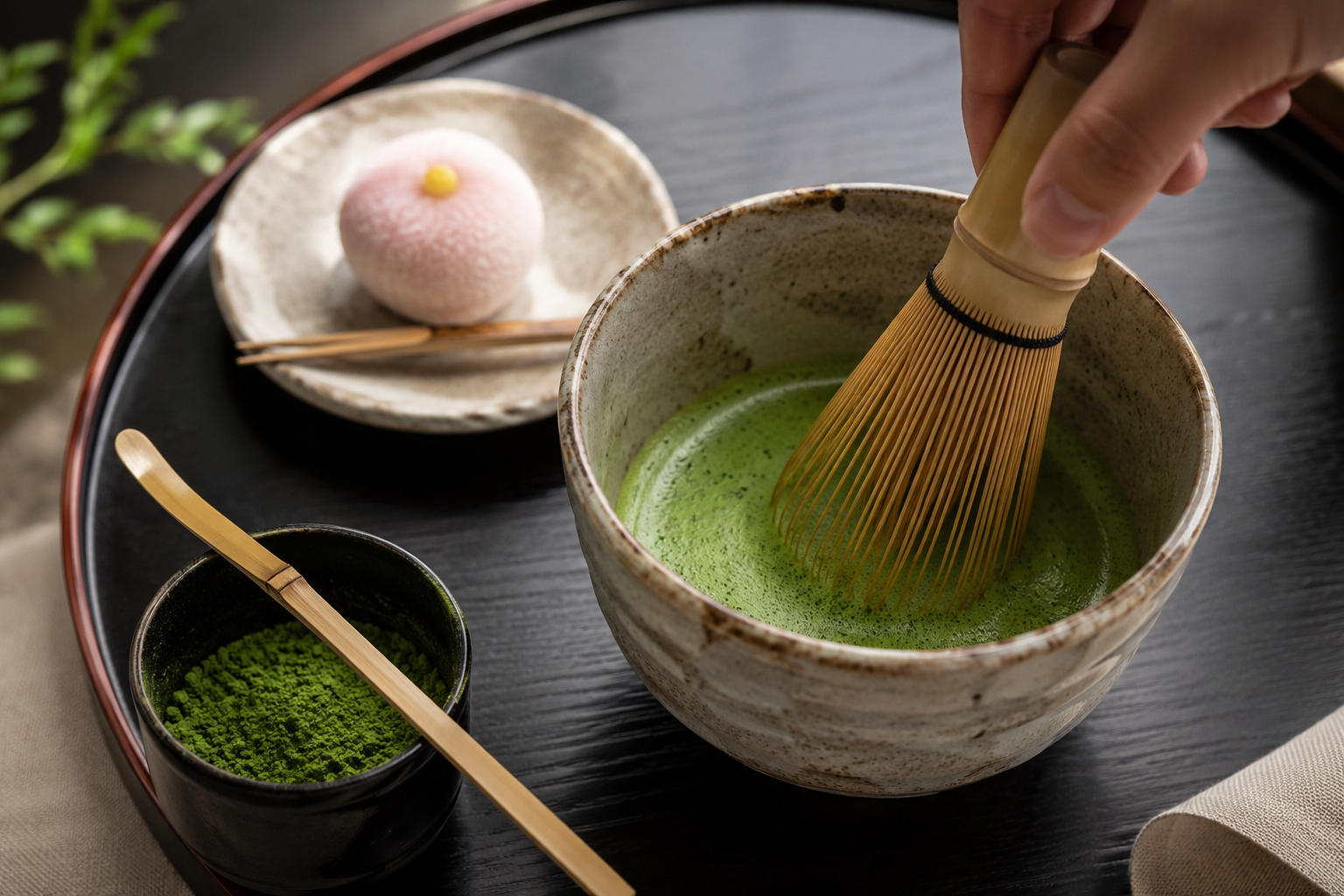
Few foods have traveled from ancient religious ritual to modern global trend as dramatically as matcha, the luminous green powder that now appears in traditional Japanese tearooms, neighborhood cafés, luxury restaurants, home kitchens, beauty products, protein shakes, pastries, ice cream, and social media photographs around the world. To one person, matcha is a carefully prepared bowl of tea whisked in silence according to centuries of Japanese tradition; to another, it is an iced latte picked up on the way to work; to someone else, it is an unfamiliar green ingredient associated with energy, antioxidants, or Japanese desserts.
Yet matcha is much more than a colorful alternative to coffee.
Behind every bowl of authentic matcha lies an unusually demanding process. Tea plants are shaded before harvest. Selected leaves are steamed, dried, refined into a material called tencha, and slowly ground into an extremely fine powder. Unlike ordinary tea, which is infused in water and then removed, matcha is suspended in water and consumed in its entirety. You are not simply drinking water flavored by tea leaves. You are consuming the powdered leaf itself.
Matcha also carries a cultural history that extends far beyond contemporary café culture. Its story connects China and Japan, Buddhist monasteries and warrior society, agricultural knowledge and artistic philosophy. It became central to the Japanese tea ceremony, a disciplined cultural practice shaped by ideas of hospitality, simplicity, awareness, and respect. Even the objects used to prepare it—the bowl, bamboo whisk, scoop, cloth, and water vessel—can carry aesthetic and symbolic meaning.
At the same time, matcha is a modern international product. It is blended with milk, added to desserts, marketed as a wellness ingredient, and sold in an enormous range of qualities and prices. Some matcha is delicate, creamy, sweet, and deeply savory. Other powders are dull, bitter, stale, or barely recognizable as true matcha. Terms such as “ceremonial grade” and “culinary grade” appear everywhere, although these descriptions are not governed by a single official Japanese grading system.
So, what exactly is matcha? How is it different from ordinary green tea? Why is good matcha so expensive? Does it really offer unusual health benefits? How should it be prepared, purchased, and stored?
To understand matcha, we need to begin not with the latte, but with the leaf.
What Is Matcha?
Matcha is a finely ground green tea powder traditionally associated with Japan. It is produced from specially cultivated and processed leaves of the tea plant, Camellia sinensis—the same plant used to make green tea, black tea, white tea, and oolong tea.
The difference lies in how the plant is grown, harvested, processed, and consumed.
Before harvest, tea plants intended for high-quality matcha are shaded for a period of time. The harvested leaves are then steamed to prevent oxidation, dried, and refined. Stems and veins are removed, leaving a processed leaf material known as tencha. The tencha is ground into a powder so fine that it can be whisked into water.
Matcha is therefore not simply “regular green tea that has been crushed.”
Ordinary green tea is usually prepared by placing leaves in hot water and allowing their flavor and soluble compounds to infuse. The leaves are then removed. Matcha remains in the bowl or cup, meaning the drinker consumes the entire powdered leaf.
This distinction gives matcha its characteristic appearance, texture, flavor, and concentration. Properly prepared matcha is opaque rather than transparent. It may have a soft layer of foam, a creamy texture, and a flavor that combines vegetal freshness, sweetness, bitterness, and umami.
What Does the Word “Matcha” Mean?
The Japanese word matcha is written 抹茶.
The first character, 抹, can refer to rubbing, wiping, grinding, or reducing something to powder. The second character, 茶, means tea.
Matcha can therefore be understood as “powdered tea” or “ground tea.”
In Japanese, it is pronounced approximately mah-cha, with two relatively even syllables. The consonant sound in the second syllable is closer to the “ch” in “chair” than to a hard “k” sound.
English speakers sometimes place strong emphasis on the first syllable and stretch the final vowel. A more natural Japanese pronunciation is short, balanced, and clean: mah-cha.
Matcha vs. Regular Green Tea
Matcha and ordinary Japanese green tea come from the same general plant species, but they are not interchangeable.
With loose-leaf green tea, hot water extracts part of the leaf’s flavor, aroma, caffeine, amino acids, and other compounds. The leaves are discarded afterward.
With matcha, the whole powdered leaf is consumed. This produces a thicker drink and often a more concentrated flavor.
Matcha cultivation also usually involves shading the plants before harvest. Shading changes the chemistry of the leaves and contributes to the green color, lower astringency, and savory flavor associated with quality matcha.
The preparation is different as well. Loose-leaf tea is steeped and strained. Matcha is sifted, combined with water, and whisked until evenly suspended.
A cup of sencha may be clear, light, and refreshing. A bowl of matcha is usually richer, more vegetal, more textured, and more intense.
The History of Matcha
Although matcha is closely associated with Japan, the practice of grinding tea into powder has earlier roots in China.
During parts of Chinese history, tea leaves were processed into compressed forms, broken apart, ground, and mixed with hot water. Powdered tea became especially important during the Song dynasty, when whisked tea preparation developed into a sophisticated practice.
Japanese Buddhist monks who traveled to China encountered tea culture there and helped bring tea plants, preparation methods, and ideas about tea back to Japan.
One of the most frequently mentioned figures in the history of Japanese tea is the Zen monk Eisai, who lived from 1141 to 1215. Eisai studied in China and promoted tea in Japan, particularly within religious and elite circles. Tea was valued not only for taste, but also because it helped monks remain alert during long periods of meditation.
Over time, powdered tea spread beyond monasteries. It became associated with aristocrats, warriors, competitions, social gatherings, and displays of wealth. Elaborate tea events sometimes emphasized expensive Chinese objects and the ability to identify different teas.
Later, Japanese tea culture moved in a different aesthetic direction. Simplicity, restraint, imperfection, natural materials, and focused hospitality became increasingly important.
Sen no Rikyū, who lived from 1522 to 1591, is among the most influential figures in the development of the Japanese tea ceremony. He helped shape an approach that valued humility and simplicity rather than extravagance. Small tearooms, understated utensils, quiet movements, and attention to the present moment became central to the experience.
Matcha was no longer merely a stimulating beverage or a luxury product. It became part of a cultural discipline.
Zen Buddhism and the Meaning of Tea
The association between matcha and Zen Buddhism is not accidental.
Tea could help monks remain awake and attentive during meditation, but its importance extended beyond caffeine. Preparing tea required concentration. Drinking it could become an exercise in awareness. Every movement—heating water, cleaning the utensils, measuring the powder, whisking the tea, presenting the bowl—could be performed deliberately.
This connection helped shape matcha as a practice of attention.
In this context, tea is not something to consume absentmindedly while rushing between tasks. It creates a pause. The host prepares something carefully for the guest. The guest receives it respectfully. Both participants become aware of the setting, the season, the objects, and one another.
This does not mean that every modern matcha drink must be solemn or ceremonial. Matcha can be playful, sweet, cold, and contemporary. However, understanding its contemplative history gives the drink a depth that is easily lost when it is treated only as a wellness trend.
How Matcha Is Grown
The production of matcha begins in the tea field.
Several weeks before harvest, tea plants intended for matcha are covered to reduce their exposure to direct sunlight. Traditional coverings once included materials such as straw, although modern producers may use specialized screens.
The amount and duration of shading vary according to the producer, region, weather, tea cultivar, and desired result. Some heavily shaded plants receive only a small percentage of normal sunlight.
Because the plant receives less light, it adapts. Shading can increase chlorophyll development and help preserve amino acids, including L-theanine, that might otherwise be transformed as the plant receives more sunlight.
These changes contribute to several qualities associated with good matcha:
A vivid green color
A stronger umami character
A smoother, rounder taste
Reduced harshness or astringency
Greater sweetness and depth
Shading is labor-intensive and requires expertise. If the plants are shaded incorrectly or for too long, their growth may suffer. The farmer must balance plant health with the flavor and color desired in the finished tea.
From Tea Leaf to Tencha
The leaves used for high-quality matcha are generally harvested during the spring, when the first flush of new growth appears. Young leaves are prized for their tenderness, color, aroma, and flavor.
After harvesting, the leaves are quickly steamed. Steaming stops enzymatic oxidation and helps preserve the fresh green character of the tea.
The leaves are then cooled and dried. Unlike leaves used for sencha, they are not rolled into narrow shapes.
The dried tea is refined by removing stems, veins, and less desirable material. The remaining leaf material is called tencha.
Tencha is not yet matcha. It becomes matcha only after grinding.
This distinction matters because not every powdered green tea is authentic matcha. Green tea leaves can be pulverized by industrial machines and sold as green tea powder, but true matcha is traditionally made from tencha grown and processed for that purpose.
Why Matcha Is Stone-Ground
Traditional matcha is ground using granite stone mills.
The grinding process must be slow. Excessive speed creates heat, which can damage flavor, aroma, and color.
A traditional stone mill may produce only about 30 to 40 grams of matcha in an hour. That is a surprisingly small quantity, especially when compared with modern industrial food production.
Slow grinding helps create the extremely fine texture required for matcha. The particles should be small enough to disperse in water and feel smooth rather than sandy.
This explains part of the cost of good matcha. High-quality matcha requires specialized cultivation, shading, selective harvesting, careful processing, removal of stems and veins, and slow milling. It is not simply a leaf placed in a high-speed blender.
Why Is Matcha So Green?
Quality matcha is known for its vibrant green color.
That color comes partly from the natural chlorophyll in the tea leaves, which is influenced by shading, freshness, cultivar, growing conditions, and processing.
However, color alone does not prove quality. Photographs may be edited, lighting can change appearances, and some powders may look bright without tasting particularly good.
In general, fresh drinking-quality matcha should be lively green rather than yellow, brown, gray, or olive. A dull color may indicate older tea, poor storage, unsuitable raw material, excessive heat, or lower-quality production.
Matcha is highly sensitive to oxygen, heat, light, and moisture. Even excellent matcha will gradually lose its vivid color after opening if it is not stored carefully.
What Does Matcha Taste Like?
Matcha does not have one universal flavor.
Its taste depends on the tea cultivar, region, harvest, shading method, processing, freshness, water temperature, preparation, and quality.
Good matcha may contain several of the following characteristics:
Umami
Natural sweetness
Fresh vegetal notes
A creamy or velvety sensation
Mild bitterness
Gentle astringency
Aromas reminiscent of grass, spinach, seaweed, peas, flowers, nuts, or fresh herbs
The word umami is especially important. It describes a savory quality that is difficult to classify as simply sweet, salty, sour, or bitter. High levels of amino acids can give matcha a deep, rounded, broth-like richness.
Some bitterness is natural. Matcha is tea, not powdered candy. However, extremely harsh, dusty, or aggressively bitter matcha may be low quality, stale, badly prepared, or intended primarily for cooking.
Water that is too hot can intensify bitterness and astringency. For many matchas, water between approximately 70 and 80 degrees Celsius—158 to 176 degrees Fahrenheit—creates a more balanced bowl than boiling water.
Ceremonial Grade vs. Culinary Grade
Matcha is often divided into two major categories: ceremonial grade and culinary grade.
These terms can be useful, but they are not part of a universal official grading system enforced throughout Japan.
“Ceremonial grade” usually refers to matcha intended to be whisked with water and consumed directly. It is generally expected to have a vivid color, fine texture, pleasant aroma, and balanced flavor with limited harshness.
“Culinary grade” usually refers to stronger matcha designed for lattes, baking, smoothies, sauces, chocolate, or desserts. Culinary matcha may be more bitter, allowing its flavor to remain noticeable when combined with milk, sugar, flour, or fat.
However, companies use these labels differently. One brand’s premium culinary matcha may be better than another brand’s ceremonial product.
Instead of relying only on the word “ceremonial,” examine the following:
Country and region of origin
Color
Aroma
Harvest information, when available
Packaging
Freshness
Intended use
Producer reputation
Flavor description
Price relative to quantity
Extremely inexpensive matcha marketed as elite ceremonial tea deserves skepticism. Authentic matcha requires too much work to be produced and shipped at the price of ordinary powdered tea.
Important Matcha Regions in Japan
Several Japanese regions are strongly associated with tea and matcha production.
Uji
Uji, near Kyoto, is perhaps the most famous historic matcha-producing area. It has a long connection to Japanese tea culture and is known for refined, high-quality teas.
Uji matcha is often associated with complexity, sweetness, umami, and traditional prestige. The name “Uji” carries enormous marketing power, so buyers should examine whether the tea was genuinely grown and processed in the region rather than merely packaged nearby.
Nishio
Nishio, in Aichi Prefecture, is one of Japan’s major matcha-producing areas. It is known for extensive tencha cultivation and is an important source of both drinking and culinary matcha.
Nishio matcha often appears in lattes, desserts, and commercial products, although the region also produces excellent premium tea.
Yame
Yame, in Fukuoka Prefecture, is known for high-quality shaded teas. Although its overall production volume is smaller than that of some major regions, Yame teas frequently receive strong recognition in Japanese tea competitions.
Shizuoka
Shizuoka is one of Japan’s most important tea-producing prefectures. It is especially famous for sencha, but it also produces matcha and other shaded teas.
Kagoshima
Kagoshima, in southern Japan, has become an increasingly important source of Japanese tea. Its climate, varied cultivars, and large-scale production allow the region to create a wide range of styles.
Origin can influence flavor and quality, but the name of a prestigious region is not a guarantee. Farming, processing, freshness, and storage remain essential.
How to Prepare Traditional Matcha
You do not need to perform a complete tea ceremony to prepare matcha well. A few careful steps can dramatically improve the result.
Traditional tools include:
Chawan (茶碗): A tea bowl with enough room for whisking.
Chasen (茶筅): A bamboo whisk used to disperse the powder and create foam.
Chashaku (茶杓): A slender bamboo scoop traditionally used to measure matcha.
Furui: A fine sifter used to remove clumps.
Basic Usucha Recipe
Usucha means “thin tea.” It is the style most people imagine when they think of a whisked bowl of matcha.
Warm the bowl with hot water.
Soak the bamboo whisk briefly in the warm water to soften its tips.
Empty and dry the bowl.
Sift approximately 1.5 to 2 grams of matcha into the bowl.
Add roughly 60 to 80 milliliters of water heated to about 70–80°C.
Whisk briskly using your wrist rather than your entire arm.
Move the whisk rapidly in a loose W or M pattern.
When a fine foam appears, lift the whisk gently from the center.
Drink the matcha soon after preparation before the powder settles.
Sifting is one of the most important steps. Matcha naturally develops small clumps because the particles are extremely fine and attract moisture. Whisking alone may not remove them completely.
What Is Koicha?
Koicha means “thick tea.”
It uses more matcha and less water than usucha. Rather than being vigorously whisked into a foam, koicha is slowly kneaded into a thick, glossy consistency.
Koicha requires very high-quality matcha because its flavor is extremely concentrated. Matcha that tastes acceptable in a sweet latte may become overwhelmingly bitter when prepared as koicha.
In formal tea practice, koicha and usucha also have different cultural roles and methods of service.
Can You Make Matcha Without a Bamboo Whisk?
Yes.
A bamboo whisk is the traditional tool and often produces the best fine foam, but it is not essential for beginners.
You can prepare matcha using:
A small electric milk frother
A sealed jar or bottle
A handheld kitchen whisk
A blender
A shaker cup
To use a jar, sift the matcha into the container, add warm water, seal it tightly, and shake vigorously. This method is especially convenient for iced matcha.
Avoid stirring dry matcha directly into a full cup of water or milk with a spoon. It will usually form floating clumps.
Instead, begin by mixing the powder with a small amount of water to create a smooth paste. Add the remaining liquid gradually.
Common Matcha Preparation Mistakes
Many people conclude that they dislike matcha when the real problem is preparation.
Using boiling water
Boiling water can make matcha taste unnecessarily bitter and harsh. Allow freshly boiled water to cool before using it.
Skipping the sifter
Unsifted matcha often contains stubborn clumps that ruin the texture.
Using too much powder
More matcha does not automatically produce a better drink. Beginners should start with a moderate amount.
Buying the wrong matcha for the purpose
Delicate premium matcha may disappear under flavored syrups and large amounts of milk. Stronger culinary matcha may be unpleasant when whisked only with water.
Using stale powder
Once matcha has oxidized, no preparation technique can fully restore its freshness.
Whisking too slowly
Matcha needs quick, energetic wrist movement to disperse evenly and form foam.
Matcha and the Japanese Tea Ceremony
The Japanese tea ceremony may be called chanoyu, meaning “hot water for tea,” or sadō/chadō, meaning “the way of tea.”
It is not simply a recipe for preparing a drink.
Tea practice brings together hospitality, movement, architecture, ceramics, calligraphy, flowers, seasonal awareness, food, etiquette, and philosophy. A formal gathering may involve a carefully selected scroll, flower arrangement, meal, sweets, utensils, and sequence of actions.
Four principles are traditionally associated with the way of tea:
Wa (和): Harmony
Harmony among people, objects, nature, and the setting.
Kei (敬): Respect
Respect for the host, the guest, the utensils, the space, and the occasion.
Sei (清): Purity
Physical cleanliness as well as clarity and sincerity of mind.
Jaku (寂): Tranquility
The calm that emerges from practicing the other principles deeply.
Another concept often associated with tea is ichigo ichie (一期一会), commonly interpreted as “one time, one meeting.” It suggests that each encounter is unique and cannot be recreated exactly.
Even if the same people gather in the same room again, the season, emotions, light, conversation, and circumstances will be different.
This idea transforms hospitality. Preparing tea becomes a way of honoring a moment that will never return.
Traditional Matcha and Modern Matcha
Matcha’s international popularity has created an enormous range of modern drinks and foods.
Today, matcha appears in:
Hot and iced lattes
Smoothies
Lemonades
Mochi
Cheesecake
Cookies
Chocolate
Ice cream
Tiramisu
Pancakes
Noodles
Protein drinks
Breakfast bowls
This creativity is not necessarily disrespectful to tradition. Japanese food culture itself includes both preservation and reinvention. Matcha has long been used in sweets, and contemporary Japanese cafés regularly create new matcha desserts.
However, modern matcha products can be very different from a traditional bowl. A large latte may contain more milk, sugar, syrup, and ice than tea. Its flavor may be pleasant, but it should not be used as the sole reference point for what matcha tastes like.
Traditional matcha allows the drinker to experience the tea itself. Modern matcha often uses the tea as one component of a larger recipe.
Both can be enjoyed, as long as we understand the difference.
Does Matcha Contain Caffeine?
Yes. Matcha contains caffeine.
A typical serving may contain approximately 60 to 80 milligrams, although the exact amount varies considerably depending on the quantity of powder, cultivar, harvest, processing, and serving size.
A lightly prepared bowl may contain less caffeine than coffee. A large café matcha made with several teaspoons of powder may contain significantly more.
Matcha also contains L-theanine, an amino acid associated with tea’s savory taste. Caffeine and L-theanine may interact in ways that affect attention and alertness, which is one reason many drinkers describe matcha’s effect as smoother or less abrupt than coffee.
Individual responses vary. Some people feel calm and focused after matcha. Others experience the same nervousness, rapid heartbeat, or sleep disruption that they experience with coffee.
Matcha is not caffeine-free simply because it is natural, green, or associated with meditation.
Potential Health Benefits of Matcha
Matcha contains compounds found in green tea, including catechins, chlorophyll, caffeine, and L-theanine.
One catechin that receives particular attention is EGCG, or epigallocatechin gallate. Laboratory and population research has investigated green tea compounds in relation to cardiovascular health, metabolism, inflammation, and cellular protection.
Because matcha involves consuming the powdered leaf, it may provide a more concentrated intake of some tea compounds than a lightly steeped cup of green tea.
However, health claims should be presented carefully.
Evidence that green tea compounds have biological activity does not prove that one daily matcha latte will prevent disease, produce major weight loss, reverse aging, or “detoxify” the body. Many studies use concentrated extracts, controlled laboratory conditions, or amounts that do not correspond neatly to an ordinary serving.
Matcha can be part of a balanced diet. It may provide antioxidants and a useful alternative to heavily sweetened beverages. That does not make it a miracle treatment.
The overall pattern of a person’s diet, sleep, movement, stress, medical care, and lifestyle matters far more than any single ingredient.
Possible Risks and Limitations
Most healthy adults can enjoy moderate amounts of matcha, but more is not always better.
Potential concerns include:
Caffeine sensitivity
Matcha may contribute to insomnia, anxiety, headaches, digestive discomfort, or a rapid heartbeat, especially when consumed in large quantities or late in the day.
Stomach irritation
Drinking strong matcha on an empty stomach may cause nausea or discomfort in some people.
Iron absorption
Compounds in tea can reduce the absorption of non-heme iron from plant foods. People with iron deficiency may be advised to avoid drinking tea directly with iron-rich meals.
Medication interactions
Tea and caffeine may interact with certain medications or medical conditions. Anyone with a health concern should seek advice from a qualified medical professional rather than relying on general online claims.
Contaminants
Because the entire leaf is consumed, sourcing matters. Tea can be exposed to pesticide residues, environmental contaminants, or heavy metals depending on where and how it is grown.
Buying from a transparent, reputable producer is preferable to purchasing unidentified powder from an unknown seller.
Concentrated supplements
Matcha as a beverage is not the same as high-dose green tea extract capsules. Concentrated supplements may carry risks that do not apply to ordinary tea consumption.
How to Buy Good Matcha
Matcha packaging can be confusing, especially for beginners. Attractive tins and Japanese-inspired designs do not guarantee quality.
Look for the following:
Clear origin information
The label should ideally identify Japan and, when possible, the region or producer.
A suitable package size
Matcha deteriorates after opening. A smaller tin that you finish quickly may be better than a large package that remains open for months.
Protective packaging
Opaque, airtight packaging helps protect the powder from light and oxygen.
Intended use
Choose drinking matcha for water-based preparation and stronger culinary matcha for baking or heavily flavored drinks.
Fresh color and aroma
Good matcha should smell fresh, vegetal, sweet, creamy, or marine. It should not smell dusty, musty, cardboard-like, or stale.
Realistic pricing
Matcha does not have to be extremely expensive, especially for lattes. However, unusually cheap powder marketed as premium ceremonial matcha may not deliver the expected quality.
For your first purchase, choose a small tin from a respected Japanese tea company or specialist seller. Learning what good matcha tastes like will make future buying decisions much easier.
How to Store Matcha
Matcha has four major enemies:
Air
Light
Heat
Moisture
Keep matcha tightly sealed in an opaque container. Store it in a cool, dark location.
Refrigeration can help preserve unopened or carefully sealed matcha, especially in warm climates. However, condensation is dangerous. If matcha has been refrigerated, allow the sealed container to reach room temperature before opening it. This prevents humid air from condensing inside the cold tin.
Always use a clean, dry spoon or scoop.
After opening, try to consume matcha within several weeks rather than saving it indefinitely. It may remain safe longer, but its color, aroma, and flavor will gradually decline.
Useful Japanese Matcha Vocabulary
Learning a few Japanese words can deepen your understanding of matcha culture.
抹茶 — Matcha: Powdered green tea
お茶 — Ocha: Tea
茶 — Cha: Tea
茶道 — Sadō/Chadō: The way of tea
茶の湯 — Chanoyu: The practice or ceremony of preparing tea
茶碗 — Chawan: Tea bowl
茶筅 — Chasen: Bamboo tea whisk
茶杓 — Chashaku: Bamboo tea scoop
薄茶 — Usucha: Thin matcha
濃茶 — Koicha: Thick matcha
碾茶 — Tencha: Processed leaves used to make matcha
旨味 — Umami: Savory taste
苦い — Nigai: Bitter
甘い — Amai: Sweet
香り — Kaori: Aroma
和菓子 — Wagashi: Traditional Japanese sweets
お点前 — Otemae: The procedure or performance of preparing tea
茶室 — Chashitsu: Tea room
一期一会 — Ichigo ichie: One time, one meeting
和敬清寂 — Wakeiseijaku: Harmony, respect, purity, and tranquility
These words show that matcha exists within an entire cultural vocabulary. The tea is connected to utensils, spaces, flavors, etiquette, and philosophical ideas.
Common Matcha Myths
Myth: All green tea powder is matcha
Not necessarily. Authentic matcha is made from tencha cultivated and processed specifically for grinding.
Myth: Ceremonial grade is an official legal category
It is generally a marketing and quality description rather than a universally regulated Japanese classification.
Myth: Matcha contains no caffeine
Matcha contains caffeine and may contain a substantial amount depending on the serving.
Myth: Matcha guarantees weight loss
Matcha alone does not cause meaningful or permanent weight loss. Claims about metabolism are often exaggerated.
Myth: The more bitter matcha tastes, the healthier it is
Extreme bitterness may indicate poor quality, excessive water temperature, too much powder, or stale tea.
Myth: Matcha must always be consumed traditionally
Traditional preparation is culturally important, but matcha can also be enjoyed in modern drinks and foods.
Myth: Bright green color always means high quality
Color is useful, but it must be considered alongside aroma, texture, freshness, origin, and taste.
Frequently Asked Questions About Matcha
Is matcha the same as green tea?
Matcha is a type of green tea, but it is produced and prepared differently from ordinary loose-leaf green tea. Matcha is made from shade-grown leaves processed into tencha and ground into a fine powder. Because the powder is consumed rather than removed after steeping, matcha has a thicker texture and more concentrated flavor.
Is matcha stronger than coffee?
It depends on the amount used. A typical bowl of matcha may contain less caffeine than a standard cup of brewed coffee, but serving sizes vary. Large café drinks made with multiple scoops of matcha may contain considerable caffeine. Matcha also contains L-theanine, which may influence how its stimulating effects feel.
How much caffeine is in matcha?
A typical serving may contain approximately 60 to 80 milligrams of caffeine, but this is only an estimate. The actual amount depends on the tea and how much powder is used.
Can you drink matcha every day?
Many healthy adults can drink matcha daily in moderate quantities. However, people who are sensitive to caffeine, pregnant, managing iron deficiency, taking certain medications, or living with specific medical conditions should discuss regular intake with a qualified professional.
Why is matcha so expensive?
Quality matcha requires shade-growing, careful harvesting, steaming, drying, refining, stem and vein removal, and extremely slow grinding. Traditional stone mills produce only a small quantity per hour. Packaging and refrigerated transportation may add further costs.
Why does my matcha taste bitter?
Your matcha may be low quality or stale, but preparation may also be responsible. Try using cooler water, less powder, a lower water-to-tea concentration, and properly sifted matcha. Do not use boiling water.
Is matcha good for weight loss?
Matcha is not a weight-loss solution. Some research has examined green tea compounds and metabolism, but the effects are generally modest and cannot replace a balanced diet, regular movement, sleep, and appropriate medical guidance.
Does matcha expire?
Matcha gradually loses freshness rather than suddenly becoming unusable on a specific day. Old matcha may become dull, bitter, and less aromatic. Check the producer’s date information, store it carefully, and use it relatively soon after opening.
What is the best matcha for beginners?
A beginner should choose a fresh, moderately priced Japanese matcha designed for drinking or everyday use. There is no need to purchase the most expensive competition-level tea. A balanced matcha with low bitterness will make learning easier.
Can I make matcha without a whisk?
Yes. Use a milk frother, shaker jar, blender, or small kitchen whisk. Sift the powder first or mix it into a paste with a small amount of water to prevent clumps.
Can matcha be mixed with milk?
Yes. Matcha works well with dairy milk and many plant-based alternatives. Because milk softens the tea’s bitterness, a slightly stronger matcha is often suitable for lattes.
What is the difference between matcha and sencha?
Sencha is generally prepared by steeping rolled green tea leaves in water and removing them. Matcha is made from shade-grown tencha that is ground and consumed as a powder. Sencha is usually clearer and lighter, while matcha is opaque, textured, and more concentrated.
What is the difference between matcha and gyokuro?
Both are shaded Japanese teas, but gyokuro is prepared as a loose-leaf infusion. Matcha is made from tencha and ground into powder. Both can have strong umami, but their processing and preparation are different.
Should matcha be sweetened?
That is a matter of preference. Traditional matcha is not sweetened, although it may be served with a Japanese sweet beforehand. Lattes and desserts often include sugar. Beginners who find matcha bitter can start with milk or a small amount of sweetener and gradually explore less-sweet preparations.
Is matcha traditionally served with food?
In tea practice, matcha is often accompanied by wagashi, traditional Japanese sweets. The sweetness balances the tea’s bitterness. In more formal gatherings, tea may follow a carefully structured meal.
Experience Japanese Culture Through Language
Matcha is more than a green powder, and Japanese is more than a collection of vocabulary and grammar rules. Both become more meaningful when they are understood within their cultural setting.
Learning Japanese can help you recognize the words printed on a tea package, understand the names of utensils, read a café menu, speak with a tea seller, and appreciate the values expressed in practices such as chanoyu and ichigo ichie. Even a small amount of language knowledge can transform matcha from an attractive imported product into a doorway to Japanese history, etiquette, agriculture, and daily life.
At Polyglottist Language Academy, we offer structured, engaging language classes for adult learners who want to communicate with confidence while understanding the culture behind the language.
Our small-group and individual courses include Japanese, German, Russian, Italian, Spanish, Portuguese, Dutch, Korean, Tagalog, Mandarin Chinese, and other languages depending on current instructor availability and demand. Classes are offered in person in Berkeley and online for students throughout the San Francisco Bay Area and beyond.
Our Japanese courses support learners at different stages, from complete beginners discovering their first phrases and writing systems to more experienced students improving conversation, reading, grammar, and cultural knowledge.
Explore our Japanese classes and sign up with Polyglottist Language Academy. A language class can take you beyond translations and tourist impressions, helping you experience Japanese culture with greater understanding, curiosity, and respect.
Check Out Our Other Blog Articles
Continue exploring Japanese language and culture with these related articles: