
5 Russian Stereotypes That Are Actually True (And 5 That Are Completely Wrong)
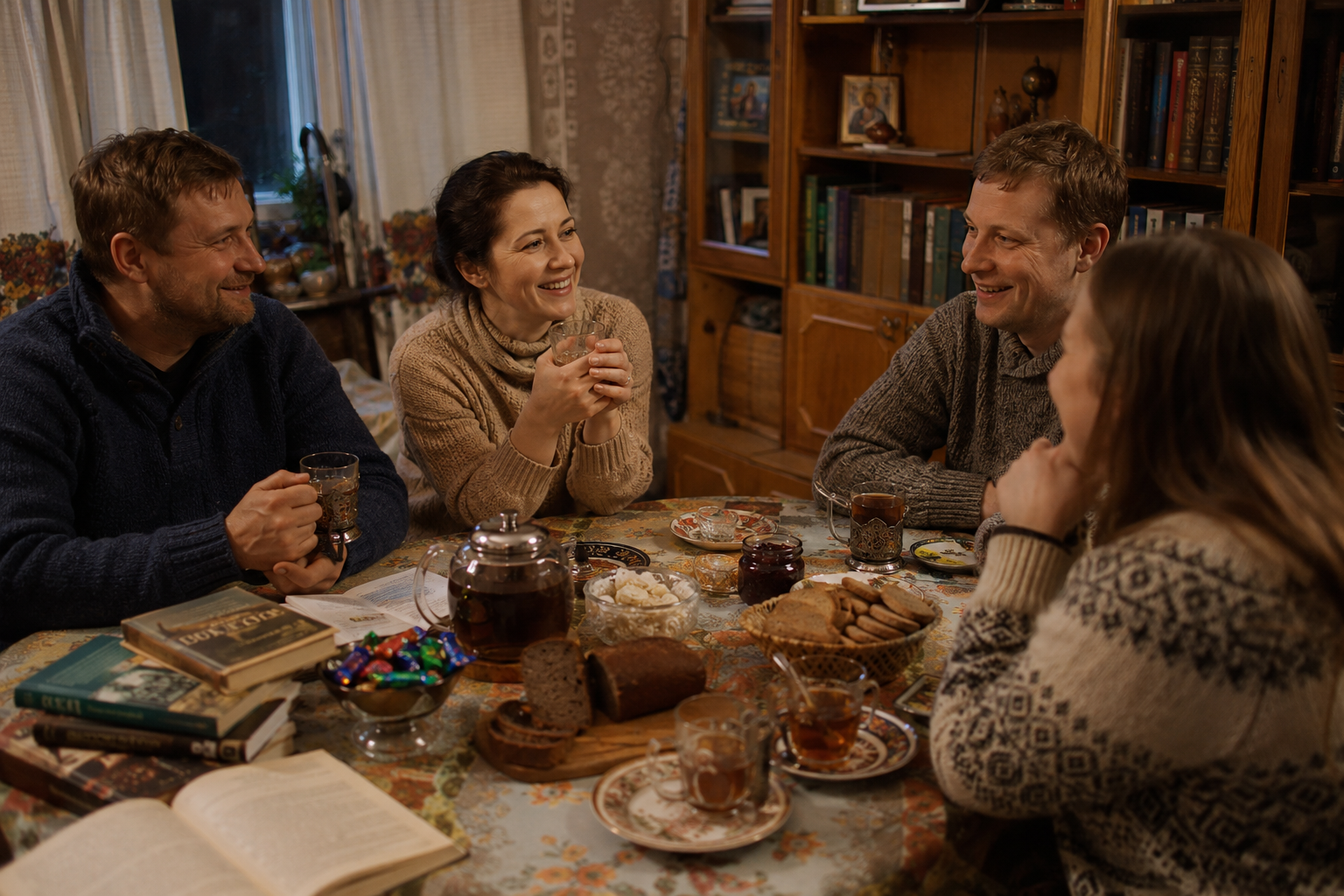
If your idea of Russia has been built from Cold War movies, spy thrillers, gloomy novels, viral travel videos, and the occasional image of a stern-looking person in a fur hat holding a glass of vodka, then you may be surprised to discover that some Russian stereotypes are not entirely invented—but the truth behind them is usually far more interesting, more human, and more culturally specific than the cliché itself.
Russian culture has always fascinated outsiders because it feels familiar and unfamiliar at the same time. Russia is European, but not quite Western European. It is modern, but deeply marked by history. It is famous for ballet, literature, chess, space science, Orthodox churches, Soviet apartment blocks, village houses, philosophical conversations, family tables, dark humor, and an emotional intensity that many visitors notice before they can explain it.
But fascination often produces simplification. Instead of asking why Russians may not smile at strangers, people say, “Russians are cold.” Instead of noticing the importance of direct speech, people say, “Russians are rude.” Instead of understanding the ritual role of vodka at certain celebrations, people say, “All Russians drink constantly.” Instead of seeing a country with many ethnic groups, regions, languages, religions, and social classes, people imagine one giant cultural block where everyone thinks, speaks, and behaves the same way.
Stereotypes are tricky because they often begin with a small observation. Many Russians really do smile less at strangers than Americans do. Many Russians really are more direct in conversation than people from cultures that rely heavily on polite softening. Tea really is a major part of daily life. Hospitality really can involve more food than a guest expects. Russian literature really does occupy an unusually important place in cultural identity.
But once a cultural pattern becomes a stereotype, it hardens. It loses context. It stops being about “many people in certain situations” and becomes “all Russians are like this.” That is where stereotypes become misleading.
For language learners, this distinction matters. If you are learning Russian, you are not only learning grammar, vocabulary, and the Cyrillic alphabet. You are also learning how people communicate, how they show warmth, how they disagree, how they welcome guests, how they use humor, and how public behavior differs from private life.
Understanding Russian stereotypes—both the ones with a grain of truth and the ones that are completely wrong—can help you avoid misunderstanding real people. A Russian person who does not smile at a cashier may be perfectly warm at home. A Russian friend who gives blunt advice may be trying to help you. A Russian host who keeps offering food is not trying to overwhelm you; they may be showing care. And a Russian who loves dark jokes is not necessarily depressed—they may simply come from a culture where humor has learned how to survive difficulty.
So let’s look at five Russian stereotypes that are actually true, or at least partly true, and five that are completely wrong.
Stereotype 1 That Is Actually True: Russians Do Not Smile at Strangers as Much as Americans Do
This is probably one of the first things foreigners notice in Russia or among Russian-speaking communities. People on the street often look serious. Cashiers may not smile automatically. Strangers in the metro do not usually exchange cheerful glances. A receptionist may be polite but not bubbly. To an American, this can feel cold or unfriendly.
But the more accurate explanation is this: in Russian culture, smiles are often expected to be sincere, personal, and motivated. You smile because something is actually funny, pleasant, warm, or emotionally real. You smile at friends, family, children, loved ones, or people with whom you have some human connection. You do not necessarily smile simply because another human being has entered your visual field.
This differs sharply from American service culture, where smiling can be part of politeness, professionalism, or friendliness toward strangers. In the United States, a cashier who does not smile may be interpreted as rude. In Russia, a cashier who smiles too much for no clear reason might be interpreted as strange, fake, flirtatious, or unserious.
This does not mean Russians never smile. They absolutely do. Russian homes, kitchens, offices, and friend groups can be full of laughter, teasing, jokes, affectionate nicknames, and emotional warmth. The difference is that smiling is more tied to private sincerity than public politeness.
For Russian learners, this is a very important cultural lesson. Do not assume that a neutral face means hostility. Do not assume that someone dislikes you because they are not performing warmth in a public setting. Russians often separate public and private behavior more strongly than Americans do.
A Russian person may look stern on the metro, then spend three hours at a kitchen table telling stories, laughing, offering tea, and asking deeply personal questions about your life. The face on the street is not always the person in the home.
Useful Russian words here include:
улыбка — smile
улыбаться — to smile
серьёзный — serious
искренний — sincere
This stereotype is true only if we phrase it carefully: Russians often smile less at strangers than Americans do. But that does not mean they are joyless, cold, or unfriendly. It means that smiling operates differently.
Stereotype 2 That Is Actually True: Russians Can Be Very Direct
Another stereotype that has some truth behind it is that Russians can sound direct, blunt, or even harsh to foreign ears.
An American might say, “Maybe we could think about doing this a little differently.” A Russian might say, “This does not work.” An American might say, “You look a little tired today.” A Russian friend might say, “You look terrible. Did you sleep?” An American colleague might soften criticism with several compliments first. A Russian colleague may go straight to the problem.
To Americans, this can feel rude. But in Russian communication, directness is often connected to honesty and sincerity. Saying what you mean is not automatically considered impolite. In fact, excessive politeness can sometimes sound artificial or evasive.
Russian has polite forms, of course. The language has formal and informal “you” forms: вы and ты. It has polite words like пожалуйста and спасибо. But Russian politeness does not always work the same way English politeness does. English often relies on indirectness: “Could you possibly…?” “Would you mind…?” “I was wondering if…” Russian can use more direct structures without sounding rude in context.
For example:
Дайте, пожалуйста, чай.
“Give me tea, please.”
To an English speaker, a literal translation may sound abrupt. But in Russian, with the right tone and пожалуйста, it can be perfectly normal and polite.
This directness also appears in friendships. A Russian friend may give very honest advice about your job, relationship, clothes, language skills, or life choices. They may not wrap the advice in soft phrases. But if you understand the cultural logic, you may realize that bluntness can be a form of care. A close friend tells you the truth because they respect you enough not to lie.
Useful words include:
прямота — directness
честность — honesty
искренность — sincerity
правда — truth
This stereotype is true in the sense that Russian communication can be more direct than American communication. But it is wrong to interpret all directness as aggression. Sometimes it is just a different cultural idea of honesty.
Stereotype 3 That Is Actually True: Tea Is Extremely Important in Russian Life
Many foreigners associate Russia with vodka, but if you spend time in Russian homes, you may discover that the real national drink of daily life is tea.
Tea, or чай, is everywhere. It appears at breakfast, at work, after dinner, during visits, during long conversations, and whenever someone needs comfort. A Russian host may ask, Чаю? — “Tea?” But the question often means much more than “Would you like a beverage?” It can mean: Sit down. Stay a while. Let’s talk. You are welcome here.
Russian tea culture is not always formal in the way some people imagine a Japanese tea ceremony or an English afternoon tea. It is often practical, warm, and domestic. There may be black tea, lemon, sugar, jam, honey, cookies, chocolates, cake, bread, cheese, or sandwiches. In older traditions, the samovar played an important role, though today most people simply use a kettle.
The emotional meaning remains. Tea creates a space for conversation. Many serious Russian discussions happen at the kitchen table over tea. People talk about family, politics, literature, health, money, memories, and the meaning of life. A quick cup of tea can become a three-hour conversation.
For language learners, tea culture is a doorway into Russian social life. If someone invites you to drink tea, they may be inviting you into a more personal space. It is not always about the tea itself. It is about time, attention, and relationship.
Useful Russian words include:
чай — tea
пить чай — to drink tea
чаепитие — tea drinking, tea gathering
варенье — jam or preserves
самовар — samovar
So yes, the stereotype that tea is important in Russian culture is true. If anything, many outsiders underestimate it. Vodka may dominate the cliché, but tea dominates everyday life.
Stereotype 4 That Is Actually True: Russians Are Very Hospitable
Russian hospitality can be intense.
If you visit a Russian home, especially the home of an older person or a family with traditional habits, you may be fed far more than you expected. You may arrive for “tea” and find salads, bread, cheese, sausage, pickles, cake, fruit, sweets, and several hot dishes. You may say you are full, only to hear:
Ешь, ешь!
“Eat, eat!”
Or:
Ты почти ничего не ел!
“You barely ate anything!”
This can feel overwhelming if you come from a culture where hosts are more restrained. But in Russian culture, feeding a guest is a major expression of care. A good host does not want the guest to leave hungry. A full table shows respect. Abundance shows warmth. Food says what words may not.
This tradition has deep roots. In a country with harsh winters, long distances, and historical scarcity, hospitality was not just politeness. It could be survival. A traveler depended on being received. A guest brought news, connection, and human presence. The home became a protected space where food, warmth, and conversation mattered deeply.
The old Russian tradition of хлеб-соль — bread and salt — expresses this beautifully. Bread and salt are offered as symbols of welcome, respect, and abundance. To share bread is to create a bond.
Useful words include:
гостеприимство — hospitality
гость — guest
угощение — treat, food offered to guests
угощайтесь — help yourself
хлеб-соль — bread and salt
This stereotype is true: Russian hospitality can be generous, emotional, and food-centered. But it should not be caricatured as “force-feeding.” At its heart, it is about care. The host is saying: You are not a stranger. You are under my roof. You will be fed.
Stereotype 5 That Is Actually True: Russians Respect Literature and Education
The stereotype that Russians love literature, poetry, and serious conversation has a real cultural basis.
Of course, not every Russian spends the evening reading Dostoevsky. Not everyone quotes Pushkin in daily conversation. Modern Russians watch television, scroll social media, listen to pop music, go shopping, follow sports, and live ordinary contemporary lives like everyone else.
But it is true that literature and education hold an unusually high place in Russian cultural identity. Russian schoolchildren study Pushkin, Lermontov, Gogol, Tolstoy, Dostoevsky, Chekhov, Akhmatova, Tsvetaeva, and many others. Poetry memorization has long been part of education. Writers in Russia have often been treated not merely as entertainers, but as moral voices, thinkers, and witnesses to history.
This is connected to the concept of the интеллигенция — the educated cultural class associated with literature, ideas, moral seriousness, and social responsibility. Even when people criticize the idea, it remains a powerful part of Russian cultural history.
Russian culture also values deep conversation. Among friends, especially in private spaces, people may discuss literature, politics, suffering, memory, childhood, philosophy, love, death, and the soul with a seriousness that can surprise outsiders used to lighter small talk.
Useful words include:
литература — literature
поэзия — poetry
образование — education
интеллигенция — intelligentsia
душа — soul
тоска — deep longing or melancholy
So yes, this stereotype is partly true. Russian culture has a special reverence for literature and intellectual life. But it becomes false when people imagine that all Russians are tragic philosophers walking through snow with a copy of Dostoevsky. The real picture is more varied and more alive.
Stereotype 1 That Is Completely Wrong: Russians Are Cold and Unfriendly
This is one of the most common and unfair stereotypes.
It comes partly from the public behavior we discussed earlier. Russians may not smile at strangers. They may not make cheerful small talk in elevators. They may seem reserved in shops, offices, or public transportation. To Americans, this can read as coldness.
But that interpretation misses the public/private divide in Russian culture.
Many Russians are reserved in public but extremely warm in private. Friendship, once established, can be deep, loyal, and emotionally demanding. A Russian friend may help you move, lend you money, bring medicine when you are sick, give honest advice, invite you to family gatherings, and expect the same seriousness from you in return.
Russian friendship is often less casual than American friendship. In American English, people may call many acquaintances “friends.” In Russian, друг or подруга often implies a deeper bond. There are acquaintances, colleagues, neighbors, and then there are real friends.
This means that warmth is not always distributed widely and lightly. It may be reserved for the inner circle. But once you are inside that circle, the warmth can be intense.
A better description would be: Russians may be reserved with strangers but deeply warm with people they trust.
That is very different from “cold and unfriendly.”
Stereotype 2 That Is Completely Wrong: All Russians Drink Vodka Constantly
The vodka stereotype may be the most overused Russian cliché in the world.
In movies, Russians are often shown drinking vodka in every scene: at breakfast, at work, in the snow, during arguments, before fights, after fights, and while saying something dramatic about destiny. This image is so common that many foreigners assume vodka is the center of Russian daily life.
The truth is more complicated.
Vodka has played an important role in Russian history and ritual. It appears at weddings, funerals, birthdays, New Year celebrations, and formal toasts. Alcohol abuse has also been a real social problem in Russia, especially in certain periods of the 20th century and the difficult post-Soviet years.
But “all Russians drink vodka constantly” is simply false.
Many Russians drink rarely. Many prefer wine, beer, cocktails, or no alcohol at all. Younger urban Russians may be interested in coffee culture, fitness, craft drinks, or alcohol-free lifestyles. Religious people may avoid alcohol. Health-conscious people may avoid it. Many families do not keep vodka as a daily beverage.
And again, tea is far more central to everyday life.
Vodka is part of Russian culture, but it is not Russian culture. Reducing Russians to vodka is lazy and inaccurate. It ignores class, generation, gender, religion, region, health, personality, and modern change.
A more accurate statement would be: Vodka has an important symbolic and ritual place in Russian culture, but daily Russian life is much more likely to involve tea than vodka.
Stereotype 3 That Is Completely Wrong: Russians Are Always Gloomy and Pessimistic
Russian culture has a reputation for melancholy. Some of this comes from literature. Dostoevsky, Tolstoy, Chekhov, and other Russian writers explore suffering, moral conflict, death, guilt, longing, and spiritual crisis with unusual depth. Russian music and poetry can also be emotionally intense.
Add serious public faces, harsh winters, complicated history, and dark humor, and outsiders may conclude: Russians are gloomy.
But this is a major oversimplification.
Russian culture is not joyless. It is full of jokes, absurd humor, celebrations, music, dancing, children’s cartoons, affectionate teasing, family gatherings, summer dachas, birthday parties, and long nights of laughter. Russians often have a sharp sense of humor, including dark humor, self-deprecating humor, and irony.
What may be different is the relationship to optimism. American culture often values positivity, enthusiasm, and “looking on the bright side.” Russian culture may be more skeptical of forced optimism. Saying everything is wonderful when it clearly is not can sound fake. Complaining can be a form of bonding. Dark jokes can be a way of surviving difficulty.
The Russian word тоска is often mentioned as a culturally important word. It can mean melancholy, longing, spiritual ache, or emotional restlessness. But having a word for deep longing does not mean people are always miserable. It means the culture has a rich emotional vocabulary.
Another useful word is авось, a kind of fatalistic hope: maybe it will somehow work out. This is not simple pessimism. It is a mix of resignation, humor, and survival.
A better description would be: Russian culture is comfortable with emotional depth, irony, and realism, but that does not mean Russians are always gloomy.
Stereotype 4 That Is Completely Wrong: Russian Culture Is Only Serious and Dark
Because Russian literature is so famous, many foreigners imagine Russian culture as one long tragic novel. They think of Dostoevsky, snowy streets, suffering souls, political drama, and heavy classical music.
All of that exists. But it is only one part of the picture.
Russian culture also has a huge tradition of comedy, satire, absurdity, children’s animation, pop music, folk songs, fairy tales, internet memes, romantic comedies, New Year films, and silly everyday jokes. Soviet and post-Soviet culture produced countless comic films and cartoons that are beloved across generations. Many Russian families have favorite jokes, favorite songs, and favorite holiday movies that are far from dark.
Russian humor can be dry, sarcastic, absurd, or dark, but it can also be playful and warm. A Russian kitchen table may move from political frustration to childhood stories to ridiculous jokes in the space of ten minutes.
This is important for language learners because if you only study “serious Russia,” you miss the living culture. You miss jokes, cartoons, pop songs, slang, affectionate diminutives, and the everyday comedy of family life.
Russian culture can be tragic, philosophical, and emotionally intense. But it can also be funny, tender, ridiculous, colorful, and deeply alive.
Stereotype 5 That Is Completely Wrong: Russia Is Culturally Uniform
Perhaps the most misleading stereotype is the idea that all Russians are basically the same.
Russia is enormous. It spans many time zones and includes many regions, ethnic groups, religions, languages, and cultural traditions. Life in Moscow is not the same as life in a Siberian town. St. Petersburg is not the same as Vladivostok. Tatarstan is not the same as Yakutia. A young software developer in a large city may have very different habits, values, and worldview from an elderly villager, a university professor, a factory worker, a musician, or a Russian-speaking immigrant in New York, Berlin, Tel Aviv, or Riga.
Even the word “Russian” can be complicated. It may refer to ethnicity, citizenship, language, culture, or identity. There are ethnic Russians, Russian citizens of many ethnic backgrounds, Russian speakers outside Russia, Soviet-born people with hybrid identities, and diaspora communities shaped by life abroad.
There are generational differences too. People who grew up in the Soviet Union may have different memories, habits, and assumptions from those born after the Soviet collapse. Younger Russians are often more globally connected through the internet, travel, music, gaming, and social media.
So when someone says, “Russians are like this,” the first question should be: Which Russians? Where? What generation? What background? What context?
A language learner should be especially careful here. Russian is spoken by people from many countries and communities. Learning Russian opens the door not only to Russia, but also to a much wider Russian-speaking world.
The stereotype of cultural uniformity is not just wrong. It prevents real understanding.
What These Stereotypes Teach Russian Learners
The point of examining stereotypes is not to decide whether Russians are “really” one thing or another. The point is to learn how cultural patterns work.
If you are studying Russian, these patterns can help you communicate more intelligently.
You learn that a neutral face is not necessarily rejection. You learn that direct advice may be a sign of honesty. You learn that tea is not just a drink but a social invitation. You learn that hospitality may come with pressure to eat more than you planned. You learn that literature, memory, and emotional sincerity matter. You learn that public reserve and private warmth can coexist.
You also learn to reject lazy clichés. Russians are not all cold. They do not all drink vodka constantly. They are not all gloomy. Their culture is not only tragic. They are not all the same.
This is what language learning does at its best. It trains you to notice nuance. It teaches you that words live inside cultures, and cultures live inside history. It helps you move beyond the cartoon version of a people and toward real human understanding.
FAQs About Russian Stereotypes
Why do Russians rarely smile at strangers?
Many Russians see smiles as something that should be sincere and motivated rather than automatic. Smiling at strangers for no clear reason can seem fake or unnecessary. This does not mean Russians are unfriendly; it means public smiling has a different cultural meaning.
Are Russians really rude or just direct?
Russian communication can be more direct than American communication. What sounds blunt in English may sound normal in Russian. Directness is often connected with honesty and sincerity, especially among friends.
Do all Russians drink vodka?
No. Vodka has an important place in Russian celebrations and cultural symbolism, but many Russians drink rarely, moderately, or not at all. Tea is much more central to everyday Russian life.
Is tea really important in Russian culture?
Yes. Tea is a major part of Russian daily life and hospitality. Being invited for tea often means being invited to sit, talk, and spend time together.
Are Russians cold and unfriendly?
No. Many Russians may seem reserved in public, but they can be very warm, loyal, and generous in private relationships. Russian friendship is often deep and serious.
Why is Russian culture associated with sadness?
Russian literature, music, and history often explore suffering, longing, and moral struggle. However, Russian culture also has rich traditions of humor, satire, celebration, and warmth.
What is the Russian word for hospitality?
The Russian word for hospitality is гостеприимство. It is an important cultural value, often expressed through generous food, tea, and attention to guests.
What does “душа” mean?
Душа means “soul.” It is a culturally important word in Russian and appears in many expressions connected to emotional depth, sincerity, generosity, and identity.
What does “тоска” mean?
Тоска is a difficult word to translate. It can mean melancholy, longing, sadness, yearning, or spiritual ache. It is often used to describe a deep emotional state rather than ordinary sadness.
How can understanding stereotypes help me learn Russian?
Understanding stereotypes helps you avoid cultural misunderstandings. It teaches you how Russians may express politeness, warmth, honesty, friendship, humor, and hospitality differently from Americans.
Learn Russian Through Culture with Polyglottist Language Academy
Russian stereotypes are not just funny ideas floating around in movies and travel blogs. They are clues—sometimes accurate, sometimes misleading—to deeper cultural patterns. When you study Russian, you are not only learning how to conjugate verbs or read Cyrillic. You are learning how people communicate, how they show warmth, how they argue, how they welcome guests, and how they think about friendship, honesty, literature, food, and home.
At Polyglottist Language Academy, we believe that language learning should always include culture. Our Russian classes help students understand not only the structure of the language, but also the world behind it. Whether you are a complete beginner, a returning student, or someone who wants to speak more confidently with Russian-speaking friends, family, colleagues, or communities, our small-group and online classes can help you build real skills in a supportive environment.
If this article made you curious about Russian culture beyond the stereotypes, we invite you to take the next step. Sign up for Russian classes with Polyglottist Language Academy and discover how much richer the language becomes when you learn it through real cultural understanding.
You May Also Enjoy These Articles
If you enjoyed this article, you may also like these related posts from our language and culture blog: