I Went to a Fancy Russian Restaurant in Saint Petersburg: What the Food and Atmosphere Are Really Like
During my past week in Saint Petersburg, I must have walked up and down Nevsky Prospekt at least fifty times. By the end of it, I felt as though I already knew the avenue intimately—if only from the outside. I passed the same cafés, bookstores, theaters, and restaurants again and again, slowly learning which places felt touristy and which seemed genuinely local.
There were several restaurants advertising Russian cuisine, but none of them quite satisfied what I was craving. I didn’t want something casual or modernized. I was looking for a place that felt ceremonial—a traditional Russian restaurant with music, deliberate pacing, and interiors that made you slow down and pay attention.
After some searching, I settled on Petrov-Vodkin. The restaurant immediately stood out, not just because it looked elegant, but because it was named after an artist I already knew and liked.
Why Petrov-Vodkin?
Kuzma Petrov-Vodkin was one of Russia’s most distinctive early-20th-century painters. His work is known for its bold colors, unusual perspectives, and symbolic weight. His most famous painting, Bathing of a Red Horse, depicts a striking red horse with a young rider—an image that is both beautiful and slightly unsettling. The painting has become iconic in Russian art history and is housed in the Tretyakov Gallery in Moscow.
Petrov-Vodkin’s art often feels suspended between realism and symbolism, rooted in tradition but quietly unconventional. It felt like a fitting namesake for a restaurant that promised traditional Russian cuisine presented with thought and restraint rather than spectacle.
The English-language menu was impressively detailed, listing ingredients for every dish. And yet, many of the names meant nothing to me. Even when I understood what was in a dish, I couldn’t quite imagine how it would taste. I was grateful that reservations could be made online—especially convenient if, like me, you don’t speak Russian well enough to comfortably call a restaurant.
First Impressions
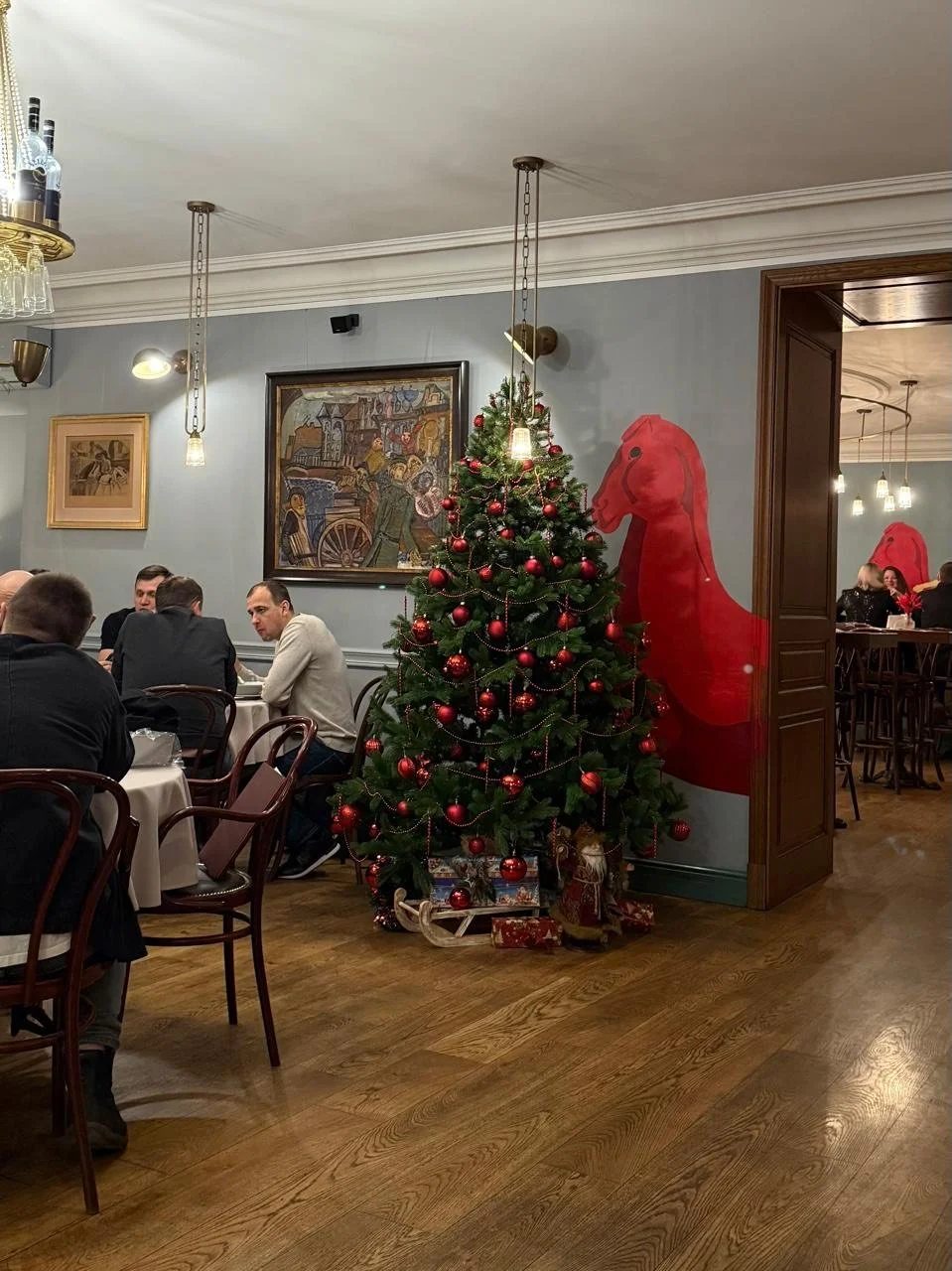
I took a short taxi ride from my Aparthotel to the restaurant, which is tucked just off Nevsky Prospekt. From the moment I stepped inside, I was pleasantly surprised. The décor felt unmistakably Russian without being theatrical—rich colors, traditional motifs, and an atmosphere that encouraged quiet conversation rather than noise.
In the dining room where I was seated, a young woman stood in the corner performing. She wasn’t singing or dancing. Instead, she was softly reciting Russian poetry. The room was completely attentive. No one spoke. It didn’t feel like background entertainment; it felt like part of the dining ritual itself.
What I Ordered (and What It Means)
Russian Dish Kholodets
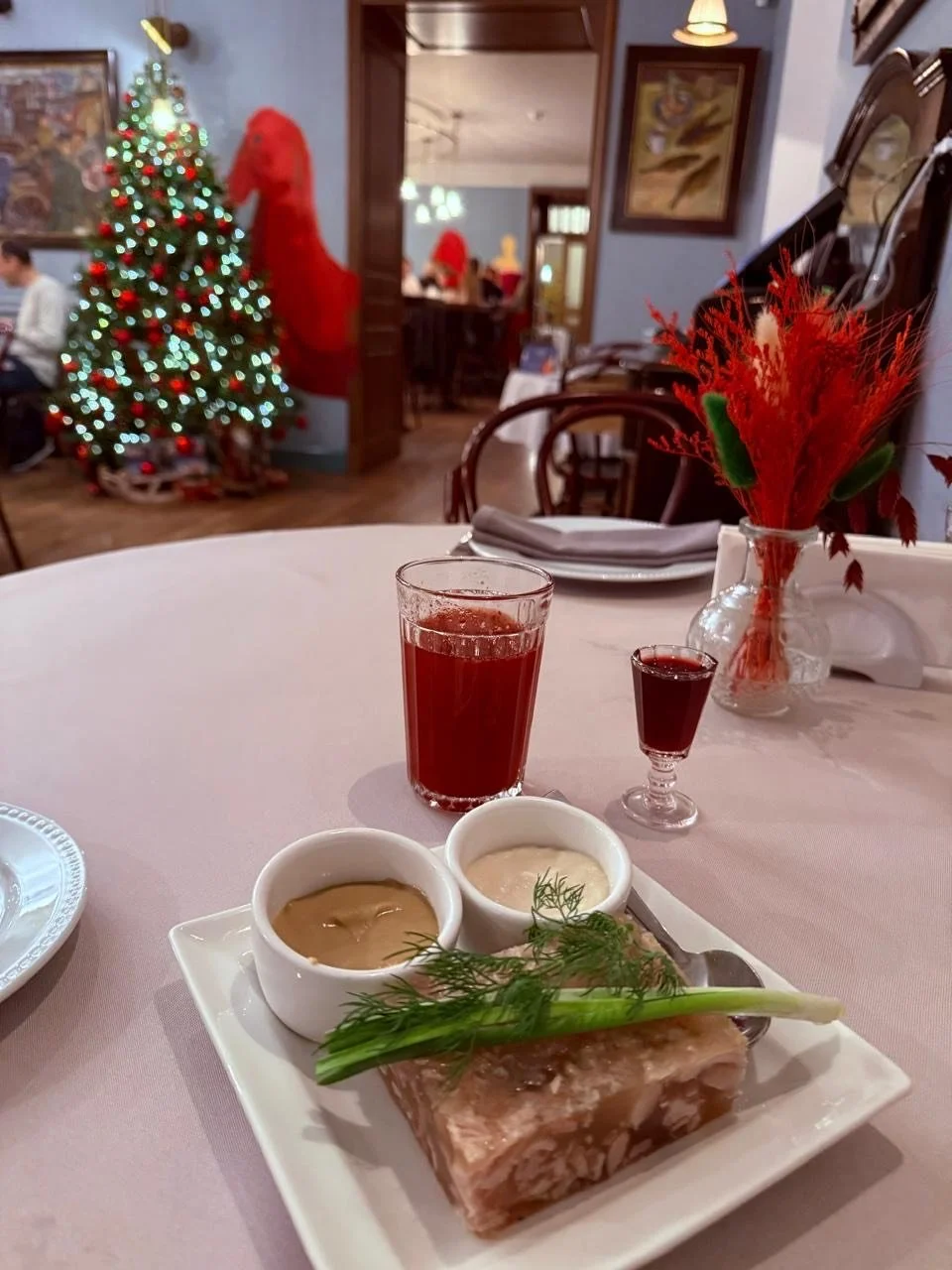
Had I not researched Russian dishes beforehand, ordering would have been genuinely difficult. I started with kholodets, a dish that often surprises first-time visitors.
Kholodets is a traditional savory meat aspic, made by slowly simmering pork or beef—often with bones—until the natural collagen thickens the broth into a jelly-like consistency. Served cold, it’s usually paired with mustard or horseradish. The texture can be intimidating, but the flavor is deep, rich, and unmistakably old-fashioned. This is the kind of dish that speaks of long winters, patience, and practicality.
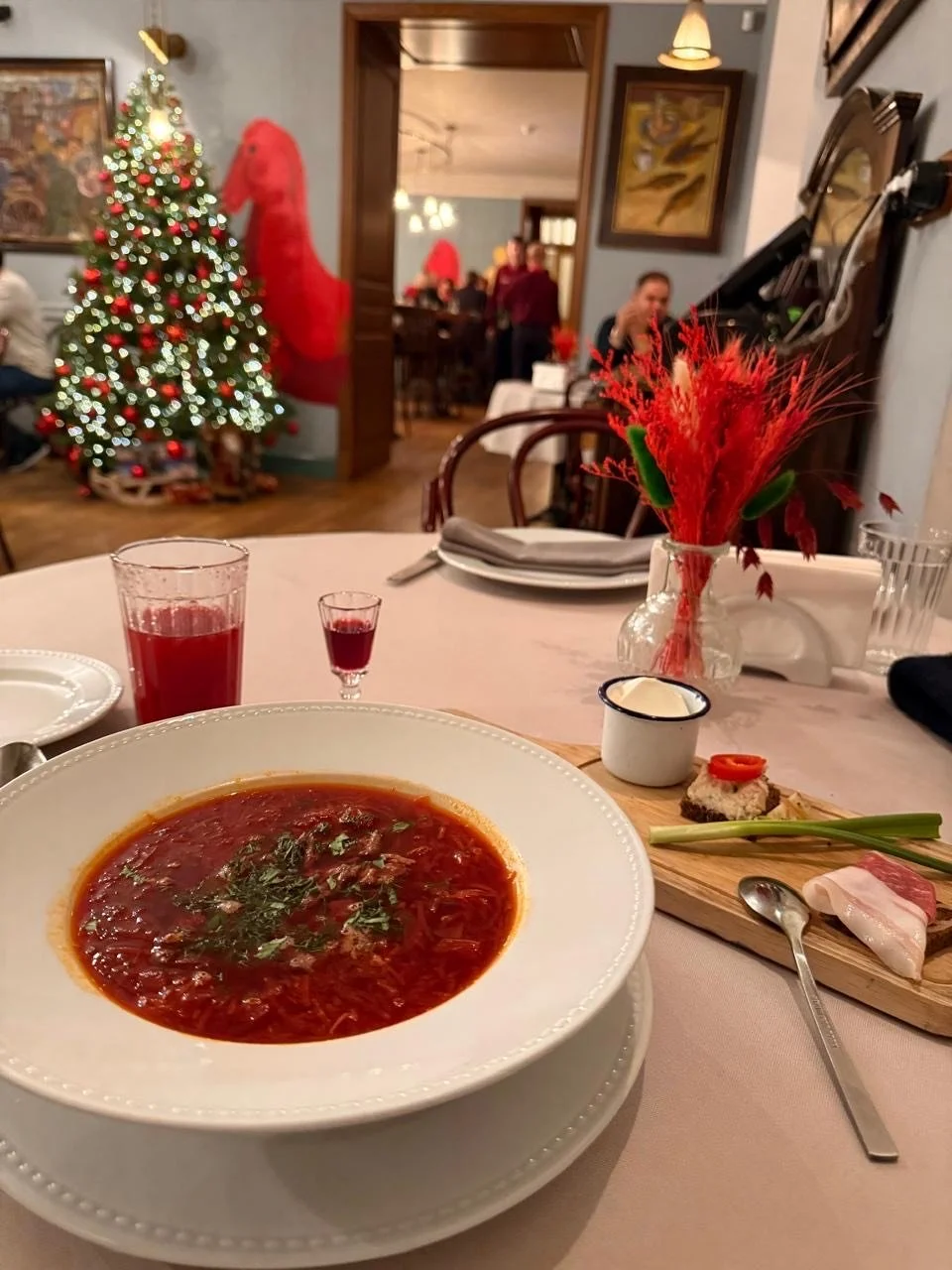
Next came borsch, the iconic beet soup. This version was rich, aromatic, and deeply colored, with tender meat and vegetables. It arrived with a separate wooden board holding classic accompaniments: salo (salted cured pork fat), fresh green onions, and sour cream. Adding sour cream softened the soup’s acidity, while alternating bites of borsch with salo and onion made the meal feel ritualistic rather than casual—almost instructional, as if this were the correct way to eat it.
Russian Soup Borsch
I was equally intrigued by the menu of nalivki, traditional Russian fruit infusions. Nalivki are homemade-style liqueurs made by steeping berries, fruits, or herbs in alcohol with sugar. Each one had a distinct personality—some warming and sweet, others sharp and intense. They’re not meant to be rushed. Sipping them slowly felt like participating in a domestic tradition rather than ordering a drink.
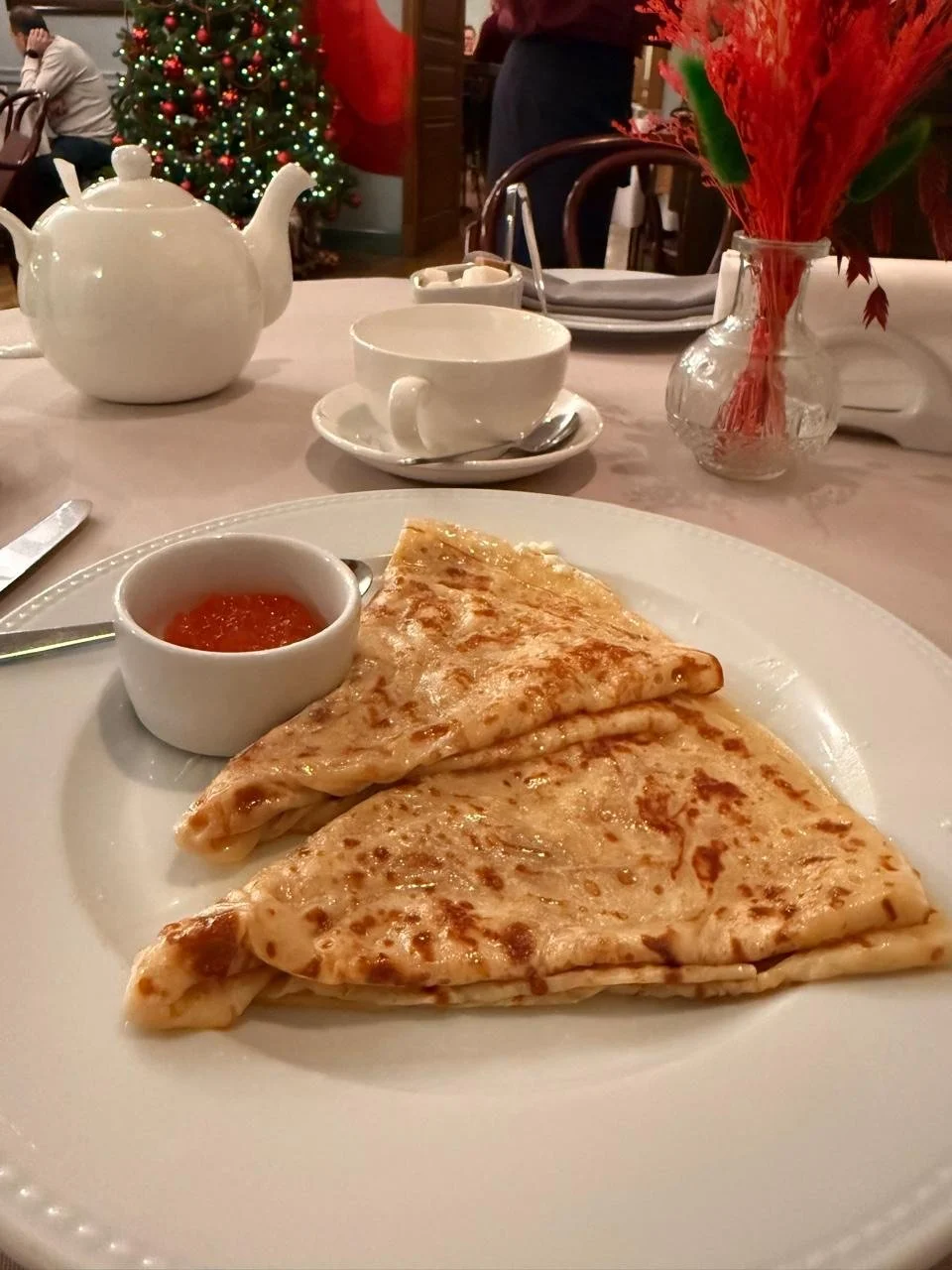
To finish, I ordered blini with red caviar. The crepes were thin and delicate, served warm, topped with glossy pearls of salmon caviar. Simple, luxurious, and unmistakably Russian, it felt like the perfect ending—elegant without excess.
An Unexpected Conversation
As I was nearly finished with my meal, I leaned back in my chair, no longer eating, just observing the room and listening to the distant echoes of Russian songs drifting in from another dining hall. At that moment, two men were heading toward the exit. One of them suddenly stopped, turned back, and approached my table.
He began speaking to me in Russian, but quickly realized I didn’t understand. Without hesitation, he switched to English. His English wasn’t elaborate, but it was more than enough to ask questions. The one that mattered most to him was why I was dining alone.
He explained that he had just finished dinner with his friend and said—almost regretfully—that had he known I was by myself, they would have invited me to sit with them. He seemed genuinely apologetic, carefully searching for English words to continue the conversation, clearly wanting to bridge the gap.
When he finally walked away, I was left with a quiet realization: in Russia, going to a restaurant—especially a place like this—is rarely a solitary experience. Dining is social, intentional, and shared. Eating alone felt unusual enough that it prompted concern.
Final Thoughts
By the time I left Petrov-Vodkin, I understood that I hadn’t just gone out to dinner. I had stepped into a carefully choreographed cultural space—where food, art, literature, and human connection quietly coexist.
A fancy Russian restaurant isn’t about rushing through courses or chasing novelty. It’s about atmosphere, memory, and shared presence. And in Saint Petersburg, even a meal can feel like a small cultural lesson—one that lingers long after the plates are cleared.
From Curiosity to Communication
Travel has a way of sharpening curiosity—not just about places, but about the language that quietly shapes everyday interactions within them. Moments like these make it clear how much meaning lives beyond menus and gestures. Understanding Russian opens access to cultural nuances that are otherwise easy to miss: tone, humor, social habits, and the unspoken rules that guide conversation.
At Polyglottist Language Academy, our Russian programs are built around this idea. Language instruction is always paired with cultural context, helping students move beyond passive observation toward genuine participation. Our online classes are designed for adults who want Russian they can actually use—whether while traveling, connecting with people, or simply understanding the world more deeply.
If experiences like this spark your interest in Russian culture, learning the language can be a natural and rewarding next step.
👉 Discover Russian classes at Polyglottist Language Academy
Continue Exploring Saint Petersburg with Greta
If you’re curious to see more of Saint Petersburg through everyday experiences rather than checklists and highlights, you can continue following Greta’s journey through the city. Each article focuses on a different layer of daily life—from walking the streets in winter to settling into an apartment, noticing routines, and observing how the city reveals itself slowly over time.
Why Russian Bakeries Matter In St. Petersburg: Pekarni, Rum Baba, And Everyday Life
MY FIRST 24 HOURS IN ST. PETERSBURG: NEVSKY PROSPECT, TOO MUCH TEA, AND RUSSIAN DONUT “PISHKA”
A DAY AT DOM KNIGI: BOOKSTORES, COFFEE, AND KAZAN CATHEDRAL IN ST. PETERSBURG
Where To Stay In Downtown St. Petersburg: A Real Apart Hotel Experience
Walking In Saint Petersburg In December: A Winter City That Has Adapted
My First Morning In St. Petersburg: Snow, Silence, And The Smell Of Fresh Bread