
What Not to Wear in Russia (If You Don’t Want to Stand Out)
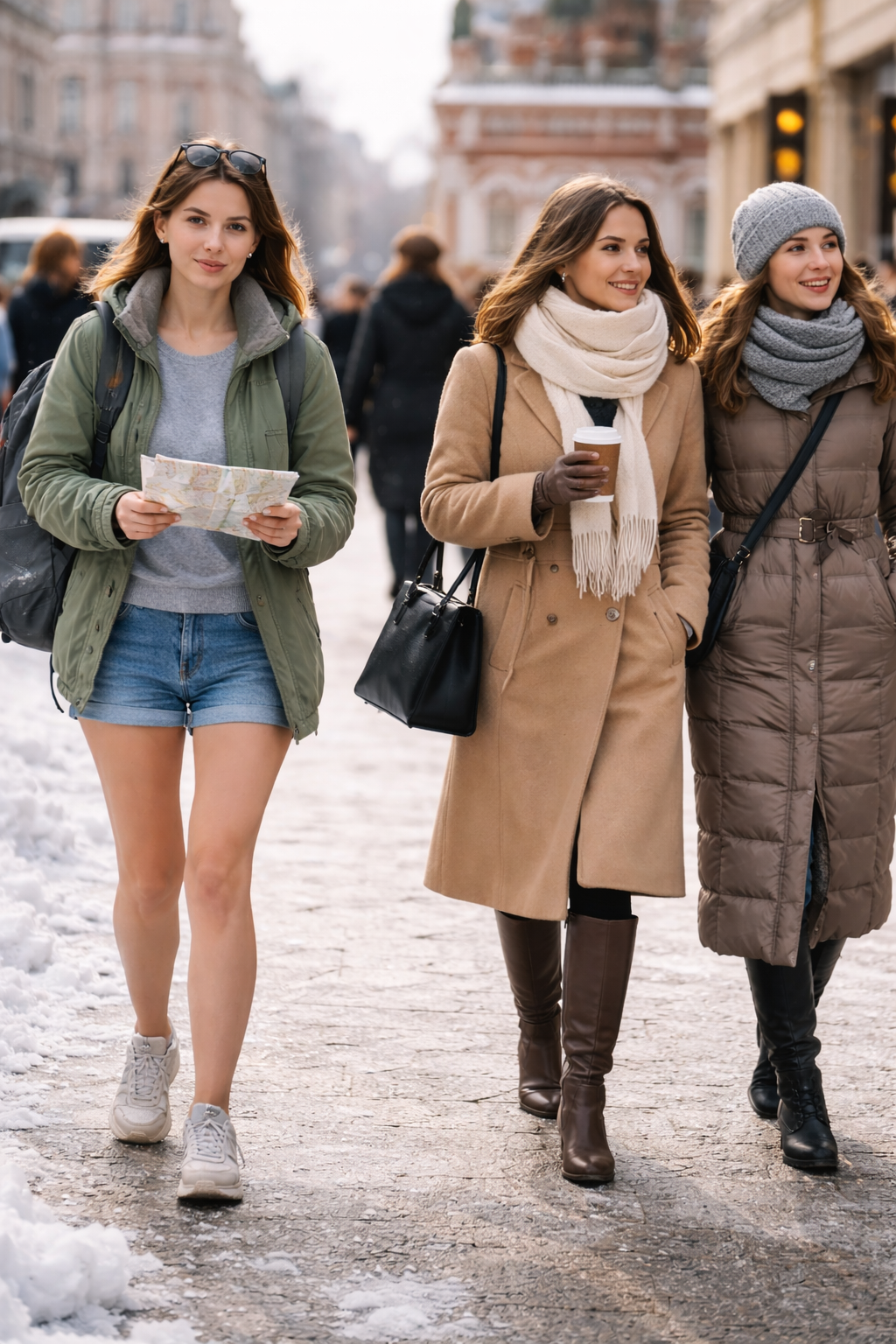
Standing out in Russia rarely has anything to do with being loud, colorful, or expressive in the way many Western cultures interpret visibility; instead, it’s often the quiet signals—clothing choices, textures, shoes, silhouettes—that immediately mark someone as “not from here,” sometimes within seconds, long before a single word is spoken.
What makes Russian dress codes so intriguing is that they are mostly unspoken. There are no official rules, no signs telling you what’s acceptable, and no one will correct you directly. Yet people notice. And while most Russians are not judgmental in the moral sense, they are extremely observant. Clothing becomes a form of social literacy: it communicates seriousness, self-respect, awareness of context, and your ability to read a room without being told how.
This article isn’t about fashion trends or trying to “blend in perfectly.” It’s about avoiding the most common mistakes that make foreigners stand out unnecessarily—especially travelers, expats, and students who want to be taken seriously, treated normally, and not instantly labeled as tourists. Many of these mistakes come from perfectly reasonable habits in the US or Western Europe that simply don’t translate well into Russian public life.
Below is a detailed guide to what not to wear in Russia if your goal is to move through cities comfortably, confidently, and without attracting the wrong kind of attention.
WHY CLOTHING MATTERS MORE IN RUSSIA THAN YOU EXPECT
In Russia, clothing is not primarily about self-expression. It’s about context.
Historically, appearance has been closely tied to dignity, reliability, and even moral character. During Soviet times, when choices were limited, looking neat and intentional was a way of asserting control and respectability. That legacy never fully disappeared. Today, even with global brands everywhere, Russians still tend to read clothing as a signal of seriousness.
This doesn’t mean everyone dresses formally all the time. It means outfits are usually considered. Even casual looks tend to be coordinated, clean, and purposeful. The biggest mistake foreigners make is assuming that “comfortable” and “acceptable” mean the same thing everywhere.
They don’t.
1. DON’T WEAR ATHLEISURE AS EVERYDAY STREET CLOTHING
One of the fastest ways to stand out in Russian cities is wearing yoga pants, gym leggings, or athletic shorts as casual daily wear.
In many parts of the US, athleisure signals health, busyness, and modernity. In Russia, it signals exactly one thing: you’re either going to the gym or you don’t care how you look.
Leggings without a long top, sports bras under jackets, running shorts, and visibly technical fabrics are rarely worn outside athletic contexts. Even people who exercise regularly change clothes before going out.
Exception: very young people and some university students—but even then, it’s limited.
2. DON’T WEAR PAJAMA-LOOKING CLOTHES IN PUBLIC
Oversized sweatpants, fleece sets, fuzzy slippers, pajama-style trousers, or anything that looks like sleepwear will immediately mark you as foreign.
Russian casual wear is still structured:
Coats have shape
Pants have seams
Knitwear looks intentional
Comfort is achieved through tailoring and fabric choice, not by wearing clothes that look unfinished.
3. DON’T WEAR FLIP-FLOPS OR BEACH SHOES IN THE CITY
Flip-flops in Moscow or St. Petersburg—even in summer—are a hard no.
They are associated strictly with:
Beaches
Pools
Summer houses (dachas)
Wearing them in urban environments suggests carelessness or confusion about social space. Even sandals tend to be more structured and styled.
4. DON’T WEAR DIRTY OR OVERLY WORN SHOES
Shoes matter in Russia more than almost any other clothing item.
Scuffed sneakers, muddy soles, fraying heels, or visibly worn-out footwear draw attention fast. Russians notice shoes instinctively. Clean shoes signal self-respect and awareness.
This is one reason why many Russians prefer leather boots, loafers, or clean minimalist sneakers rather than heavily worn athletic shoes.
5. DON’T OVERDO “OUTDOOR” CLOTHING IN THE CITY
Technical jackets, hiking backpacks, cargo pants, and outdoorsy aesthetics are practical—but they don’t belong everywhere.
In Russia, there’s a clearer distinction between:
City clothing
Nature clothing
Wearing full hiking gear in an urban café or restaurant feels as out of place as wearing a suit to go camping.
6. DON’T ASSUME CASUAL MEANS SLOPPY
Casual in Russia still means neat.
Wrinkled T-shirts, stretched collars, faded prints, and random logo combinations signal indifference. Russians often dress “up” slightly for situations where Westerners dress down—restaurants, theaters, casual meetings.
This doesn’t require luxury brands. It requires coherence.
7. DON’T WEAR LOUD SLOGANS OR IRONIC GRAPHICS
Graphic T-shirts with jokes, political slogans, sarcasm, or oversized branding are uncommon and often read as juvenile.
Russian style favors:
Neutral colors
Clean lines
Subtle statements
Humor is appreciated—but not usually worn across the chest.
8. DON’T DRESS UNDERDRESSED FOR CULTURAL SPACES
Theaters, concert halls, ballet, opera, and even museums often come with implicit dress expectations.
You don’t need formalwear—but jeans and hoodies can feel disrespectful in certain venues. Russians treat cultural outings as events, not errands.
9. DON’T IGNORE SEASONAL LOGIC
Dressing “wrong for the weather” attracts attention.
Light jackets in deep winter
Heavy boots in warm spring
Summer clothes the moment the sun appears
Russians dress cautiously and seasonally. Weather changes are respected, not challenged.
10. DON’T CONFUSE SEXY WITH STYLISH
This is one of the most misunderstood points.
Yes, some Russian women dress very femininely. But overtly revealing clothing—especially during the day—often feels out of place. Short skirts, deep cleavage, and extreme bodycon styles are usually reserved for specific contexts.
Daytime city style tends to be polished, not provocative.
11. DON’T WEAR BACKPACKS LIKE A TOURIST
Large hiking backpacks scream “visitor.”
Many locals prefer:
Structured handbags
Leather backpacks
Minimalist crossbody bags
It’s not about cost—it’s about proportion and intention.
12. DON’T NEGLECT OUTERWEAR
Coats are central to Russian style.
A good coat can carry an entire outfit. A bad one ruins everything.
Puffy, shapeless jackets are practical but often avoided in favor of tailored wool coats, structured puffers, or long silhouettes—even in cold weather.
13. DON’T WEAR “JUST RAN OUT” OUTFITS
In many Western cultures, running errands in whatever you’re wearing is normal. In Russia, people usually change—even for short outings.
Going outside is treated as a public act, not a private extension of home life.
WHAT YOU SHOULD WEAR INSTEAD (BRIEFLY)
While this article focuses on what not to wear, here’s the general principle that helps you blend in:
Clean lines
Neutral colors
Structured silhouettes
Clean shoes
Thoughtful layering
You don’t need to look Russian. You just need to look intentional.
CLOTHING, LANGUAGE, AND CULTURAL FLUENCY
Clothing is one of the first “languages” you speak in Russia—often before Russian itself. It signals whether you understand social boundaries, context, and unspoken expectations.
Learning Russian without understanding these cues can feel like missing half the conversation.
FAQs: WHAT NOT TO WEAR IN RUSSIA
Is it dangerous to stand out because of clothing?
Usually no, but it can attract unwanted attention or make interactions less smooth.
Do Russians judge foreigners harshly for clothing?
Not harshly—but they notice quickly.
Are dress codes stricter in Moscow and St. Petersburg?
Yes. Smaller cities may be more relaxed, but standards still exist.
Can I wear sneakers?
Yes—if they’re clean, simple, and styled intentionally.
Do men face similar expectations?
Absolutely. Sloppy dressing stands out just as much for men.
LEARN THE CULTURE BEHIND THE LANGUAGE
Understanding what not to wear in Russia is about more than fashion—it’s about learning how Russians read the world. This kind of cultural literacy makes language learning faster, deeper, and far more rewarding.
At Polyglottist Language Academy, we teach Russian the way it’s actually used—along with the cultural logic that shapes everyday behavior, communication, and social norms. Our classes help you understand why things feel the way they do, not just how to conjugate verbs.
👉 Join our Russian language classes and learn to navigate Russian culture with confidence, not guesswork.
READ NEXT ON OUR BLOG
If you found this useful, you’ll enjoy these articles too: