
A Day in the Life of a Russian City Apartment
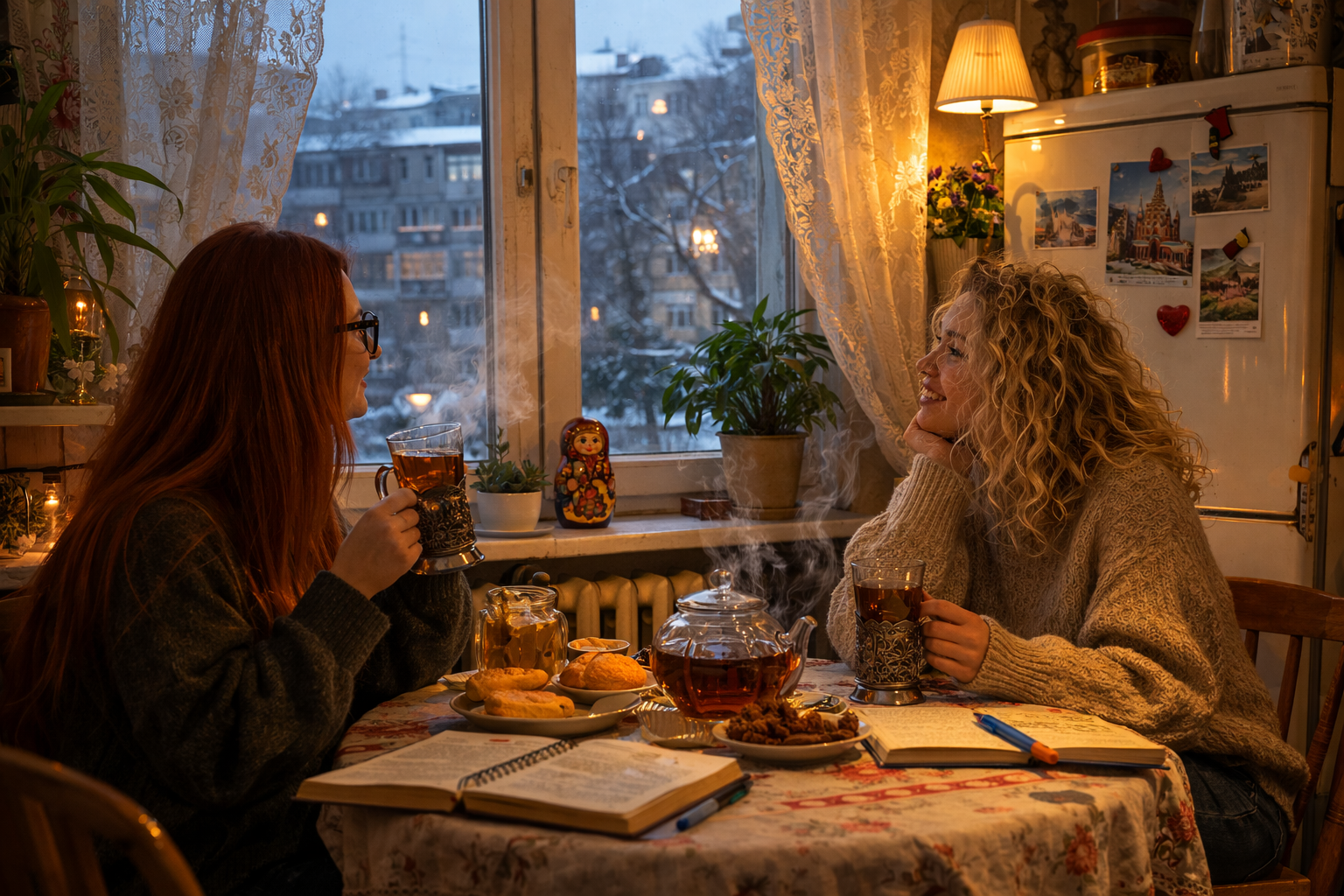
There is a particular rhythm to life inside a Russian city apartment — a quiet choreography shaped by history, climate, architecture, and generations of shared experience — where mornings begin not with urgency but with ritual, walls carry memories older than their paint, kitchens function as emotional centers rather than merely practical spaces, and daily life unfolds in ways that reveal far more about Russian culture than any museum, monument, or travel guide ever could.
To understand Russia, one must step inside its apartments.
Not the grand palaces of Saint Petersburg or curated tourist spaces, but ordinary city flats: the places where tea is poured endlessly, conversations stretch late into the night, neighbors are heard through thin walls, and everyday routines reflect centuries of adaptation to urban density, harsh winters, and deeply communal social traditions.
For visitors, Russian apartments can feel both familiar and strangely different. The layout may resemble European housing, yet the atmosphere — the emotional texture of domestic life — carries its own unmistakable character.
A Russian apartment is not just where people live.
It is where life happens.
Morning: The Quiet Beginning
The day often begins slowly.
Unlike cultures that celebrate energetic mornings, Russian urban mornings tend to be subdued. Outside, city streets may already be active — trams humming, buses stopping rhythmically, people moving briskly through cold air — but inside the apartment, the pace remains calm.
The first sounds are subtle:
a kettle beginning to heat,
slippers moving across wooden floors,
the soft clink of a spoon against a glass tea holder.
Tea comes first for many households. Coffee has grown popular in modern cities, but tea remains deeply symbolic — a bridge between sleep and waking life.
Breakfast is usually simple:
bread with butter or cheese,
porridge,
cottage cheese,
eggs,
or leftovers from the previous evening.
Meals emphasize practicality rather than spectacle. The focus is nourishment and routine.
Windows may stay slightly open even in winter, allowing fresh air to circulate — a habit rooted in long-standing beliefs about health and ventilation.
Architecture Shapes Daily Life
Russian city apartments vary widely depending on when they were built.
Soviet-Era Buildings (Panel Houses)
Many urban residents live in apartment blocks constructed between the 1950s and 1980s. These buildings were designed for efficiency and mass housing during rapid urbanization.
Common features include:
compact kitchens,
narrow hallways,
shared plumbing systems,
functional layouts.
While often criticized architecturally, these apartments created stability and community for millions of families.
Pre-Revolutionary Apartments
Older buildings in central districts offer:
high ceilings,
ornate moldings,
large windows,
thick walls.
These apartments feel spacious and historic, often divided over decades into multiple living arrangements.
Modern Developments
Newer apartments combine Western amenities with Russian design sensibilities, yet many traditional domestic habits remain unchanged.
Architecture influences behavior: limited space encourages closeness, shared routines, and creative organization.
The Kitchen: Heart of the Home
In many cultures, the living room is central. In Russia, the kitchen holds emotional importance.
Even in small apartments, the kitchen becomes a gathering place.
Here people:
discuss politics,
share personal stories,
celebrate holidays,
resolve disagreements,
welcome close friends.
A kitchen table often witnesses the most meaningful conversations.
Tea flows continuously. Guests are rarely allowed to sit without being offered something to eat — even if they insist they are not hungry.
Hospitality expresses care more through action than words.
Midday: Work, Study, and Everyday Life
During the day, apartments may empty as residents leave for work or university.
Yet traces of life remain:
drying laundry near radiators,
books stacked on shelves,
houseplants thriving despite long winters.
Many Russian apartments contain extensive libraries. Books hold cultural prestige, reflecting a society that historically valued education and literature deeply.
Remote work has increasingly transformed urban apartments into multifunctional spaces:
home offices,
study areas,
online classrooms.
The apartment adapts to modern life while preserving traditional rhythms.
Soundscape of Apartment Living
One distinctive feature of Russian apartment life is sound.
Walls can be thin, and neighbors become part of daily awareness.
Residents may hear:
footsteps upstairs,
distant television programs,
children playing,
someone practicing piano.
Rather than constant conflict, these sounds create a shared urban intimacy — a reminder that life unfolds collectively.
Unwritten rules develop:
avoid loud repairs early in the morning,
respect quiet hours,
tolerate occasional noise.
Living closely together teaches negotiation and patience.
Afternoon Light and Domestic Rituals
As daylight fades — especially during winter — apartments transform atmospherically.
Lamps replace sunlight earlier than expected. Warm interior lighting contrasts with blue-gray skies outside.
Afternoons often involve small rituals:
preparing soup,
organizing household tasks,
calling relatives,
helping children with homework.
Food preparation remains central. Homemade meals carry emotional significance tied to family continuity.
Soups such as borscht or shchi simmer slowly, filling the apartment with familiar aromas.
Guests Arrive: Hospitality in Action
Unexpected visits are common among close friends.
When guests arrive, hosts immediately begin preparing food, regardless of prior plans.
A typical table may quickly include:
sliced bread,
pickled vegetables,
cheese,
salads,
tea or wine.
Refusing food repeatedly may worry the host; acceptance signals appreciation and trust.
Conversation becomes lively but sincere. Russians often move quickly beyond small talk toward meaningful topics:
personal experiences,
philosophy,
social issues,
memories.
The apartment becomes a private world separate from public life.
Evening: The Emotional Center of the Day
Evenings carry special importance.
After long workdays and challenging commutes, returning home represents emotional release.
Shoes come off immediately at the entrance — an essential cultural habit. Slippers replace outdoor footwear, symbolizing transition into domestic comfort.
Television may play softly, but conversation remains central.
Dinner tends to be the largest meal, shared when possible.
Unlike fast-paced dining cultures, meals may extend for hours, blending food, discussion, and reflection.
The Role of Objects
Russian apartments often contain objects preserved for decades:
inherited furniture,
Soviet-era glassware,
family photographs,
books from multiple generations.
These items create continuity between past and present.
Minimalism exists but is less culturally dominant than in some Western societies. Objects tell stories.
A cabinet filled with porcelain or crystal is not decoration alone; it represents memory and care.
Winter Evenings: Interior Life Intensifies
Winter transforms apartment living.
Long nights encourage indoor activities:
reading,
watching films,
long conversations,
cooking elaborate meals.
Snow outside enhances the feeling of enclosure and warmth inside.
Many foreigners discover that Russian domestic life feels especially rich during winter months — introspective rather than isolating.
Language Inside the Apartment
Domestic language differs from public speech.
Inside apartments, Russian becomes:
more emotional,
more playful,
filled with diminutives and humor.
Nicknames and affectionate expressions appear frequently.
Language reflects intimacy.
Understanding these linguistic shifts helps learners grasp the emotional depth of Russian communication.
Late Night Conversations
Night often brings philosophical discussions.
Russians have a reputation for late-night conversations exploring existential questions — a stereotype rooted partly in reality.
Topics may include:
meaning of life,
literature,
politics,
personal dreams.
Tea or wine accompanies discussion long past midnight.
Silence between conversations feels natural rather than awkward.
The Meaning of Home in Russian Culture
The Russian word dom carries emotional resonance beyond physical shelter.
Home represents:
safety,
authenticity,
emotional honesty,
refuge from public pressures.
The apartment becomes a psychological space where people can fully be themselves.
Understanding this helps explain why invitations into someone’s home signal deep trust.
What Foreigners Often Misunderstand
Visitors sometimes expect dramatic cultural differences but overlook subtle ones:
hospitality expressed through food rather than enthusiasm,
quiet comfort instead of constant entertainment,
emotional sincerity over surface politeness.
Russian apartment life values authenticity.
Nothing needs to be performed.
What Living in a Russian Apartment Teaches
Spending time inside a Russian home often changes visitors’ perspectives on daily life.
Many discover:
slower rhythms feel grounding,
shared meals strengthen relationships,
conversation deepens without distraction.
The apartment becomes not just a living space but a cultural teacher.
FAQs: Russian Apartment Life
Are Russian apartments small?
Many are compact, especially Soviet-era units, but efficient design makes them comfortable.
Do Russians really take off shoes indoors?
Yes. Indoor cleanliness is extremely important.
Why is the kitchen so central?
Historically limited living space turned kitchens into social hubs.
Are neighbors close socially?
Not always personally close, but mutual awareness is common.
Is hospitality important?
Very. Guests are almost always offered food and drink.
Do families live together long?
Multi-generational living arrangements are common in some households.
Are modern apartments different?
New buildings offer modern amenities but retain cultural habits.
Is apartment life similar across Russia?
Practices vary by region, but many traditions are widely shared.
Discover Russian Culture Through Language
Understanding daily life inside a Russian apartment reveals something essential: culture lives in ordinary moments — shared meals, conversations at kitchen tables, and quiet evenings spent together.
At Polyglottist Language Academy, we believe language learning should open doors to real cultural understanding, not just vocabulary lists. Our Russian classes help students explore the living culture behind the language — communication styles, traditions, and everyday life.
Our experienced instructors guide students through structured, engaging lessons designed specifically for adult learners, whether online or in person.
👉 Ready to experience Russian language and culture for yourself?
Join our Russian classes at Polyglottist Language Academy and begin your journey today.
Continue Exploring Russian Language & Culture
If you enjoyed this article, you may also like:
Why Russians Take Friendship More Seriously Than Most Cultures
Moscow: The Most Beautiful Winter City I’ve Ever Walked Through
Traveling From St. Petersburg To Moscow By Train: A First-Hand Account
What It’s Like To Take The Saint Petersburg Metro For The First Time
A DAY AT DOM KNIGI: BOOKSTORES, COFFEE, AND KAZAN CATHEDRAL IN ST. PETERSBURG