
Learn Russian in San Francisco: The Best Classes for Real Conversation
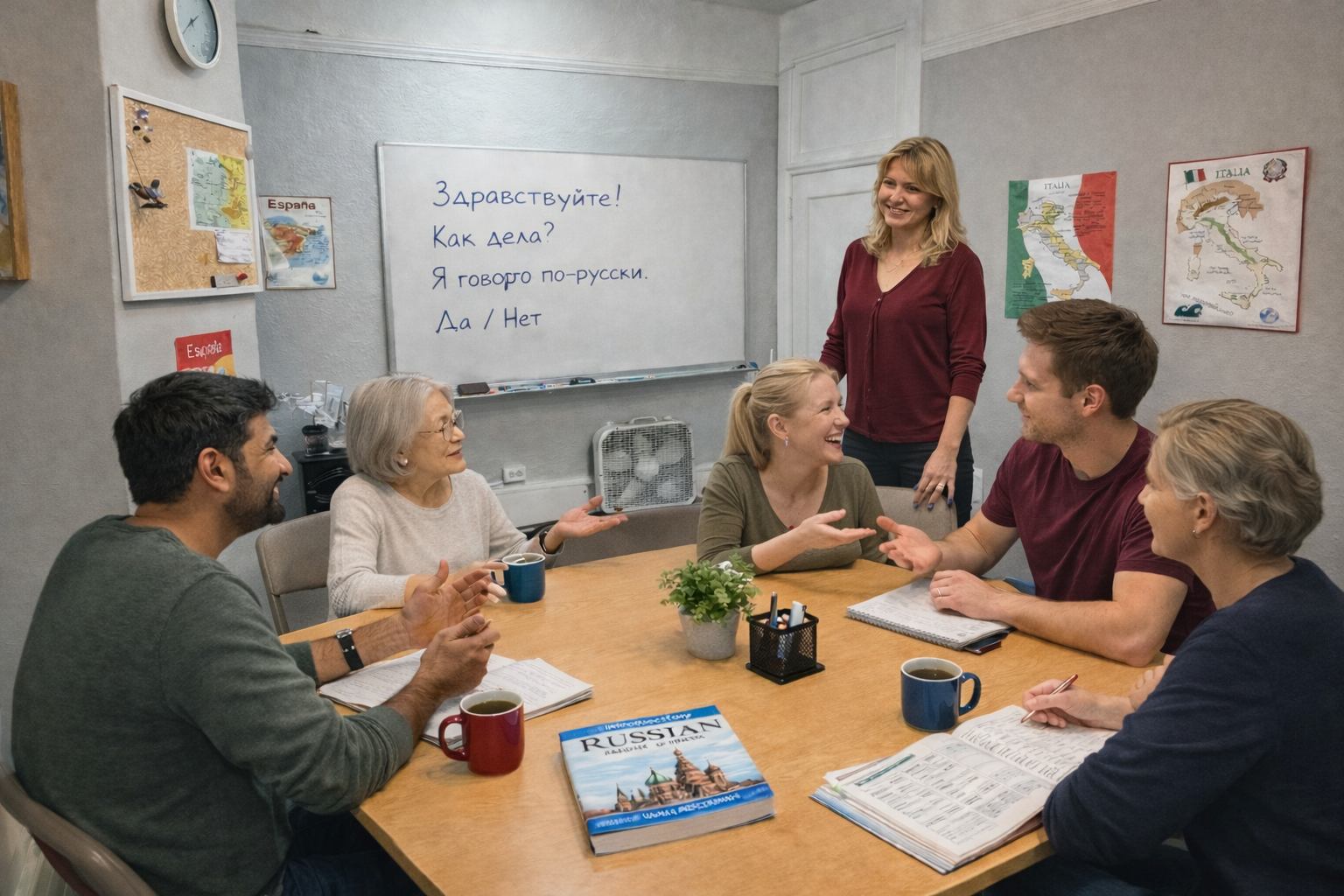
There is something electrifying about hearing Russian spoken fluently in the middle of San Francisco—the sharp rhythm of consonants, the emotional depth carried in a single phrase, the way even a casual greeting sounds layered with history—and once you recognize that sound, you begin to understand that learning Russian is not simply about grammar charts or memorizing vocabulary lists, but about stepping into an entirely new intellectual and cultural dimension.
San Francisco has always been a city of curiosity. From the tech innovators of SoMa to the artists of the Mission and the scholars of Berkeley, it attracts people who are not content with surface-level experiences. And that is precisely why Russian thrives here. Russian is not an “easy hobby language.” It is bold, expressive, philosophical, and often surprisingly humorous. It rewards depth. It demands attention. And in return, it offers access to one of the richest literary, artistic, and intellectual traditions in the world.
But here is the truth: not all Russian classes are created equal.
If your goal is real conversation—being able to speak confidently, understand native speakers, and express your thoughts naturally—then you need more than a textbook-driven course. You need immersion. You need dialogue. You need a classroom where Russian is alive.
This guide will help you understand what makes a Russian class in San Francisco truly effective, what to look for when choosing a program, and how to move from “I know the alphabet” to “I can actually have a conversation.”
Why Learn Russian in San Francisco?
San Francisco may seem geographically distant from Moscow or St. Petersburg, but culturally, it is closer than you might think. The Bay Area has long had a Russian-speaking community, academic institutions with strong Slavic studies programs, and professionals working in fields where Russian language skills are an asset—technology, cybersecurity, diplomacy, academia, energy, journalism, and international business.
Russian is spoken across an enormous geographic region, including countries such as:
Russia
Kazakhstan
Belarus
Ukraine
Latvia
For Bay Area professionals, Russian opens doors to emerging markets and strategic industries. For travelers, it transforms trips into meaningful cultural experiences. For literature lovers, it unlocks authors like Leo Tolstoy and Fyodor Dostoevsky in their original voice. For heritage learners, it reconnects family history.
And for intellectually curious people? Russian is simply one of the most fascinating languages you can learn.
The Biggest Mistake People Make When Learning Russian
Many learners begin with enthusiasm but quickly feel overwhelmed.
They buy a grammar book.
They memorize the Cyrillic alphabet.
They download vocabulary apps.
Then, within weeks, they hit a wall.
Russian has six cases. Verbs of motion. Aspect. Flexible word order. Consonant clusters that feel impossible at first. Without guidance, it can feel like trying to assemble a machine without instructions.
The biggest mistake? Trying to learn Russian passively.
Russian is not a language you absorb by reading about it. It is a language you internalize by speaking it.
If your classes focus only on rules—without conversation practice—you will understand Russian “on paper” but freeze in real-life situations.
The best Russian classes in San Francisco prioritize conversation from the very beginning.
What “Real Conversation” Actually Means
Many schools promise “speaking practice,” but what does that look like in reality?
Real conversational Russian means:
Speaking in full sentences from Week 1
Practicing dialogues that reflect real situations
Learning how natives actually talk—not just textbook phrases
Training your ear to understand natural speed
Developing confidence to respond without translating in your head
It means role-playing ordering coffee, asking for directions, discussing hobbies, expressing opinions, and even debating cultural differences.
It also means learning tone and nuance. Russian can sound blunt to English speakers—but understanding when that directness is friendly, ironic, or emotional makes all the difference.
The Structure of Effective Russian Classes
A strong Russian course balances four elements:
1. Solid Grammar Foundations
You cannot skip grammar in Russian. Cases matter. Verb aspect matters. But grammar should serve communication—not replace it.
2. Guided Speaking Practice
Structured conversations allow you to practice safely while building fluency step by step.
3. Listening Exposure
Authentic audio materials—dialogues, interviews, short clips—help train your ear.
4. Cultural Context
Understanding Russian communication style is essential. Language reflects worldview.
The best programs integrate all four seamlessly.
Beginner Russian: Where You Really Start
Many students worry that Russian is “too hard.” The truth is that the beginning stage is surprisingly empowering.
You start with:
The Cyrillic alphabet (usually mastered within 2–3 weeks)
Basic greetings
Introducing yourself
Talking about your job and hobbies
Numbers and practical vocabulary
Within a month, you can hold simple conversations.
What makes the difference is repetition through speaking—not silent memorization.
Intermediate Russian: Where Confidence Grows
At the intermediate level, something shifts. You stop constructing sentences mechanically and begin thinking more fluidly.
You learn:
All six cases in practical use
Verb aspect in real contexts
Expressing opinions and emotions
Narrating in past and future
Handling everyday scenarios with flexibility
Conversation becomes more dynamic. You discuss news, travel experiences, cultural differences, and even humor.
This is where high-quality instruction becomes crucial. Poor teaching at this level creates fossilized mistakes. Strong teaching builds long-term fluency.
Russian for Professionals in the Bay Area
San Francisco professionals often study Russian for strategic reasons:
International business
Tech collaboration
Security and policy analysis
Journalism
Academic research
Professional Russian classes focus on:
Formal vs informal register
Email etiquette
Presentation language
Industry-specific vocabulary
Cross-cultural communication norms
Understanding how to navigate directness, hierarchy, and tone in Russian professional settings is just as important as vocabulary.
Small Group vs Private Russian Lessons
Both formats have advantages.
Small Group Classes
More affordable
Peer motivation
Natural conversation flow
Exposure to different speaking styles
Private Lessons
Personalized pace
Flexible scheduling
Targeted goals
Faster progress if consistent
The key is consistency. Weekly practice is more powerful than sporadic intensive sessions.
Why Russian Conversation Feels Different
Russian conversations often go deeper faster. Small talk is shorter. Discussions can quickly become philosophical.
Emotional vocabulary is rich. Tone carries weight. Silence has meaning.
When you learn Russian conversationally, you are not just translating your English personality—you are discovering how to express yourself differently.
Many students describe this as transformative.
How Long Does It Take to Become Conversational?
It depends on consistency.
With weekly classes and moderate practice:
Basic conversational level: 4–6 months
Solid intermediate: 12–18 months
Strong conversational fluency: 2+ years
Russian rewards long-term commitment.
But you will see progress quickly if you speak regularly.
Common Myths About Learning Russian
Myth 1: Russian Is Impossible
It is systematic. Complex, yes—but logical.
Myth 2: You Must Be “Good at Languages”
Consistency matters more than talent.
Myth 3: You Can Learn It Alone with Apps
Apps help. Conversation builds fluency.
Myth 4: Pronunciation Is Too Hard
It becomes natural with guided practice.
What to Look for in Russian Classes in San Francisco
When evaluating programs, ask:
Are classes conversation-focused?
Are groups small?
Is there a clear level progression?
Do instructors have teaching experience—not just native fluency?
Is the atmosphere supportive?
Learning Russian requires courage. You need a classroom where mistakes are part of the process—not something to fear.
FAQs About Learning Russian in San Francisco
Is Russian harder than Spanish or French?
For English speakers, Russian grammar is more complex. However, pronunciation is consistent, and reading becomes straightforward once you know Cyrillic.
How quickly can I learn the alphabet?
Most students master it within 2–3 weeks.
Do I need prior experience?
No. Complete beginner courses start from zero.
Is Russian useful professionally?
Yes, especially in international relations, cybersecurity, energy, tech, and academia.
Can I become fluent as an adult?
Absolutely. Adult learners often progress faster because they are disciplined and goal-oriented.
Should I take in-person or online classes?
Both can be effective. In-person offers energy and immersion. Online offers flexibility.
How much homework is required?
Typically 1–3 hours per week, depending on level.
What is the best way to practice outside class?
Short daily speaking practice, listening to Russian audio, and reviewing dialogues.
Learn Russian with Polyglottist Language Academy
At Polyglottist Language Academy, we specialize in real conversation from the very first class. Our Russian courses in San Francisco are designed for adults who want practical fluency—not just textbook knowledge.
What makes our program different?
Small group classes
Structured progression from complete beginner to advanced
Conversation-centered methodology
Experienced instructors
Supportive, intellectually engaging environment
We believe Russian is not just a language—it is a doorway to deeper cultural understanding.
Whether you are learning for travel, professional growth, heritage, or intellectual curiosity, we invite you to join us.
👉 Sign up today and start speaking Russian with confidence.
Continue Exploring Russian Language and Culture
Traveling From St. Petersburg To Moscow By Train: A First-Hand Account
What It’s Like To Take The Saint Petersburg Metro For The First Time
Why Russian Bakeries Matter In St. Petersburg: Pekarni, Rum Baba, And Everyday Life
A DAY AT DOM KNIGI: BOOKSTORES, COFFEE, AND KAZAN CATHEDRAL IN ST. PETERSBURG
Walking In Saint Petersburg In December: A Winter City That Has Adapted
My First Morning In St. Petersburg: Snow, Silence, And The Smell Of Fresh Bread
Learn Russian In Portland: Practical Language Courses For Adult Students
Moscow: The Most Beautiful Winter City I’ve Ever Walked Through
Traveling From St. Petersburg To Moscow By Train: A First-Hand Account
Best Russian Classes In Los Angeles For Adults: Flexible Online Courses