
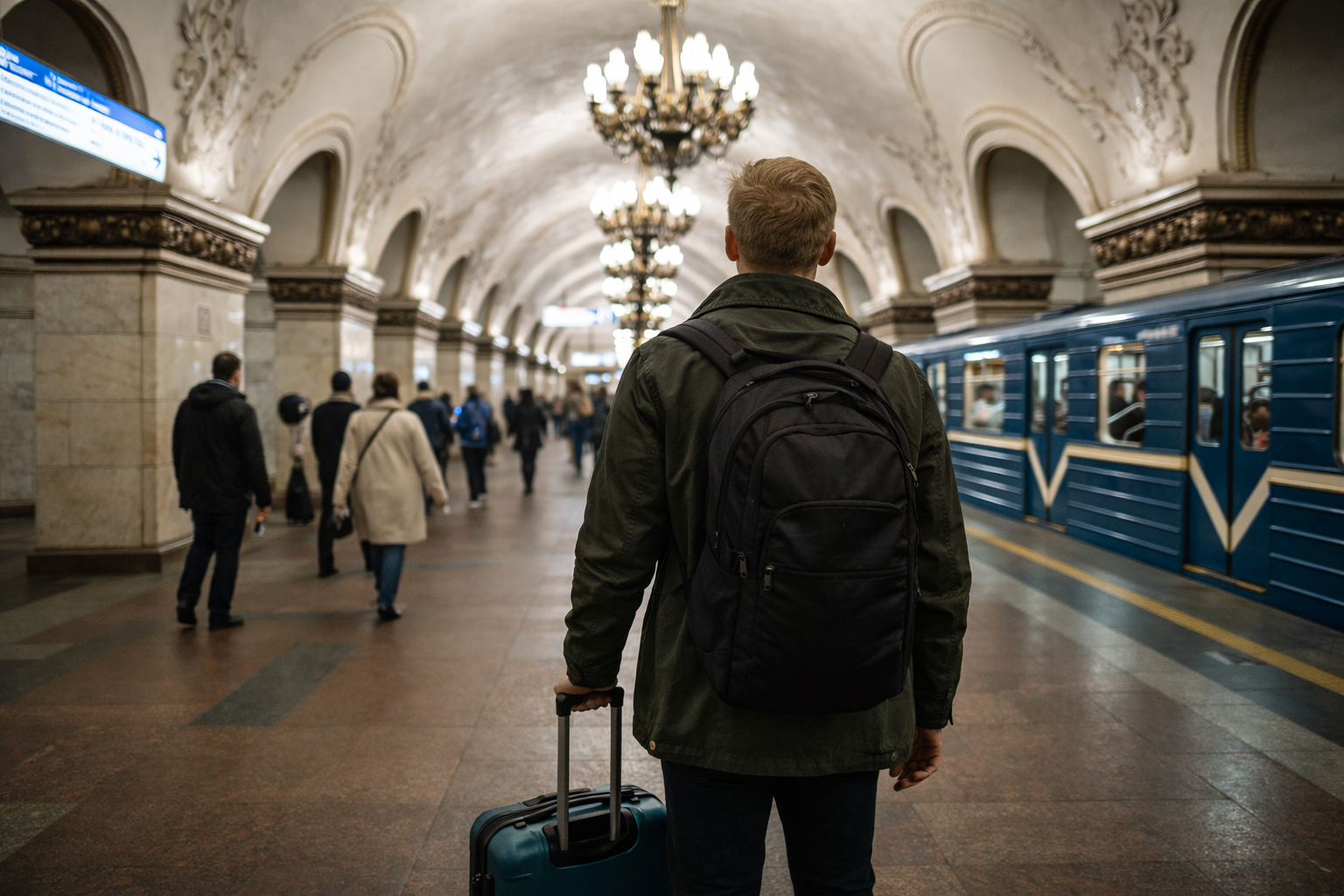
The first week in a new country rarely unfolds the way travelers expect, but few places challenge assumptions, reshape cultural instincts, and quietly rewire a visitor’s understanding of daily life as quickly and profoundly as Russia, where familiar routines suddenly operate under different social rules and even ordinary moments—buying coffee, riding the metro, asking for directions, or simply observing how people interact—begin to feel like lessons in a parallel version of modern life.
For many foreigners, arriving in Russia comes with preconceived images shaped by films, news headlines, literature, or Cold War stereotypes. Some expect coldness, severity, or difficulty. Others imagine grand imperial architecture and dramatic cultural intensity. The truth, as most visitors discover within days, is far more nuanced—and far more interesting.
Russia does not reveal itself immediately. Instead, it unfolds gradually through small interactions: a stranger helping you without smiling, a cashier speaking bluntly but kindly, a quiet metro car filled with people deeply absorbed in thought, or a café where conversations stretch for hours without interruption. What surprises foreigners most is not what feels foreign, but what feels unexpectedly human once cultural expectations shift.
This article explores the experiences that consistently surprise newcomers during their first week in Russia, explaining not only what happens but why—because understanding the cultural logic behind these moments transforms confusion into appreciation.
1. People Don’t Smile at Strangers — And It’s Not Rudeness
One of the first cultural shocks foreigners notice is the absence of constant smiling in public spaces.
In many Western cultures, smiling functions as social lubrication. It signals friendliness, politeness, or harmlessness. In Russia, however, smiles carry meaning rather than serving as default behavior.
A Russian smile typically indicates:
genuine warmth
personal connection
shared humor
authentic emotion
Smiling without reason may even appear insincere or superficial. As a result, public spaces—metros, shops, streets—often appear serious to newcomers.
Yet something remarkable happens after a few interactions. Once a relationship forms, Russians often become extraordinarily warm, generous, and emotionally expressive. Foreigners frequently realize that smiles in Russia feel earned, and therefore more meaningful.
2. Strangers Help More Than Expected
Despite the stereotype of emotional distance, foreigners are often surprised by how willing Russians are to help when someone genuinely needs assistance.
Examples travelers report repeatedly:
strangers walking them to the correct building instead of giving directions
passengers helping carry heavy luggage
locals translating menus or instructions
people offering practical advice without hesitation
Help tends to be practical rather than performative. Russians may not engage in small talk, but when assistance is needed, they often act decisively.
This reflects a cultural emphasis on solidarity in real situations rather than casual friendliness.
3. The Metro Feels Like a Cultural Institution
In cities like Moscow and Saint Petersburg, the metro system surprises nearly every visitor.
Foreigners expect transportation. Instead, they encounter:
grand chandeliers
marble columns
mosaics and sculptures
cathedral-like stations
Beyond aesthetics, the atmosphere itself stands out.
Passengers typically:
stand quietly
avoid loud phone conversations
read books
move efficiently
The metro operates with remarkable speed and organization, and newcomers quickly learn an unspoken rule: respect shared public space.
For many visitors, the metro becomes their first insight into Russian collective behavior—orderly, purposeful, and surprisingly calm.
4. Direct Communication Style
Foreigners often misinterpret Russian communication during their first week.
Russians tend to speak directly and efficiently. Conversations may lack phrases common in English-speaking cultures such as:
“How are you?” as a greeting
excessive politeness markers
indirect refusals
Instead, responses are often honest and concise.
Examples:
“No, this doesn’t work.”
“You should do it differently.”
“This is expensive.”
Initially, this can feel abrupt. Over time, foreigners realize it eliminates ambiguity and often builds trust faster.
Directness signals respect for honesty rather than hostility.
5. Cashiers and Service Culture Feel Different
Service interactions frequently surprise newcomers.
In many Western countries, service workers are trained to display constant friendliness. In Russia, service tends to prioritize efficiency over emotional performance.
A cashier may appear serious but still provide perfectly competent service.
The underlying cultural principle is simple:
Professionalism matters more than performative friendliness.
Once foreigners adjust expectations, interactions feel straightforward and refreshingly honest.
6. Tea Is Everywhere
Coffee culture exists, especially in major cities, but tea remains deeply embedded in daily life.
Visitors quickly notice:
tea offered at homes automatically
long conversations accompanied by tea
evening tea rituals
offices stocked with tea supplies
Tea represents hospitality, comfort, and conversation.
Declining tea repeatedly may even feel unusual to hosts.
7. The Scale of Everything
Russia often surprises visitors through sheer scale.
Cities feel vast:
wide avenues
enormous apartment blocks
expansive parks
long escalators descending deep underground
Distances that appear short on maps can take significant time to traverse.
This scale reflects historical urban planning and contributes to a feeling foreigners often describe as “epic” or cinematic.
8. Intellectual Conversations Happen Naturally
Foreigners frequently notice conversations moving quickly into serious topics.
Subjects discussed casually may include:
philosophy
politics
literature
history
existential questions
Small talk exists but often transitions rapidly into meaningful dialogue.
Many visitors find these discussions unexpectedly stimulating and memorable.
9. Silence Is Comfortable
In some cultures, silence feels awkward. In Russia, silence can signal comfort rather than tension.
Friends may sit together quietly without pressure to fill conversation gaps.
Public spaces often maintain calm atmospheres without background chatter.
This surprises foreigners accustomed to constant verbal interaction but often becomes one of the most appreciated aspects of Russian social life.
10. Hospitality Is Deeply Personal
When invited into a Russian home, foreigners often experience extraordinary hospitality.
Typical experiences include:
abundant food
insistence on eating more
long conversations
emotional openness
Hospitality moves beyond politeness into genuine care.
Guests are treated seriously—not casually.
11. Weather Is Taken Seriously — But Complaints Are Minimal
Visitors often expect constant discussion about harsh weather.
Instead, Russians adapt pragmatically.
People dress appropriately, move efficiently, and continue daily routines regardless of conditions.
Weather becomes something to manage, not dramatize.
12. Bureaucracy Still Exists — But People Navigate It Skillfully
Administrative processes may feel complex to newcomers.
However, locals often possess remarkable expertise in navigating systems efficiently.
Foreigners learn quickly:
Patience and preparation matter more than frustration.
13. Safety Feels Different Than Expected
Many visitors arrive with safety concerns shaped by outdated perceptions.
Instead, they often find:
lively nighttime streets
families walking late
extensive public transport usage
Large cities maintain strong public presence, which contributes to a sense of order.
14. Fashion Is Noticeably Intentional
Foreigners frequently notice how carefully people dress, even for everyday activities.
Appearance reflects:
self-respect
social awareness
personal presentation
Casual clothing exists but is often more polished than expected.
15. Humor Is Subtle and Intelligent
Russian humor surprises newcomers because it often relies on irony, wordplay, or understatement rather than overt jokes.
It may take time to recognize humor cues—but once understood, many foreigners find Russian humor deeply enjoyable.
Why These Surprises Matter
The first week in Russia challenges automatic cultural assumptions.
Foreigners begin to realize:
friendliness does not always look familiar
sincerity may replace politeness rituals
depth can replace surface interaction
Instead of feeling alienating, these differences often create curiosity and respect.
Many travelers report that Russia becomes more fascinating each day precisely because it requires active cultural learning.
FAQs: First Week in Russia
Is Russia difficult for foreigners to navigate?
Major cities are increasingly accessible, especially with translation apps and improved infrastructure.
Do people speak English?
Younger generations and urban professionals often do, though learning basic Russian phrases greatly improves experiences.
Is Russia welcoming to visitors?
Yes. While social norms differ, genuine hospitality is common once interactions begin.
Should I learn Russian before visiting?
Even basic phrases dramatically enhance travel experiences and cultural understanding.
Is public transportation easy to use?
Yes. Metro systems are efficient and well organized.
What cultural mistake should I avoid?
Interpreting seriousness as unfriendliness is the most common misunderstanding.
How quickly do foreigners adapt?
Most visitors report significant adjustment within one week.
What surprises people most overall?
The contrast between public reserve and private warmth.
Learn Russian with Polyglottist Language Academy
Understanding Russia becomes infinitely richer when you understand the language behind everyday interactions. Words reveal cultural logic, humor, emotion, and social nuance that translations simply cannot capture.
At Polyglottist Language Academy, we help students move beyond textbook Russian and develop real cultural fluency through practical, conversation-focused learning.
Our programs include:
Small-group Russian classes
Private lessons tailored to your goals
Online and flexible scheduling
Native-speaking instructors
Real-life communication training
Supportive international learning community
Whether you are preparing for travel, professional communication, or cultural exploration, our courses help you build confidence step by step.
👉 Ready to start your Russian journey? Sign up for classes today and experience the language that transforms travel into true cultural understanding.
Continue Reading: Explore More from Our Blog
If you enjoyed this article, you may also like:
Traveling From St. Petersburg To Moscow By Train: A First-Hand Account
What It’s Like To Take The Saint Petersburg Metro For The First Time
Why Russian Bakeries Matter In St. Petersburg: Pekarni, Rum Baba, And Everyday Life
A DAY AT DOM KNIGI: BOOKSTORES, COFFEE, AND KAZAN CATHEDRAL IN ST. PETERSBURG
Walking In Saint Petersburg In December: A Winter City That Has Adapted
My First Morning In St. Petersburg: Snow, Silence, And The Smell Of Fresh Bread