
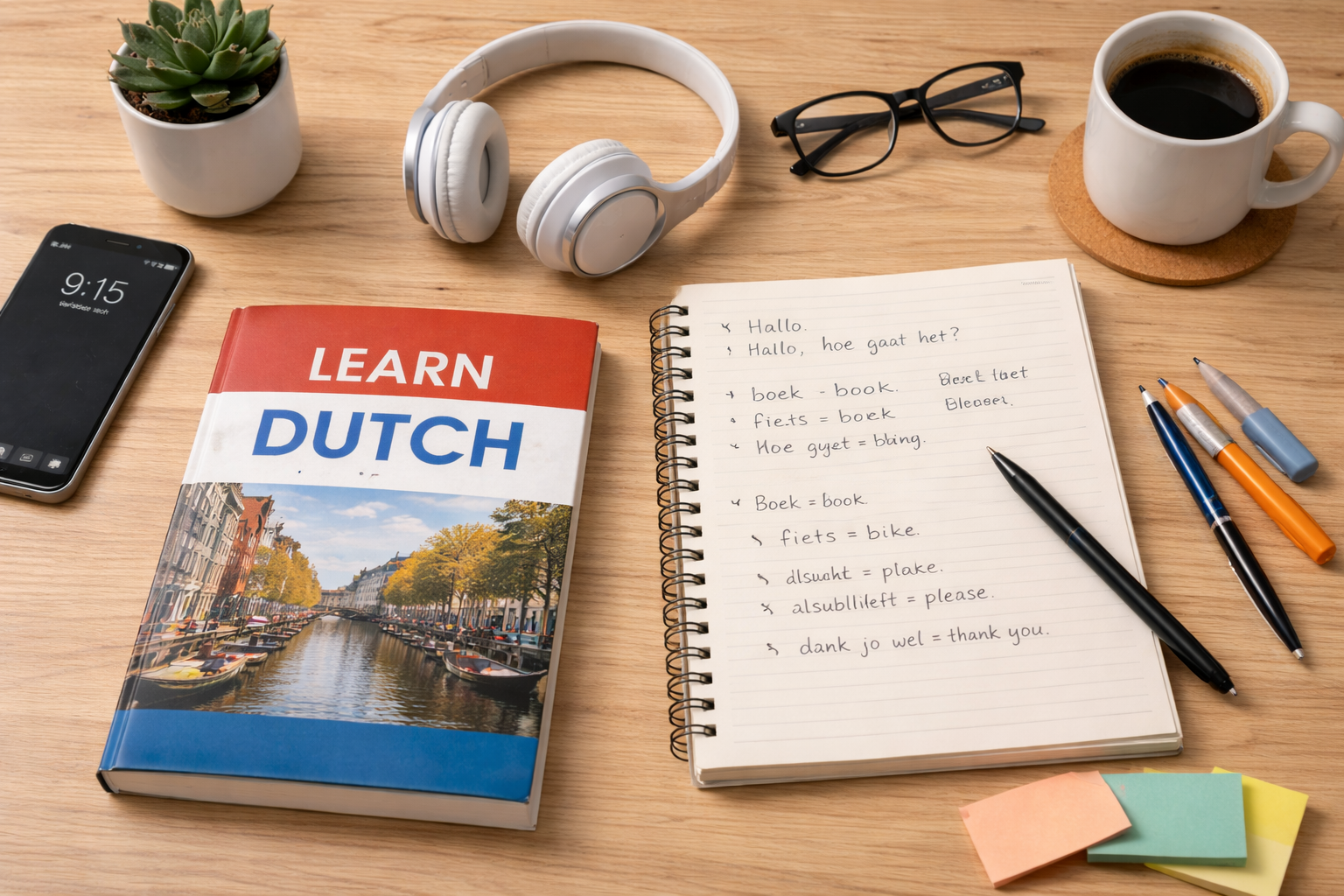
In an increasingly interconnected world where careers, relationships, and opportunities frequently cross borders, learning a language is no longer simply an academic pursuit but a practical life skill, and few experiences highlight this reality more clearly than the moment an English-speaking professional arrives in the Netherlands and realizes that daily life—renting an apartment, understanding official letters, chatting with neighbors, navigating healthcare systems, or even ordering confidently at a local café—suddenly depends on understanding Dutch.
For many people in San Jose and across Silicon Valley, the Netherlands has quietly become an important destination. Tech professionals relocate to Amsterdam and Eindhoven. Entrepreneurs collaborate with Dutch startups. Engineers join international teams. Students pursue graduate programs at Dutch universities. Families move abroad for new opportunities or lifestyle changes.
And then comes the realization almost everyone shares:
English works… until it doesn’t.
The Netherlands is famous for English fluency, yet real integration, professional confidence, and everyday independence depend heavily on Dutch. The first municipal appointment, the first housing contract, the first school meeting, or the first informal neighborhood conversation quickly reveals the difference between surviving comfortably and merely getting by.
This is where survival Dutch becomes essential—not perfect grammar, not academic mastery, but the practical ability to function confidently in real-life situations.
This guide explores how learners in San Jose can go from zero knowledge to survival-level Dutch efficiently through practical training designed specifically for busy adults and professionals.
Why Learn Dutch Before Moving to the Netherlands?
Many learners assume they can wait until arrival. In reality, starting early provides enormous advantages.
1. Faster Integration
Dutch society values initiative. Even basic Dutch immediately changes interactions:
shopkeepers respond warmly
colleagues include you more naturally
administrative processes feel less intimidating
daily tasks become smoother
A simple “Goedemorgen” or “Dank je wel” signals effort and respect.
2. Professional Advantages
While English dominates many workplaces, Dutch often appears in:
internal emails
HR communication
informal office conversations
networking events
local client interactions
Understanding Dutch helps professionals move from outsider to participant.
3. Reduced Culture Shock
Language provides context. Without it, everyday systems feel confusing.
With survival Dutch, newcomers understand:
announcements
signs
etiquette
humor
social cues
This dramatically reduces stress during relocation.
What Is “Survival Dutch”?
Survival Dutch focuses on functionality, not perfection.
You learn how to:
introduce yourself
ask questions
understand directions
handle appointments
manage shopping and services
communicate politely in daily situations
It is the difference between memorizing grammar rules and actually living comfortably.
The Biggest Mistake Beginners Make
Many learners start Dutch using traditional methods designed for academic settings.
Common problems include:
excessive grammar memorization
unrealistic vocabulary lists
delayed speaking practice
lack of real-life scenarios
Busy professionals need a different approach—one focused on immediate usability.
The Survival Dutch Framework
Effective Dutch learning progresses through practical stages.
Stage 1: Sound and Pronunciation Foundations
Dutch pronunciation feels unfamiliar at first, especially sounds like:
g / ch
vowel combinations (ui, eu, ij)
Early pronunciation training prevents long-term frustration.
Learners who focus on sound recognition early gain confidence faster.
Stage 2: Essential Communication Blocks
Instead of isolated words, survival Dutch teaches functional phrases:
Ik begrijp het niet. (I don’t understand.)
Kunt u dat herhalen? (Can you repeat that?)
Waar is het station? (Where is the station?)
These phrases create immediate independence.
Stage 3: Everyday Situations
Training focuses on realistic contexts:
supermarkets
public transportation
housing appointments
cafés and restaurants
workplace introductions
Learning becomes situational rather than theoretical.
Why Dutch Feels Easier Than You Expect
English speakers often discover Dutch is surprisingly accessible.
Reasons include:
shared Germanic roots
familiar sentence structures
recognizable vocabulary
Examples:
DutchEnglishwaterwaterhuishouseboekbookappelapple
Progress feels fast during early stages.
A Practical Learning Timeline
For busy adults studying consistently:
TimeAbility4 weeksBasic greetings and survival phrases3 monthsHandle simple daily tasks6 monthsBasic conversations12 monthsIndependent functioning
Consistency matters more than intensity.
Learning Dutch in San Jose: Why Local Training Matters
You might wonder why someone in California should learn Dutch locally before moving.
Local programs provide:
structured accountability
guided progression
cultural preparation
speaking practice
Learning alone online often leads to stalled progress.
A supportive learning environment keeps momentum alive.
The Role of Speaking from Day One
Adult learners often hesitate to speak early.
However, speaking immediately:
builds confidence
accelerates listening skills
improves memory retention
Mistakes are part of progress, not failure.
Cultural Skills Included in Survival Dutch
Language learning also teaches cultural expectations.
Key Dutch cultural traits include:
direct communication
punctuality
planning culture
equality in conversation
efficiency in services
Understanding these norms prevents misunderstandings.
Micro-Learning for Busy Professionals
San Jose professionals succeed when learning fits existing routines.
Example weekly structure:
Monday: vocabulary review (10 minutes)
Wednesday: live lesson
Friday: listening practice
Weekend: conversational exercises
Short, consistent exposure works better than long sessions.
Technology as a Supplement — Not a Replacement
Apps help with vocabulary but cannot replace conversation.
Language requires interaction, correction, and feedback.
The most successful learners combine:
guided instruction
independent practice
real speaking opportunities
Common Challenges (And How to Overcome Them)
“Dutch sounds too fast.”
Solution: train listening gradually using short dialogues.
“I’m afraid of pronunciation mistakes.”
Solution: focus on communication first; accuracy improves naturally.
“I forget vocabulary quickly.”
Solution: learn phrases tied to real situations.
“I don’t have enough time.”
Solution: consistency over duration—15 minutes daily matters.
Psychological Benefits of Learning Dutch Before Relocation
Students often report:
reduced anxiety about moving abroad
stronger confidence
faster social integration
increased cultural curiosity
Language transforms relocation from uncertainty into adventure.
What Makes Adult Dutch Learners Successful?
Successful learners typically:
set realistic goals
practice regularly
accept imperfect progress
engage actively during lessons
Motivation grows through visible improvement.
From Survival to Confidence
Survival Dutch is not the endpoint—it is the gateway.
Once learners manage daily interactions, they naturally expand into:
deeper conversations
workplace communication
friendships
cultural participation
Momentum becomes self-sustaining.
FAQs: Learning Survival Dutch in San Jose
Is Dutch difficult for English speakers?
No. It is considered one of the easiest languages for English speakers to learn.
How long does it take to reach survival level?
Most learners reach functional ability within 2–3 months of consistent study.
Do I need perfect pronunciation?
No. Communication matters more than perfection.
Can I learn Dutch online effectively?
Yes, especially when lessons include live speaking practice.
Should I learn Dutch before moving?
Absolutely. Even basic knowledge dramatically improves early experiences.
How many hours per week should I study?
About 3–5 hours weekly is sufficient for steady progress.
Is survival Dutch enough for work?
It provides a strong foundation; professional fluency develops later.
Am I too old to learn Dutch?
Not at all. Adults often learn faster because they understand context and goals.
Learn Survival Dutch with Polyglottist Language Academy
At Polyglottist Language Academy, we specialize in helping busy adults move from zero knowledge to real-world communication quickly and confidently.
Our Dutch programs are designed specifically for professionals, expats, and travelers preparing for life in the Netherlands.
We offer:
Small-group Dutch classes
Private lessons tailored to relocation goals
Flexible online learning options
Native-speaking instructors
Practical, conversation-focused curriculum
Cultural preparation alongside language training
Our philosophy is simple: language learning should prepare you for real life—not just textbooks.
👉 Ready to start your Dutch journey? Sign up today and begin building the skills you need to live confidently in the Netherlands.
Continue Reading: Explore More from Our Blog
If you enjoyed this article, check out these related guides:
The Dutch Identity: A Culture Shaped By Land, Sea, And Trade
Do All Dutch People Speak English? The Truth Behind The Stereotype
A Brief History Of The Dutch Language (And Why It Matters Today)
How Similar Is Dutch To English? Surprising Linguistic Overlaps
The Fastest Way To Learn Dutch According To Language Teachers
Do You Really Need To Learn Dutch If You Live In The Netherlands?
How Long Does It Take To Learn Dutch – Realistic Timelines By Level
Is Dutch Hard To Learn? Honest Insights For English Speakers