
THE MOST BEAUTIFUL MOSCOW METRO STATIONS: HISTORY, SECRETS, AND RUSSIA’S UNDERGROUND PALACES
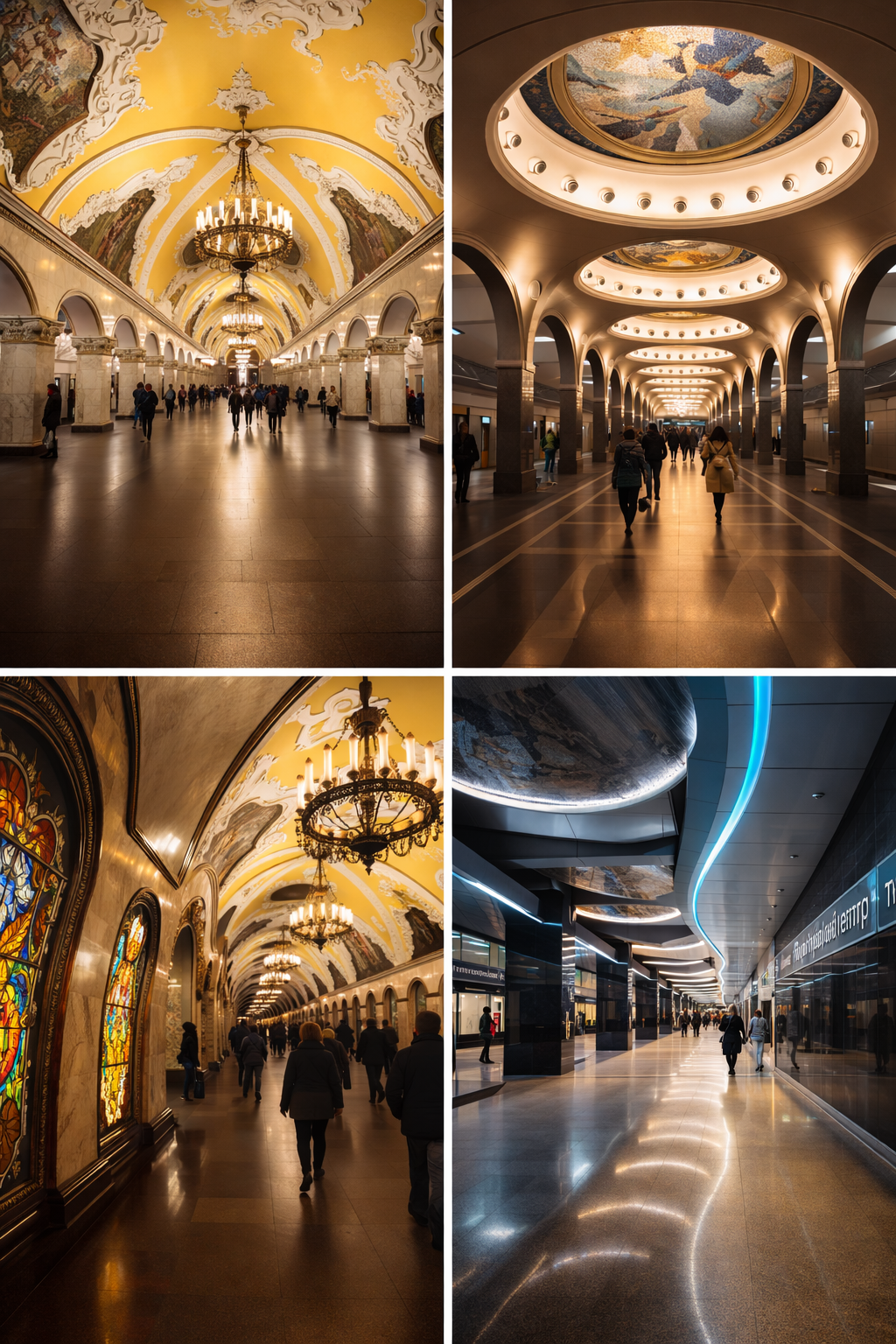
Why the Moscow Metro Is Unlike Any Subway System in the World
Beneath the busy streets of Moscow lies a world that surprises nearly every visitor — a vast underground network where commuters walk beneath crystal chandeliers, marble columns glow under golden light, mosaics celebrate history like museum masterpieces, and daily transportation transforms into an unexpected encounter with art, ideology, and architectural ambition on a monumental scale.
The Moscow Metro is often described as the most beautiful subway system in the world, but that description barely captures its true significance. It is not simply infrastructure; it is a cultural statement. Built during one of the most transformative periods of Russian history, the metro was designed to elevate ordinary life, turning routine travel into an experience meant to inspire pride, optimism, and collective identity.
Unlike the purely functional underground systems of many global cities, Moscow’s metro stations were conceived as “palaces for the people.” Architects, artists, engineers, and sculptors collaborated to create spaces that rivaled theaters and grand halls above ground. Even today, millions of passengers pass through environments that feel closer to museums than transit corridors.
Walking into stations like Komsomolskaya or Mayakovskaya feels less like catching a train and more like entering a hidden architectural gallery — one that reveals Russia’s history, artistic movements, and evolving national identity.
For travelers, architecture lovers, photographers, and language learners alike, exploring the Moscow Metro offers one of the most accessible ways to understand Russian culture from the inside.
In this guide, we’ll explore:
the fascinating history behind the metro’s creation
the most beautiful Moscow Metro stations you must see
modern expansions and new architectural designs
practical tips for visiting like a local
and how understanding the metro deepens cultural and language learning
The Birth of the Moscow Metro: A Vision Beneath the City
Moscow Before the Metro
At the beginning of the 20th century, Moscow faced rapid urban growth. Horse-drawn transport and crowded streets struggled to keep pace with industrial expansion. City planners recognized the need for underground transportation as early as 1902, but political instability delayed progress.
The project finally began in earnest in the early 1930s.
Construction officially started in 1931, marking one of the Soviet Union’s most ambitious engineering projects.
A Political and Cultural Project
The metro was never intended to be merely practical.
Under Joseph Stalin, the system became a symbol of modernization and ideological achievement. Leaders envisioned stations that would demonstrate technological progress while celebrating workers, industry, and national history.
The guiding philosophy was revolutionary:
Public infrastructure should be beautiful and accessible to everyone.
Architects combined:
classical European grandeur
Soviet symbolism
modern engineering innovation
The result was unprecedented.
Opening Day: 1935
On May 15, 1935, the Moscow Metro opened with:
13 stations
11 kilometers of track
a single line connecting Sokolniki and Okhotny Ryad
Passengers reportedly dressed formally to ride the metro for the first time, treating the journey as a cultural event rather than ordinary transportation.
The metro immediately became a source of national pride.
Expansion Through the Decades
Over time, the network expanded dramatically.
Today the Moscow Metro includes:
250+ stations
more than 400 kilometers of track
over 9 million daily riders
Despite modernization, artistic ambition remains central to new construction.
The Most Beautiful Moscow Metro Stations You Must See
1. Komsomolskaya — The Crown Jewel
Often considered the most magnificent station in the system, Komsomolskaya embodies the idea of the underground palace.
Opened: 1952
Style: Stalinist Baroque
Highlights include:
enormous chandeliers
golden ceiling mosaics
ornate columns
grand symmetrical design
The mosaics depict historic Russian military victories, intended to inspire unity and strength.
Standing beneath its glowing ceiling feels like entering a ceremonial hall rather than a transit hub.
2. Mayakovskaya — Futurism Underground
Opened in 1938, Mayakovskaya represents a dramatic shift toward modernity.
Style: Art Deco + Soviet futurism
Features:
stainless steel arches
elegant lighting
ceiling mosaics portraying an idealized Soviet future
The station won the Grand Prix at the 1939 New York World’s Fair, proving its international architectural significance.
Its airy design still feels strikingly modern today.
3. Novoslobodskaya — A Stained-Glass Cathedral
Few subway stations anywhere resemble Novoslobodskaya.
Opened: 1952
Distinctive elements:
32 illuminated stained-glass panels
warm golden lighting
cathedral-like atmosphere
The glass panels were created by Latvian artists and give the station a spiritual ambiance rarely associated with public transport.
4. Ploshchad Revolyutsii — Sculptures of Everyday Heroes
Opened: 1938
This station is famous for its bronze sculptures depicting Soviet citizens:
soldiers
students
farmers
athletes
A beloved tradition holds that touching the bronze dog’s nose brings good luck — and commuters continue the ritual today.
The polished metal reveals decades of hopeful passengers.
5. Park Pobedy — Engineering on a Grand Scale
At 84 meters deep, Park Pobedy is among the deepest metro stations in the world.
Visitors descend via one of Europe’s longest escalators.
The station features massive murals commemorating historical battles, blending engineering achievement with national storytelling.
New Moscow Metro Stations: Modern Design Underground
While historic stations attract most attention, modern expansions show how Moscow continues redefining metro architecture.
The Big Circle Line (BCL)
A massive circular route improving connectivity across the city, the BCL introduces contemporary aesthetics:
minimalist geometry
LED lighting
innovative materials
Each station has a unique visual identity.
Nekrasovskaya Line
Opened in stages beginning in 2020, this line emphasizes accessibility and modern passenger flow while maintaining artistic ambition.
Mnyovniki Station
A futuristic design featuring bold colors and clean architectural lines demonstrates how the metro balances tradition with innovation.
Why the Moscow Metro Feels Different From Other Subways
Most metro systems prioritize efficiency.
Moscow prioritized experience.
Design goals included:
emotional uplift
civic pride
artistic education
architectural beauty
The metro became an everyday museum visited by millions.
Exploring the Moscow Metro Like a Local
Practical Tips
Buy a Troika Card
The easiest way to travel seamlessly.
Visit During Off-Peak Hours
Late morning or early afternoon allows you to appreciate architecture without crowds.
Plan a Station Route
Many travelers create self-guided metro tours focusing on historic stations.
Learn Basic Russian Phrases
Even simple expressions enhance interactions and confidence.
The Metro as a Cultural Classroom
The Moscow Metro teaches visitors about:
Soviet history
artistic movements
national identity
everyday Russian life
Observing commuters reveals social rhythms and cultural norms impossible to learn from guidebooks alone.
FAQs About the Moscow Metro
What is the most beautiful Moscow Metro station?
Komsomolskaya is often ranked first, though Mayakovskaya and Novoslobodskaya are equally admired.
Is the Moscow Metro safe?
Yes. It is considered one of the safest and most efficient metro systems worldwide.
How deep is the Moscow Metro?
Some stations exceed 80 meters underground due to geological conditions and wartime planning.
Can tourists easily navigate it?
Yes, especially with maps and basic Russian phrases.
Why are stations so decorative?
They were designed as “palaces for the people,” symbolizing cultural pride and progress.
Learn Russian Through Culture With Polyglottist Language Academy
At Polyglottist Language Academy, we believe language learning becomes meaningful when culture is part of the journey. Understanding places like the Moscow Metro helps learners connect vocabulary with real experiences, making communication more natural and memorable.
Our Russian courses help students:
navigate travel confidently
understand cultural context
speak naturally with native speakers
experience Russian culture beyond textbooks
👉 Join Polyglottist Language Academy today and start your Russian journey through language, culture, and real-world discovery.
Explore More on Our Blog
Continue exploring Russian culture and language:
Why Russian Ballet Is World-Famous: The Legacy Of Bolshoi & Mariinsky
Moscow: The Most Beautiful Winter City I’ve Ever Walked Through
Walking In Saint Petersburg In December: A Winter City That Has Adapted
My First Morning In St. Petersburg: Snow, Silence, And The Smell Of Fresh Bread
A DAY AT DOM KNIGI: BOOKSTORES, COFFEE, AND KAZAN CATHEDRAL IN ST. PETERSBURG
MY FIRST 24 HOURS IN ST. PETERSBURG: NEVSKY PROSPECT, TOO MUCH TEA, AND RUSSIAN DONUT “PISHKA”