
The FSI Says Japanese Takes 2,200 Hours — Here's What That Actually Looks Like in Practice
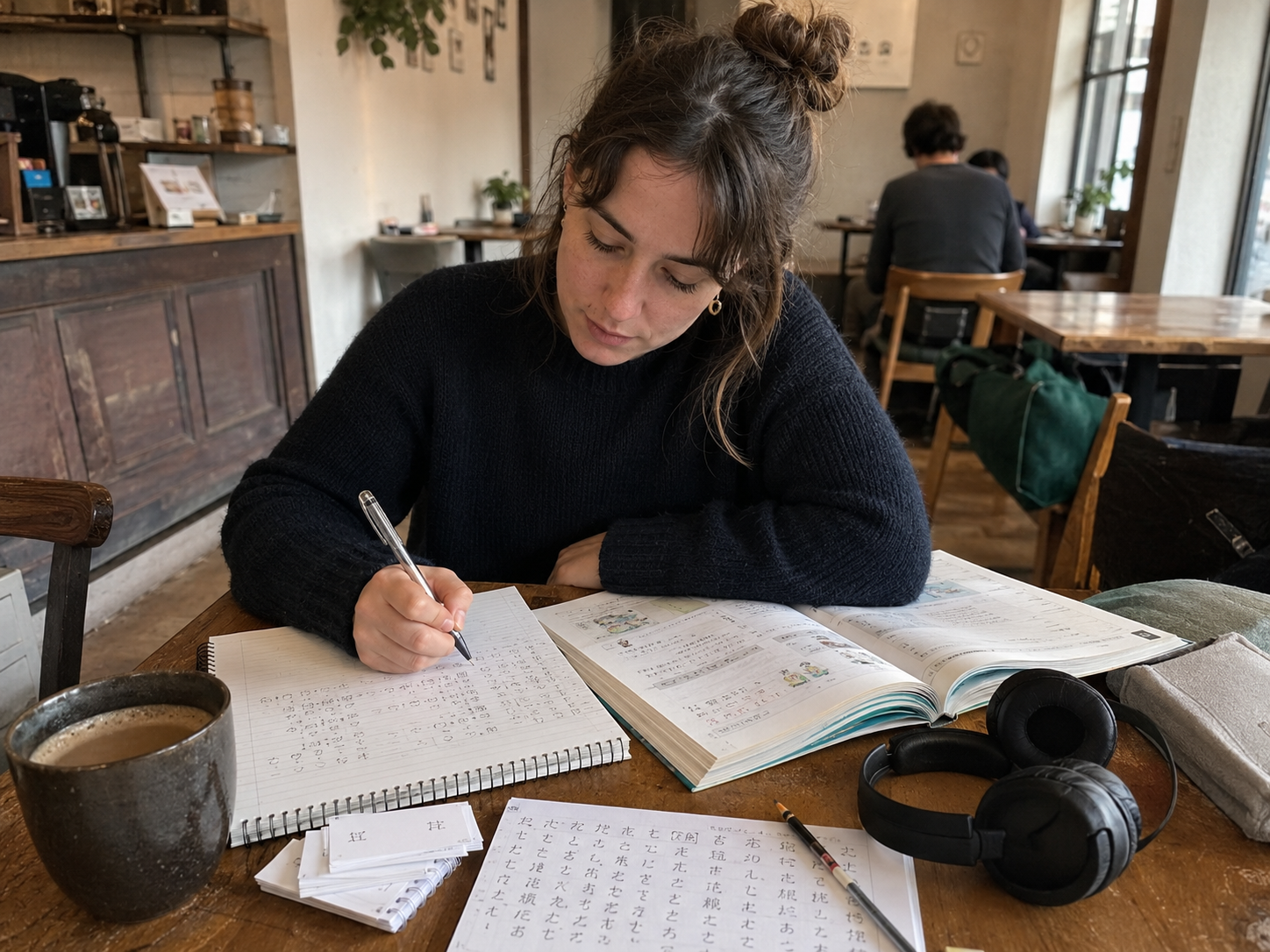
When people first hear that the Foreign Service Institute estimates Japanese takes around 2,200 class hours for English speakers to reach professional working proficiency, the number can sound so enormous, so intimidating, and so far removed from ordinary adult life that many potential learners imagine themselves trapped forever in a mountain of flashcards, kanji notebooks, grammar charts, and half-understood anime subtitles before they ever manage to order ramen, introduce themselves, or have a real conversation with a Japanese speaker.
But that is not what the 2,200-hour estimate really means.
It does not mean you need 2,200 hours before you can say anything useful in Japanese. It does not mean you need to study full-time for years before the language becomes enjoyable. It does not mean beginners should panic, give up, or decide that Japanese is only for linguistic geniuses, diplomats, translators, or people who started learning as children.
What it does mean is more practical: Japanese is one of the most time-intensive languages for native English speakers because it asks you to build several new systems at once. You are not only learning new words. You are learning a new writing system—actually three writing systems. You are learning a different sentence structure. You are learning particles that do not translate neatly into English. You are learning levels of politeness that shape every interaction. You are learning kanji, which can feel like an entire second education. You are also learning how Japanese communication depends on context, social relationship, indirectness, and cultural expectations.
That is a lot.
But here is the encouraging part: you do not need professional working proficiency to enjoy Japanese, use Japanese, or feel real progress. A traveler does not need the same Japanese as a diplomat. A beginner who wants to understand basic anime phrases does not need the same Japanese as a foreign service officer reading government documents. A student who wants to order food, ask directions, introduce themselves, and understand simple conversations does not need to wait until hour 2,200.
The real question is not simply, “How long does Japanese take?” The better question is: “What do I want to be able to do in Japanese, and what kind of study pace can I realistically sustain?”
Once you ask that question, the FSI number becomes much less frightening. It becomes a useful reference point, not a life sentence.
In this article, we will break down what the famous 2,200-hour estimate actually means, why Japanese is considered difficult for English speakers, what different study schedules look like in real life, what learners can realistically do after a few months or a few years, and how adults can approach Japanese in a way that is steady, motivating, and genuinely rewarding.
What Is the FSI, and Why Does It Say Japanese Takes 2,200 Hours?
The Foreign Service Institute, often called the FSI, trains U.S. diplomats and government professionals in foreign languages. Because these learners often need to use languages in serious professional contexts, the FSI developed estimates for how long it typically takes native English speakers to reach professional working proficiency in different languages.
Japanese is placed in the highest difficulty group for English speakers, along with languages such as Chinese, Korean, and Arabic. The commonly cited number for Japanese is around 2,200 class hours.
That number is often repeated online, but it is also often misunderstood.
First, the FSI estimate refers to intensive, structured classroom training. These are not casual app minutes completed while half-watching TV. They are focused hours in an organized language program, usually supported by homework, speaking practice, listening work, reading, review, and cultural training.
Second, the goal is not “basic fluency” or “travel Japanese.” The goal is professional working proficiency. This means the learner can use Japanese effectively in many practical, social, and professional situations. They can discuss work-related topics, understand complex conversations, read useful materials, and function at a high level—not perfectly, not like a native speaker, but competently in serious contexts.
Third, the 2,200 hours are class hours, not necessarily total exposure. In real life, learners also need self-study, listening, reading, homework, review, vocabulary work, and practice outside class. This means the total number of hours may be higher for many people, especially if they are studying less intensively.
But again, this does not mean you need thousands of hours before Japanese becomes useful. It means that reaching a high professional level in Japanese takes a long time because the language is structurally very different from English.
Why Japanese Takes Longer for English Speakers
Japanese is not difficult because it is “impossible” or “illogical.” Japanese has its own logic. In many ways, it is beautifully organized. But it is different from English in several major areas, and those differences add up.
For English speakers, Japanese presents challenges in writing, grammar, vocabulary, listening, politeness, and cultural communication. A student learning Spanish or French can rely on many familiar words, shared alphabet patterns, similar sentence structures, and centuries of linguistic overlap with English. A student learning Japanese cannot rely on the same shortcuts.
That does not make Japanese worse. It simply means the path is different.
Let’s look at the biggest reasons Japanese takes time.
1. Japanese Has Three Writing Systems
One of the first surprises for beginners is that Japanese does not use just one writing system. It uses three: hiragana, katakana, and kanji.
Hiragana is the basic phonetic script used for native Japanese words, grammar endings, and particles. Katakana is another phonetic script, often used for foreign words, names, emphasis, and sound effects. Kanji are characters originally borrowed from Chinese, and they represent meaning as well as sound.
The good news is that hiragana and katakana are very learnable. Many students can learn the basics of both within a few weeks if they practice consistently. At first, they may read slowly, but the systems themselves are manageable.
Kanji is the longer journey.
There are thousands of kanji, though learners do not need all of them immediately. Kanji can have multiple readings depending on the word. They require memory, repetition, visual recognition, and lots of exposure. For many learners, kanji is the part of Japanese that makes reading progress feel slower than speaking progress.
But kanji is not only a burden. Once you begin to recognize patterns, kanji becomes extremely helpful. It gives visual clues to meaning. It helps distinguish words that sound the same. It makes Japanese text more compact and meaningful. At first, kanji feels like a wall. Later, it becomes a map.
A realistic learner should not think, “I must master kanji before I can enjoy Japanese.” Instead, think: “Kanji will grow gradually alongside my speaking, listening, and grammar.”
2. Japanese Grammar Works Differently from English
English usually follows a subject-verb-object word order. For example:
“I eat sushi.”
Japanese usually follows a subject-object-verb pattern. The verb comes at the end:
“I sushi eat.”
Of course, real Japanese is more nuanced than that, but this basic difference changes how you process sentences. English speakers are used to hearing the action early. In Japanese, you often have to wait until the end of the sentence to understand what happened.
This requires mental adjustment.
Japanese also uses particles, small words that mark the role of each part of the sentence. Particles such as は, が, を, に, で, と, へ, and から are tiny but powerful. They show topic, subject, object, direction, location, means, and relationship between ideas.
For English speakers, particles can feel slippery because they do not always have direct translations. Students may understand the vocabulary in a sentence but still feel unsure about the meaning because the particles are doing invisible work.
Japanese grammar is not random. In fact, many parts of it are consistent. But it forces English speakers to stop thinking in English word order and start seeing the structure of the sentence in a new way.
That takes time.
3. Japanese Has Fewer Familiar Words
When English speakers learn Spanish, French, Italian, or Portuguese, they benefit from many cognates—words that look or sound similar because they share Latin or other historical roots.
For example, English speakers can often guess words like “animal,” “important,” “possible,” “restaurant,” “information,” or “music” in European languages.
Japanese has some English loanwords, especially modern words written in katakana, such as コンピューター for computer or コーヒー for coffee. These are helpful, but they are not enough to carry the learner through the language.
Most everyday Japanese vocabulary must be learned from scratch.
This means memory load is higher. Words for basic actions, feelings, social relationships, household objects, and abstract ideas may feel unfamiliar. Even when Japanese borrows from English, the pronunciation can change enough that beginners may not immediately recognize the word.
Vocabulary learning in Japanese is not impossible, but it requires steady accumulation. You build it layer by layer.
4. Politeness Levels Matter
Japanese is famous for politeness, and for good reason. The language changes depending on social relationship, status, context, and formality.
A beginner may first learn polite forms such as です and ます. These are useful and safe in many situations. But Japanese also includes casual speech, honorific language, humble language, workplace expressions, and set phrases used in specific social contexts.
This can surprise English speakers because English has politeness too, but it does not reshape verbs and expressions to the same extent. In Japanese, how you say something can reveal your relationship to the listener.
Are you speaking to a friend? A teacher? A customer? A boss? A stranger? A child? Someone older? Someone lower in status? Someone you just met?
These questions matter.
This does not mean beginners must master advanced honorific language immediately. They do not. But over time, learners need to understand that Japanese is not only about grammatical correctness. It is also about social appropriateness.
That is one reason Japanese takes longer: you are learning not just what to say, but how to position yourself socially while saying it.
5. Listening Takes Time
Japanese listening can be challenging for beginners even when they know the words on paper.
Native speech can sound fast. Words connect. Particles are short. Subjects are often omitted when context makes them obvious. Sentences may rely on implication rather than explicit explanation. A learner may hear a sentence and wonder, “Who is doing the action? What exactly is being referred to? Why is the subject missing?”
In English, we usually expect sentences to include a clear subject. In Japanese, context often does more of the work.
This is why listening practice matters from the beginning. If students only study grammar charts and vocabulary lists, they may feel shocked when they hear real Japanese. The rhythm, intonation, and natural omissions take practice.
The encouraging news is that listening improves with exposure. Even short daily listening sessions can help. Learners can listen to beginner dialogues, slow Japanese podcasts, simple videos, textbook audio, songs, anime clips, or shadowing exercises.
At first, you may understand only a few words. Then phrases. Then sentence patterns. Then whole exchanges.
Listening progress often feels slow, but it compounds.
What 2,200 Hours Looks Like in Real Life
The 2,200-hour number becomes more meaningful when we translate it into ordinary schedules. Most adult learners are not studying Japanese full-time. They have jobs, families, school, businesses, errands, and limited energy. So what does this number actually look like?
Let’s compare different study paces.
Casual Learner: 2–3 Hours Per Week
A casual learner studying 2–3 hours per week can absolutely make progress. This pace is common for busy adults taking one weekly class and doing a little review.
At 2 hours per week, 2,200 hours would take over 21 years. At 3 hours per week, it would take about 14 years.
That sounds discouraging only if you assume the goal is professional proficiency. But most casual learners do not need that goal. At this pace, students can still learn hiragana, katakana, greetings, simple grammar, travel phrases, self-introductions, basic questions, and beginner conversation.
After a few months, they may be able to introduce themselves, read simple words, recognize common expressions, and understand basic classroom Japanese. After a year, if they are consistent, they may have a solid beginner foundation.
This pace is best for people who want Japanese as a long-term hobby, cultural interest, travel preparation, or gentle intellectual project.
The danger at this pace is forgetting. Because Japanese is so different from English, long gaps can erase progress. Casual learners need small but regular review. Even ten minutes a day between classes can make a major difference.
Serious Hobby Learner: 5–7 Hours Per Week
A learner studying 5–7 hours per week is in a much stronger position. This might mean one class per week plus daily review, listening practice, flashcards, homework, and occasional speaking practice.
At 5 hours per week, 2,200 hours would take about 8.5 years. At 7 hours per week, it would take about 6 years.
Again, that is for the FSI-style professional benchmark. But in practical terms, this pace can produce meaningful progress much earlier.
After 3 months, a serious hobby learner may know hiragana, katakana, basic greetings, numbers, simple sentence patterns, and common classroom phrases. After 6 months, they may handle basic self-introductions, simple questions, beginner dialogues, and some everyday vocabulary. After one year, they may reach a strong beginner level and start moving toward lower-intermediate material.
This is a realistic pace for adults who want Japanese to become part of their life without taking over their life.
University-Style Learner: 10–15 Hours Per Week
A university student or highly committed adult may spend 10–15 hours per week on Japanese through classes, homework, reading, listening, and review.
At 10 hours per week, 2,200 hours would take a little over 4 years. At 15 hours per week, it would take just under 3 years.
This is the pace where progress becomes very visible. Students can move through beginner material more quickly, retain vocabulary better, and build listening and reading skills at the same time. They may complete beginner textbooks, prepare for JLPT N5 or N4, and begin handling more natural material.
This pace requires discipline. It is not impossible, but it needs structure. Without a teacher, curriculum, or clear plan, students may spend many hours inefficiently. With guidance, however, this pace can be very productive.
Intensive Learner: 20+ Hours Per Week
At 20 hours per week, 2,200 hours would take a little over 2 years. At 25–30 hours per week, it begins to resemble intensive language-school or government training.
This is the closest ordinary learners may come to the FSI model. But it is not realistic for everyone. Intensive study requires time, energy, consistency, and often a specific reason: relocation to Japan, academic goals, career needs, or serious personal commitment.
The benefit is acceleration. The challenge is burnout.
Japanese rewards consistency more than panic. Studying intensely for two weeks and then disappearing for two months is less effective than maintaining a steady weekly routine for a year.
What Can You Actually Do After 3 Months, 6 Months, 1 Year, and 2 Years?
Instead of obsessing over the final 2,200-hour number, learners should think in milestones.
After 3 Months
With consistent study, a beginner may be able to:
Read hiragana and katakana slowly
Greet people politely
Introduce themselves
Say where they are from
Count basic numbers
Ask simple questions
Understand basic classroom phrases
Recognize common particles
Read very simple sentences
Use basic expressions for travel and politeness
At this stage, Japanese is still very new. Learners may feel slow, but the foundation is forming.
After 6 Months
After 6 months, a consistent learner may be able to:
Read kana more comfortably
Recognize some basic kanji
Talk about daily routines
Ask and answer simple questions
Understand beginner dialogues
Use basic verbs in polite form
Talk about likes and dislikes
Order food in simple situations
Understand simple listening exercises
Begin preparing for JLPT N5-style material
This is often when learners begin to feel that Japanese is becoming real. They still cannot say everything they want, but they can do something.
After 1 Year
After one year of steady study, learners may be able to:
Handle beginner conversations
Read simple textbook passages
Recognize more kanji
Understand basic grammar patterns
Talk about past and present actions
Describe plans
Use common particles more accurately
Understand some slow native content
Begin JLPT N4-level material, depending on pace
Feel more confident using Japanese in structured situations
At this stage, many students are still beginners, but they are no longer complete beginners. They have a framework.
After 2 Years
After two years, depending on intensity, learners may be able to:
Hold simple conversations on familiar topics
Read easier manga or graded readers with help
Understand parts of Japanese shows, especially with subtitles
Use more complex grammar
Recognize a larger number of kanji
Handle travel situations more comfortably
Express opinions in simple ways
Move toward lower-intermediate or intermediate Japanese
A casual learner and an intensive learner will look very different after two years. But both can make real progress if they are consistent.
How the JLPT Fits In
Many Japanese learners use the Japanese Language Proficiency Test, or JLPT, as a goal. The JLPT has five levels: N5, N4, N3, N2, and N1. N5 is the easiest, and N1 is the most advanced.
JLPT N5 covers basic Japanese, including simple grammar, basic vocabulary, and beginner kanji. N4 adds more everyday language. N3 is often considered a bridge between beginner and intermediate. N2 and N1 require broader reading and listening ability.
The JLPT can be useful because it gives learners structure. It provides a goal, a vocabulary range, grammar targets, and a sense of progress.
But the JLPT does not measure everything.
Most importantly, the JLPT does not directly test speaking. A student can pass a written and listening test but still struggle to speak naturally. Another student may be able to speak simple Japanese but not yet read enough kanji for a higher JLPT level.
So the JLPT is helpful, but it is not the same as fluency.
A good Japanese learning plan should include reading, listening, speaking, vocabulary, grammar, and cultural understanding. Tests can support the journey, but they should not define the entire journey.
Do Adults Really Have a Chance?
Yes. Adults can absolutely learn Japanese.
Adults sometimes worry that they are too old, too busy, or too late. But adults also have advantages. They understand grammar explanations. They can set goals. They can choose resources. They can connect language learning to travel, work, literature, food, film, anime, business, or personal relationships.
The key is realistic expectation.
An adult learner who studies Japanese one hour per week and expects fluency in six months will be disappointed. An adult learner who studies steadily, reviews regularly, practices listening, and accepts gradual progress can go far.
Japanese is not a language you conquer quickly. It is a language you build a relationship with.
That may sound romantic, but it is practical. The students who succeed are usually not the ones who sprint hardest at the beginning. They are the ones who keep returning to the language week after week.
A Sustainable Beginner Study Plan
For most adult beginners, the best plan is balanced and manageable. You do not need to study five hours a day. You need consistency.
A good weekly routine might look like this:
One structured Japanese class per week
Ten to fifteen minutes of daily kana, vocabulary, or kanji review
Two short grammar review sessions per week
Listening practice three to five times per week
Speaking or shadowing practice at least once or twice per week
Occasional cultural exposure through music, shows, videos, food, or travel content
The goal is not to do everything perfectly. The goal is to keep Japanese active in your brain.
Spaced repetition can help with vocabulary and kanji. Listening helps with rhythm and comprehension. Speaking practice helps you stop waiting until you are “ready.” A teacher helps you avoid confusion and gives structure. Cultural exposure keeps motivation alive.
Japanese becomes easier when it is not only a subject, but part of your life.
Common Mistakes Learners Make with the 2,200-Hour Number
The first mistake is thinking 2,200 hours means “I cannot speak until then.” This is false. You can use basic Japanese much earlier.
The second mistake is thinking all study hours are equal. One focused hour with review, listening, speaking, and feedback is more valuable than three distracted hours of passive exposure.
The third mistake is ignoring the writing system. Some learners try to avoid kana or kanji for too long. This may feel easier at first, but it limits progress later.
The fourth mistake is studying only apps. Apps can be useful, but they rarely provide complete language development. Japanese needs speaking, listening, grammar explanation, reading, and cultural context.
The fifth mistake is comparing yourself to unrealistic internet stories. Some people claim they became fluent in Japanese in one year. Maybe they studied full-time. Maybe their definition of fluent is different. Maybe they are exaggerating. Your path does not need to look like someone else’s.
The sixth mistake is quitting because beginner progress feels slow. Japanese takes time at the beginning because everything is unfamiliar. But once patterns start repeating, the language becomes more manageable.
So, Is Japanese Worth the Time?
Absolutely.
Japanese is challenging, but it is also deeply rewarding. It opens the door to one of the world’s most influential cultures: literature, cinema, anime, manga, design, technology, cuisine, history, business, fashion, travel, and daily life in Japan.
It also changes how you think about language. You begin to notice hierarchy, context, implication, silence, politeness, and indirectness. You learn that communication is not always about saying everything explicitly. You discover that grammar can reflect social relationships. You realize that writing can carry visual meaning, not just sound.
Japanese teaches patience. It rewards attention. It forces you to slow down. And in a world where everyone wants instant results, that may be one of its greatest gifts.
The FSI says Japanese takes 2,200 hours. But your first meaningful moment in Japanese may come much earlier.
It may happen when you read your first hiragana word.
It may happen when you order tea in Japanese.
It may happen when you understand a line in a song.
It may happen when you recognize a kanji on a menu.
It may happen when you introduce yourself and someone smiles because they understood you.
Those moments matter.
They are not professional proficiency. But they are real language.
FAQ: Learning Japanese and the FSI 2,200-Hour Estimate
Does Japanese really take 2,200 hours to learn?
The 2,200-hour estimate usually refers to intensive class hours needed for English speakers to reach professional working proficiency. It does not mean you need 2,200 hours before you can have basic conversations or use Japanese for travel.
Is Japanese impossible for English speakers?
No. Japanese is challenging because it is very different from English, but it is not impossible. With consistent study, good instruction, and realistic goals, English-speaking adults can make steady progress.
How long does it take to learn hiragana and katakana?
Many learners can learn the basics of hiragana and katakana within a few weeks. Reading them quickly and comfortably takes more practice, but the systems themselves are very manageable.
Is kanji the hardest part of Japanese?
For many learners, kanji is one of the hardest parts because it requires long-term memorization and repeated exposure. However, kanji also becomes helpful because it provides meaning clues and makes reading easier over time.
Can I speak Japanese before I know many kanji?
Yes. Speaking and reading develop differently. You can learn greetings, survival phrases, simple grammar, and basic conversation before you know many kanji.
Is JLPT N5 enough for travel?
JLPT N5 gives you a basic foundation, but travel also requires practical listening and speaking. A student with N5-style knowledge plus speaking practice can handle some simple travel situations.
Is JLPT N2 the same as fluency?
No. JLPT N2 is an impressive level and shows strong reading and listening ability, but it does not automatically mean full fluency, especially in speaking and writing.
Can adults learn Japanese successfully?
Yes. Adults can learn Japanese very successfully, especially when they study consistently, use structured lessons, review regularly, and connect the language to personal goals.
How many hours per week should I study Japanese?
For steady progress, 5–7 hours per week is a strong hobby pace. Busy beginners can still progress with 2–3 hours per week, but they should include short daily review to avoid forgetting.
What is the best way to start learning Japanese?
Start with hiragana and katakana, basic greetings, simple sentence patterns, essential vocabulary, and listening practice. A structured class can help you avoid confusion and build good habits from the beginning.
Learn Japanese with Polyglottist Language Academy
If you have been curious about learning Japanese but felt intimidated by the FSI’s 2,200-hour estimate, remember this: you do not need to become professionally fluent before Japanese becomes meaningful. You can begin with simple words, small conversations, cultural understanding, and steady progress.
At Polyglottist Language Academy, we help students approach language learning in a realistic and encouraging way. Our Japanese classes are designed for adult learners who want structure, guidance, cultural context, and a supportive environment. Whether you are a complete beginner or returning to Japanese after studying in the past, classes can help you build a strong foundation step by step.
We also offer classes in many other languages, including French, Spanish, Italian, German, Russian, Portuguese, Dutch, Korean, Tagalog, and more. Our goal is to help students not only learn grammar and vocabulary, but also understand the cultures behind the languages they study.
Japanese may take time, but you do not have to take the journey alone. With the right teacher, the right structure, and a realistic plan, you can make Japanese part of your life—one class, one phrase, one kanji, and one conversation at a time.
Visit Polyglottist Language Academy today to explore our Japanese classes and find the right level for your goals.
Keep Reading: More Articles from Our Language Blog
If you enjoyed this article, you may also like these related posts from our blog:
The Best Way To Start Learning Japanese As A Complete Beginner
How To Practice Japanese Every Day Even With A Busy Schedule
Japanese Classes In San Francisco For Adults: Where To Start
Japanese Pronunciation For Beginners: What English Speakers Get Wrong
Japanese Lessons In Palo Alto: A Smarter Way To Learn The Language
Learn Japanese In Walnut Creek: Small Classes, Real Progress