
Japanese Classes in San Francisco for Adults: Where to Start
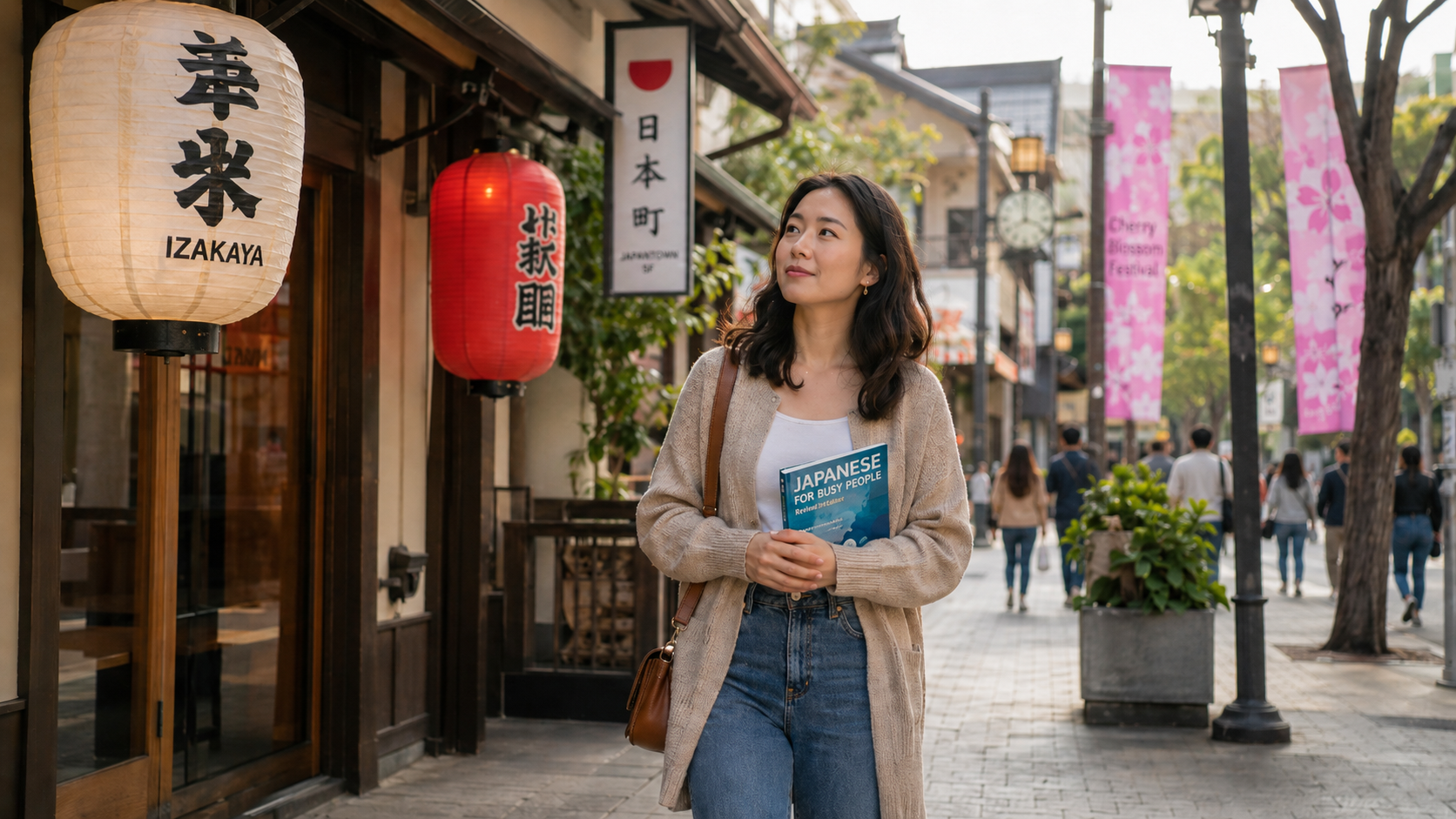
If you live in San Francisco or anywhere in the Bay Area and have ever found yourself pausing in front of a ramen shop menu, planning a first trip to Tokyo, watching a Japanese film and wishing you could catch more than a few familiar words, or wondering whether it is too late as an adult to begin a language with three writing systems, unusual grammar, and a reputation for being “difficult,” then Japanese may feel both deeply exciting and slightly intimidating at the same time.
That combination is very common. Many adults are drawn to Japanese because the language opens a door to something they already love: travel, food, anime, manga, cinema, literature, design, business, technology, martial arts, family history, or simply the elegance of Japanese culture. But the moment they begin researching Japanese classes in San Francisco, the questions start to multiply. Should you take an in-person class? Is online Japanese effective? Do you need to learn hiragana before you begin? How long does it take to speak even simple Japanese? Is a college course too intense? Is a language app enough? Should you prepare for the JLPT? And perhaps the biggest question of all: where should an adult beginner actually start?
The good news is that Japanese is not something you need to “figure out” alone. While it is true that Japanese is very different from English, it is also a beautifully structured language. Its pronunciation is more approachable than many beginners expect. Its grammar, while unfamiliar at first, is logical and pattern-based. Even the writing system becomes less frightening when it is introduced in the right order. The real challenge is not that Japanese is impossible. The challenge is finding a learning path that is clear, realistic, and sustainable for adult life.
For adults in San Francisco, the options are wide-ranging. You can find community college courses, cultural organizations, private tutors, language schools, online classes, self-study apps, conversation meetups, and Japanese cultural events around the Bay Area. Each option has its place. A university-style course may be perfect for someone who wants an academic structure. A private tutor may be ideal for someone with a very specific goal. A cultural event or language lounge may help learners practice casually. But for many busy adults, the best place to start is a structured beginner Japanese class that offers a clear curriculum, a supportive teacher, and enough speaking practice to make the language feel alive from the beginning.
This guide will walk you through what to expect from Japanese classes in San Francisco, what adult beginners should look for, how in-person and online options compare, and how to build a realistic first six-month learning plan. Whether you are learning Japanese for travel, work, culture, heritage, or personal enrichment, the most important step is not becoming perfect. It is simply beginning in the right way.
Why Adults in San Francisco Are Learning Japanese
San Francisco is one of the best places in the United States to feel the connection between language and culture. The Bay Area has a long Japanese and Japanese American history, strong cultural institutions, an active food scene, tech and business ties with Japan, and one of the country’s historic Japantowns. For many people, Japanese is not an abstract language from far away. It is connected to places, communities, restaurants, events, films, books, and relationships that already exist around them.
Some adults begin Japanese because they are planning a trip to Japan. They want to order food, ask for directions, read signs, understand train announcements, and feel less dependent on translation apps. Even basic Japanese can transform a trip. Being able to say thank you naturally, ask a simple question, read hiragana on a menu, or recognize common station names can make travel feel much richer and less stressful.
Others are motivated by culture. Japanese pop culture has had an enormous influence around the world, and many adults who grew up with anime, manga, video games, or Japanese cinema eventually decide they want to understand the language more directly. Subtitles are useful, but they cannot always capture tone, humor, politeness, or emotional nuance. Learning Japanese gives students access to a different way of hearing and interpreting the culture they already enjoy.
Some students come to Japanese for professional reasons. The Bay Area’s technology, design, gaming, education, and business communities often intersect with Japan. Even if you do not need full professional fluency, learning Japanese can help you communicate more respectfully with Japanese colleagues, clients, partners, or friends. In business contexts, even basic cultural and linguistic awareness can make a meaningful difference.
There are also heritage learners: adults who have Japanese family background, Japanese-speaking relatives, or a personal connection to Japanese culture but did not grow up fully fluent. For these students, language study can be emotional as well as practical. It may be about reconnecting with family history, understanding grandparents, traveling with relatives, or feeling closer to a part of one’s identity.
And then there are lifelong learners. Many adults simply love languages. They enjoy the intellectual challenge, the cultural depth, and the satisfaction of making progress in something that once seemed impossible. Japanese attracts these learners because it is different enough to feel truly new, but structured enough to reward steady effort.
Whatever your reason, a good Japanese class should respect adult motivation. Adults are not children in an after-school program. They usually have jobs, families, schedules, responsibilities, and limited time. They need classes that are serious but not overwhelming, structured but not rigid, and supportive without being childish.
Is Japanese Really That Hard to Learn?
Japanese has a reputation for being one of the more difficult languages for English speakers, and that reputation is not completely undeserved. The writing system is unfamiliar. Grammar works differently from English. Politeness levels matter. Vocabulary is mostly unrelated to English. And if your long-term goal is advanced literacy, kanji will require patience over years.
But the word “hard” can be misleading. Many beginners hear that Japanese is difficult and assume they will not be able to make meaningful progress for a very long time. That is not true. Japanese is challenging, but it is also highly learnable when approached step by step.
One encouraging fact is that Japanese pronunciation is relatively approachable for English speakers. Japanese has a small set of vowel sounds, and many consonants are not difficult to pronounce. You do not need to master the rolling “r” of Spanish or Italian, the nasal vowels of French, or the tones of Mandarin. Japanese does have pitch accent, which affects how words sound naturally, but beginners do not need to master it immediately. At the beginning, it is more important to learn the rhythm of the language, pronounce vowels clearly, and avoid adding extra stress where it does not belong.
The grammar is different, but it is logical. English relies heavily on word order. Japanese uses particles—small words such as は, が, を, に, and で—to show how different parts of a sentence relate to each other. This can feel strange at first, but once students understand the function of particles, Japanese sentence structure begins to make sense. Verbs also follow patterns. There are fewer irregular verbs than in English, and many conjugations are quite systematic.
The writing system is usually the biggest psychological barrier. Japanese uses three scripts: hiragana, katakana, and kanji. This sounds overwhelming, but beginners do not learn all of them at once.
Hiragana is usually the first script students learn. It is a phonetic syllabary, which means each symbol represents a sound, not a whole word. There are 46 basic hiragana characters. Once you know them, you can read many beginner Japanese words and grammatical endings.
Katakana is another phonetic syllabary, also with 46 basic characters. It is often used for foreign loanwords, names, emphasis, and certain sound effects. If you see words like コーヒー for coffee or ホテル for hotel, you are looking at katakana.
Kanji are characters of Chinese origin. They represent meanings and are used heavily in written Japanese. Kanji can seem intimidating because there are thousands of them, but beginner students start with a small number: numbers, days of the week, basic verbs, common nouns, and simple everyday words. You do not need to know 2,000 kanji to begin speaking Japanese. You only need a manageable starting point.
The key is sequence. If a class throws everything at you at once, Japanese feels chaotic. If a class introduces the language in a clear order—sounds, greetings, hiragana, basic sentence patterns, katakana, simple verbs, particles, survival phrases, and beginner kanji—Japanese becomes much more approachable.
What Adult Beginners Should Look for in a Japanese Class
When searching for Japanese classes in San Francisco, it is tempting to choose based only on location or price. Those details matter, of course, but they should not be the only factors. The right beginner class can set you up for years of progress. The wrong class can make Japanese feel confusing, discouraging, or impossible.
A good Japanese class for adults should have a structured beginner curriculum. You should know what you are learning, why you are learning it, and what comes next. A class that simply jumps from phrases to grammar explanations to random vocabulary may feel fun for a few weeks, but it will not build a strong foundation. Adult beginners need a pathway: Beginner 1, Beginner 2, Beginner 3, and so on.
Small class size is also important. Japanese requires speaking practice, correction, repetition, and time to ask questions. In a very large class, it is easy to hide. That may feel comfortable at first, especially if you are nervous, but it does not help you speak. In a small group, every student has more opportunities to practice, make mistakes, listen to others, and receive feedback.
The teacher should be patient and experienced with adult learners. Adults often bring perfectionism into the classroom. They may feel embarrassed when they cannot remember a word or when their pronunciation sounds awkward. A good teacher understands this. They create an atmosphere where mistakes are normal, questions are welcome, and progress is measured realistically.
Speaking should begin early. Of course, Japanese writing and grammar matter. But if you spend months only memorizing symbols and rules, you may never feel that the language belongs to you. Even in the first class, students can learn how to greet someone, introduce themselves, say where they are from, ask simple questions, and respond politely. Speaking early builds confidence.
At the same time, a good class should not ignore hiragana and katakana. Many beginners hope they can learn Japanese entirely in romanization, using the Latin alphabet. Romanization can be useful for the first few lessons, but it quickly becomes limiting. Hiragana and katakana are essential for reading, pronunciation, grammar, and future progress. A strong beginner course will introduce them gradually and help students practice with mnemonics, worksheets, reading exercises, and homework.
Cultural context is another important ingredient. Japanese is not just vocabulary and grammar. Politeness, indirectness, greetings, gestures, silence, gift-giving, restaurant etiquette, and levels of formality all shape how the language is used. Adult learners often find Japanese more meaningful when cultural explanations are woven into the class. Why do people say certain phrases before eating? Why are there different levels of “thank you”? Why does Japanese often avoid direct refusal? These details make the language come alive.
Finally, adult-friendly pacing matters. A class should move steadily enough that students feel they are progressing, but not so fast that everyone feels constantly behind. Adults need homework, but they also need realistic expectations. A teacher who understands working adults will know how to balance ambition with sustainability.
Japanese Learning Options in San Francisco and the Bay Area
San Francisco and the wider Bay Area offer many ways to begin learning Japanese. The best option depends on your goals, schedule, budget, and learning style.
Community colleges can be a good choice for students who want a formal academic structure. City College of San Francisco and other Bay Area colleges may offer elementary Japanese courses with a multi-semester sequence. These classes can be thorough and affordable, especially for students who enjoy a school-like environment. The downside is that college courses often follow fixed semester schedules, may involve larger classes, and can feel more academic than conversational.
Cultural organizations are another valuable resource. San Francisco’s Japantown, Japanese cultural centers, and organizations connected to Japanese and Japanese American culture often offer language classes, conversation events, workshops, or cultural programming. These spaces can be especially motivating because they connect language learning to community. However, class availability may vary by season, and some programs may focus more on culture than systematic language progression.
Dedicated language schools are often a strong choice for adults who want structured classes without committing to a full college semester. Language schools typically offer beginner levels, small-group formats, private lessons, and schedules designed for working adults. The quality can vary, so it is important to look for a school that emphasizes adult learners, clear progression, and practical communication.
Private tutors can be excellent for learners with specific needs. If you are preparing for a business trip, working toward JLPT N5, reviewing after a previous class, or studying Japanese for family reasons, a tutor can personalize lessons. The downside is cost. Private lessons are usually more expensive than group classes, and some students miss the energy and accountability of learning with classmates.
Online live classes have become one of the most practical options for busy adults. These are different from self-paced apps or recorded videos. In a live online class, you still have a teacher, classmates, a schedule, speaking practice, and feedback. The difference is that you can attend from home. For someone living in San Francisco, Oakland, Berkeley, or elsewhere in the Bay Area, this can save hours of commuting over the course of a term.
Self-study apps and free resources can be useful supplements. Tools like NHK World’s beginner Japanese lessons, Japan Foundation resources, kana apps, flashcard systems, and grammar websites can help reinforce what you learn in class. But for most adults, apps alone are not enough. They rarely provide enough speaking practice, correction, accountability, or structured progression. Many students use apps enthusiastically for a few weeks and then stop because there is no class, teacher, or group to keep them going.
The most effective approach is often a combination: a structured class as the foundation, plus self-study resources between sessions. The class gives you direction. The homework gives you practice. The teacher gives you correction. The group gives you accountability. The extra resources give you flexibility.
In-Person vs. Online Japanese Classes for Busy Adults
One of the biggest decisions for San Francisco learners is whether to take Japanese in person or online. Both can work well. The right choice depends on your lifestyle.
In-person classes offer physical presence. Some students enjoy being in a classroom, meeting classmates face to face, writing on paper, and physically leaving home to study. In San Francisco, an in-person Japanese class can also be combined with cultural experiences: visiting Japantown, eating Japanese food after class, attending events, or browsing Japanese bookstores and markets.
However, in-person classes can be difficult for working adults. San Francisco traffic, parking, public transit delays, evening fatigue, and long commutes can all interfere with consistency. A class may look perfect on paper, but if attending requires 45 minutes each way after work, it may become hard to maintain.
Online Japanese classes solve many of these problems. You do not need to cross town, find parking, or commute across the Bay. You can join from your home, office, or quiet workspace. For adults with busy schedules, this convenience can make the difference between studying consistently and dropping out.
Some students worry that online classes will feel impersonal. But a well-run online small-group class can be highly interactive. Teachers can use breakout rooms, shared screens, chat, digital flashcards, listening exercises, and pair practice. Students can read hiragana together, practice dialogues, ask questions, and receive corrections in real time. The essential element is not the physical room. It is the quality of teaching and the amount of active participation.
For many adults in San Francisco, online Japanese classes offer the best balance: live instruction, real interaction, local scheduling, and no commute. This is especially helpful at the beginner level, when consistency matters more than almost anything else.
A Realistic Six-Month Roadmap for Learning Japanese
One of the most helpful things a beginner can have is a realistic roadmap. Japanese is a long-term language, but you can make visible progress in the first six months if you study consistently.
Month 1: Sounds, Greetings, and Hiragana
In the first month, your goal is not to become conversationally fluent. Your goal is to become comfortable with the basic sound and structure of Japanese.
You will likely learn greetings such as こんにちは, ありがとうございます, はじめまして, and よろしくお願いします. You may learn how to say your name, where you are from, what you do, and what languages you speak. You will begin to recognize the rhythm of Japanese and practice speaking out loud.
This is also the time to begin hiragana. At first, the symbols may look completely unfamiliar. But with daily practice, most students can learn to recognize the basic characters. You do not need to write them perfectly right away. Recognition comes first, then reading simple words, then writing.
You will also learn the idea of topic-comment structure. Instead of thinking in English word order, you begin to understand sentences like “I am a student,” “This is coffee,” or “My name is Anna” through Japanese patterns.
Months 2–3: Katakana, Particles, and Survival Phrases
After the first month, you begin expanding your foundation. Katakana becomes important because it appears frequently in menus, signs, foreign names, and loanwords. Many students enjoy katakana because they can suddenly recognize words borrowed from English, such as coffee, hotel, taxi, and restaurant-related vocabulary.
You will also begin learning particles. These are small but powerful words that show the role of each part of the sentence. At first, particles can feel confusing because English does not use them in the same way. But with repetition, they become one of the keys to understanding Japanese.
This stage is also ideal for survival Japanese. You can learn how to order food, ask how much something costs, say where you want to go, ask for help, and understand basic polite phrases. If you are learning Japanese for travel, this is when the language starts feeling immediately useful.
Months 4–6: Verbs, Simple Conversations, and First Kanji
By months four to six, you should be building simple conversations. You may learn how to talk about your daily routine, hobbies, work, family, likes and dislikes, weekend plans, and travel experiences. Verbs become more important, including present, past, negative, and polite forms.
You may also begin learning your first kanji. This should be done gradually. Common beginner kanji include numbers, days of the week, basic directions, people, places, and simple verbs. The goal is not to memorize hundreds of characters quickly. The goal is to become comfortable with the idea that kanji represent meaning and appear constantly in real Japanese.
Listening practice should also increase. Short dialogues, teacher-led listening exercises, beginner audio resources, and repeated exposure to natural phrases will help your ear adjust. Listening often feels slower than reading at first, so patience is important.
After Six Months: Consolidation and New Goals
After six months of steady study, many adult learners can handle simple introductions, basic travel situations, kana reading, beginner grammar, and some simple conversations. They are not fluent, but they are no longer at zero. This is a meaningful milestone.
At this point, you may decide to continue into higher beginner classes, prepare for JLPT N5, focus on travel Japanese, build conversation skills, or strengthen reading. The most important thing is not to stop just when the foundation is forming. Japanese rewards continuity. A little progress each week becomes significant over time.
Should You Prepare for the JLPT?
The JLPT, or Japanese Language Proficiency Test, is a standardized exam with levels from N5 to N1. N5 is the beginner level, and some students enjoy using it as a goal. Preparing for JLPT N5 can help you organize vocabulary, grammar, kanji, and listening practice.
However, not every adult learner needs the JLPT. If you are learning Japanese for travel, culture, or personal enjoyment, you may not need an exam at all. A class focused on communication may be more useful than test preparation in the beginning.
That said, JLPT N5 can be motivating after you have studied for a while. It gives you a clear target and a sense of accomplishment. The best approach is usually to build a strong beginner foundation first, then decide whether the exam fits your goals.
How to Choose the Right Japanese Class in San Francisco
Before registering for a Japanese class, ask yourself a few practical questions.
First, what is your main goal? Travel Japanese, conversation, reading manga, understanding anime, business communication, heritage learning, or long-term fluency? Your goal affects the type of class you need.
Second, how much time can you realistically study each week? A weekly class is a wonderful start, but you will progress faster if you also review between classes. Even 15–20 minutes a day can make a difference, especially for kana, vocabulary, and listening.
Third, do you prefer structure or flexibility? If you need a formal academic sequence, a college course may suit you. If you want practical speaking and adult-friendly pacing, a small-group language school may be better. If your schedule is unpredictable, private lessons may help.
Fourth, do you want in-person or online? Be honest about your commute. Many adults choose an in-person class with good intentions but struggle to attend regularly. The best class is the one you will actually attend.
Finally, pay attention to class atmosphere. You want a place where beginners feel welcome. Japanese requires courage. You will pronounce things imperfectly, forget characters, confuse particles, and make mistakes. That is not failure. That is how language learning works.
Why Japanese Is Especially Rewarding in San Francisco
Learning Japanese in San Francisco has a special advantage: you are not studying in isolation. The Bay Area gives you many ways to connect your learning to real life.
You can visit Japantown and recognize words on signs. You can order in a Japanese restaurant and understand more of the menu. You can attend cultural festivals, film screenings, tea ceremony events, calligraphy workshops, or language exchanges. You can meet others who are also interested in Japan and Japanese culture. You can use the city itself as motivation.
This matters because language learning is not only about textbooks. Motivation grows when the language feels connected to life. A student who learns the word for train before traveling to Japan will remember it better. A student who learns food vocabulary before going to a ramen shop will feel the language immediately. A student who learns greetings and politeness formulas before attending a cultural event will understand more than words—they will understand behavior.
San Francisco gives Japanese learners context. A good class gives them structure. Together, they create a strong environment for adult learning.
How Polyglottist Language Academy Supports Adult Japanese Learners
At Polyglottist Language Academy, we understand that adult learners need more than a list of vocabulary words. They need structure, encouragement, clear explanations, and a realistic path forward. Many adults come to language learning with excitement but also anxiety. They worry they are too busy, too old, too slow, or too easily embarrassed. Our goal is to make language learning serious, effective, and welcoming.
For students in San Francisco and the Bay Area, our online Japanese classes offer a practical way to begin without the stress of commuting. You can join a live class from home while still receiving teacher guidance, speaking practice, and interaction with other learners. Small-group classes allow students to ask questions, practice actively, and feel known by the instructor.
Our approach is especially helpful for beginners. We believe Japanese should be introduced step by step: pronunciation, greetings, hiragana, simple sentence patterns, katakana, particles, useful phrases, and cultural context. We want students to understand not only what to say, but why Japanese works the way it does.
Polyglottist Language Academy offers language classes for adults who want meaningful progress in a supportive environment. Whether you are learning Japanese for travel, culture, work, family, or personal enrichment, starting with a structured class can save you months of confusion and help you build confidence from the beginning.
If you are ready to begin, we invite you to check our current Japanese class schedule and explore our online and Bay Area language class options. A new language does not begin with fluency. It begins with one class, one greeting, one sentence, and the decision to start.
FAQs About Japanese Classes in San Francisco
How long does it take for an adult to learn basic Japanese?
It depends on your goals and study habits, but many adults can learn basic greetings, hiragana, simple sentence structures, and survival phrases within the first few months of consistent study. A solid beginner foundation often takes six months to a year. Japanese is a long-term language, but you can make useful progress much earlier than full fluency.
Is Japanese too hard to learn as an adult?
No. Japanese is challenging, but adults can absolutely learn it. In fact, adults often do well because they understand grammar explanations, can study intentionally, and usually have strong motivation. The key is to follow a structured path and avoid trying to learn everything at once.
Should I learn hiragana before taking a Japanese class?
It helps, but it is not always required. A good beginner class will introduce hiragana early and guide you through it. If you want to prepare before class begins, learning a few hiragana characters in advance can make the first weeks easier.
Are online Japanese classes effective?
Yes, live online Japanese classes can be very effective, especially for busy adults. The most important factors are the quality of instruction, class size, student participation, and consistency. A live online class with a teacher and classmates is very different from watching pre-recorded videos alone.
What is better: group classes or private lessons?
Both can work. Group classes are great for structure, motivation, peer support, and regular speaking practice. Private lessons are useful if you have specific goals, an unusual schedule, or want highly personalized attention. Many students begin with group classes and add private lessons later if needed.
Can I learn Japanese just with apps?
Apps can help, especially for vocabulary, kana practice, and daily review. But most learners need more than apps to speak confidently. Apps usually cannot provide real conversation, correction, cultural explanation, or accountability. A class gives you structure and feedback.
Do I need to take the JLPT?
Not necessarily. The JLPT is useful if you want a formal goal, need certification, or enjoy exam-based study. But if your goal is travel, conversation, culture, or personal enrichment, you can study Japanese without taking the test. JLPT N5 may become a good goal after you have completed a beginner course.
What should I expect in my first Japanese class?
You can expect to learn greetings, pronunciation basics, simple phrases, and perhaps an introduction to hiragana. You may also learn how Japanese sentences are structured and how to introduce yourself. A good beginner class should feel welcoming, organized, and manageable.
Is Japanese pronunciation difficult?
Japanese pronunciation is generally more approachable than many beginners expect. The sounds are relatively consistent, and the vowel system is clear. The rhythm and pitch accent take practice, but you can begin speaking simple Japanese early without needing perfect pronunciation.
Can I learn Japanese for travel in a short time?
You can learn useful travel Japanese in a few months if you focus on practical phrases, listening, pronunciation, and cultural etiquette. You will not become fluent quickly, but you can learn enough to greet people, order food, ask simple questions, and feel more confident in Japan.
Continue Learning: Related Articles from Our Blog
If you are interested in Japanese, language learning, and adult-friendly study strategies, you may also enjoy these articles from the Polyglottist Language Academy blog:
The Best Way To Start Learning Japanese As A Complete Beginner
Japanese Pronunciation For Beginners: What English Speakers Get Wrong
How To Practice Japanese Every Day Even With A Busy Schedule
Hiragana, Katakana, And Kanji: What Japanese Learners Need To Know First
Japanese Lessons In Palo Alto: A Smarter Way To Learn The Language
Learn Japanese In Walnut Creek: Small Classes, Real Progress
Japanese Classes In San Francisco For Adults: Where To Start