
Japanese Lessons in Palo Alto: A Smarter Way to Learn the Language
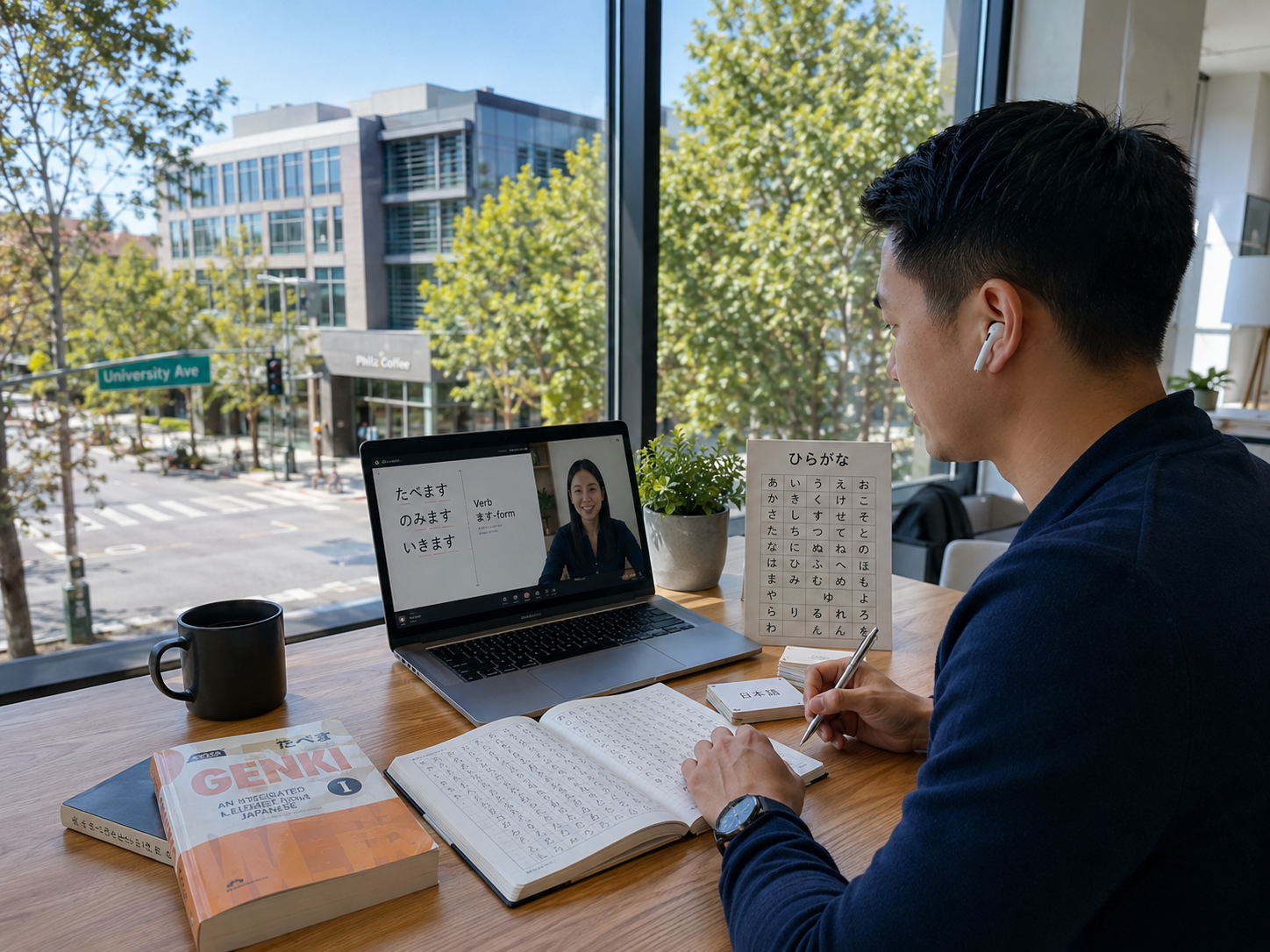
If you live in Palo Alto, where ambitious professionals, Stanford students, tech workers, entrepreneurs, researchers, parents, travelers, and lifelong learners are constantly looking for skills that open new doors, learning Japanese can feel like one of the most rewarding decisions you can make—not because Japanese is “easy,” not because it can be mastered overnight, and not because a language app can magically turn you fluent in a few months, but because Japanese offers something much deeper: access to one of the world’s most fascinating cultures, one of the most influential economies, and one of the most intellectually satisfying language systems a learner can encounter.
Japanese is a language that attracts people for many reasons. Some people fall in love with Japanese through anime, manga, film, design, food, video games, or literature. Others become interested because of Japan’s importance in technology, business, robotics, architecture, fashion, or international relations. Some learners want to travel to Tokyo, Kyoto, Osaka, Hokkaido, or Okinawa and experience the country with more confidence. Others have Japanese friends, family members, colleagues, clients, or partners and want to communicate more meaningfully. And some are simply drawn to the beauty of the language itself: the rhythm, the politeness levels, the writing system, the compact grammar, and the way Japanese expresses social awareness so differently from English.
For people in Palo Alto, Japanese lessons make particular sense. Palo Alto sits at the center of a globally connected, intellectually curious, internationally minded region. The Bay Area is full of people who are used to learning difficult things, building skills over time, and thinking across cultures. But when it comes to Japanese, many learners make the same mistake: they assume they can teach themselves entirely through apps, YouTube videos, or scattered online resources. These tools can be helpful, but Japanese is not a language where random exposure alone usually works. Beginners need structure. They need feedback. They need pronunciation correction. They need help understanding grammar that does not behave like English. They need a teacher who can explain why a sentence works, not just what it means.
That is why Japanese lessons—especially well-structured beginner lessons—can make such a difference. A good Japanese class does not simply give you vocabulary lists. It helps you build a foundation. It teaches you how the language thinks. It shows you how to introduce yourself, ask questions, recognize patterns, read the first writing systems, and understand the cultural logic behind the words. A smarter way to learn Japanese is not to rush. It is to begin correctly.
For Palo Alto learners, the smartest path is often a small-group or guided online Japanese class that combines flexibility with real instruction. You get the convenience of learning from home, work, or a quiet café, while still receiving the human guidance that apps cannot provide. You can ask questions. You can practice speaking. You can hear corrections. You can stay accountable. And most importantly, you can avoid the confusion that so many self-taught Japanese learners experience after the first burst of enthusiasm fades.
Japanese is absolutely learnable. But it rewards learners who approach it with patience, curiosity, and a strong foundation.
Why Japanese Appeals to Palo Alto Learners
Palo Alto is not an ordinary learning environment. People here tend to value education, global perspective, practical skills, and intellectual challenge. Japanese fits naturally into that mindset.
For tech professionals, Japanese can be connected to innovation, robotics, gaming, product design, engineering, and global business. Japan remains one of the world’s most important economies and a major player in advanced manufacturing, automotive technology, electronics, design, and research. Even when English is used in international business, knowing Japanese can create trust and cultural understanding that translation alone cannot provide.
For Stanford students and academics, Japanese opens the door to East Asian studies, literature, linguistics, history, international relations, art, and cultural research. Japanese is also a fascinating language for anyone interested in how grammar shapes thought. It structures sentences differently from English, handles politeness with remarkable precision, and often leaves things unsaid when context is clear.
For travelers, Japanese makes Japan dramatically more accessible. Japan is famous for being organized, clean, safe, and welcoming, but English is not always widely spoken outside major tourist zones. Even basic Japanese can transform a trip. Being able to greet someone politely, ask for directions, order food, read simple signs, understand train station language, or say thank you properly makes travel more respectful and more enjoyable.
For fans of Japanese culture, lessons provide a deeper connection. Anime, manga, J-pop, Japanese cinema, food culture, martial arts, tea ceremony, calligraphy, literature, and traditional arts all become richer when you understand even a little of the language behind them.
And for lifelong learners, Japanese is simply exciting. It is different enough from English to feel like a new mental landscape, but structured enough that steady progress is possible.
Why Japanese Feels Hard at First
Many beginners are attracted to Japanese but intimidated by it. They hear that Japanese has three writing systems, unfamiliar grammar, particles, honorifics, and levels of politeness. They may worry that they are “too old” to learn it, or that Japanese is only for people who started as teenagers.
This fear is understandable, but it is also misleading.
Japanese is challenging, but not impossible. In fact, some parts of Japanese are surprisingly friendly to beginners. Japanese pronunciation is generally more consistent than English pronunciation. Verbs do not conjugate by person the way they do in many European languages. There is no grammatical gender like in Spanish, French, German, or Russian. Nouns do not change form for singular and plural in the same way English nouns do. Once you understand the basic sentence structure, Japanese can feel elegant and logical.
The real challenge is that Japanese is different. It asks English speakers to stop expecting every sentence to work like English. Word order is different. Particles mark the role of words in a sentence. Context matters deeply. Politeness is built into grammar. And the writing system requires steady, patient study.
This is exactly why guided Japanese lessons are so useful. A good teacher helps you understand what is actually difficult, what only looks difficult, and what you should focus on first.
The Smarter Way to Begin: Do Not Start with Everything at Once
One of the biggest mistakes Japanese beginners make is trying to learn everything at the same time. They start with hiragana, katakana, kanji, anime phrases, grammar charts, vocabulary apps, YouTube lessons, and random textbook PDFs. Within a few weeks, they feel overwhelmed.
A smarter approach is to build in layers.
First, learn basic pronunciation and greetings. Japanese sounds are not extremely difficult for English speakers, but there are important details: vowel length, rhythm, the Japanese “r,” and avoiding English-style stress.
Second, learn hiragana. Hiragana is one of the Japanese phonetic writing systems and is essential for reading beginner materials. It may look intimidating at first, but it is very learnable with regular practice.
Third, learn basic sentence patterns. For example:
わたしはアメリカ人です。
Watashi wa Amerika-jin desu.
I am American.
これは本です。
Kore wa hon desu.
This is a book.
日本語を勉強しています。
Nihongo o benkyō shite imasu.
I am studying Japanese.
Fourth, learn useful conversational routines: introductions, asking names, ordering food, saying where you are from, talking about work, asking simple questions, and expressing likes and dislikes.
Fifth, begin katakana. Katakana is used for foreign words, names, loanwords, and emphasis. It is especially useful because many English-based words appear in Japanese through katakana.
Kanji should not be ignored, but beginners do not need to conquer kanji immediately. A good class introduces kanji gradually, with context and purpose.
Why Apps Alone Are Not Enough
Language apps can help with memorization and daily exposure. They can be useful for drilling hiragana, reviewing vocabulary, or building a habit. But they usually cannot replace real lessons.
Japanese beginners often need answers to questions like:
Why is は pronounced wa in some sentences?
What is the difference between は and が?
Why does the verb come at the end?
When should I use です and ます?
Why do Japanese people avoid saying “you” directly?
How polite should I be when speaking to a teacher, stranger, friend, or colleague?
Why does the same English sentence have multiple Japanese translations?
How do I know what to omit from a sentence?
What should I learn first: hiragana, katakana, or kanji?
An app may show correct answers, but it rarely explains the thinking behind them in a way that fits your level. A teacher can hear your pronunciation, notice your mistakes, explain grammar clearly, and help you avoid bad habits.
For Palo Alto professionals and busy adults, this matters. Time is valuable. Spending six months wandering through disconnected apps may feel productive, but it often leads to shallow knowledge. A structured Japanese class helps you make better use of your time.
What a Good Beginner Japanese Class Should Include
A strong beginner Japanese class should be practical, structured, and encouraging. It should not drown students in grammar terminology on the first day, but it also should not treat Japanese as a collection of travel phrases with no system.
A good beginner class should include:
1. Pronunciation from the Start
Japanese pronunciation is often described as simple, but English speakers still make predictable mistakes. They may over-stress syllables, pronounce vowels unclearly, or struggle with long vowels such as おばさん (obasan, aunt) versus おばあさん (obāsan, grandmother). These differences matter.
2. Hiragana and Katakana
The writing systems should be introduced gradually but seriously. Relying only on romanization for too long can slow progress. Hiragana helps learners see Japanese as Japanese, not as English written in Latin letters.
3. Essential Grammar Patterns
Students should learn how Japanese sentences are built. This includes particles, word order, basic verb forms, adjectives, questions, negation, and polite speech.
4. Speaking Practice
Beginners need to speak early. Even simple exchanges build confidence:
はじめまして。
Hajimemashite.
Nice to meet you.
ロビーです。
Robī desu.
I’m Robbie.
よろしくお願いします。
Yoroshiku onegai shimasu.
Pleased to meet you / I look forward to learning with you.
5. Listening Practice
Japanese can sound fast to beginners because the rhythm is unfamiliar. Students need exposure to natural but level-appropriate speech.
6. Cultural Context
Japanese language and Japanese culture cannot be fully separated. Politeness, indirectness, greetings, bowing, honorifics, and social roles all influence how people speak.
7. Consistent Review
Japanese requires repetition. A good class revisits old material while adding new structures, so students do not forget what they learned after one week.
Why Small-Group Lessons Work Well for Adults
Small-group Japanese lessons are often ideal for adult learners. They provide structure and accountability without the pressure of a large classroom. Students can practice with others, hear different voices, ask questions, and build confidence gradually.
In a small group, you are not alone in your confusion. Other students often have the same questions. Someone else may ask the thing you were afraid to ask. You also get to practice real communication, not just repeat after an audio file.
For busy Palo Alto learners, small-group classes can also be more motivating than self-study. When you know you have class each week, you are more likely to review. When you see classmates progressing, you stay engaged. When a teacher expects you to participate, you speak even if you feel nervous.
This is important because language learning is not just intellectual. It is social. You have to get used to making sounds, trying sentences, forgetting words, and continuing anyway.
Online Japanese Lessons for Palo Alto Students
For many Palo Alto residents, online Japanese lessons are the most practical option. Between work, commuting, family responsibilities, school schedules, and busy professional lives, traveling to a class can be difficult. Online classes solve this problem while still providing live instruction.
The best online Japanese lessons are not passive video courses. They are interactive. Students speak, listen, read, ask questions, and receive corrections. A live online class can be just as effective as an in-person class when it is well taught and organized.
Online lessons are especially convenient for:
tech professionals with changing schedules
Stanford students and researchers
parents who cannot easily commute
adults who prefer learning from home
travelers preparing for a Japan trip
learners who want access to teachers beyond their immediate neighborhood
students in Palo Alto, Menlo Park, Mountain View, Los Altos, Sunnyvale, and the wider Bay Area
A smart online Japanese class should still feel personal. The teacher should know the students, track progress, and create opportunities to speak. The goal is not just to watch a screen. The goal is to participate.
Japanese for Travel: A Practical Reason to Start
Many learners begin Japanese because they want to visit Japan. This is an excellent reason. Even beginner Japanese can make travel more meaningful.
You do not need fluency to benefit. You can start with phrases like:
すみません。
Sumimasen.
Excuse me / I’m sorry / Thank you, depending on context.
ありがとうございます。
Arigatō gozaimasu.
Thank you very much.
英語を話せますか。
Eigo o hanasemasu ka.
Can you speak English?
これはいくらですか。
Kore wa ikura desu ka.
How much is this?
駅はどこですか。
Eki wa doko desu ka.
Where is the station?
おすすめは何ですか。
Osusume wa nan desu ka.
What do you recommend?
These phrases may seem simple, but they change how you experience Japan. They show respect. They help you interact more confidently. They reduce anxiety. They also make Japanese people more likely to respond warmly, because you are making an effort.
A Japanese class for travelers should teach practical survival language, but it should also explain cultural expectations: how to enter a restaurant, how to ask politely, how to behave on trains, how to use convenience stores, how to read menus, and why certain direct translations from English may sound too blunt.
Japanese for Business and Professional Growth
Japanese can also be valuable professionally. While not every Palo Alto professional needs Japanese for work, those who interact with Japanese companies, clients, products, research, design, technology, or cultural industries may find it useful.
Even basic Japanese can improve professional relationships. It shows seriousness and respect. It can help you understand business etiquette, greetings, email tone, hierarchy, and indirect communication. Japanese professional culture often values careful politeness, humility, and relationship-building. Language study gives you insight into those values.
For professionals, Japanese lessons also train patience and attention to detail. You learn to notice small differences: a particle, a verb ending, a politeness level, a sound length. These details can be intellectually satisfying for people who enjoy complex systems.
In a global region like Silicon Valley, language skills can set you apart. Japanese may not be as commonly studied as Spanish or French, but that is part of its advantage. It signals curiosity, discipline, and international awareness.
Japanese for Culture: Going Beyond Translation
Japanese culture has enormous global influence. But experiencing Japanese culture only through translation can create distance. Learning the language, even at a beginner level, reveals patterns that translation hides.
For example, Japanese often avoids direct pronouns when context is clear. It uses set phrases that carry social meaning. It expresses gratitude, apology, humility, and respect in ways that do not map perfectly onto English.
The famous phrase:
よろしくお願いします
Yoroshiku onegai shimasu
has no single perfect English translation. It can mean “Nice to meet you,” “Please treat me well,” “I look forward to working with you,” “Thank you in advance,” or “I’m counting on you,” depending on context.
This kind of phrase shows why Japanese is so fascinating. It reflects a culture where relationships, context, and mutual obligation are embedded in language.
When you study Japanese, you are not just learning words. You are learning a different way of organizing social reality.
What Beginners Should Expect in the First Few Months
A beginner Japanese student should not expect to become fluent in a few weeks. But with consistent study, progress can be very visible.
In the first few months, you can expect to learn:
basic greetings
self-introductions
hiragana
some katakana
simple sentence patterns
numbers
basic question words
common verbs
polite present and past forms
simple listening skills
essential travel phrases
how particles work at a basic level
how Japanese word order differs from English
You may be able to introduce yourself, talk about where you are from, say what you like, ask simple questions, order food, read some basic words, and understand beginner-level dialogues.
Most importantly, you will stop seeing Japanese as a mysterious wall of symbols and sounds. You will begin to see structure.
That shift is powerful. Once Japanese starts to make sense, motivation becomes easier to sustain.
How to Study Between Lessons
Taking Japanese lessons is important, but what you do between lessons matters too. The best learners develop small, consistent habits.
Here are smart study habits for beginners:
Practice Hiragana Daily
Five to ten minutes a day is better than one long session once a week. Write the characters by hand. Read them aloud. Use flashcards, but also practice reading real words.
Review Class Notes Immediately
After class, spend a few minutes reviewing what you learned. This helps move information from short-term memory into long-term memory.
Speak Out Loud
Japanese must be spoken, not just read silently. Repeat phrases aloud. Record yourself. Practice introductions until they feel natural.
Use Apps as Support, Not as the Main Teacher
Apps can help with review, but they should support your class—not replace it.
Learn Phrases in Context
Do not memorize isolated words only. Learn phrases and sentence patterns. Japanese grammar makes much more sense when vocabulary appears inside real sentences.
Accept Slow Progress
Japanese rewards consistency. Some weeks will feel easy, others frustrating. This is normal. The key is to continue.
Why Adults Can Learn Japanese Successfully
Many adults worry that they are too old to learn Japanese. This fear is common, but it is not accurate. Adults can be excellent language learners because they bring discipline, motivation, life experience, and clear goals.
Children may absorb pronunciation naturally, but adults can understand systems. They can compare grammar. They can choose study strategies. They can commit to a class. They can ask precise questions. They can connect Japanese to travel, work, culture, or personal interests.
The real obstacle for adults is usually not age. It is inconsistency, unrealistic expectations, or lack of structure.
A good Japanese class helps solve this. It gives adults a path, a schedule, a teacher, and a reason to keep going.
Choosing the Right Japanese Lessons in Palo Alto
When looking for Japanese lessons as a Palo Alto learner, consider the following questions:
Is the class designed for adults?
Is it appropriate for complete beginners?
Does it include speaking practice?
Does the teacher explain grammar clearly?
Will you learn hiragana and katakana?
Is the class small enough for participation?
Does the schedule work for busy professionals?
Is the atmosphere supportive rather than intimidating?
Does the class connect language and culture?
Can online lessons provide real interaction?
The best Japanese lessons are not necessarily the fastest or flashiest. They are the ones that help you keep learning after the first month.
A good class should leave you feeling challenged but not lost. It should make Japanese feel possible.
The Smartest Mindset for Learning Japanese
The smartest way to learn Japanese is to approach it as a long-term relationship, not a quick project.
You do not need to learn everything at once. You do not need perfect pronunciation on day one. You do not need to memorize hundreds of kanji immediately. You do not need to understand anime without subtitles after three months.
You need to start.
You need to build habits.
You need to learn the sound system.
You need to read hiragana.
You need to understand basic grammar.
You need to practice speaking, even imperfectly.
You need to stay curious.
Japanese is a language of layers. At first, you learn greetings. Then sentence patterns. Then particles. Then verb forms. Then levels of politeness. Then kanji. Then nuance. Each layer opens a new part of the language.
The reward is not only fluency. The reward is the process of entering another culture more deeply.
Why Japanese Lessons Are Worth It
Japanese lessons are worth it because they save you from confusion. They give you a map. They help you avoid common beginner mistakes. They keep you accountable. They make pronunciation clearer. They make grammar less mysterious. They turn passive interest into active skill.
For Palo Alto learners, Japanese can be a personal enrichment project, a professional advantage, a travel tool, a cultural bridge, or a serious intellectual pursuit. Whatever your reason, the right lessons can help you begin with confidence.
Japanese may look intimidating from the outside, but once you step inside the language, you discover patterns, beauty, and logic. You learn that the writing systems can be mastered step by step. You learn that grammar is different, but not chaotic. You learn that even simple phrases carry cultural meaning.
Most of all, you learn that Japanese is not just a language to study. It is a language to experience.
FAQs About Japanese Lessons in Palo Alto
Are Japanese lessons good for complete beginners?
Yes. A well-designed beginner Japanese class should assume no previous knowledge. You can start with greetings, pronunciation, hiragana, basic sentence patterns, and simple conversation.
Can I learn Japanese online from Palo Alto?
Yes. Online Japanese lessons are a practical option for Palo Alto students, especially busy adults and professionals. Live online classes can still include speaking practice, teacher feedback, and structured learning.
How hard is Japanese for English speakers?
Japanese is challenging because it has a different grammar structure and writing system, but it is not impossible. Pronunciation is relatively consistent, and many beginner patterns are logical once explained clearly.
Should I learn hiragana before taking Japanese lessons?
You do not need to know hiragana before starting a true beginner class. A good class will introduce hiragana gradually. However, practicing hiragana early will help you progress faster.
How long does it take to learn Japanese?
It depends on your goals and study consistency. You can learn basic survival Japanese in a few months, but conversational confidence takes longer. Japanese is best approached as a long-term learning journey.
Do I need to learn kanji right away?
Beginners should focus first on pronunciation, hiragana, katakana, and basic grammar. Kanji can be introduced gradually. Trying to master kanji too early can overwhelm new learners.
Are Japanese classes useful for travel to Japan?
Absolutely. Even basic Japanese can help you greet people, order food, ask directions, read simple signs, and travel more respectfully. It can make your trip much smoother and more meaningful.
Is Japanese useful for professionals in Palo Alto?
Yes, especially for professionals interested in international business, technology, design, research, gaming, robotics, or Japanese companies and culture. Even basic Japanese shows cultural awareness and commitment.
What is the best way to study Japanese between classes?
Practice hiragana daily, review class notes, speak out loud, listen to beginner audio, and use apps for reinforcement. Consistency matters more than long occasional study sessions.
Can adults learn Japanese successfully?
Yes. Adults can learn Japanese very successfully with structure, regular practice, and realistic expectations. Many adult learners do especially well because they are motivated and disciplined.
Learn Japanese with Polyglottist Language Academy
If you are in Palo Alto or elsewhere in the Bay Area and want a smarter, more structured way to begin Japanese, Polyglottist Language Academy offers language classes designed for adult learners who want real progress, not random memorization.
Our classes help students build a strong foundation in pronunciation, essential grammar, reading, speaking, and cultural understanding. Whether you are learning Japanese for travel, work, personal interest, or a lifelong love of Japanese culture, guided instruction can help you avoid confusion and stay motivated.
Japanese may be challenging, but you do not have to learn it alone. With the right teacher, the right structure, and a supportive class environment, you can begin your Japanese language journey with confidence.
Sign up for Japanese classes with Polyglottist Language Academy and take the first step toward understanding one of the world’s most fascinating languages.
You May Also Like These Articles
If you enjoyed this article, you may also want to read:
Is Japanese Hard To Learn? An Honest Guide For English Speakers
Why Japanese Feels Difficult At First—And How To Push Through
How To Practice Japanese Every Day Even With A Busy Schedule
Hiragana, Katakana, And Kanji: What Japanese Learners Need To Know First
Japanese Classes In San Francisco For Adults: Where To Start
Learn Japanese In Oakland: Small Group Classes That Actually Help You Speak