
A Beginner’s Guide to Vietnamese Culture, Etiquette, and Everyday Life
When you first begin learning about Vietnam, it is easy to be drawn in by the country’s unforgettable images—narrow streets filled with motorbikes, bright lanterns glowing over ancient towns, families gathering around generous meals, and the sound of a tonal language that seems to carry history, warmth, and respect in every syllable—but Vietnamese culture is far deeper than any postcard or travel video can show. To truly understand Vietnam, you need to look not only at its food, landscapes, and famous destinations, but also at the values that shape daily behavior: family loyalty, respect for elders, social harmony, humility, hospitality, education, and the careful art of communicating without causing embarrassment.
Vietnamese culture is one of the richest and most fascinating cultures in Southeast Asia. It has been shaped by thousands of years of history, including indigenous traditions, Chinese influence, Confucian ideas, Buddhism, French colonial contact, American involvement, and the rapid modernization of recent decades. Today, Vietnam is both deeply traditional and strikingly modern. In cities such as Hanoi, Ho Chi Minh City, and Da Nang, you will see young professionals working in cafés, students scrolling on smartphones, entrepreneurs building businesses, and families living in high-rise apartments. At the same time, many homes still have ancestral altars, families gather for Tết, elders are treated with special respect, and everyday conversations depend heavily on age, relationship, and social position.
For American learners, Vietnamese culture can feel both welcoming and complex. Many aspects of daily life are wonderfully warm: people may invite you to eat, ask personal questions out of friendliness, help you navigate a market, or show appreciation when you try even a few words of Vietnamese. But some customs may feel unfamiliar at first. Vietnamese communication can be more indirect than American communication. Respect is often shown through small gestures rather than big declarations. A simple greeting can change depending on whether someone is older, younger, male, female, a teacher, a relative, a stranger, or a friend. Even the word “you” is not as simple in Vietnamese as it is in English.
That is why learning about culture is essential for anyone interested in the Vietnamese language. Language and culture are inseparable. Vietnamese pronouns reflect relationships. Dining etiquette reflects family values. Holiday traditions reflect the importance of ancestors and community. Everyday habits, from removing shoes before entering a home to using both hands when giving something to an elder, reveal a society where respect is often expressed through action.
This beginner’s guide will introduce you to Vietnamese culture, etiquette, and everyday life in a practical and approachable way. Whether you are planning to visit Vietnam, connect with Vietnamese friends or relatives, study the Vietnamese language, work with Vietnamese colleagues, or simply understand the culture more deeply, this guide will help you avoid common misunderstandings and appreciate the beauty of Vietnamese social life.
What Makes Vietnamese Culture Unique?
Vietnamese culture is often described as family-centered, community-oriented, respectful, and deeply connected to tradition. While modern Vietnam is changing quickly, many cultural values remain rooted in older ways of thinking about family, duty, education, and social harmony.
Historically, Vietnam developed as an agricultural society where village life, rice cultivation, and family cooperation were essential. In such a context, the individual was never completely separate from the group. A person’s identity was closely tied to family, ancestors, village, and community. This still influences Vietnamese culture today. Even in modern cities, many people make decisions with family expectations in mind.
Vietnam has also been influenced by Confucianism, which emphasizes respect for elders, education, proper behavior, social order, and filial piety. Filial piety means respect, care, and duty toward one’s parents and ancestors. This value remains one of the foundations of Vietnamese family life.
Buddhism, folk beliefs, ancestor worship, and local traditions have also shaped Vietnamese culture. Many families maintain ancestral altars in their homes, where they offer incense, fruit, flowers, and food to honor relatives who have passed away. This is not simply a religious practice; it is also a way of remembering family roots and maintaining a connection between generations.
At the same time, Vietnam is not frozen in the past. Modern Vietnam is energetic, ambitious, and youthful. Cities are full of cafés, universities, businesses, shopping centers, motorbikes, social media culture, and global influences. Young Vietnamese people may listen to international music, work in technology, study abroad, and follow global fashion trends while still returning home for Tết, respecting their parents’ wishes, and participating in family rituals.
This blend of old and new is one of the most interesting aspects of Vietnamese life.
Core Vietnamese Cultural Values
Family and Filial Duty
Family is at the center of Vietnamese culture. In many Vietnamese families, the needs of the family are considered more important than the desires of the individual. Children are raised to respect parents, grandparents, teachers, and older relatives. Adult children often feel a strong responsibility to support their parents financially, emotionally, and practically.
Multi-generational households are still common, especially outside major urban centers. Even when family members do not live together, they often stay closely connected. Grandparents may help raise children, parents may support adult children longer than is typical in the United States, and major life decisions—such as education, career, marriage, or moving abroad—may involve family discussion.
For Americans, this can be one of the biggest cultural differences. In the United States, independence is often seen as a sign of maturity. In Vietnamese culture, responsibility to family is often seen as a sign of maturity. Being a good son, daughter, sibling, spouse, or parent carries deep social importance.
Respect, Hierarchy, and Age
Vietnamese society places strong emphasis on respect, especially toward elders and people in positions of authority. Age matters. Teachers, parents, grandparents, bosses, and older relatives are usually addressed with special language and treated with visible politeness.
This respect appears in everyday behavior. Younger people may greet elders first, offer them the best seat, serve them food, pour tea, or listen quietly when they speak. In a family meal, elders may begin eating first. In conversation, younger people may avoid contradicting elders too directly, especially in public.
Hierarchy does not mean that people are unfriendly or distant. Rather, it means that relationships are understood through roles. A person’s age, family position, profession, and social relationship all influence how others speak and behave around them.
Harmony and “Saving Face”
Another important value in Vietnamese culture is harmony. Open conflict, public criticism, loud arguments, and direct embarrassment are generally avoided. This connects to the idea of “saving face,” or preserving dignity and reputation.
In Vietnamese culture, embarrassing someone publicly can damage the relationship. For example, correcting someone harshly in front of others, raising your voice, or forcing someone to admit a mistake may be seen as disrespectful. People may prefer to communicate indirectly, soften criticism, or address problems privately.
For Americans, who may be used to more direct communication, this can sometimes be confusing. A Vietnamese person may say “maybe,” smile politely, or remain quiet instead of saying a direct “no.” This does not necessarily mean agreement. It may mean they are avoiding confrontation or trying to be polite.
Understanding this cultural difference can prevent many misunderstandings.
Education and Hard Work
Education is highly valued in Vietnamese culture. Teachers are respected, and academic success is often seen as a path to personal advancement and family pride. Many Vietnamese parents invest heavily in their children’s education and expect them to work hard.
This emphasis on education is connected to both Confucian tradition and modern economic ambition. A good education can bring honor to the family and open doors to better opportunities. Students may feel strong pressure to succeed, but this pressure is often rooted in the family’s hopes for their future.
Everyday Life in Vietnam
Daily Routines and Neighborhood Life
Everyday life in Vietnam often begins early. In many cities and towns, the morning starts with street food vendors preparing breakfast, markets opening, older adults exercising in parks, and motorbikes filling the streets. Breakfast is commonly eaten outside the home, especially in urban areas. A bowl of phở, bánh mì, sticky rice, or noodle soup may be part of a normal weekday morning.
Neighborhood life is lively and social. Small shops, family businesses, cafés, street vendors, and markets create a sense of community. People often know their neighbors, regular vendors, and café owners. Daily errands may involve conversation, bargaining, joking, and informal social contact.
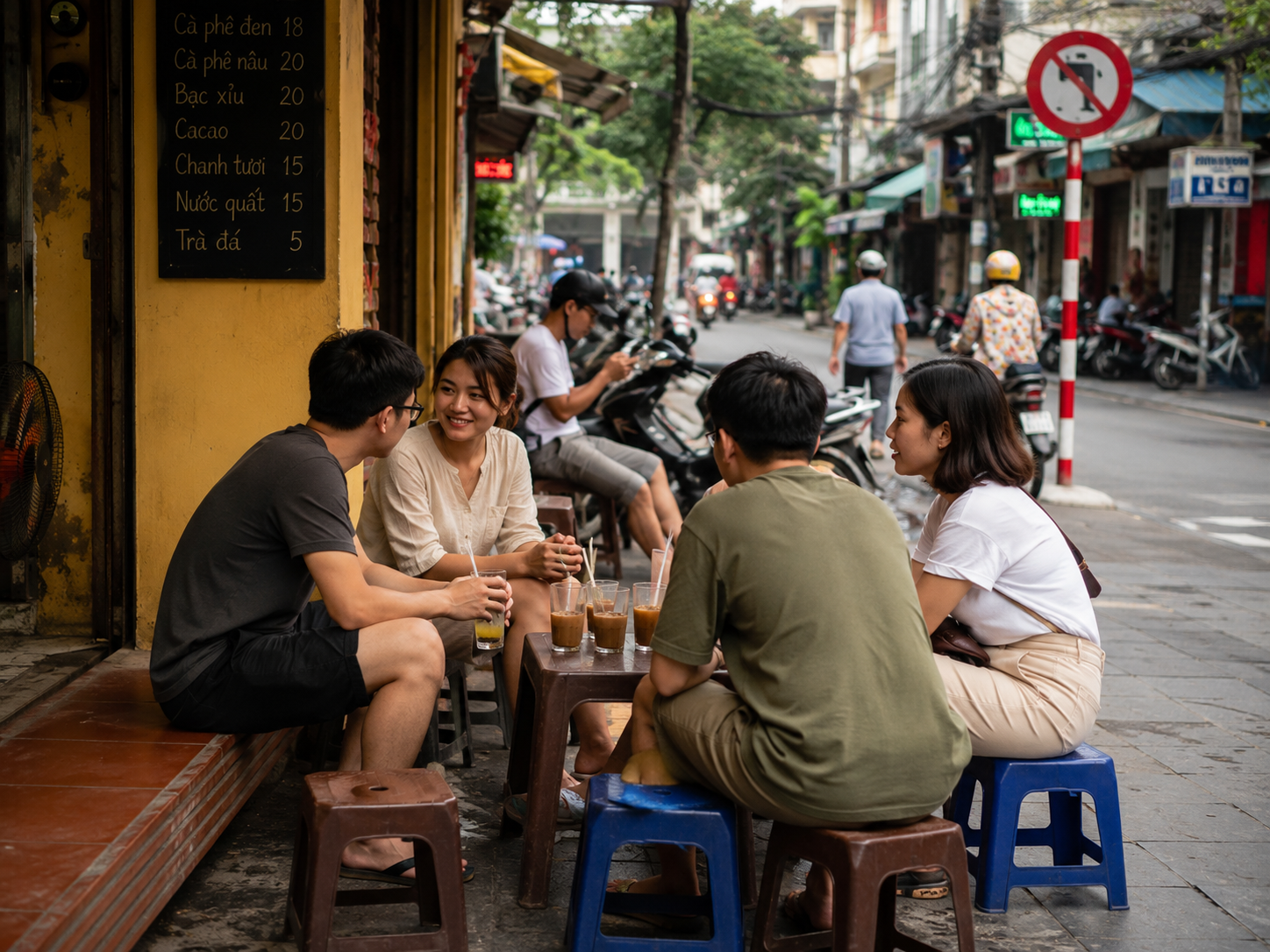
Café culture is especially important in Vietnam. Vietnamese coffee is not just a drink; it is a social ritual. Friends meet over iced coffee, workers take breaks in cafés, and students study in coffee shops. In many places, people sit on small plastic stools on the sidewalk, watching the city move around them.
Family Life at Home
Home life often revolves around shared meals, family responsibilities, and respect for elders. Meals are usually communal, with several dishes placed in the center of the table. Family members share vegetables, fish, meat, soup, rice, sauces, and herbs. Eating together is a way to maintain closeness.
In many homes, children are expected to help with chores, study seriously, and behave respectfully. Grandparents may play an important role in daily life, especially in childcare. Important family decisions are often discussed collectively rather than individually.
Visitors to Vietnamese homes should be aware that hospitality is taken seriously. A host may offer tea, fruit, snacks, or a meal. Guests are often encouraged to eat more. Refusing too strongly may seem impolite, but accepting modestly and showing appreciation is usually welcomed.
Work and School Culture
Vietnamese work and school environments may feel more hierarchical than American ones. Teachers, managers, and senior staff are usually treated with respect. Students may be less likely to openly challenge teachers, and employees may avoid disagreeing with managers in public.
Relationships are also important in professional life. Trust, personal connection, and reputation can matter as much as formal qualifications. Building rapport may take time, but it can be essential for successful collaboration.
In school, teachers are highly respected. Students often use titles rather than first names. This respect for teachers reflects a broader cultural belief that education is honorable and that teachers play an important role in shaping a person’s future.
Urban and Rural Life
Vietnam’s urban and rural lifestyles can be quite different. Cities such as Hanoi and Ho Chi Minh City are fast-paced, crowded, and full of opportunity. Motorbikes dominate the roads. Cafés, restaurants, offices, schools, shops, and apartment buildings create a dense urban rhythm.
Rural areas may have a slower pace of life and stronger ties to agriculture, fishing, village festivals, and extended family networks. Traditional customs may be more visible in rural communities, although modernization has reached many parts of the country.
Many Vietnamese families have connections to both urban and rural life. A person may work in Ho Chi Minh City but return to a hometown for Tết. A student may study in Hanoi while grandparents remain in a village. This connection between city and countryside remains important in Vietnamese identity.
Vietnamese Etiquette: How to Show Respect
Greetings and Forms of Address
A basic greeting in Vietnamese is “Xin chào,” but real Vietnamese greetings often depend on age and relationship. Vietnamese uses kinship terms as pronouns and forms of address. Words such as anh, chị, em, cô, chú, bác, ông, and bà are not only family terms; they are also used in everyday social interactions.
For example, anh can mean older brother or be used to address a slightly older man. Chị can mean older sister or be used for a slightly older woman. Em can refer to someone younger. Cô can mean aunt, female teacher, or a woman of a certain age. These terms show respect and help define the relationship between speakers.
This can be challenging for English speakers because English uses “I” and “you” in nearly every situation. Vietnamese requires more social awareness. You need to consider the other person’s age, gender, status, and relationship to you.
When in doubt, learners can start politely, listen to how others address them, and ask for guidance. Most Vietnamese speakers appreciate the effort.
Visiting a Vietnamese Home
When visiting a Vietnamese home, it is polite to bring a small gift, such as fruit, sweets, tea, or flowers. Gifts do not need to be expensive. In fact, overly expensive gifts may make the receiver uncomfortable. The gesture matters more than the price.
You should usually remove your shoes before entering the home, especially if you see shoes near the entrance. Dress modestly and neatly, particularly if visiting elders or a more traditional family.
When giving or receiving something, using both hands is a respectful gesture. If food or tea is offered, accept with gratitude. Complimenting the food and hospitality is appreciated.
If there is an ancestral altar in the home, treat it respectfully. Do not touch items on the altar unless invited. These spaces are meaningful and connected to family memory.
Dining Etiquette and Table Manners
Vietnamese meals are often shared. Instead of ordering separate plates, people eat from common dishes placed in the center of the table. Rice is usually served individually, while vegetables, meat, fish, soup, and sauces are shared.
At a family meal, wait for the host or elders to begin. Younger people may invite older people to eat first. This can be expressed verbally, depending on the family and region.
Chopstick etiquette is important. Do not stick chopsticks upright in a bowl of rice, as this resembles incense offerings for the dead. Do not point chopsticks at people, wave them around, or use them to play with food. Place them neatly when not eating.
It is polite to try a little of what is offered, especially if you are a guest. Hosts may encourage you to eat more, which is a sign of hospitality. You do not need to overeat, but showing appreciation matters.
What to Avoid in Social Situations
There are several gestures and behaviors that may be considered rude in Vietnam. Avoid touching someone on the head, especially a child or elder. Avoid pointing directly at people with your finger. Do not put your feet on chairs or tables, as feet are considered low and unclean in many Asian cultures.
Public anger is also best avoided. Raising your voice, arguing loudly, or publicly criticizing someone can make others uncomfortable and cause a loss of face. If there is a problem, staying calm and speaking privately is usually better.
Public displays of affection may be less accepted, especially in traditional or rural settings. Holding hands may be fine, but more intimate gestures can feel inappropriate in public.
Communication Style in Vietnamese Culture
Direct and Indirect Communication
Vietnamese communication is often more indirect than American communication. This does not mean people are dishonest. It means that politeness, context, and relationship often matter more than blunt clarity.
For example, if someone does not want to accept an invitation, they may avoid saying “no” directly. They might say they are busy, smile, hesitate, or give a vague answer. A direct refusal may feel too harsh.
Similarly, criticism may be softened. Instead of saying, “This is wrong,” someone may say, “Maybe we can look at this again,” or “Perhaps another way would be better.” The meaning is there, but it is wrapped in politeness.
For language learners, this is important. If you only translate words literally, you may miss the real meaning. Tone, silence, facial expression, and context all matter.
Politeness and Humility
Humility is valued in Vietnamese culture. Boasting, showing off, or speaking too proudly about oneself may be viewed negatively. People may downplay their achievements or respond modestly to compliments.
For example, if complimented on cooking, appearance, or skill, a Vietnamese person may laugh, deny the compliment, or respond modestly. This does not mean they reject the compliment; it may simply be a polite response.
Politeness also appears in the way people ask questions, make requests, and speak to elders. A respectful tone is often more important than perfect grammar.
Body Language
Body language in Vietnam can be subtle. A slight bow or nod can show respect. Using both hands to give or receive objects is polite. Smiling can express friendliness, but it may also be used to smooth over discomfort or embarrassment.
Calling someone over with the palm facing upward, as Americans sometimes do, can seem rude. A more polite gesture is to hold the palm downward and move the fingers inward.
Eye contact can also differ. In American culture, direct eye contact is often associated with confidence and honesty. In Vietnamese culture, too much direct eye contact with elders or authority figures may feel disrespectful or overly bold.
Food, Street Life, and Regional Flavors
Vietnamese food is one of the most beloved cuisines in the world, but its cultural meaning goes beyond taste. Food is a way of welcoming guests, caring for family, honoring ancestors, and building community.
Shared meals are central to family life. Dishes are balanced with rice, vegetables, herbs, fish sauce, meat, seafood, soup, and pickled items. Vietnamese cuisine often balances salty, sweet, sour, bitter, and spicy flavors. Fresh herbs and vegetables are especially important.
Some famous everyday dishes include phở, a noodle soup often eaten for breakfast; bánh mì, a Vietnamese sandwich influenced by French bread; bún chả, grilled pork with noodles; cơm tấm, broken rice with grilled meat; and gỏi cuốn, fresh spring rolls.
Street food is also central to Vietnamese daily life. Many people eat breakfast, lunch, or snacks from small vendors. Street food stalls are often specialized, serving one or two dishes perfected over years. Sitting on a small plastic stool with a bowl of noodles or a glass of iced coffee is not just a tourist experience; it is part of everyday life for many Vietnamese people.
Regional differences are also important. Northern cuisine, especially around Hanoi, is often described as balanced and subtle. Central Vietnamese food, especially from Hue and Da Nang, can be spicier and more elaborate. Southern cuisine, including Ho Chi Minh City and the Mekong Delta, often has sweeter flavors and abundant herbs, fruits, and coconut-based ingredients.
Holidays, Traditions, and Family Rituals
Tết: Lunar New Year
Tết, or Tết Nguyên Đán, is the most important holiday in Vietnam. It marks the Lunar New Year and is a time for family reunions, honoring ancestors, cleaning the home, preparing special foods, giving lucky money to children, and visiting relatives.
Before Tết, families clean and decorate their homes, buy flowers, prepare food, and settle debts or conflicts when possible. During Tết, many businesses close, and people travel to their hometowns. For visitors, this can be a beautiful but challenging time to be in Vietnam because transportation is busy and many shops may be closed.
Tết is more than a holiday. It expresses the importance of family, renewal, gratitude, and hope for the coming year.
Mid-Autumn Festival
The Mid-Autumn Festival, or Tết Trung Thu, is especially associated with children, lanterns, mooncakes, and lion dances. Families may gather to enjoy the full moon, give gifts to children, and celebrate the harvest season.
For learners of Vietnamese culture, this festival shows the playful and family-centered side of tradition. It is colorful, joyful, and deeply connected to childhood memories.
Ancestor Worship
Ancestor worship is one of the most meaningful traditions in Vietnamese culture. Many families keep an altar with photos, incense, flowers, fruit, and offerings. On holidays, death anniversaries, and important family occasions, relatives may light incense and invite ancestors to be spiritually present.
This practice reflects the belief that family continues across generations. Ancestors are remembered, honored, and included in family life. Even Vietnamese people who are not strongly religious may still participate in ancestor rituals as part of cultural identity.
Weddings, Funerals, and Family Celebrations
Vietnamese weddings and funerals often combine traditional rituals with modern practices. Weddings may include family ceremonies, gift exchanges, formal clothing, speeches, meals, and cash gifts in envelopes. Funerals can be elaborate, involving family duties, rituals, prayers, and community support.
Other family celebrations, such as birthdays, housewarmings, and death anniversaries, are also important. These gatherings reinforce family connection and respect for previous generations.
The Vietnamese Language and Culture
Vietnamese is a tonal language, which means that tone changes meaning. For English speakers, this can be one of the most challenging parts of learning Vietnamese. However, pronunciation is only one part of the language. Vietnamese also reflects culture through its pronouns, titles, and levels of politeness.
In English, you can say “I” and “you” to almost anyone. In Vietnamese, speakers choose words based on age, gender, social role, and relationship. This means that every conversation requires cultural awareness.
For example, how you address a teacher is different from how you address a friend, a younger person, an older woman, or a shopkeeper. Learning these forms of address helps learners understand Vietnamese etiquette more deeply.
This is why studying Vietnamese is not only about vocabulary and grammar. It is also about learning how to show respect, build relationships, and communicate appropriately.
Common Mistakes Foreigners Make
One common mistake is being too direct. Americans may value honesty and clarity, but in Vietnam, direct criticism can sound harsh. It is better to soften your language, especially in sensitive situations.
Another mistake is ignoring age and titles. Calling someone by their name without an appropriate title may sound too casual or rude, especially if the person is older or in a respected position.
Dining mistakes are also common. Sticking chopsticks upright in rice, starting before elders, or refusing food too bluntly can create awkwardness. Observing others and following their lead is usually the safest approach.
Foreigners may also misread indirect communication. A polite smile or vague answer does not always mean agreement. Pay attention to context and nonverbal cues.
Finally, some visitors forget that culture varies by region, generation, and individual. Not every Vietnamese person follows every tradition in the same way. Urban youth, rural elders, overseas Vietnamese families, and professionals in international settings may all behave differently. The goal is not to stereotype, but to become more observant, respectful, and culturally aware.
Practical Tips for Visitors and Vietnamese Learners
Start by learning basic greetings and polite expressions. Even simple phrases such as “xin chào” and “cảm ơn” can make a positive impression. Then learn common forms of address, because these are essential for respectful communication.
When visiting homes, bring a small gift, remove your shoes if others do, and show appreciation for food and hospitality. At meals, wait for cues from the host and elders. Use chopsticks respectfully.
In conversation, speak calmly and avoid public confrontation. If you need to address a problem, do so privately and politely. Listen for indirect meanings and pay attention to body language.
Most importantly, stay humble and curious. Vietnamese people are often very encouraging when foreigners try to learn the language. You do not need to be perfect. A respectful attitude matters more than flawless pronunciation.
Frequently Asked Questions About Vietnamese Culture
What are the most important values in Vietnamese culture?
Some of the most important values in Vietnamese culture are family loyalty, respect for elders, education, hard work, humility, and social harmony. Family is especially central, and many people make decisions with their parents, grandparents, and relatives in mind.
How should I greet someone politely in Vietnam?
You can begin with “Xin chào,” but Vietnamese greetings often depend on the person’s age and relationship to you. It is helpful to learn terms such as anh, chị, cô, chú, ông, and bà because they show respect and make your speech sound more natural.
Is Vietnamese culture very family-oriented?
Yes, Vietnamese culture is strongly family-oriented. Children are expected to respect and care for parents, and adult children often remain closely connected to their families. Family gatherings, ancestor worship, and holidays such as Tết all reflect the importance of family.
What should I know before visiting a Vietnamese home?
Bring a small gift, dress neatly, remove your shoes if appropriate, and greet elders respectfully. If food or tea is offered, accept graciously and thank your host. Avoid touching family altars or private items unless invited.
What are some Vietnamese dining etiquette rules?
Wait for elders or hosts to begin eating, use chopsticks respectfully, and do not stick chopsticks upright in rice. Shared dishes are common, and meals are often a social experience. Showing appreciation for the food is always a good idea.
Is Vietnamese communication indirect?
Vietnamese communication can be more indirect than American communication, especially when refusing, disagreeing, or giving criticism. People may avoid saying “no” directly in order to preserve harmony and avoid embarrassment.
Why are Vietnamese pronouns difficult for English speakers?
Vietnamese pronouns depend on age, gender, relationship, and social status. English speakers are used to simple pronouns like “I” and “you,” but Vietnamese requires you to choose words that reflect the relationship between speakers.
What is Tết?
Tết, or Tết Nguyên Đán, is the Vietnamese Lunar New Year and the most important holiday in Vietnam. It is a time for family reunions, honoring ancestors, cleaning and decorating homes, giving lucky money, and welcoming a fresh start.
What mistakes should foreigners avoid in Vietnam?
Avoid being too direct, raising your voice, embarrassing people publicly, mishandling chopsticks, ignoring elders, or using overly casual forms of address. When unsure, observe what locals do and choose the more respectful option.
Can learning Vietnamese help me understand Vietnamese culture better?
Absolutely. Vietnamese teaches you how respect, age, family, and social relationships are expressed in everyday speech. Learning the language helps you understand not only what people say, but also how they relate to one another.
Learn Vietnamese with Polyglottist Language Academy
If you are interested in Vietnamese culture, one of the best next steps is to begin learning the Vietnamese language. Culture becomes much more meaningful when you can understand greetings, family terms, everyday expressions, food vocabulary, and the polite forms of speech that shape real conversations.
At Polyglottist Language Academy, we offer live language classes for adults in a supportive and engaging environment. Our classes are designed for students who want more than memorized phrases. We help learners understand how language works in real life—through culture, conversation, pronunciation, grammar, and everyday communication.
Whether you are learning Vietnamese for travel, family, heritage, work, study, or personal interest, our small-group classes and experienced instructors can help you build confidence step by step. If you are a complete beginner, you can start from the basics and gradually develop the tools you need to communicate with more comfort and cultural awareness.
Visit Polyglottist Language Academy to explore our language classes and sign up for a course that fits your goals. Learning Vietnamese is not only a way to speak a new language—it is a way to enter a rich cultural world with greater respect, curiosity, and connection.
You May Also Like
If you enjoyed this guide, you may also want to read these related articles from our language learning blog: