
A Foreigner’s First Trip to a Russian Bathhouse (Banya)
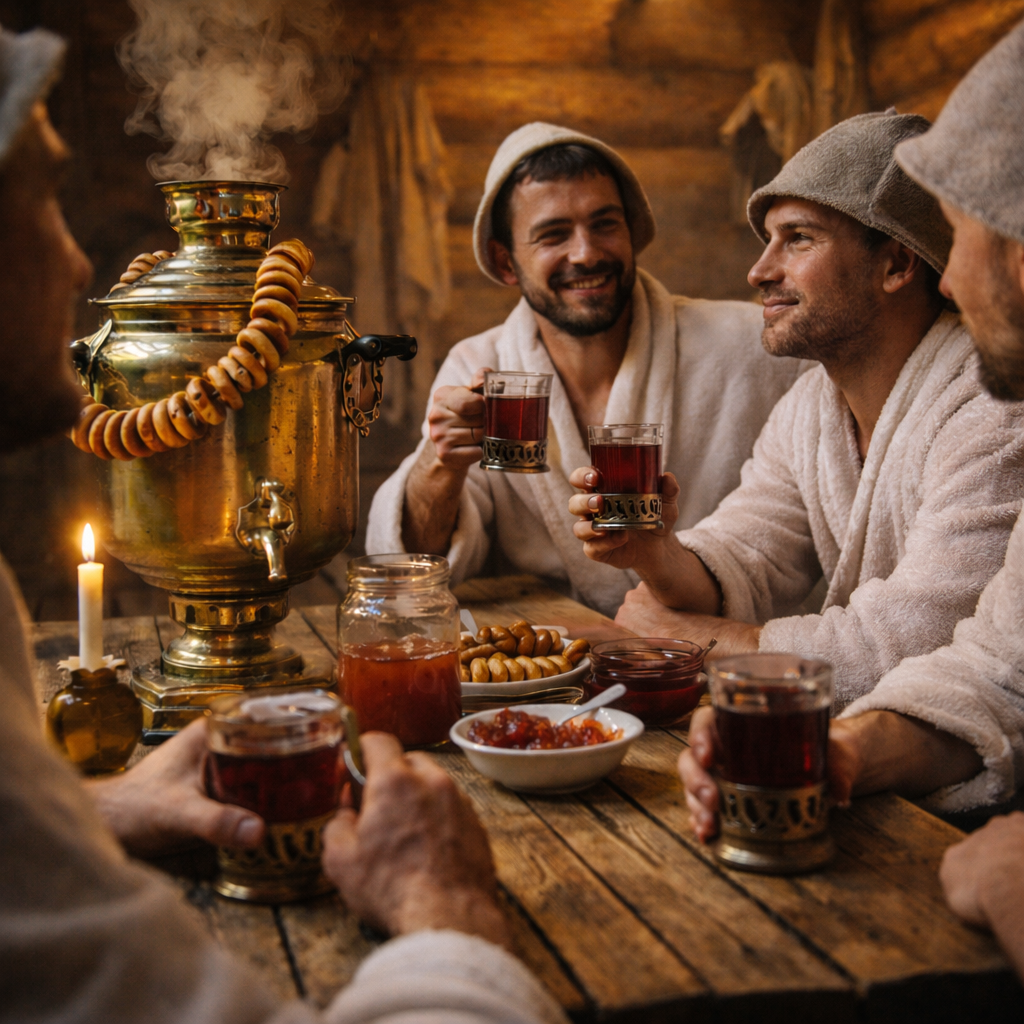
A Russian banya is the kind of place that makes you question your life choices and then, twenty minutes later, swear you’ve never felt better in your life. You shuffle in feeling awkward and foreign; you float out pink, wobbly, and oddly proud of yourself. In between, there is blazing steam, icy water, birch branches, and a crash course in one of the most beloved rituals of Russian life.
What follows is a long-form guide to the Russian banya from a foreigner’s first‑timer perspective: part cultural history, part how‑to manual, part language lesson, and part plea not to underestimate the power of a felt hat. You can use it as the skeleton for your own narrative, weaving in your personal mishaps, observations, and photos.
A Foreigner’s First Trip to a Russian Bathhouse (Banya)
The first shock hits you at the entrance: this place is serious about heat. Even in the lobby of a traditional banya, you feel a gentle wave of warmth, the faint smell of damp wood and soap, and the buzz of voices drifting out from behind heavy doors. People move with a kind of relaxed purpose – clutching towels, plastic bags, and mysterious bundles of leafy branches that look like they escaped from a forest ritual.
If you are a foreigner, you probably arrive armed with mixed information: “It’s like a sauna, but not,” “They hit you with branches,” “You go from very hot to very cold and somehow don’t die.” All of that is true, but the banya is more than a health treatment. It is a living slice of Russian history and identity – a place where people have washed, given birth, gossiped, negotiated, flirted, and philosophized for centuries. To understand how strange and wonderful your first visit will be, it helps to know where this all came from.
A short history of the Russian banya
For as long as there has been something like “Russia,” there has been something like the banya. Early chronicles mention wooden steam huts where Slavic tribes cleansed themselves and performed simple rituals. Long before indoor plumbing was common, a separate bathhouse – often a squat log cabin just beside the main house – was a staple of village life. Families heated it once or twice a week, lugging water, chopping wood, and timing the stove so the steam would be just right by evening.
Over the centuries, this humble building took on a heavy symbolic load. Banyas were not only for washing off the dirt of the fields or city streets. They were used to mark life’s big thresholds: brides and grooms visited before and after weddings; women sometimes gave birth in the warm, secluded space of the banya; bodies were washed here before burial. The bathhouse was, in a sense, a ritual chamber between worlds – between dirty and clean, sick and healthy, single and married, this world and the next.
As Russia urbanized, grand public banyas appeared in major cities. In an era when most apartments did not have their own bathrooms, the local banya was where everyone went, from workers to intellectuals to party officials. It functioned as a raw kind of equalizer: once you stepped inside and undressed, social differences blurred. Everyone sweated on the same wooden benches, wrapped in the same steaming clouds, listened to the same hiss of water on hot stones.
Even today, when most city dwellers have showers at home, the banya has not disappeared. It has simply shifted its role. Instead of being the only place to wash, it has become a place to really wash – and to socialize, detox from city life, and reconnect with an older, slower rhythm. When Russians speak fondly about going “in the banya,” they mean more than hygiene. They mean an entire micro‑world where time, conversation, and temperature follow their own rules.
The anatomy of a banya visit: step‑by‑step
Knowing the structure of a typical visit will save you from your first and most pressing fear: “Am I about to do something incredibly wrong and possibly naked?” While banyas differ in style and luxury, the basic flow is surprisingly consistent.
1. Arrival and mild panic
You start at the front desk, where a receptionist will ask what you want. This is your first opportunity to smile and say: “Здравствуйте, это моя первая баня” – “Hello, this is my first time in a banya.” It’s amazing how quickly staff soften when they hear you confess your novice status. They’ll usually explain the basics: which floor or door is for men, which for women; how long your session lasts; where to rent towels, slippers, or a felt hat.
Most traditional banyas are strictly separated by gender. Mixed sessions exist, especially in spa‑like venues or private rooms, but the classic format is “men here, women there, no crossing.” Once you’ve paid, you will get a key or a wristband for your locker and perhaps a sheet or towel.
The lobby is your last glimpse of the outside world. After that, you step through a door into a different climate.
2. Changing rooms: the first test of courage
The changing room is where your “foreigner nerves” really kick in. Here you meet the reality of banya etiquette: a lot of people will be fairly naked, and nobody cares. Men might be walking around in felt hats and rubber slippers and little else. Women may be wrapped in towels, chatting and adjusting hair. Everyone moves as if this were the most normal thing in the world – because for them, it is.
You find your locker, undress, and put your valuables safely away. Depending on the place and your comfort level, you might go fully nude (the traditional way), wear underwear, or keep on a swimsuit in more modern or tourist‑oriented banyas. If you’re unsure, look around and copy the local norm. Wrap yourself in a towel or sheet and slip into plastic slippers, which are essential on wet tiles.
By this point, you may already feel warm. The air is humid, and the smell of hot wood and soap drifts in from the inner rooms. Your pulse picks up slightly – part nerves, part anticipation.
3. The rest room: communal living room
Before you face the heat, most banyas have a rest area – a kind of communal living room. There are long wooden tables, plastic-covered benches, and sometimes a proper restaurant menu. On the tables you might see teapots, plates of pickles, hunks of brown bread, sliced lemons, bottles of mineral water, beer, or the occasional discreet vodka bottle.
Here people sit between steam rounds, wrapped in towels like toga‑wearing philosophers. They play cards or backgammon, watch sports on a small TV, talk politics, complain about bosses, and gossip about relatives. It’s half spa, half village kitchen.
This is also where you can order tea and snacks before or after the hot sessions. Traditional drinks include herbal tea, black tea with lemon and jam, kvass (a fermented bread drink), or beer. You might see dried fish, pickles, sausages, or fruit, depending on the level of “old school” versus “modern café” you’ve stumbled into.
After a quick orientation – maybe a glass of water, maybe a deep breath – you move toward the heart of the experience.
4. Entering the steam room: crossing the threshold
The steam room is called the парилка (parilka) – literally “steaming place.” To enter, you usually pass through a shower area or a smaller warm room. It’s good manners (and hygiene) to quickly rinse off before your first round. Many regulars do a brisk wash with soap and then head into the heat.
You open the heavy door and step into a dim, wooden chamber. Immediately you feel the weight of the air: thick, hot, heavy with moisture. Benches are arranged on several levels – lower ones cooler, upper ones brutally hot. In the corner or along one wall sits the stove, a massive heater loaded with stones. A metal tank or bucket of water stands nearby, with a ladle for splashing water onto the stones.
At first you sit on a lower bench, on your towel. The felt hat goes on your head to protect you from overheating. The room may be quiet, with only the gentle creak of wood; or it may be full of low conversation and the occasional chuckle. If someone pours water on the stones, there is a sudden hiss, and a wave of steam rolls down like a hot fog.
You breathe carefully, through your nose or shallowly through your mouth. The air feels velvety and almost tangible; your skin starts to prickle. You’ll be surprised how quickly your heart rate speeds up. This is not a gentle sauna; it is a serious, wet heat designed to make you sweat immediately.
Your first session should be short – five to ten minutes at most, less if you feel dizzy. You are here to warm up, not to prove that foreigners can out‑suffer the locals.
5. Venik and parenie: the art of being gently beaten
On the second or third round, you encounter one of the most famous – and intimidating – banya rituals: the venik.
A venik is a bundle of branches, usually birch or oak, tied together with the leaves still on. Before use, it is soaked in hot water to soften the leaves and release their aroma. People carry their veniki in plastic bags like precious bouquets. Some bring their own from the countryside, proudly explaining where and how they were harvested.
Parenie is the steam treatment performed with these bundles. Here’s how it usually works: you lie face‑down on a bench, sometimes on a sheet or towel. An experienced person – a friend, a professional attendant (банщик), or a kindly stranger – stands beside you with one or two veniki. First they wave the venik above you, scooping and directing hot steam down onto your back so you are wrapped in a fresh cloud of heat. Then they start tapping and brushing your body with the branches: back, shoulders, legs, feet.
This may sound like medieval torture, but it feels surprisingly good when done skillfully. The leaves and twigs stimulate your skin and muscles without really hurting. The combination of heat, scent, and rhythmic contact is hypnotic. You may find yourself drifting into a strange state – not quite asleep, but not fully present either.
As a foreigner, you can ask: “Вы делаете парение с веником?” – “Do you do venik steam treatments?” If you worry about your pain tolerance, add: “Сделайте, пожалуйста, не слишком сильно” – “Please don’t do it too strong.” Most attendants are used to varying their technique; they may even chuckle and say, “First time? We’ll be gentle.”
For your first visit, one short parenie session is enough to understand why Russians love this. You will walk out of the steam feeling as if every muscle has been loosened and your skin has taken a deep breath.
6. The cold plunge: shock therapy, Russian edition
Immediately after the hot session comes the second most dramatic moment: cooling down. Russian banyas are built around contrast. Where there is great heat, there must be serious cold.
Depending on the facility, you might have a cold plunge pool, buckets of cold water, a small swimming pool, or – in the countryside – the great outdoors with snowdrifts and frozen rivers. You step out of the steam room, heartbeat loud in your ears, and you walk straight to the cold.
This is the part where your brain screams “Why are we doing this?” while your body obeys. You lower yourself into the plunge pool, or you pull a cord that dumps a bucket of icy water over your head. There is a gasp, maybe an involuntary shout, and then a full‑body rush. The cold bites your skin, tightens your chest, and then, surprisingly fast, becomes bearable.
If you’re in a rural banya in winter, the ritual may be even more theatrical: racing out into the snow, rolling in it like a happy dog, or dipping into an ice‑hole cut in a frozen river, then sprinting back to the steaming hut.
The idea is that this hot‑cold alternation trains your blood vessels and boosts your immune system. Whether or not you fully buy the science, you can’t deny the effect. After the shock, you feel incredibly awake, almost euphoric. Your skin tingles, your head clears, and suddenly all your problems seem far away and slightly ridiculous.
7. Resting, tea, and conversation
Once your heart stops pounding, you wrap up and drift back to the rest room. This transition – from intense heat and cold to the warm, social space – is part of the charm. You sink onto a bench, order tea with lemon and maybe a plate of snacks, and begin to appreciate the depth of your relaxation.
Conversation at this stage has a special quality. People are more open, less guarded. You might find yourself talking about life with a stranger you have only ever seen in a towel and a felt hat. Arguments about politics or football become oddly philosophical. Jokes hit harder. The world outside – emails, deadlines, social media – feels like a distant universe.
Typically, people repeat this cycle – steam, venik, cold plunge, tea – three or four times over a couple of hours. Each round pushes you a little further into that liminal state where you are both tired and energized, heavy and light.
8. Final wash and floating out
At the end of your stay, you take a proper wash in the shower area or washing room. In more traditional places, you might see plastic basins and wooden tubs, hot and cold taps, and people scrubbing themselves with washcloths and soap in a very practical, unselfconscious way. After such intense sweating, the feeling of rinsing off is almost ceremonial. You are washing away not just sweat but whatever mental and physical weight you brought in with you.
You dry off, get dressed slowly, and step back into the real world. The air outside feels cooler, sharper, almost too thin. Your face glows. Your limbs feel heavy but pleasantly loose, like you’ve been given a new body that fits better than the old one.
Rituals explained: venik, parenie, felt hats, and snow
Many of the details that look strange to foreigners are, for Russians, the essence of the banya.
Venik (веник) is more than a bath accessory. Traditionally, birch leaves are thought to improve the skin and aid breathing, while oak is seen as grounding and calming. The branches are harvested young, dried, then re‑softened in hot water. Part of the fun is choosing your venik: some people swear by specific types of wood, specific regions, even specific vendors.
Parenie (парение) – the steaming ritual – is both physical and social. It’s an act of care: to beat someone with leaves, in this context, is to help them. Friends will take turns steaming each other. Regulars often “adopt” confused newcomers, offering to show them “how it’s really done.” Parenie creates a bond; after someone has seen you face‑down on a bench while they vigorously ventilate your backside with birch, small talk seems pointless.
Felt hats (шапка) are the unsung heroes of the banya. Made of thick felt or wool, they keep your head cool enough to withstand the intense heat while your body sweats. They are also a strangely democratic fashion show: you’ll see simple gray cones, fancy embroidered hats, joke hats shaped like beer mugs or crowns. Putting one on is like putting on a uniform that says: I am in on this. I may be a foreigner, but at least my headwear is correct.
Cold plunges and snow rolling might look like reckless masochism, yet they are essential to the banya’s identity. Russians will tell you the cold “closes the pores” after the heat, “hardens” the body, and keeps you from catching cold. There is also an undeniable childlike joy in sprinting from a fiery hut into a snowstorm, shouting at the sky and laughing as your feet crunch in the snow.
Etiquette: how not to offend anyone (or yourself)
Banya etiquette is not overly formal, but there are a few unwritten rules that matter.
Nudity is normal, not sexual. In traditional banyas, people are naked in the steam room and shower areas. No one is posing; everyone is simply washing, sweating, and surviving the heat. If you’re anxious, remember: nobody is here to inspect you; they are too busy not passing out.
Gender separation is standard. Pay attention to signs and instructions. Men and women either have separate sections or separate days/times. Mixed‑gender banyas, if they exist, will almost always expect swimsuits.
Shower before entering the parilka. It’s respectful and hygienic. A quick rinse removes perfumes and sweat, making the steam room smell more like wood and herbs and less like a duty‑free shop.
Sit on your own towel. This protects the benches and your skin. Hot wood plus bare skin equals burning. A towel also minimizes the “shared sweat” factor.
Don’t act like the steam boss unless you are one. Someone – often an older regular – informally manages the stove: when to add wood, when to pour water, how much steam is enough. As a newcomer, don’t rush to grab the ladle. Watch, learn, imitate.
Keep the volume respectful in the steam room. Deep discussions and loud jokes belong in the rest area. In the parilka, people appreciate a calmer atmosphere – it’s as close as Russia gets to a meditative space.
Ask before using someone’s venik. Those bundles may have emotional value. If you want to experience parenie, ask for the service at the desk or politely approach a банщик.
Tip for treatments. If a staff member steams you or gives you a massage, a tip is customary, on top of the fee. At the café, follow normal restaurant tipping norms.
Above all, if you feel dizzy or unwell, leave the steam room. Russians will respect that more than any attempt to prove your bravery.
Sensory experience: what it actually feels like
Describing the banya is like describing a thunderstorm from inside the cloud. The experience is largely sensory, and as a writer, this is where you can have fun.
The smell is the first anchor: a dense blend of wet pine or birch wood, hot metal from the stove, green leafiness from veniki, maybe a whisper of eucalyptus or mint. The air tastes warm and slightly sweet, with a hint of minerals from the water. When fresh steam rises, it carries a faint smoky note if the stove is wood‑fired.
The sounds are muffled, almost underwater. You hear the thunk of a broom on a bench, the slap of wet leaves on skin, the sudden roar when someone tosses a ladle of water on the stones. There are soft grunts, sighs of relief, bursts of laughter, and the rustle of towels. In the rest room, the soundtrack shifts to clinking cups, card shuffling, and the low rumble of a dozen overlapping conversations.
On your skin, sensations change constantly. In the parilka, the heat settles onto you like a heavy cloak. Each breath is a conscious act. Sweat beads instantly and rolls down your back. When the venik lands, it’s not pain so much as a firm brush, a percussion massage that moves blood and heat around under your skin. When you plunge into cold water, your body contracts; you feel every pore close, every muscle tighten, and then gradually relax.
Psychologically, you move through stages: self‑consciousness, endurance, surrender, and then an almost meditative openness. Somewhere around the third round, you stop worrying about how you look or whether you’re doing it “right,” and you simply exist in cycles of hot and cold, tension and release. Outside, you might never speak to strangers; here, after steaming side by side, conversation flows easily.
Health beliefs: benefits and risks
Russians often talk about the banya as if it were a combination of doctor, therapist, and priest. “The banya heals everything,” they’ll say, only half joking. There is centuries‑old folk wisdom behind this, and some modern science as well.
Perceived benefits
Cardiovascular workout. The intense heat dilates blood vessels, increasing circulation. The sudden cold causes them to constrict. This alternating load is often compared to mild interval training. People with healthy hearts may experience improved circulation and a pleasant “afterglow” for hours.
Respiratory relief. Humid steam can temporarily ease congestion and help loosen mucus. Add in herbal infusions – birch, eucalyptus, pine – and many people find it easier to breathe, especially in winter when air is dry indoors.
Muscle and joint relaxation. Deep heat penetrates muscles and stiff joints, easing soreness from exercise or long days at a desk. Combined with venik massage, it can feel like a full‑body reset.
Stress reduction. The ritual itself – leaving your phone, sweating heavily, alternating heat and cold, then resting with tea – is designed to disconnect you from your usual stressors. Many visitors report better sleep and a calmer mood after a banya session.
Skin cleansing. Heavy sweating plus gentle exfoliation from venik and scrubbing leaves your skin smoother and warmer to the touch. Some people notice a visible glow.
Risks and cautions
It’s important to balance romanticism with realism. Banya is not safe for everyone or in all conditions.
Heart and blood pressure issues. If you have cardiovascular disease, serious arrhythmias, or uncontrolled high blood pressure, the sudden temperature shifts can be dangerous. In such cases, banya use should be cleared with a doctor, or avoided.
Dehydration and overheating. Spending too long in the steam room or not drinking enough fluids can lead to headaches, nausea, or fainting. Listening to your body, taking breaks, and sipping water or herbal tea are essential.
Alcohol. A small beer or shot of vodka between rounds is part of the cultural image, but heavy drinking in high heat stresses the heart and impairs judgment. Slippery floors and deep pools are not forgiving places for people who can’t walk straight.
Acute illness. If you have a fever, infectious disease, or certain skin conditions, the banya is not the right place for you or for the people around you. Traditional wisdom might say “sweat out a cold,” but modern advice is more cautious.
Hygiene. Like any wet communal environment, there is a small risk of fungal infections or skin issues. Wearing slippers, sitting on a towel, and showering before and after are simple precautions.
For most healthy people, used sensibly, the banya can be a potent but positive stressor – a kind of controlled storm you walk into willingly, and out of feeling somehow renewed.
Banya, sauna, hammam: cousins, not twins
If you’ve been to a Finnish sauna or a Turkish hammam, you might think you already know what to expect – and then be surprised.
Russian banya is hot and very humid. The heart of the ritual is throwing water on hot stones to create thick steam, using venik to move that steam and massage the body, and plunging into cold water. It’s raw, social, and focused on contrast.
Finnish sauna is typically hotter but drier. You may toss a little water on the stones, but the air remains relatively dry, and there is less emphasis on elaborate rituals. Many Finnish saunas are small, home‑based, and part of everyday life.
Turkish hammam is cooler and extremely humid, built around long soaks on warm stone slabs, exfoliating scrubs, and foam massages. The pace is slower and more spa‑like; the architecture — domes, marble — is part of the experience.
All three are about heat and cleansing, but each expresses a different cultural personality. The banya, in its rustic intensity, is very Russian: a little brutal, very communal, and delivered with a sense of humor.
Famous banyas to put on your bucket list
If you want to turn your banya initiation into a story, certain historic bathhouses are practically characters in their own right.
Sanduny (Сандуны) in Moscow is the star. Founded in the 19th century, it combines serious steam rooms with almost palatial interiors: marble columns, chandeliers, stained glass, and an ornate pool that looks like it belongs in a tsar’s residence. Here you can go from being thrashed with birch branches to eating in an elegant restaurant, all without leaving the building.
In both Moscow and St. Petersburg, you’ll find other venerable banyas with long histories, where famous writers, actors, and politicians have sweated and schemed. Some are more down‑to‑earth, catering to locals with simple steam rooms and affordable services; others lean into nostalgia and luxury. Visiting one of these places is like stepping into a living museum where the exhibits are the rituals and the regulars themselves.
Russian phrases to survive (and enjoy) your banya visit
You do not need to be fluent in Russian to enjoy the banya, but a handful of phrases can transform you from “confused foreigner” to “brave foreigner who tried.” Here are some useful lines you can sprinkle into your story, complete with transliteration.
“Здравствуйте, это моя первая баня.”
Zdravstvuyte, eto moya pérvaya bánya.
“Hello, this is my first time in a banya.”“Я иностранец, подскажите, как тут всё устроено?”
Ya inostránets, podskazhíte, kak tut vsyo ustróeno?
“I’m a foreigner, could you explain how things work here?”“Где гардероб / раздевалка?”
Gde garderób / razdeválka?
“Where is the cloakroom / changing room?”“Где мужское / женское отделение?”
Gde muzhskóye / zhénskoye otdeléniye?
“Where is the men’s / women’s section?”“Можно, пожалуйста, шапку и полотенце напрокат?”
Mózhno, pozháluysta, shápku i poloténtse naprokat?
“May I rent a hat and a towel, please?”“Вы делаете парение с веником?”
Vy délayete paréniye s vénikom?
“Do you do venik steam treatments?”“Сделайте, пожалуйста, не слишком сильно.”
Sdélayte, pozháluysta, ne slíshkom síl’no.
“Please don’t do it too strong.”“Хватит, спасибо, очень горячо!”
Khvátit, spasíbo, óchen’ goryachó!
“That’s enough, thanks, it’s very hot!”“Где можно охладиться? Есть бассейн или душевая?”
Gde mózhno ohladít’sya? Yest’ basséyn ili dusheváya?
“Where can I cool down? Is there a pool or a shower?”“Пойдём отдохнуть, попьём чаю.”
Paydyóm otdokhnút’, popyóm cháyu.
“Let’s go rest and have some tea.”“Пар хороший?”
Par khoróshiy?
“Is the steam good?”“Сколько с меня за парение?”
Skól’ko s menya za paréniye?
“How much do I owe you for the parenie?”
FAQs about the Russian banya
Do I have to be naked?
Not always, but often. Traditional banyas expect nudity in the steam room, with separate areas for men and women. Some modern or tourist‑oriented banyas allow or even require swimsuits. When in doubt, ask at the front desk and observe what locals are doing.
How long should I stay inside the steam room?
For your first visit, start with short sessions: 5–10 minutes in the parilka, followed by cooling down. Do not treat this as a contest of endurance. It’s better to do several short rounds than one heroic but risky marathon.
Will people stare at me as a foreigner?
Probably not for long. You may get a few curious glances or friendly questions at first, but once you sit on a bench and start sweating like everyone else, you become part of the landscape. If you try a few phrases in Russian, you might even collect some instant banya friends.
Is it safe?
For most healthy people who use common sense, yes. If you have heart problems, very high blood pressure, or other serious conditions, consult a doctor first and avoid extreme heat and cold. Always leave the steam room if you feel dizzy, short of breath, or unwell.
What should I bring?
Essentials include: a towel (or two), plastic slippers, soap, shampoo, a bottle of water, and a hair tie if you have long hair. Optional but useful: a felt hat, your own venik, a light robe or wrap, a plastic bag for wet items, and some cash for snacks or tips.
Can I drink alcohol in the banya?
Many locals enjoy a beer or a small shot of vodka at the table between rounds. However, heavy drinking in high heat is dangerous. If you want to experience the banya safely and clearly, stick to water, tea, or juice during the session and keep any alcohol very modest.
How do I book a venik or parenie treatment?
In larger banyas, you can usually book at the front desk or directly with a банщик. Ask about the price and duration. It’s normal to tip afterward if the service is good.
Learn the language of the banya with Polyglottist Academy
If the banya charms you (or terrifies you in a way you want to conquer), learning more Russian will make your next visit ten times richer. Being able to understand jokes, banter, and instructions turns the experience from “mysterious ritual” into “inside look at everyday Russian life.”
Polyglottist Language Academy specializes in helping learners go beyond textbook Russian into the textures of real conversations – including the kind you’ll hear in a steam room between rounds of venik and tea. Their Russian courses blend practical speaking practice with cultural insights, so you don’t just memorize phrases; you understand when and how to use them.
Whether you’re starting from scratch or brushing up before a trip, you can explore their Russian classes here:
Russian Classes at Polyglottist Language Academy