
Why Russian Cafés Feel Different from Western Ones
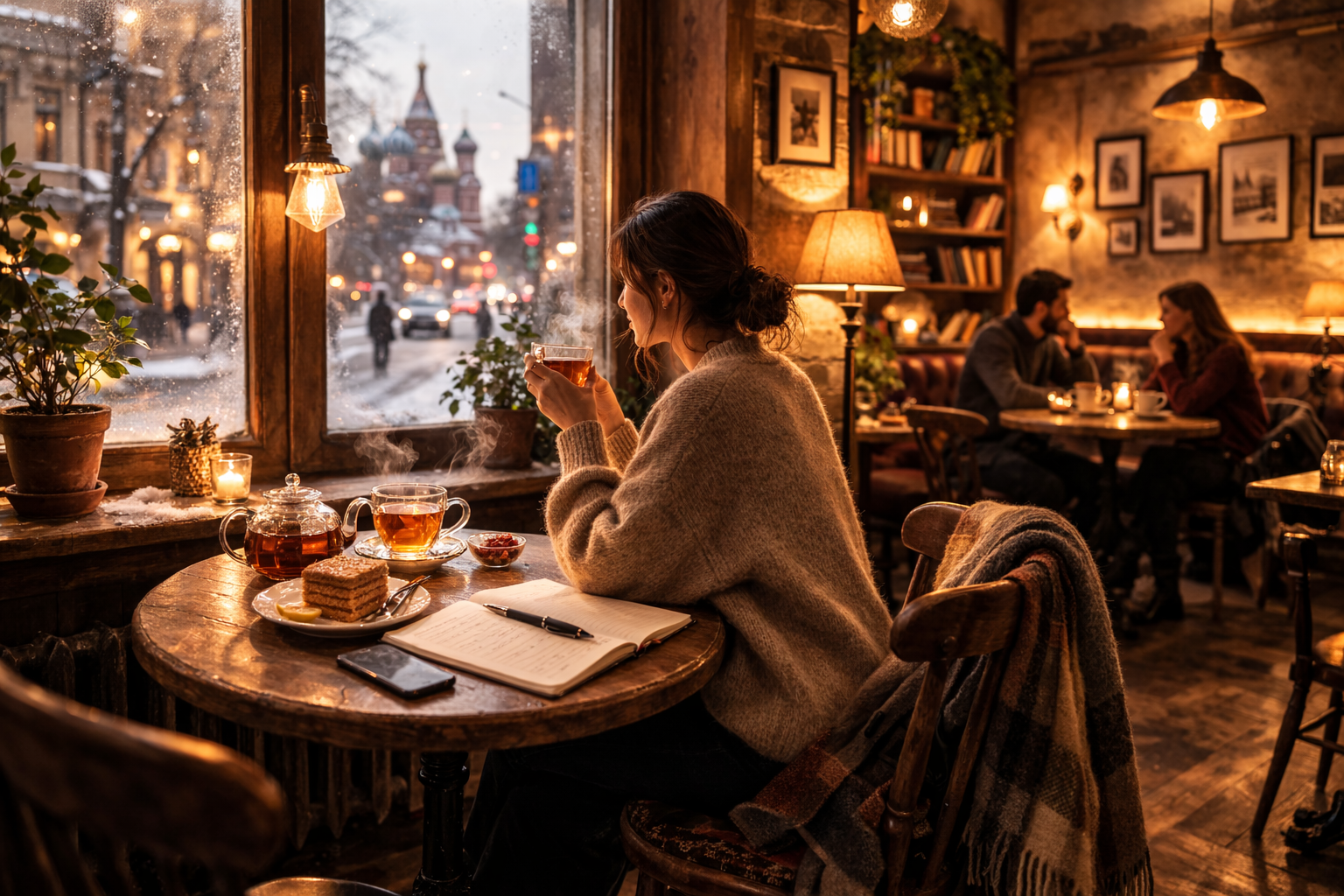
There is a moment many travelers experience shortly after arriving in Russia when they step into what appears, at first glance, to be an ordinary café — tables, coffee machines, pastries behind glass — yet within minutes something feels unmistakably different, not because of what is present but because of what is absent: the familiar rhythm of Western café culture, the background chatter shaped by efficiency, the subtle expectation to order quickly and move on, replaced instead by an atmosphere that feels slower, more introspective, almost theatrical, as if the café were not merely a place to drink coffee but a stage where emotion, conversation, solitude, and culture quietly unfold.
Russian cafés are not simply businesses serving caffeine. They are social spaces shaped by history, literature, climate, and psychology. To understand why they feel different from Western cafés is to understand something deeper about Russian society itself — how people relate to time, to strangers, to conversation, and even to silence.
For language learners and cultural observers, cafés offer one of the most revealing windows into a culture. In Russia, they reveal a world where lingering is normal, seriousness coexists with warmth, and a cup of tea or coffee becomes an invitation not to rush but to reflect.
The Café as Cultural Mirror
In Western Europe and the United States, cafés often function as extensions of productivity. People arrive with laptops, schedules, meetings, and goals. Coffee fuels activity.
In Russia, cafés historically evolved differently.
They became spaces of:
intellectual exchange
artistic reflection
emotional conversation
quiet observation
Rather than serving as temporary stops between obligations, Russian cafés often feel like destinations in themselves.
This distinction changes everything — from interior design to customer behavior.
Time Moves Differently
One of the first differences visitors notice is the pace.
In many Western cafés, efficiency is invisible but constant:
quick ordering
takeaway culture
subtle pressure to free tables
Russian cafés rarely operate with this urgency.
Customers may sit for hours over a single drink without feeling unwelcome. Staff rarely rush guests. Conversations unfold slowly, sometimes punctuated by long pauses that feel natural rather than awkward.
This slower rhythm reflects broader cultural attitudes toward time. Russian social life historically values depth over speed. A meaningful conversation matters more than efficiency.
The café becomes a temporary refuge from external pressures.
The Role of Climate
Geography shapes culture more than people often realize.
Long winters and cold climates historically encouraged indoor social life across Russia. Cafés became warm communal spaces — somewhere between living room and public square.
During winter months:
windows glow against dark afternoons
coats pile on chairs
tea samovars steam gently
conversations linger late into evening
The café is not just a commercial venue; it is shelter.
Even modern urban cafés retain this emotional warmth.
Tea Culture vs Coffee Culture
While coffee has grown popular in recent decades, tea remains deeply embedded in Russian identity.
Tea in Russia is rarely rushed.
It arrives with:
lemon slices
jam or honey
desserts meant to be shared
extended conversation
The act of drinking tea encourages duration. Unlike espresso culture — built around speed — tea invites presence.
Historically, tea gatherings symbolized hospitality and trust. That legacy still shapes café behavior today.
Silence Is Comfortable
One of the most striking differences Western visitors notice is how comfortable silence feels in Russian cafés.
In many Western settings, silence signals awkwardness. Conversation must continue.
In Russia, silence can mean:
reflection
emotional understanding
intellectual processing
Two friends may sit quietly for several minutes without discomfort. A person reading alone is not perceived as lonely but thoughtful.
This cultural acceptance of introspection gives Russian cafés their distinctive emotional tone.
Literary Influence: Cafés as Intellectual Spaces
Russian literature profoundly shaped public life.
Writers such as Dostoevsky, Tolstoy, Bulgakov, and Akhmatova portrayed cafés and salons as places where philosophical questions were debated and personal crises unfolded.
Even today, cafés often carry literary aesthetics:
bookshelves
dim lighting
handwritten menus
classical music or jazz
The atmosphere invites contemplation rather than consumption.
Visitors often sense they have entered a narrative rather than a business.
Emotional Openness in Conversation
Western small talk tends to remain light:
weather
work updates
casual humor
Russian conversations frequently move quickly toward deeper topics:
meaning of life
personal struggles
politics
philosophy
relationships
The café provides emotional permission for seriousness.
Language learners often notice conversations sounding intense — yet participants experience them as authentic rather than heavy.
Design: Cozy Over Minimalist
Western cafés increasingly favor minimalist aesthetics:
clean lines
neutral palettes
efficiency-focused layouts
Russian cafés often prioritize warmth and atmosphere:
layered textures
vintage furniture
warm lighting
artistic decoration
The goal is emotional comfort, not visual simplicity.
Spaces feel lived-in rather than curated for speed.
Service Style Differences
Service culture also contributes to the distinct feeling.
In many Western countries:
friendliness is expressed through enthusiasm
frequent check-ins are expected
In Russia:
service may appear reserved
staff respect personal space
interactions remain polite but understated
This is not rudeness — it reflects respect for privacy.
Once understood, many visitors find the approach calming.
Solo Café Culture
Russia has a strong tradition of being alone in public spaces.
People comfortably:
read books
journal
think quietly
observe others
Solitude carries no stigma.
For language learners, this creates ideal environments for observation and listening practice without social pressure.
The Role of Dessert
Russian cafés rarely treat dessert as an afterthought.
Pastries and cakes often carry cultural significance:
medovik (honey cake)
napoleon cake
syrniki (cheese pancakes)
poppy seed pastries
Desserts encourage sharing and extended stays.
Eating slowly becomes part of social ritual.
Technology Feels Secondary
While laptops exist everywhere today, Russian cafés often feel less dominated by productivity culture.
People come primarily to:
meet friends
talk
relax
think
The atmosphere subtly discourages constant multitasking.
Historical Context: Cafés as Safe Spaces
During various historical periods, cafés served as semi-private public spaces where ideas could be discussed more freely than elsewhere.
This legacy contributes to the sense that cafés are places for genuine conversation and emotional honesty.
The cultural memory remains even in modern settings.
Why Language Learners Notice the Difference Immediately
Language learners are especially sensitive to atmosphere.
In Russian cafés, learners experience:
authentic listening environments
natural speech rhythms
emotional nuance
gestures and tone beyond textbooks
Cafés become informal classrooms.
Understanding cultural context improves language comprehension dramatically.
The Psychology Behind the Atmosphere
Russian culture often values emotional depth over surface positivity.
Western environments sometimes prioritize cheerfulness and optimism.
Russian cafés allow:
seriousness
vulnerability
complexity
This emotional permission creates an atmosphere many visitors describe as “real.”
Modern Changes — and What Has Stayed the Same
Urban Russia now features specialty coffee culture, international trends, and modern design influences.
Yet core elements remain:
lingering conversations
reflective mood
intellectual undertones
warmth during cold seasons
The café continues to function as a cultural sanctuary.
What Western Visitors Often Misinterpret
Common misunderstandings include:
“People seem unfriendly.”
→ They are respecting personal space.
“Service is cold.”
→ It is professional rather than performative.
“Everyone looks serious.”
→ Public seriousness does not equal unhappiness.
Understanding these differences transforms the experience.
Lessons Russian Cafés Teach About Culture
Spending time in Russian cafés reveals broader cultural values:
depth over speed
sincerity over performance
presence over productivity
conversation over efficiency
These values shape communication styles and language use.
How Café Culture Improves Russian Learning
Regular café visits help learners:
recognize conversational pacing
understand emotional tone
absorb vocabulary naturally
observe cultural interaction patterns
Language becomes lived experience rather than academic exercise.
FAQs About Russian Café Culture
Are Russian cafés unfriendly to foreigners?
No. Staff may seem reserved at first, but politeness and patience are highly valued.
Do people stay long after finishing drinks?
Yes. Lingering is normal and expected.
Is tipping required?
Tipping exists but is generally modest compared to the U.S.
Are cafés good places to practice Russian?
Absolutely. They offer authentic listening environments.
Why are conversations often serious?
Russian culture values meaningful discussion and emotional honesty.
Is coffee or tea more popular?
Both are common today, though tea remains culturally significant.
Can you work on a laptop in Russian cafés?
Yes, but many people come primarily to socialize or relax.
Are Russian cafés influenced by European culture?
Yes, especially French and Austrian traditions, but adapted through Russian history and social norms.
Experience Language Through Culture at Polyglottist Language Academy
At Polyglottist Language Academy, we believe language learning goes far beyond grammar rules and vocabulary lists. True fluency comes from understanding how culture shapes communication — how people speak, interact, pause, and connect in real life.
Our Russian language classes help students explore not only the structure of the language but the cultural environments where it lives, from literature and everyday conversation to the subtle social dynamics you experience in places like Russian cafés.
We offer:
Small-group interactive classes
Beginner through advanced Russian courses
Experienced instructors trained in language pedagogy
Cultural immersion integrated into every lesson
Online and in-person learning options
Whether you are preparing for travel, reconnecting with heritage, or fascinated by Russian culture, our courses help you understand the language as it is truly lived.
👉 Ready to begin your Russian language journey? Sign up for classes at Polyglottist Language Academy today and start experiencing the culture behind the language.
Continue Reading: Explore More From Our Blog
If you enjoyed this article, you may also like:
Moscow: The Most Beautiful Winter City I’ve Ever Walked Through
From Samovars To Flat Whites: How Coffee Took Over Tea-Drinking Russia
Why Russian Bakeries Matter In St. Petersburg: Pekarni, Rum Baba, And Everyday Life
My First Morning In St. Petersburg: Snow, Silence, And The Smell Of Fresh Bread
MY FIRST 24 HOURS IN ST. PETERSBURG: NEVSKY PROSPECT, TOO MUCH TEA, AND RUSSIAN DONUT “PISHKA”