
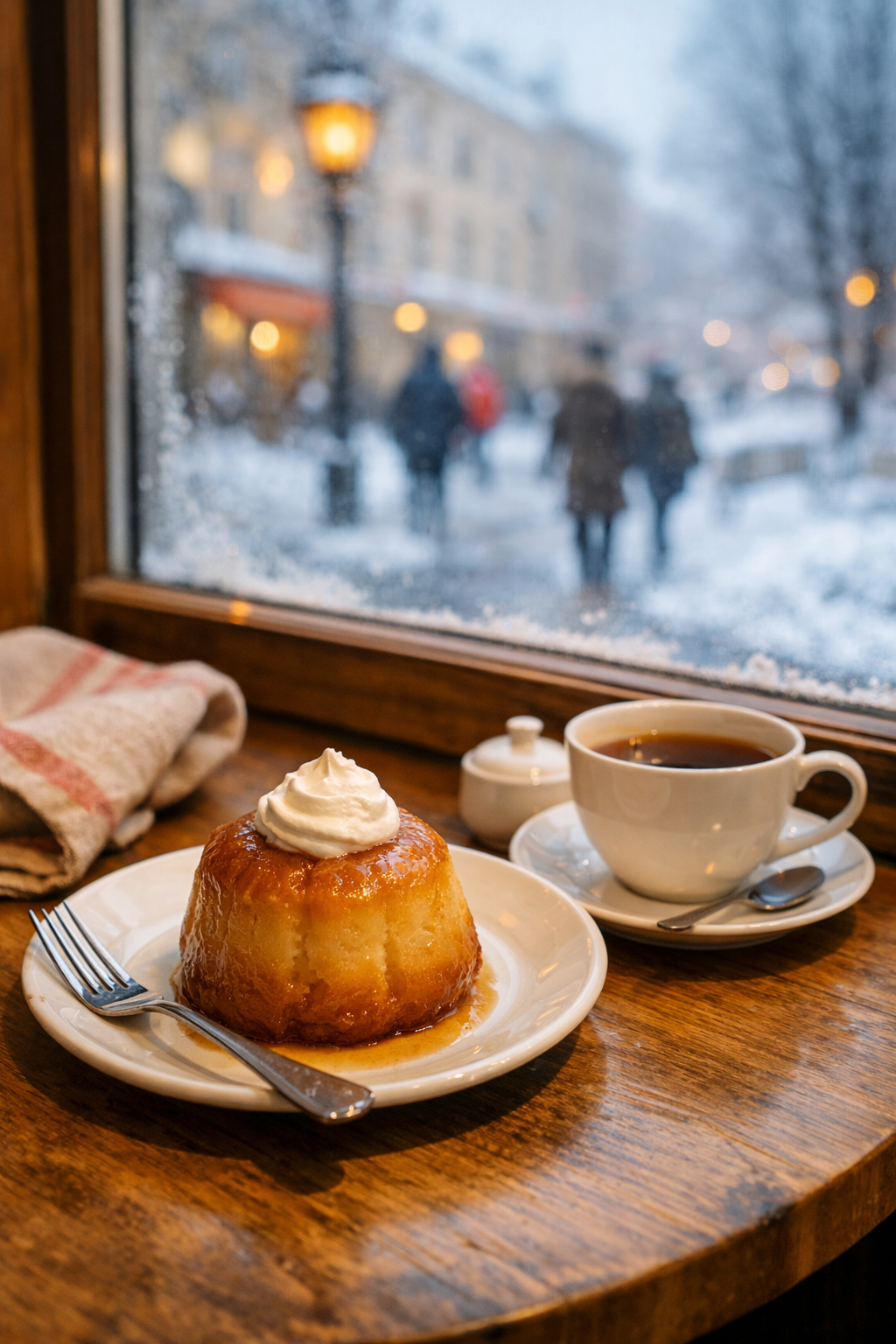
Russian desserts rarely announce themselves loudly. They do not rely on elaborate decoration, dramatic plating, or overwhelming sweetness. Instead, they tend to appear quietly—behind glass bakery counters, at the end of family meals, or alongside a cup of tea—offering flavors that feel familiar, restrained, and deeply tied to history, memory, and place. To understand Russian desserts, especially the lesser-known ones, is to understand a culture that values substance over spectacle and pleasure that unfolds slowly rather than all at once.
For many people outside Russia, the country’s dessert culture remains almost invisible. When it is mentioned at all, it is often reduced to honey cake or sweet blini, leaving out an entire world of pastries and baked goods shaped by centuries of borrowing, adaptation, and quiet reinvention. Russian desserts have been influenced by imperial tastes, Soviet practicality, Orthodox fasting traditions, regional ingredients, and the simple realities of climate. Sugar was once scarce, butter precious, and fruit seasonal. Desserts were not meant to overwhelm the senses; they were meant to comfort, to last, and to feel earned.
This article explores some of the lesser-known Russian desserts—those that don’t always make it into guidebooks or Instagram feeds, but which remain deeply present in everyday life. From the soaked richness of rum baba to the gentle simplicity of vatrusha, from café-era classics to cottage-cheese-based comfort foods, these desserts reveal how Russians think about sweetness, time, and indulgence.
As with language itself, the real story lies not in the obvious examples, but in the quieter ones.
Pavlov: A Café-Era Dessert Tradition (Not Pavlova)
Pavlov is often confused with Pavlova, the well-known meringue dessert popular outside Russia, but in the Russian context the term refers less to a single standardized cake and more to a style of light, café-era desserts shaped by restraint, technique, and controlled sweetness.
During the late imperial and early Soviet periods, Russian cafés developed delicate pastries built around whipped egg whites, soft sponge layers, and minimal sugar. These desserts were airy without being theatrical, elegant without excess. They were designed to accompany tea or coffee rather than dominate the table.
What defines Pavlov-style desserts is not a fixed recipe, but an attitude toward sweetness. Sugar is present, but disciplined. Texture matters more than decoration. The pleasure comes from balance rather than indulgence.
In this sense, Pavlov reflects a broader Russian aesthetic in pastry-making: beauty achieved through precision and moderation rather than spectacle.
Rum Baba: Soaked, Heavy, and Unapologetic
If Pavlov represents lightness, rum baba represents its opposite.
Rum baba is not a cake you rush. Dense, saturated, and deliberately excessive in its own way, it belongs to a category of desserts meant to be eaten slowly, with a fork, usually alongside coffee or strong tea.
Although rum baba originated outside Russia, it was enthusiastically adopted and adapted. Russian versions tend to be less flamboyant than their Western European counterparts, focusing on texture rather than decoration. The cake absorbs syrup—often infused with rum or liqueur—until it becomes almost custard-like inside, blurring the boundary between solid and liquid.
Rum baba is often associated with cafés and quiet pauses rather than celebrations. It is contemplative, heavy, and deeply satisfying. In Russian dessert culture, it occupies a space reserved for foods that demand attention and time.
Vatrusha: Cottage Cheese at the Center
Vatrusha may be one of the most quietly iconic Russian desserts, yet it remains largely unknown outside the region.
At first glance, it appears simple: a round yeast pastry with a visible filling of sweetened cottage cheese in the center. But vatrusha carries deep cultural meaning. Cottage cheese (tvorog) plays a central role in Russian cuisine, appearing in both sweet and savory dishes, and vatrusha showcases it in its purest dessert form.
The dough is soft but not overly rich. The filling is mildly sweet, tangy, and substantial. Vatrusha is often eaten for breakfast, with tea, or as an afternoon snack. It feels nourishing rather than indulgent.
What vatrusha reveals is a Russian preference for desserts that feel grounded—even sweetness is expected to provide sustenance.
Zapekanka: Baked Simplicity and Comfort
Zapekanka is less a pastry than a baked dish, often made from cottage cheese, eggs, and a small amount of sugar. It sits somewhere between dessert and meal and appears frequently in homes, school cafeterias, and everyday cooking.
There is no decoration, no glaze, no flourish. Zapekanka is warm, filling, and familiar. It is often served with sour cream, fruit preserves, or condensed milk, adding moisture and contrast.
As a dessert, zapekanka reflects Soviet practicality: affordable, nutritious ingredients transformed into something comforting and dependable.
Syrniki: Pan-Fried Balance
Syrniki are small cottage cheese pancakes, lightly sweetened and pan-fried until golden. Though commonly eaten for breakfast, they also function as a dessert, especially when served with sour cream, honey, or jam.
Their appeal lies in balance: crisp on the outside, soft and creamy inside. Syrniki rely on technique rather than sugar, making them satisfying without being heavy.
Across generations, syrniki remain one of the most loved expressions of Russian dessert philosophy—modest, repeatable, and deeply comforting.
Napoleon’s Quieter Cousins
While Napoleon cake is internationally known, Russian bakeries also produce simpler layered pastries inspired by it. These everyday versions use fewer layers, less cream, and less sugar, making them easier to eat and less overwhelming.
They are not reserved for celebrations. They appear in bakeries as casual options, reinforcing the idea that dessert does not always require an occasion.
Soviet-Era Café Desserts
During the Soviet period, café desserts were standardized and restrained, designed for consistency rather than luxury. Yet within these limitations, classics emerged: sponge cakes with light cream, fruit gelatin desserts, and pastries dusted with powdered sugar.
Many Russians feel nostalgia for these desserts not because they were extraordinary, but because they were reliable. They tasted the same wherever you went, offering familiarity in an otherwise unpredictable world.
Why Russian Desserts Feel Different
Visitors often find Russian desserts unexpectedly subtle. Sugar rarely dominates. Texture matters more than appearance. Warmth matters more than novelty.
This approach mirrors broader cultural values: endurance, balance, and respect for ingredients. Desserts are not meant to overwhelm—they are meant to accompany life quietly.
Desserts as Cultural Vocabulary
Understanding Russian desserts offers insight into everyday language and habits. Words like tvorog (cottage cheese), vypechka (baked goods), and konditerskaya (pastry shop) carry meanings shaped by lived experience.
Food, like language, is never neutral.
FAQs About Russian Desserts
Are Russian desserts very sweet?
Generally, no. They tend to be moderately sweet and restrained.
Is cottage cheese common in Russian desserts?
Yes. It plays a central role in many traditional sweets.
Are these desserts homemade or bakery items?
Both. Many appear in homes and bakeries alike.
Do Russian desserts change by season?
Yes, especially those involving fruit.
Are these desserts eaten daily?
Some, like syrniki and vatrusha, can be part of everyday life.
Learn Russian Through Culture
At Polyglottist Language Academy, we believe language learning becomes richer when it is rooted in culture. Exploring Russian desserts helps students understand everyday vocabulary, habits, and social cues that textbooks often miss.
We offer Russian language classes for all levels, both online and in person, taught by experienced instructors who integrate language with cultural context.
👉 Sign up for Russian classes at Polyglottist Language Academy and learn the language as it is truly lived.
Continue Exploring Russian Culture on Our Blog
If you enjoyed this article, you may also like: