
The Russian Fear of Drafts (Сквозняк): A Cultural Obsession That Explains More Than You Think
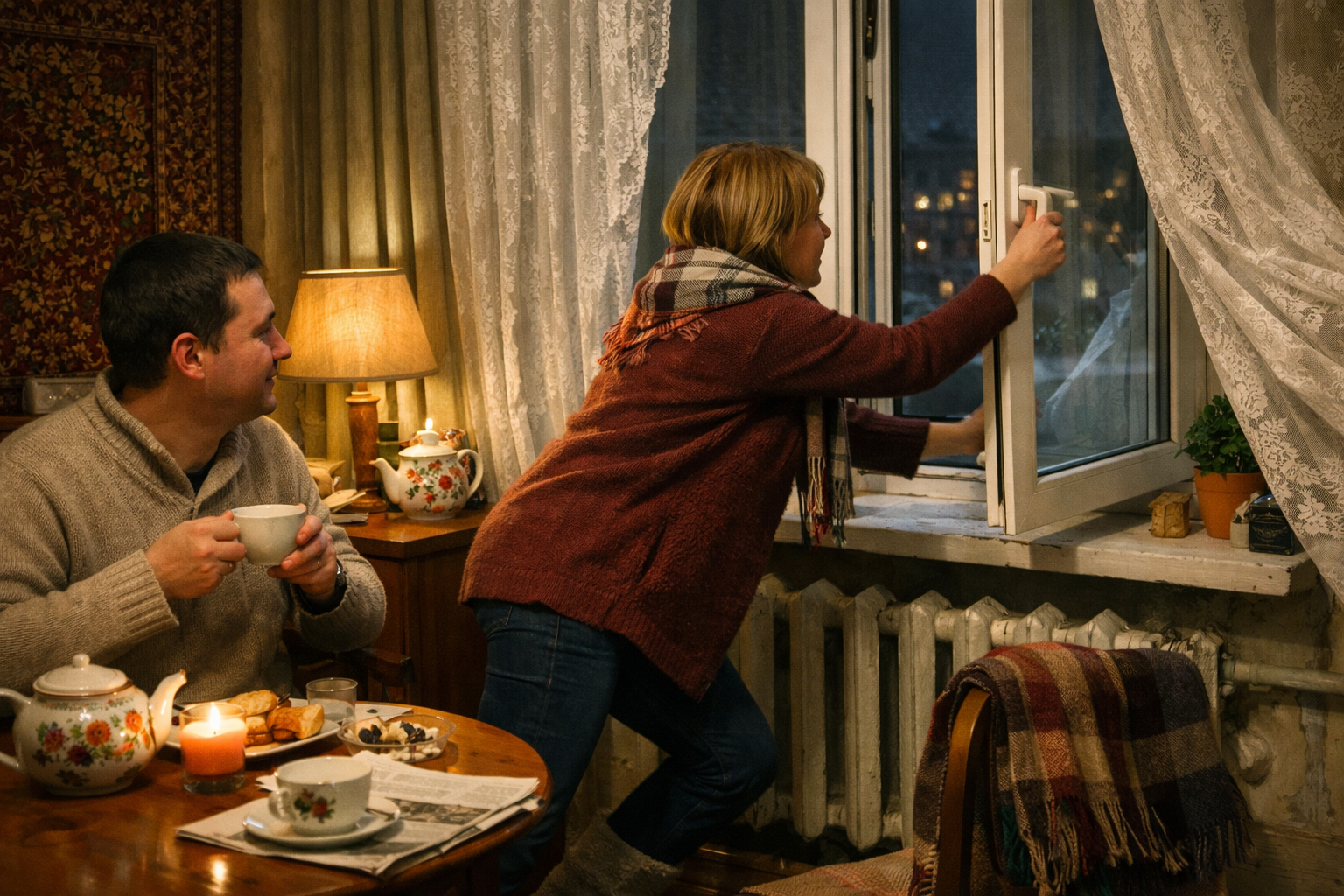
There are few things that will provoke faster, more visceral alarm in a Russian household than the simultaneous opening of two windows, a cracked balcony door paired with a hallway vent, or a gentle breeze daring to cross a room uninvited, because in the Russian imagination, air is not neutral—it is powerful, dangerous, sneaky, and capable of causing everything from sore throats to facial paralysis if it dares to move with too much freedom.
To outsiders, this fear seems almost comical. To Russians, it is deeply logical.
If you spend any real amount of time in Russia—or with Russians abroad—you will eventually encounter сквозняк (skvoznyák), the dreaded draft. Someone will leap up mid-conversation to shut a window. A scarf will appear around a neck that looked perfectly fine moments earlier. A warning will be issued with the urgency usually reserved for natural disasters: “Закрой окно! Сквозняк!” (“Close the window! There’s a draft!”)
This is not about mild discomfort. This is about health, history, survival, and an entire worldview shaped by climate, architecture, medicine, and collective memory.
And once you understand the Russian fear of drafts, you start understanding Russia itself.
What Exactly Is “Сквозняк”?
In simple terms, сквозняк refers to air that moves through a space rather than merely existing in it. A breeze is fine. Fresh air is acceptable—sometimes. But air that flows from one opening to another? That is suspicious. That is dangerous. That is a draft.
The word itself comes from сквозь, meaning “through,” emphasizing motion, penetration, and exposure. The danger is not cold air alone—it’s air in transit, air with intent.
In Russian thinking, still air is safe. Moving air is a threat.
This distinction already tells us something important: the fear of drafts is not irrational panic, but a specific cultural categorization of risk.
A Climate That Teaches Caution
To understand сквозняк, you have to understand Russia’s climate—not in abstract statistics, but in lived experience.
Russian winters are not merely cold; they are long, relentless, and historically unforgiving. Before central heating, before modern insulation, before antibiotics, exposure to cold air wasn’t an inconvenience—it could be fatal.
A cracked window in January could mean illness.
Illness could mean pneumonia.
Pneumonia could mean death.
Generations grew up internalizing the idea that cold air moving across the body causes sickness. Even today, many Russians will tell you—without irony—that a draft can lead to:
sore throats
ear infections
stiff necks
facial nerve inflammation
kidney problems
chronic illness
Western medicine may raise an eyebrow, but cultural memory doesn’t erase itself just because science evolves.
Soviet Medicine and the Reinforcement of Fear
The fear of drafts didn’t just survive modernization—it was institutionalized during the Soviet era.
Soviet medicine emphasized prevention, routine, and environmental control. Doctors routinely warned patients against drafts, cold floors, uncovered heads, and temperature changes. Hospitals were famous for their warm wards and sealed windows, even in summer.
Children grew up hearing:
“Don’t sit near the window.”
“Cover your neck.”
“You’ll catch something.”
Scarves became year-round accessories.
Open windows became a calculated risk.
Air conditioning—when it eventually arrived—was treated with deep suspicion.
To this day, many Russians prefer suffocating heat to moving air.
Architecture That Trains the Body
Russian apartments reinforce this mindset.
Soviet-era buildings were designed to retain heat, not circulate air. Thick walls, heavy doors, sealed windows—these were features, not flaws. Air movement inside an apartment often signals a structural problem or extreme weather.
When windows are opened, it’s usually:
briefly
deliberately
under supervision
You air out a room, then you close it. Letting air roam freely feels negligent.
Western open-plan living, cross-ventilation, and ceiling fans feel chaotic and unsafe to many Russians.
Why the Neck Is Always at Risk
If you want to witness Russian draft paranoia in its purest form, watch what happens when someone’s neck is exposed.
The neck is believed to be especially vulnerable to drafts. Even a slight breeze across it can allegedly cause:
stiff neck
swollen lymph nodes
fever
weeks of discomfort
This is why scarves appear in September and don’t disappear until May.
A Russian without a scarf in cool weather will often be told:
“Ты что, хочешь заболеть?”
(“Do you want to get sick?”)
This isn’t nagging—it’s care.
Drafts vs. Air Conditioning: A Modern Battleground
Air conditioning has become the modern incarnation of сквозняк fear.
In offices, restaurants, and hotels, Russians frequently complain that AC is:
too cold
blowing directly
dangerous
Many will move seats, block vents, or ask staff to turn it off entirely.
To a Russian, AC isn’t comfort—it’s controlled draft technology, and therefore suspect.
This explains countless cross-cultural conflicts where Westerners are melting and Russians are shivering in the same room.
Drafts as a Metaphor for Exposure
Beyond health, сквозняк functions as a metaphor.
Drafts represent uncontrolled exposure—to cold, to danger, to the outside world. Russian culture traditionally values:
protection
containment
boundaries
Warmth equals safety.
Enclosure equals care.
This mindset extends beyond windows.
It influences:
emotional reserve
cautious trust
skepticism toward sudden change
Just as you don’t let air rush through your home unchecked, you don’t let people rush into your inner world.
Why Arguing About Drafts Never Works
Many foreigners try logic.
“Fresh air is healthy.”
“There’s no medical evidence.”
“It’s not that cold.”
These arguments fail because this isn’t about evidence—it’s about lived truth.
To a Russian, the danger of drafts has been proven by:
childhood illnesses
family stories
medical advice
collective experience
You don’t debate gravity. You respect it.
How Russians Air Out Rooms (Safely)
Interestingly, Russians do value fresh air—they just control it carefully.
Typical method:
Open one window wide
Leave the room
Close it after 5–10 minutes
This avoids cross-drafts while still renewing air.
The idea is exchange without exposure.
Learning Russian Through Сквозняк
Understanding сквозняк helps language learners in unexpected ways.
It explains:
why Russians comment on your clothing
why they close windows without asking
why “Are you cold?” is an expression of care
why warmth equals hospitality
It also introduces key vocabulary:
продуло (got hit by a draft)
надень что-нибудь (put something on)
тепло оденься (dress warmly)
Language lives inside culture, and this is a perfect example.
FAQs: The Russian Fear of Drafts
Is the fear of drafts uniquely Russian?
It’s strongest in Russia and Eastern Europe, though similar beliefs exist in parts of Asia and Southern Europe.
Do young Russians still believe in this?
Many do, especially regarding necks and air conditioning, though attitudes are slowly changing.
Is there any medical truth to it?
Cold air itself doesn’t cause illness, but sudden temperature changes can affect comfort and immune response. The belief persists culturally.
Why do Russians hate open windows at night?
Night air is believed to be especially dangerous—colder, heavier, and more likely to cause illness.
What’s the polite response when someone warns you about a draft?
Thank them and comply—or at least pretend to. It’s an act of care.
Does this affect how Russians travel?
Yes. Hotels, trains, and airplanes often become battlegrounds over airflow.
Is “сквозняк” always negative?
Yes. It’s almost never neutral or positive.
Will I be judged for liking drafts?
Privately, maybe. But mostly people will just worry about you.
What Сквозняк Teaches Us About Russian Culture
The fear of drafts is not superstition—it’s cultural logic shaped by climate, history, architecture, and care.
It teaches us that:
warmth equals safety
exposure equals risk
protection equals love
Once you see it this way, Russian behavior stops seeming strange and starts making sense.
Learn Russian Through Culture, Not Just Grammar
At Polyglottist Language Academy, we believe language learning only truly works when you understand the culture behind the words.
Our Russian classes don’t just teach cases and conjugations—we explain:
why Russians speak the way they do
how cultural habits shape language
what people really mean, not just what they say
Whether you’re a beginner or advanced learner, our small-group and individual Russian classes (online and in person)help you understand Russian as it’s lived, not just as it’s written.
👉 Sign up for Russian classes with Polyglottist Language Academy and start learning the language the way Russians actually use it.
You Might Also Enjoy These Articles
If you liked this deep cultural dive, check out our other Russian-focused posts:
How Russians Really Dress Indoors (Layering, Home Clothes, Slippers Culture)
Walking In Saint Petersburg In December: A Winter City That Has Adapted
My First Morning In St. Petersburg: Snow, Silence, And The Smell Of Fresh Bread
MY FIRST 24 HOURS IN ST. PETERSBURG: NEVSKY PROSPECT, TOO MUCH TEA, AND RUSSIAN DONUT “PISHKA”