
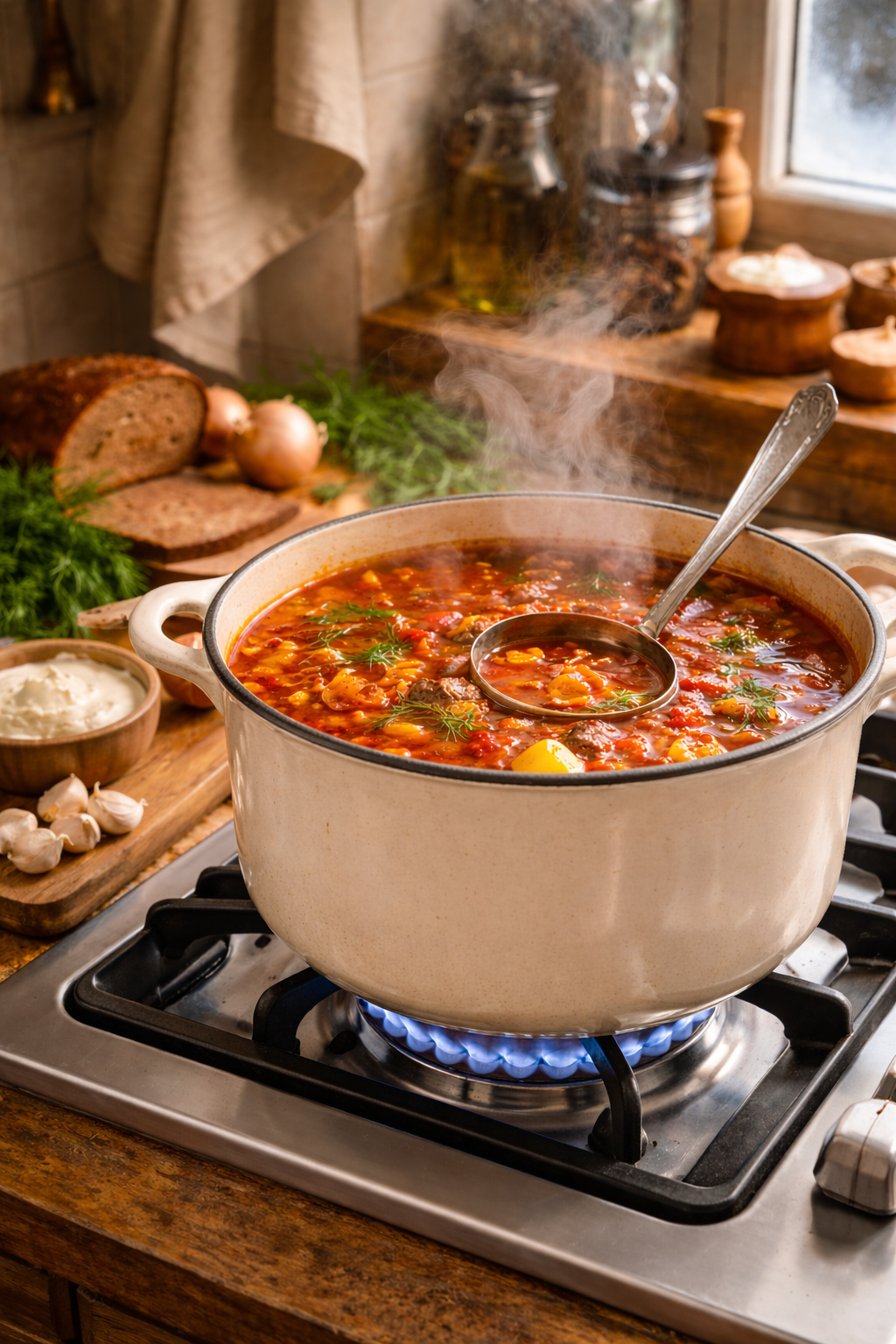
Why Russian Soups Are the Heart of Winter Cooking
The story of Russian hot drinks begins long before cafés, samovars polished to a shine, or porcelain cups placed carefully on lace-covered tables; it begins with climate, geography, scarcity, ritual, and the human need for warmth that is not merely physical but emotional, social, and deeply cultural, because in a country where winter stretches on for months and cold is not an inconvenience but a defining condition of life, what you drink to warm yourself becomes a quiet philosophy rather than a casual habit.
In Russia, hot drinks are not consumed on the run or absentmindedly gulped between errands. They are paused over. They are discussed. They are offered before questions are asked and remembered long after conversations end. To be invited in from the cold and handed a steaming mug is to be momentarily folded into someone’s private world, a gesture that says you are safe here, you are welcome, and you can stay a little longer. This is why Russian hot drinks carry such weight: they sit at the intersection of hospitality, survival, and storytelling.
For many outsiders, Russian drink culture is reduced to two clichés—vodka and tea. Vodka is cold, fiery, ceremonial; tea is strong, black, and endless. But this narrow view misses an entire universe of hot beverages that have quietly sustained people through centuries of harsh winters, long train journeys, illnesses, celebrations, fasting periods, and simple evenings at home. Some are ancient, tied to pagan rituals or monastic traditions. Others emerged through trade routes, imperial fashions, or Soviet ingenuity. All of them reveal something essential about how Russians relate to warmth, time, and togetherness.
This article is an invitation to slow down and step into that universe. Beyond tea, beyond stereotypes, you’ll discover drinks made from honey and spices, fermented berries, herbs gathered in forests, grains simmered patiently on stovetops, and citrus fruits warmed gently against the cold. Each drink has a story, a season, and a specific emotional register: some are meant to fortify, others to soothe, others still to celebrate or heal.
As you read, you may notice that learning about Russian hot drinks feels uncannily similar to learning the language itself. Nothing is rushed. Meanings unfold gradually. Context matters. And the real essence is never found in the textbook version, but in the lived experience—shared at a kitchen table, on a snowy street, or during a long evening when no one is watching the clock.
Let’s begin.
Sbiten: Russia’s Forgotten Winter Elixir
Long before tea arrived in Russia, long before sugar became widely available, there was sbiten—a hot, honey-based drink that once dominated Russian winters and filled the streets of medieval cities with the scent of spices and herbs.
Sbiten dates back at least to the 12th century and was originally prepared with honey, water, and a complex blend of spices and medicinal herbs. Cloves, cinnamon, ginger, bay leaves, and sometimes peppercorns were simmered slowly, creating a drink that was both warming and restorative. Vendors known as sbitenshchiki sold it from large containers in markets and public squares, especially during winter fairs and holidays.
What makes sbiten fascinating is its dual nature. On one hand, it was everyday sustenance—something to warm your hands and body while moving through freezing streets. On the other, it carried symbolic meaning, associated with health, prosperity, and protection against illness. Some versions were non-alcoholic, while others included a light fermentation or a splash of mead.
Today, sbiten is experiencing a quiet revival, especially among those interested in traditional Russian cuisine and pre-imperial food culture. When you taste it, you’re not just drinking something sweet and spicy—you’re tasting a Russia that existed before samovars, before imported tea, before globalized flavors.
Mors: The Berry Drink That Defies Categories
Mors occupies a curious space in Russian culture. It can be cold or hot, casual or ceremonial, medicinal or simply refreshing. Made primarily from cranberries, lingonberries, or other forest berries, mors is both ancient and endlessly adaptable.
In its hot form, mors becomes a gentle, comforting drink often served during illness or deep winter. The berries are crushed, simmered with water, lightly sweetened, and strained. The result is tart, aromatic, and deeply red—visually striking against snow-covered landscapes.
Hot mors is often associated with care. Grandmothers make it when someone has a cold. It appears on hospital trays. It’s served after long walks in the forest or after hours spent outdoors. Unlike sugary commercial drinks, traditional mors is restrained, balancing sweetness and acidity in a way that feels purposeful rather than indulgent.
What mors reveals about Russian culture is an intimacy with nature. These berries are not exotic imports; they are gathered, frozen, stored, and remembered. Drinking hot mors is a reminder that even in winter, the forest still provides.
Kissel: When a Drink Becomes a Spoonful
Is kissel a drink or a dessert? Russians have been debating this question for centuries, and the answer, characteristically, is that it depends.
Kissel is a thickened fruit drink made with berry juice and starch, resulting in a texture that ranges from lightly viscous to fully spoonable. Served hot, it becomes a uniquely Russian comfort food—something between a beverage, a pudding, and a memory.
Historically, kissel was made from fermented grains, not fruit, and was associated with ritual meals and fasting periods. Over time, fruit-based versions became dominant, especially in the 19th and 20th centuries. Hot cherry, cranberry, or blueberry kissel was commonly served in schools, hospitals, and homes, often accompanied by biscuits or bread.
For many Russians, kissel is inseparable from childhood. Its texture, its warmth, its gentle sweetness evoke a time when being cared for meant being fed something warm and familiar. It is not sophisticated in the modern sense, but it is emotionally rich.
Herbal Teas (Travianye Chai): The Other Tea Tradition
While black tea dominates the Russian imagination, herbal infusions—known collectively as travianye chai—have always existed alongside it.
These drinks are not teas in the strict sense, but infusions made from herbs, flowers, leaves, and roots. Common ingredients include chamomile, mint, thyme, Ivan chai (fireweed), linden flowers, and rosehip. Many of these herbs were traditionally gathered in summer, dried, and stored for winter use.
Hot herbal teas are deeply tied to folk medicine. Each plant has a purpose: calming nerves, aiding digestion, strengthening immunity, or helping with sleep. Drinking them is often a deliberate act, taken in the evening, during illness, or after emotional stress.
In recent years, Ivan chai has seen a resurgence as a symbol of national heritage. Once exported across Europe before tea took over, it is now celebrated for its mild taste and health benefits.
Coffee, Russian-Style: A Complicated Relationship
Coffee in Russia has always been something of an outsider, arriving later than tea and carrying different social meanings. Yet hot coffee drinks have carved out their own space, especially in urban and literary circles.
Traditionally, coffee was prepared strong, often Turkish-style, simmered directly in water and served unfiltered. It was associated with intellectuals, artists, and city life. In Soviet times, coffee was scarce, leading to substitutes and creative improvisations.
Today, Russia’s coffee culture is thriving, but the older rituals remain. Coffee is still something you sit with, not something you rush through. In winter, it is often sweetened generously or paired with pastries, becoming a form of indulgent warmth.
Hot Kompot: Preserved Summer in a Glass
Kompot is another drink that blurs boundaries. Made by simmering fresh or dried fruits—apples, pears, cherries, plums—it can be served cold or hot. In winter, hot kompot becomes a way of accessing summer flavors when fresh fruit is scarce.
Unlike juice, kompot is gentle and understated. The fruit is not crushed but infused, resulting in a drink that feels light yet nourishing. Hot kompot is commonly served at family meals, especially with children, and is often the first "special" drink kids are given.
Its simplicity is its strength. Kompot teaches patience, thrift, and respect for ingredients.
Mulled Wine, Russian Adaptations
While mulled wine is not originally Russian, it has been enthusiastically adopted and adapted. Known as glintvein, it appears during winter markets, holidays, and social gatherings.
Russian versions tend to be less sweet and more spice-forward, sometimes incorporating local berries, honey, or even tea. Non-alcoholic versions are common and widely accepted.
Glintvein reflects Russia’s ability to absorb foreign influences and reshape them according to local tastes and needs.
Why Hot Drinks Matter So Much in Russian Culture
Hot drinks in Russia are not just about warmth. They structure time. They mark transitions—from outdoors to indoors, from work to rest, from illness to recovery. They create pauses in a culture that values endurance and emotional restraint.
To offer someone a hot drink is to offer presence. To accept one is to agree to stay.
Learning Russian Through Food and Drink
Understanding Russian hot drinks gives you a different entry point into the language. Vocabulary becomes tangible. Cultural references make sense. Expressions tied to warmth, comfort, and hospitality gain depth.
Language is never abstract—it lives in habits, rituals, and everyday choices.
FAQs About Russian Hot Drinks
Are these drinks commonly available in cafés today?
Some are, especially in traditional cafés or during winter festivals, but many are still primarily homemade.
Is Russian tea always black and strong?
Traditionally yes, but herbal infusions have always existed alongside it.
Are these drinks sweet?
Many are mildly sweet, often with honey rather than sugar, but balance is key.
Do Russians drink hot drinks year-round?
Yes, though the types and frequency change with the seasons.
Are these drinks difficult to make at home?
Most are simple and forgiving, requiring basic ingredients and patience.
Learn the Language Behind the Culture
At Polyglottist Language Academy, we believe that language learning is inseparable from culture. Understanding what Russians drink, when they drink it, and why they drink it opens doors that grammar alone never will.
We offer Russian classes for beginners and advanced learners alike—online and in-person—taught by experienced instructors who bring language to life through history, daily habits, and real conversation.
👉 Ready to go deeper? Sign up for our Russian classes and start understanding not just the words, but the world behind them.
Keep Exploring
If you enjoyed this article, we invite you to explore more of our cultural deep dives: