
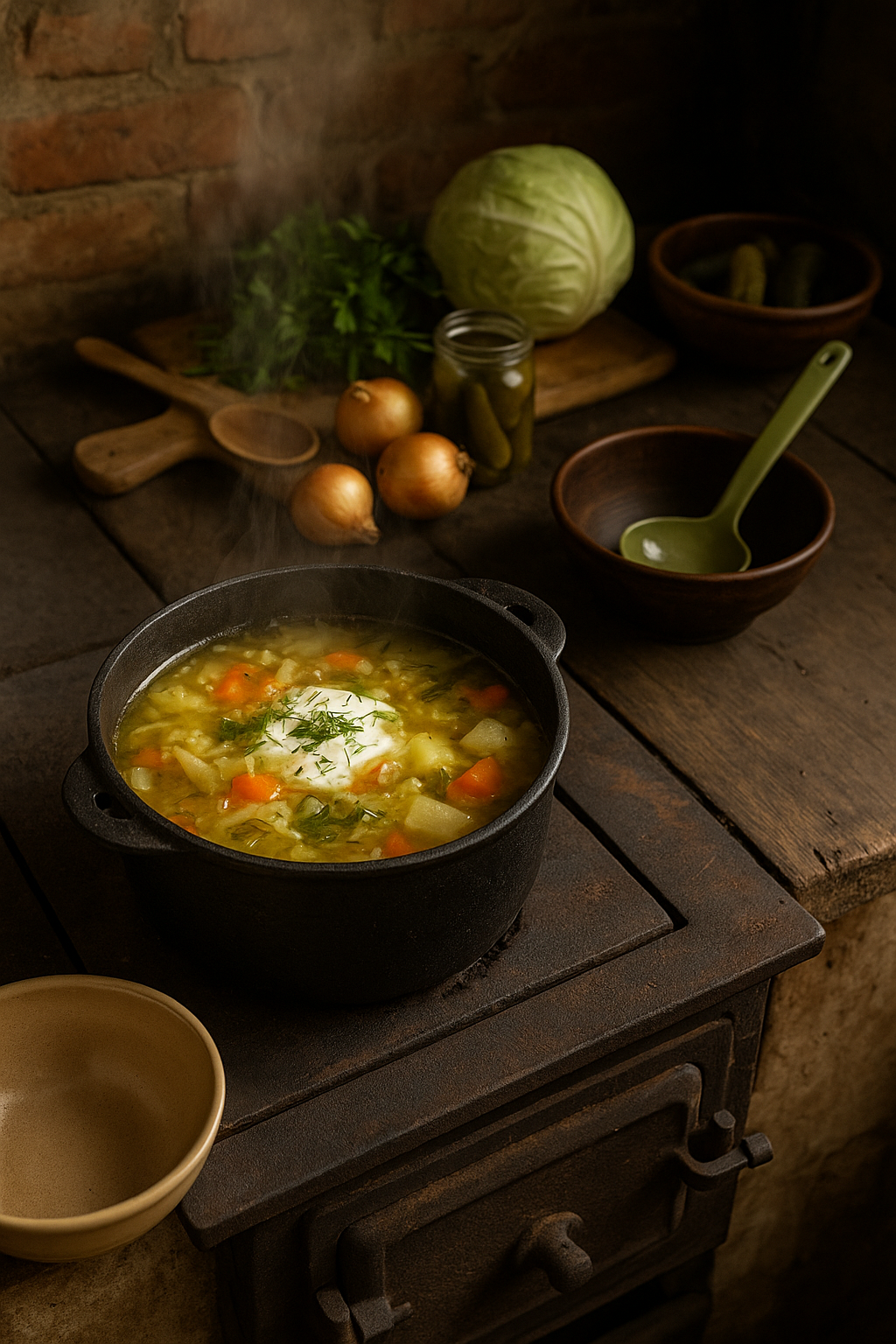
Few nations have placed soup so firmly at the heart of their cuisine and cultural identity as Russia, where the long winters and harsh climate made a steaming bowl of broth not just a comfort but a necessity for survival. For centuries, two soups in particular—shchi (cabbage soup) and solyanka (a rich, hearty, and slightly sour soup)—have stood at the center of Russian dining tables, from peasant huts to aristocratic feasts, from Tsarist banquets to Soviet canteens. These dishes are more than recipes; they are living traditions that reflect the history, geography, and soul of Russia itself.
The importance of soup in Russian life cannot be overstated. Unlike in Western Europe, where soups were often considered starters, in Russia a soup could define the entire meal. Families planned their days around a pot simmering on the stove, travelers sought it in roadside taverns, and soldiers carried its flavors into battle. In Russian literature and folklore, soups were symbols of hospitality, comfort, and national character. To this day, a visitor to Russia is far more likely to be offered a steaming bowl of soup than a sandwich.
But why shchi and solyanka in particular? What makes these two soups so enduringly central to Russian cuisine? The answer lies in both their ingredients and their adaptability. Shchi, made primarily with cabbage, was accessible to everyone, from the poorest peasants who lived on cabbage and rye to wealthy households that enriched it with meat, herbs, and spices. Solyanka, meanwhile, was a soup of abundance, created by blending a medley of meats, fish, or mushrooms with pickles, olives, and lemon, offering a sharp and warming taste that set it apart from any other dish in the Russian repertoire.
Together, these soups tell the story of Russia: survival through simplicity, creativity through scarcity, and celebration through variety. They represent the resilience of a people who endured long winters, the blending of Slavic and foreign influences, and the unbroken chain of culinary tradition that connects medieval monasteries with modern Moscow restaurants.
In this article, we will explore the history, recipes, and cultural meanings of shchi and solyanka. We’ll look at how they were cooked in the past, how they evolved over centuries, and how they are prepared today. Along the way, we’ll dive into the role these soups played in Russian society, literature, and daily life, and why they remain essential symbols of Russian hospitality.
Shchi: The Cabbage Soup of the People
Origins and Early History
The history of shchi stretches back more than a thousand years. Cabbage was introduced to Russia in the 9th century and quickly became a staple crop because of its ability to withstand the cold and its usefulness in fermentation. Fermented cabbage provided crucial vitamins during the long winters, helping to prevent scurvy. Thus, it was natural that Russians began to build a soup around it.
By the Middle Ages, shchi had become the quintessential Russian dish. Chronicles from monasteries and villages mention it as a daily food. In fact, the phrase “без щей обед не в обед” (“without shchi, lunch is not lunch”) became a common saying, reflecting how essential it was.
Varieties of Shchi
Though cabbage is always at the heart of shchi, there are countless variations:
Rich Shchi (богатые щи): Made with meat (often beef or pork), sometimes flavored with herbs and sour cream.
Poor Shchi (бедные щи): Made simply with cabbage, onions, carrots, and perhaps a little millet or potatoes.
Sour Shchi (кислые щи): Made with fermented cabbage (sauerkraut), giving it a tangy and hearty flavor.
Green Shchi (зелёные щи): Made with sorrel or nettles in spring, a seasonal variation that brought fresh vitamins after winter.
The adaptability of shchi meant it could be eaten daily without growing monotonous.
Cultural Importance
For centuries, shchi was eaten by everyone—peasants, soldiers, merchants, and nobles alike. It was easy to cook in large pots, economical, and nourishing. In peasant households, a pot of shchi often simmered for several days, with family members adding water or new ingredients as needed. It was said that the longer shchi was reheated, the better it tasted.
In literature, shchi appears as a symbol of home and tradition. Tolstoy, Chekhov, and Gorky all mention it in their works, using it as shorthand for Russian authenticity.
Solyanka: The Soup of Abundance and Celebration
Origins and Early Mentions
While shchi represented everyday sustenance, solyanka was more festive and indulgent. Its name derives from соль(“salt”), a reflection of its tangy and savory profile. The soup first appeared in the 15th–16th centuries, likely as an evolution of hearty meat stews cooked with pickles and spices.
Solyanka was popular in taverns, where it became known as a hangover cure. The combination of sour pickles, lemon, and brine, mixed with a rich broth and an assortment of meats or fish, made it both restorative and flavorful. By the 18th and 19th centuries, it had become a staple of Russian banquet tables.
Types of Solyanka
There are three main categories of solyanka:
Meat Solyanka (мясная солянка): Made with sausages, ham, beef, chicken, or other meats. Often includes olives, capers, pickled cucumbers, lemon, and sour cream.
Fish Solyanka (рыбная солянка): A lighter version with salmon, sturgeon, or perch. Particularly popular in coastal towns and monasteries.
Mushroom Solyanka (грибная солянка): A vegetarian option using forest mushrooms, perfect for Orthodox fasting periods.
The hallmark of solyanka is its balance of flavors: salty, sour, savory, and slightly spicy. Unlike the simplicity of shchi, solyanka is complex and layered, making it an ideal celebratory dish.
Solyanka in Russian Culture
Solyanka became a favorite among Russia’s writers and gourmands. The French gastronome Alexandre Dumas, who toured Russia, praised it for its uniqueness. Pushkin and Gogol mentioned it as part of Russian feasting culture. In the Soviet era, it was a standard menu item in canteens and railway dining cars, continuing its role as a soup of gatherings and journeys.
Comparing Shchi and Solyanka
Though both soups are beloved, they represent different aspects of Russian life:
Shchi is everyday, humble, nourishing—the soup of survival and continuity.
Solyanka is festive, indulgent, and eclectic—the soup of gatherings and celebration.
Together, they capture the dual spirit of Russian cuisine: endurance and joy, simplicity and complexity.
The Enduring Popularity of Shchi and Solyanka Today
In modern Russia, these soups remain staples. Restaurants serve gourmet versions with fine cuts of meat and exotic spices, while homes across the country continue to cook them in traditional ways. They also serve as cultural ambassadors—featured in Russian food festivals, cooking shows, and culinary tourism.
For Russians abroad, shchi and solyanka often provide a taste of home, linking generations to their heritage. For foreigners learning Russian, trying these soups is an unforgettable cultural experience.
FAQs About Shchi and Solyanka
Q: What is the difference between shchi and borscht?
A: Shchi is cabbage-based and usually lighter, while borscht is beet-based with a sweeter and earthier flavor.
Q: Why is cabbage so central in Russian cuisine?
A: Cabbage grows well in cold climates, stores easily, and ferments well, making it a reliable food source for long winters.
Q: Is solyanka always sour?
A: Yes, but the sourness varies depending on the use of pickles, lemon, or brine.
Q: Can shchi be vegetarian?
A: Absolutely. Many traditional versions use only cabbage, vegetables, and herbs.
Q: Which soup is more common today?
A: Shchi remains more common as an everyday soup, while solyanka is often served in restaurants or on special occasions.
Q: Do Russians eat soup every day?
A: Many households still do, especially older generations. Soup is seen as essential to a balanced meal.
Q: What is served with shchi or solyanka?
A: Both are often served with rye bread, sour cream, and sometimes garlic rolls (пампушки).
Q: Are these soups hard to make at home?
A: Not at all. Both can be prepared with basic ingredients and adjusted to taste.
Conclusion
For centuries, shchi and solyanka have kept Russia warm—physically, culturally, and spiritually. They embody the resilience of a people who learned to transform simple ingredients into enduring traditions. Whether you taste the humble comfort of cabbage soup or the complex joy of solyanka, you are tasting Russia itself.
At Polyglottist Language Academy, we believe that language and culture are inseparable. Just as these soups connect generations of Russians, learning the Russian language connects you to the traditions, literature, and daily life that shape its identity.
👉 Sign up for Russian classes at Polyglottist Language Academy and deepen your journey into Russian culture—not just through words, but through the stories and flavors that bring them alive.
If you enjoyed this exploration of Russian soups, check out our other blog posts:
Blini Through The Seasons: From Maslenitsa To Modern Brunch Tables
The Comfort Of Olivier Salad: Why Russians Can’t Celebrate New Year Without It
Pryaniki (Russian Spice Cookies): Sweet Treats With A Long History
Charlotte Russe: The 19th-Century Dessert Russia Borrowed And Made Its Own
Russian Porridges (Kashi): From Childhood Breakfasts To Festive Tables