
How Italians Talk About Love (and Why It Sounds More Poetic)
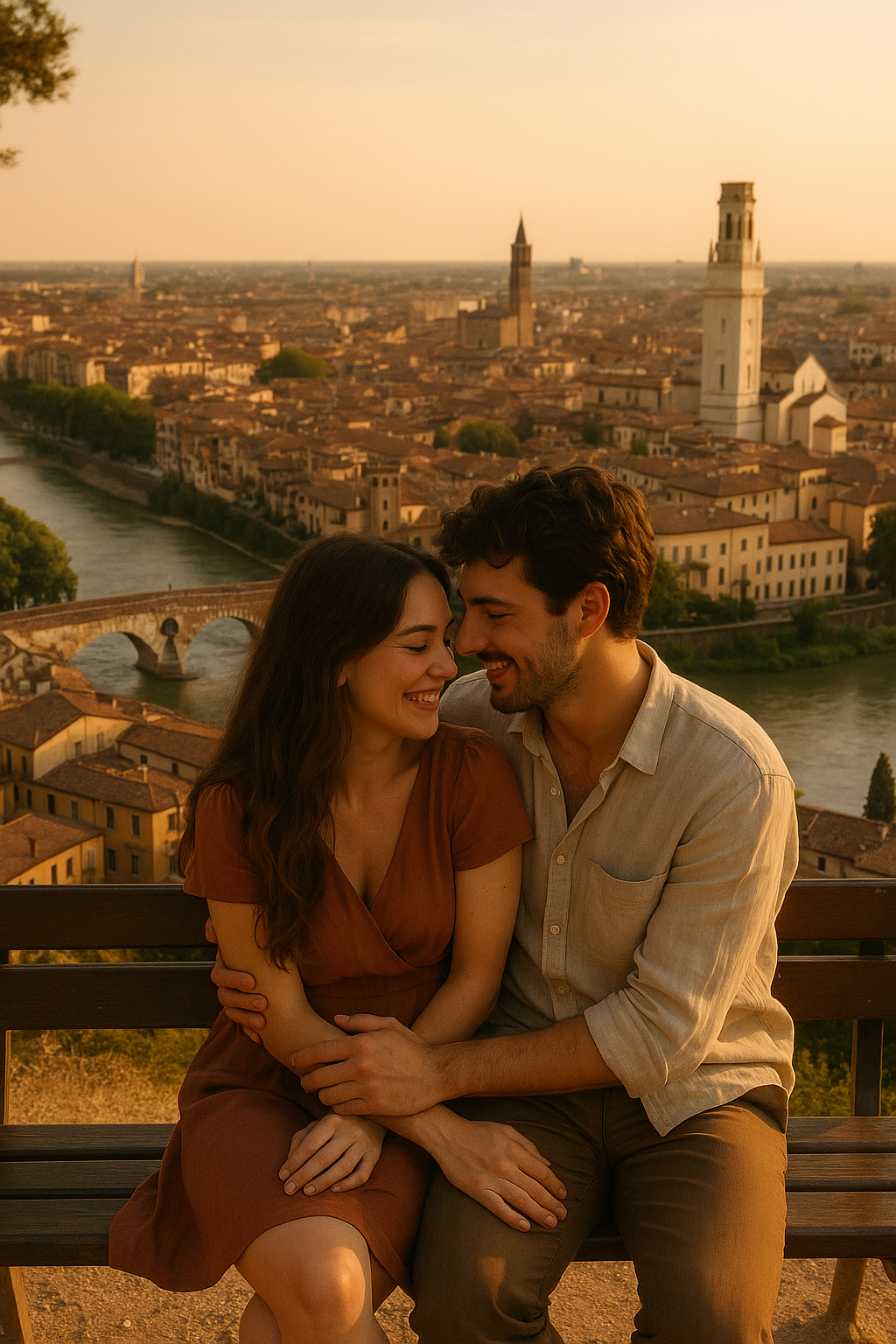
Love has many languages, but few cultures seem to speak about it with as much passion, elegance, and poetry as the Italians. In Italy, love is not just a private emotion but a public art form, expressed in music, literature, gestures, and, most vividly, in the words people choose. The Italian language itself—with its flowing vowels, lyrical rhythm, and rich vocabulary—invites romance. To say “I love you” in Italian, ti amo, is not merely a statement; it feels like an invocation, a phrase that rolls off the tongue like a melody.
But what makes Italian expressions of love feel so distinct? It’s not only the words themselves but also the cultural weight behind them. Italians grow up surrounded by poetry, opera, Renaissance art, and centuries of storytelling where love has been a central theme. From Dante writing about Beatrice, to Petrarch’s sonnets, to the fiery declarations in Verdi’s operas, the idea of love has always been interwoven with beauty, tragedy, and exaltation. The language developed to capture these experiences reflects that heritage: it’s a vocabulary steeped in metaphor, imagery, and depth.
Unlike English, where “love” often stretches to cover everything from romantic passion to affection for pizza, Italian offers more precise and emotionally loaded distinctions. There is amore (love as a grand, sweeping concept), affetto(tender affection), infatuazione (infatuation), passione (passion), and cotta (a crush, usually lighthearted). Even casual phrases carry poetry—when Italians say mi manchi (“I miss you”), they are literally saying “you are missing from me,” as if the beloved were a physical piece of their being.
And of course, there is the cultural context. In Italy, love is not something to be hidden or understated. It is celebrated in public piazzas, confessed over long dinners, shouted across balconies, and whispered in narrow cobblestone streets. It is performed as much as it is felt, often with sweeping hand gestures and expressive tones. This externalization of love makes the language surrounding it more vivid—because it isn’t just vocabulary, it is performance.
In this article, we will explore how Italians talk about love, from the grand words of eternal devotion to the playful vocabulary of flirtation. We’ll look at idioms, historical influences, and everyday phrases that reveal why Italian love talk sounds so poetic. And along the way, you’ll see how learning these expressions does more than improve your vocabulary—it gives you access to one of the most beautiful cultural traditions in the world: the Italian way of loving.
1. The Big Word: Amore
The Italian word amore is one of the most famous exports of the language, often borrowed into songs, poetry, and even casual speech in English. But in Italian, amore is never trivial. It suggests intensity, grandeur, and sometimes even destiny. Calling someone amore mio (“my love”) is both a term of endearment and a statement of belonging.
Common Expressions:
Amore a prima vista – love at first sight
Il grande amore – the great love
Amore eterno – eternal love
2. Saying “I Love You” in Italian
While English has only one version of “I love you,” Italian distinguishes between ti amo and ti voglio bene.
Ti amo is reserved for deep, romantic love—usually between partners. It is intimate, passionate, and carries weight.
Ti voglio bene literally means “I want good for you” and is used among family members, close friends, and sometimes long-term partners. It suggests affection, care, and warmth without necessarily being romantic.
This distinction reflects the Italian ability to fine-tune emotional expression through language.
3. The Poetry of Longing: Mi manchi
Perhaps no phrase better captures Italian romanticism than mi manchi (“I miss you”). Unlike the English “I miss you,” which feels external, mi manchi conveys a sense of incompleteness. It suggests that the person is literally missing from the speaker’s existence, as if a vital part of them were absent.
4. From Crushes to Passion: Nuances of Romantic Vocabulary
Italians don’t just say they’re “in love.” They have words for every stage of affection:
Una cotta – a crush, often teenage or playful.
Infatuazione – infatuation, a stronger but fleeting passion.
Passione – passion, often overwhelming and consuming.
Attrazione – attraction, usually physical.
5. Compliments and Flirtation
Flirting in Italian is practically an art form. Compliments tend to be direct but wrapped in elegance.
Sei bellissima – You are very beautiful.
Hai un sorriso stupendo – You have a wonderful smile.
Mi fai impazzire – You drive me crazy.
But the delivery matters as much as the words. Gestures, tone, and eye contact complete the performance.
6. Historical and Literary Roots of Italian Love Language
The way Italians talk about love is deeply rooted in their literature and history. Dante’s Divine Comedy elevated the concept of spiritual love, while Petrarch’s sonnets gave us some of the most enduring metaphors for longing. Opera added drama and musicality to declarations of love. These influences remain present in how Italians speak today, often unconsciously channeling centuries of poetic tradition.
7. Idioms of Love in Everyday Life
Italian is full of idioms that tie love to everyday imagery:
Perdere la testa per qualcuno – to lose one’s head for someone (to fall head over heels).
Avere un colpo di fulmine – to have a thunderbolt (love at first sight).
Innamorarsi fino alle ossa – to fall in love to the bones.
These idioms are not just colorful—they show how Italians blend metaphor and feeling naturally in conversation.
8. Love in Family and Friendship
Not all Italian love talk is romantic. Expressions of affection are equally important within families and friendships. Parents call children tesoro (treasure) or cucciolo (puppy), while friends might say ti voglio bene as a sign of loyalty. The richness of vocabulary allows Italians to express affection in ways that feel warm and personal without confusion.
9. Why It Sounds More Poetic
The musicality of Italian contributes to the poetry of its love expressions. Open vowels, rolling r sounds, and rhythmic cadence make phrases sound like lines of verse. But beyond sound, there is intention: Italians value the art of bella figura(making a good impression), and this extends to how they talk about emotions. Love is too important to be expressed flatly—it demands beauty in its expression.
FAQs: HOW ITALIANS TALK ABOUT LOVE
Q: Is “ti amo” only for romantic partners?
Yes, ti amo is used almost exclusively between lovers. For family and friends, use ti voglio bene.
Q: Why do Italians have so many words for love?
Because love is central to Italian culture, literature, and daily life, the language evolved to capture its many shades.
Q: Is Italian really more romantic than English?
In sound and structure, yes—Italian is more melodic, and its vocabulary is richer in emotional nuance.
Q: What are the most common Italian pet names for loved ones?
Tesoro (treasure), amore (love), cuore mio (my heart), bello/bella (handsome/beautiful).
Q: Do Italians express love differently across regions?
Yes. Northern Italians may be more reserved in public, while southern Italians are famously expressive and demonstrative.
Q: Is Italian flirtation always serious?
Not necessarily. Playful compliments and gestures are part of social culture, even when not meant as declarations of love.
Q: What’s the role of gestures in Italian love talk?
Huge. Words are often paired with expressive hand movements, eye contact, and tone of voice.
Q: How can learners practice love vocabulary in Italian?
Listen to Italian love songs, read poetry, or practice dialogues. Even learning pet names adds fun to your vocabulary.
Final Thoughts
The way Italians talk about love reveals why the culture feels so poetic: the words are rich, the delivery is expressive, and the heritage is steeped in art and beauty. Learning these expressions gives you more than vocabulary—it gives you insight into how Italians live and love.
At Polyglottist Language Academy, we believe learning Italian means diving into its cultural soul, not just memorizing grammar. Our Italian courses combine language with culture—whether it’s love, food, art, or history—so you can speak Italian not only correctly but beautifully. If you want to discover the language of love in all its richness, sign up today for our classes—online or in-person.
And if you enjoyed this article, don’t stop here—check out more of our cultural explorations:
Why Italians Live With Their Parents Longer (And What It Says About Culture)
How Italians Really Eat Pasta (And The Rules Tourists Break)
How Italians Really Speak: Street Italian Vs. Textbook Italian
Italian Language Meets Italian Lifestyle: What You Can Only Learn On The Ground
Learning Italian In San Francisco: Best Places, Classes, And Meetups