
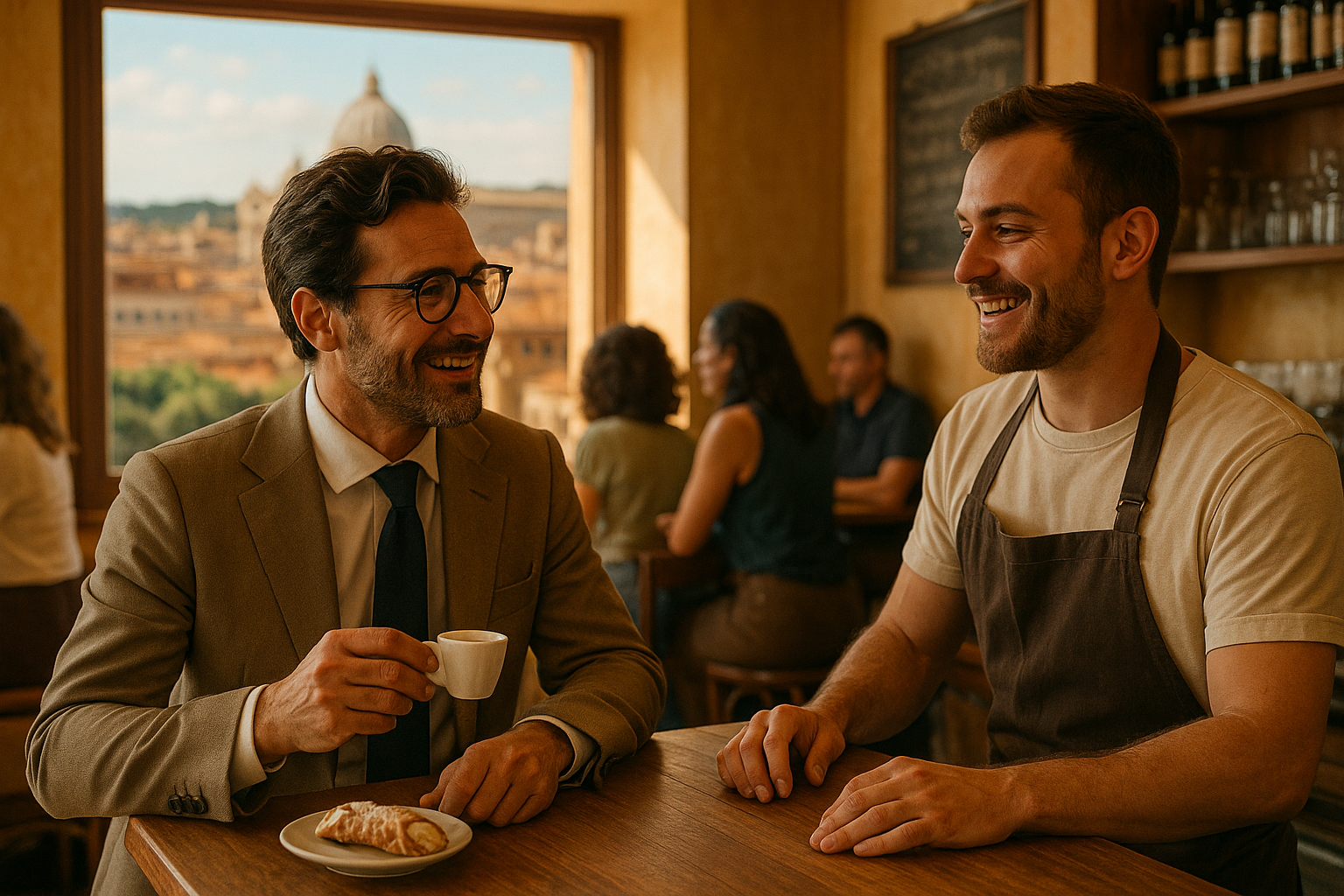
The Italian bar is not merely a place to grab a cappuccino on your way to work or sip an espresso after lunch; it is a cultural institution, a cornerstone of everyday life that reveals how Italians view community, ritual, and the simple pleasures of daily existence. To call it a “coffee shop” would be to miss its deeper significance, because the bar in Italy is both social hub and cultural marker, where conversations unfold, newspapers are spread across marble counters, and time itself seems to follow a rhythm measured in sips of coffee. It is a space that bridges private and public life, where everyone—from the businessman in a pressed suit to the retiree with a newspaper—has their own seat, their own drink, and their own ritual.
What strikes visitors most is how seamlessly the Italian bar weaves into the fabric of the day. From the early morning rush of locals grabbing a cappuccino and cornetto before heading to work, to the mid-morning pause for a quick espresso “al volo,” to the evening aperitivo hour when the bar shifts from a place of caffeine to a place of conversation, it feels less like an establishment and more like a heartbeat of the neighborhood. Every Italian, no matter their age or social class, has a “bar di fiducia”—a trusted bar where they know the barista by name, where their order is remembered, and where a familiar nod or smile reminds them that they belong.
Unlike coffee culture elsewhere, where cafés can be places of solitude, productivity, or elaborate seasonal menus, the Italian bar is built around brevity, tradition, and connection. An espresso takes no more than a minute to prepare, two minutes to drink, and yet in that short time an entire exchange happens—banter with the barista, a greeting to the person standing next to you, or even just a moment of personal reset. The brevity is part of its beauty: the Italian bar isn’t about lingering for hours but about weaving countless small pauses into the rhythm of daily life.
And yet, despite its efficiency, there is nothing hurried or soulless about it. In fact, the rituals of the bar reveal deeper truths about Italian culture: a respect for tradition, an appreciation of quality over quantity, and a belief that even the smallest acts—like sipping a perfectly made coffee—deserve to be savored. The Italian bar is at once simple and sophisticated, ordinary and extraordinary, an everyday necessity and a timeless ritual.
A Short History of the Italian Bar
The Italian bar as we know it today traces its origins back to the 19th century, when coffeehouses began to emerge in cities such as Venice, Turin, and Naples. These early establishments were not just about coffee; they were meeting places for intellectuals, revolutionaries, artists, and writers. From the literary gatherings in Florence to the political debates in Turin, bars served as incubators for ideas that shaped modern Italy.
Coffee itself had arrived in Venice in the 16th century, imported through trade routes with the Ottoman Empire. Initially a luxury reserved for the wealthy, it quickly gained popularity across all classes. By the late 19th century, with the invention of the espresso machine, coffee drinking in Italy became fast, convenient, and democratic—anyone could afford a shot of energy at the counter.
The bar evolved into what we see today: a place that opens early in the morning, serves everything from espresso to sandwiches to aperitivi, and caters to all walks of life. It became embedded into the very fabric of Italian daily rhythm.
What Makes the Italian Bar Unique?
Several factors distinguish the Italian bar from the concept of “cafés” elsewhere:
The Counter Culture
In Italy, most coffee is consumed standing at the counter. This tradition is both practical and cultural: it’s faster, it’s cheaper (sitting down often costs more), and it creates a communal atmosphere.The Coffee Itself
Italian coffee culture is famously minimalist. An espresso is just an espresso—no syrups, whipped cream, or flavor shots. The few variations (macchiato, cappuccino, caffè corretto) are defined by small tweaks rather than elaborate inventions.Timing is Everything
Italians have strict unwritten rules about when to drink what. Cappuccino or latte is for the morning only; ordering one after lunch brands you as a foreigner immediately. Espresso, however, is acceptable at any hour.The Integration of Food
Bars are not just for coffee. They serve pastries in the morning, panini at lunch, and aperitivi in the evening. A single bar transforms throughout the day to suit the rhythms of Italian life.The Social Element
A bar is as much about conversation as consumption. It is where neighbors greet each other, local gossip circulates, and friendships are maintained one espresso at a time.
Rituals of the Italian Bar
The Italian bar operates by rituals, many of them subtle but deeply ingrained.
Ordering: Typically, you first pay at the register, then bring your receipt to the barista to order your drink. Though some places allow you to order directly, knowing this ritual sets you apart from tourists.
The Quick Shot: An espresso is consumed quickly, often in two or three sips while standing. Italians do not linger over espresso the way foreigners often do.
The Morning Pastry: Breakfast at the bar is usually a cappuccino (or caffè latte) with a pastry, most commonly a cornetto. This ritual is less about indulgence and more about starting the day on a sweet, energizing note.
The Aperitivo Hour: By late afternoon or early evening, the bar transforms again. Glasses of Aperol Spritz, Campari Soda, or a simple glass of wine take over the counter, accompanied by small snacks. This ritual bridges the workday and the evening, offering a pause for social connection.
The Bar as a Reflection of Italian Culture
The Italian bar is not only about coffee or food; it encapsulates deeper cultural values:
Community Over Individuality: Unlike in many coffee shops where people sit alone on laptops, the Italian bar emphasizes presence and interaction. It reflects Italy’s communal spirit and preference for shared experiences.
Ritual and Structure: The unwritten rules of when to drink cappuccino or how to stand at the counter mirror Italy’s appreciation for order and tradition, even in casual contexts.
Accessibility: Coffee is affordable for all, making the bar a democratic institution where social classes blend seamlessly.
Pace of Life: While Italians are known for their leisurely meals, the bar is the opposite—quick, efficient, and energizing. This duality shows how Italians balance slow living with bursts of purposeful activity.
The Evolution of the Bar Today
In modern Italy, the bar continues to thrive despite international coffee chains attempting to make inroads. Starbucks, for example, only entered the Italian market recently, and its expansion has been limited. The reason is simple: Italians already have a coffee culture that works perfectly for them.
At the same time, bars have evolved. In cities like Milan and Rome, some have adopted more gourmet approaches, offering specialty blends and artisanal pastries. Others have embraced the role of “third place” by expanding their aperitivo offerings into full social evenings.
Yet the essence remains: the Italian bar is about ritual, community, and identity.
How to Experience the Italian Bar Like a Local
If you want to avoid standing out as a tourist, follow these tips:
Order cappuccino only in the morning.
Stand at the counter unless you specifically want table service.
Keep your order simple—espresso, macchiato, cappuccino.
Learn the basic lingo: “Un caffè” means an espresso, not American coffee.
Don’t expect to linger for hours; the bar is about quick enjoyment.
By embracing these habits, you will not only blend in but also appreciate the rhythm and beauty of Italian daily life.
FAQs About the Italian Bar
Q: Why do Italians drink coffee standing up?
A: It’s faster, cheaper, and creates a communal atmosphere at the counter.
Q: Can I order a cappuccino after lunch?
A: You can, but it’s seen as unusual. Cappuccino is considered a breakfast drink.
Q: Is tipping expected at the bar?
A: Not really. You can leave small change, but it’s not required.
Q: What’s the difference between “bar” in Italy and “bar” in English?
A: In Italy, “bar” means a café that serves coffee, pastries, and sometimes alcohol. It’s not primarily about nightlife.
Q: How much does coffee usually cost?
A: An espresso at the counter often costs around €1–1.50, making it accessible to everyone.
Q: Do Italians ever drink American-style coffee?
A: Some do order “caffè lungo” or “caffè Americano,” but espresso remains the standard.
Q: Are bars family-friendly?
A: Absolutely. Bars are community hubs where all generations come together.
Q: How many times a day do Italians go to the bar?
A: Many go at least twice—once in the morning for breakfast and once after lunch for an espresso.
Final Thoughts
The Italian bar is more than a place to drink coffee—it is a microcosm of Italian culture itself. It represents community, tradition, and the balance between efficiency and leisure. To step into a bar in Italy is to step into the heart of everyday life, where the simplest rituals hold the deepest meaning.
If you’re studying Italian or planning to travel to Italy, learning how to navigate the bar is one of the best cultural lessons you can give yourself.
At Polyglottist Language Academy, we don’t just teach you vocabulary and grammar—we give you the cultural context that makes language come alive. Our Italian classes are designed to help you understand not just how Italians speak, but how they live, connect, and celebrate everyday rituals like the bar. Whether online or in-person, we invite you to join us and immerse yourself fully in the beauty of Italian culture.
👉 Sign up today for our Italian courses and start your journey toward speaking (and living) Italian like a local.
Explore More from Our Blog
If you enjoyed this article, you may also like: