
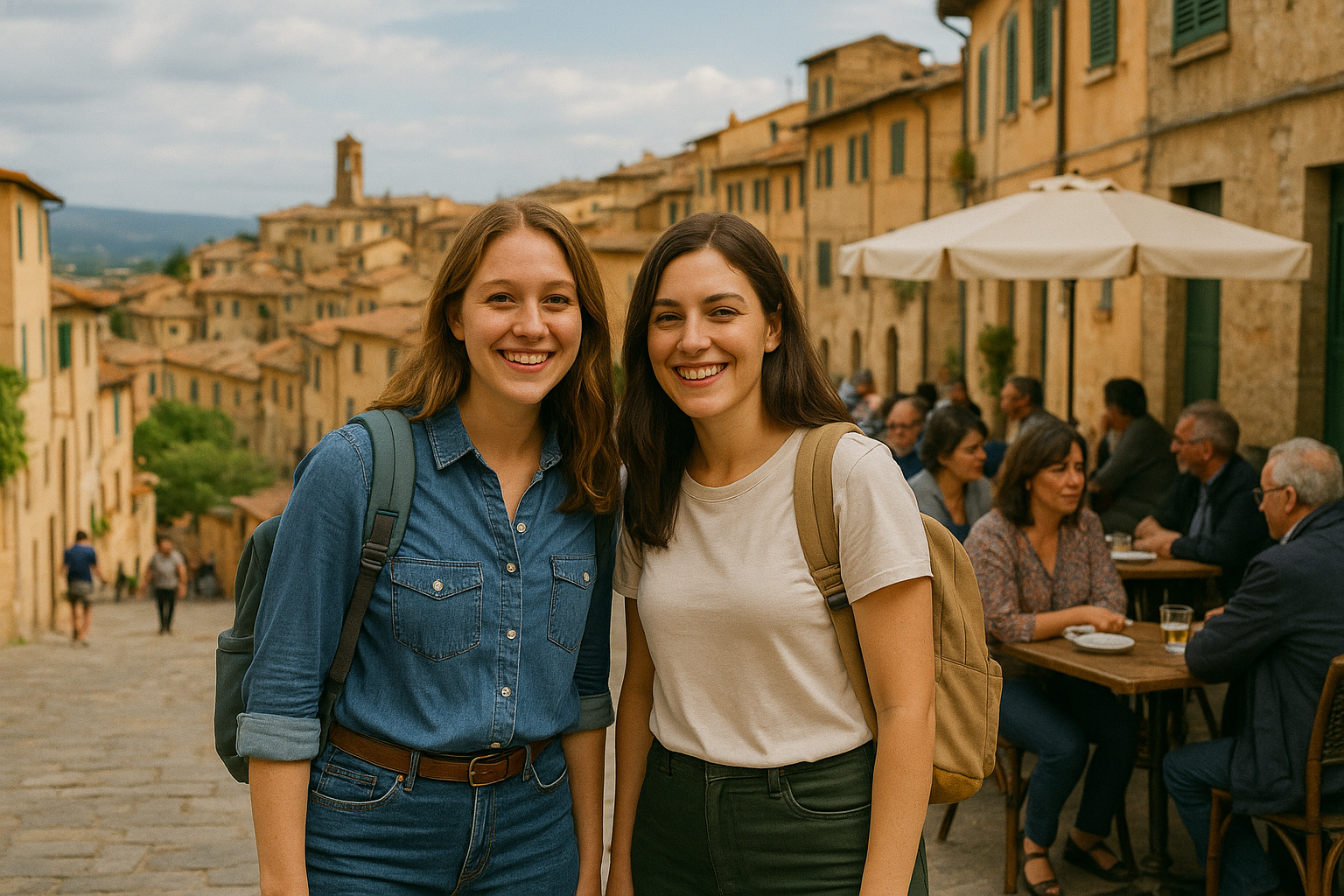
Introduction: Beyond Grammar and Vocabulary—The Real Italian Adventure
Picture yourself stepping off a train in Florence. The air is alive with shouts of vendors, the tang of espresso wafts from a nearby bar, and scooters zip by in a blur of chrome and bravado. You pause to ask someone for directions, carefully practicing the Italian phrase you memorized. The local smiles, responds at lightning speed, and gestures dramatically with their hands—using expressions and nuances that no textbook ever covered. Suddenly, your well-rehearsed sentence feels like just the first step in a much larger dance.
Learning Italian is not just about conjugating verbs or memorizing vocabulary lists. It’s about rhythm, attitude, social codes, and the beautiful chaos that is everyday Italian life. It’s about knowing how to order coffee without raising eyebrows, understanding why people say “Boh!” with a shrug, and grasping that sometimes “Subito!” doesn’t actually mean immediately.
Many language learners devote months—even years—to studying Italian in classrooms or through apps, only to arrive in Italy and feel like they’ve landed on a different planet. Why? Because the real secrets of speaking—and living—like an Italian are found not in books, but in the streets, markets, piazzas, and conversations of Italy itself.
This article is your invitation to dive into the magical intersection where the Italian language meets the Italian lifestyle.We’ll explore gestures, unwritten social rules, regional quirks, and those priceless cultural subtleties you can only absorb by being there. Whether you’re planning a trip, considering a longer stay, or just dreaming of la dolce vita, come along for a deep look at what truly makes Italian communication—and life—so wonderfully unique.
So grab an espresso (in a tiny cup, of course), settle into your favorite chair, and let’s uncover what you can only learn on the ground in Italy.
Italian Is More Than Words: The Power of Gestures
Start speaking Italian and sooner or later you’ll realize… your hands want to join the conversation.
In Italy, gestures aren’t an accessory—they’re a second language. They convey emotions, clarify meaning, and sometimes replace words entirely. For instance:
Ma che vuoi?! (hand bunched into a cone, shaken up and down)
→ “What do you want?!” or “What are you saying?!”Basta! (hand slicing the air horizontally)
→ “Enough!”Perfetto. (fingertips kissing, then opening outward)
→ “Perfect.”
These gestures add layers of expression that words alone can’t deliver. You won’t find them in grammar books, but on Italian streets, they’re essential communication tools.
The Pace of Life—and Language
One of the first surprises for visitors is how fast Italians speak. Even people who have studied Italian diligently can feel overwhelmed by rapid-fire conversations filled with idioms, slang, and casual contractions.
But there’s another rhythm to Italian life that contrasts with this speed: a willingness to pause, chat, and savor the moment. The famous “passeggiata,” the evening stroll through town, is a perfect example. Conversations happen at a leisurely pace, with time for jokes, stories, and local gossip.
Learning Italian on the ground teaches you to:
✅ Recognize when to match the tempo
✅ Slow down and enjoy small talk
✅ Understand that socializing is as important as information exchange
The Coffee Code
Many an unsuspecting traveler has walked into an Italian café and accidentally committed cultural crimes. Coffee is practically a sacred ritual, and the rules are subtle but serious:
Espresso is simply called “un caffè.” Don’t call it “espresso” unless you want to out yourself as a tourist.
Cappuccino is a morning drink. Ordering one after lunch or dinner might earn you puzzled looks.
Standing at the bar costs less than sitting at a table.
“Un caffè macchiato” is espresso “stained” with a bit of milk. Useful if you crave something less intense.
How This Connects to Language
Ordering coffee is a linguistic micro-lesson in politeness and cultural context:
🚫 Voglio un caffè. (I want a coffee.) → too direct
✅ Vorrei un caffè, per favore. (I’d like a coffee, please.) → polite and proper
Practicing these tiny rituals helps you blend in and builds confidence for larger conversations.
Greetings and Social Rituals
Italians greet each other with warmth, but also with specific rules:
Buongiorno until the afternoon, then Buonasera.
Air kisses (one on each cheek) for friends and family—but only if you know the person well.
Always greet shopkeepers upon entering and say goodbye when leaving.
These small gestures of courtesy go a long way in Italy. They’re part of the unwritten social contract that makes daily life smoother.
Language of Emotion
Italians express emotions vibrantly—sometimes dramatically. Phrases like:
Che bello! (How beautiful!)
Che schifo! (How disgusting!)
Dai! (Come on!)
Boh! (I don’t know / who knows?)
These expressions pepper conversations and give color and personality to the language. Studying Italian in class often focuses on neutral phrases, but real life in Italy is full of emotional shading.
Food Language: More Than Menus
Italy’s passion for food is legendary. But beyond delicious plates, food also shapes language and social life.
Regional Names: A pastry might be called “brioche” in Milan but “cornetto” in Rome. The same goes for sandwiches, rolls, and even pasta shapes.
Ordering nuances:
“Per me…” → A polite way to order. E.g. “Per me, un piatto di pasta.”
“Mi può portare…?” → Very polite: “Could you bring me…?”
Table Talk
Meals are prime time for conversation. Italians love discussing:
Recipes
Food memories
Seasonal ingredients
Local specialties
Joining these conversations improves your Italian and helps you connect culturally.
Regional Diversity: Italy Is Not One Language
Textbooks often teach a “standard” Italian. But regional differences can leave learners puzzled. Consider:
Dialects like Neapolitan or Sicilian, which can be nearly incomprehensible to outsiders.
Local slang and idioms unique to cities or provinces.
Regional food vocabulary that changes dramatically across short distances.
On the ground, you’ll learn how locals actually speak—and how to adapt.
Formality vs. Informality: Tu vs. Lei
Knowing when to use tu (informal) and Lei (formal) is crucial:
Use Lei with strangers, older people, and in formal settings.
Use tu with friends, family, and peers—but wait to be invited.
Even locals sometimes slip up, but getting this right earns you respect.
The Art of Conversation
Italians love lively discussions, but topics have unspoken rules:
✅ Safe topics:
Food
Travel
Culture
Sports
Local news
🚫 Sensitive topics (unless you know someone well):
Politics
Religion
Personal finances
Conversations are theatrical, with voice changes, gestures, and expressive faces. It’s part of the fun—and something no classroom can replicate.
Small Talk: Un’arte Italiana
Small talk is essential in Italy:
At shops: “Com’è andata la giornata?” (How was your day?)
At markets: Commenting on produce quality.
In queues: Sharing mild complaints or jokes.
These exchanges build connection and community—a big part of Italian social life.
The Concept of Time
Italians have a flexible relationship with time. A phrase like:
Subito! (Immediately!)
…might mean “in a minute,” “soon,” or even “later.” Learning this cultural elasticity is essential to avoiding frustration.
Learning Life Skills Through Language
On the ground, Italian becomes a tool for:
Reading timetables at train stations.
Asking for directions.
Haggling in markets.
Booking accommodation.
Complimenting a chef.
Each real-world encounter builds confidence and fluency far beyond textbook scenarios.
Italian Humor and Irony
Italians love humor, puns, and gentle teasing. You’ll notice:
Friendly sarcasm
Playful exaggeration
Humorous body language
Understanding humor requires cultural context—and immersion is the best teacher.
Embracing Mistakes
Perhaps the biggest lesson you’ll learn in Italy is that making mistakes is okay. Italians generally appreciate foreigners who try to speak their language. Smiles, gentle corrections, and encouragement are common responses.
Learning on the ground teaches you humility, resilience, and the joy of human connection—language imperfections and all.
A Journey of Language and Life
Learning Italian in Italy transforms your understanding of:
Language nuance
Social rituals
Emotional expression
Regional diversity
It also connects you to people and places in a way no app or textbook ever could.
Frequently Asked Questions (FAQs)
Q1: Can I learn Italian only online or in a classroom?
You’ll build a strong foundation online or in class, but the real fluency comes from practicing in everyday situations in Italy.
Q2: Is it okay if I don’t speak perfect Italian when I visit?
Absolutely! Italians appreciate the effort and often help you along. It’s better to try than to stay silent.
Q3: How long before I feel comfortable speaking Italian in Italy?
It varies. Many learners feel conversational in 6-12 months of regular practice, but comfort grows exponentially with immersion.
Q4: Will locals speak English to me?
In tourist areas, many do. But in smaller towns or local shops, Italian is essential. Even basic phrases will help you connect.
Q5: Do I have to use gestures when speaking Italian?
No—but gestures are fun and help convey meaning. You’ll naturally pick them up over time!
Q6: Is it expensive to live in Italy while learning?
Costs vary by region. Big cities are pricier; smaller towns offer affordable living and authentic immersion experiences.
Q7: Are regional dialects hard to understand?
They can be challenging! Stick with standard Italian at first, but learning a few local expressions helps you bond with locals.
Q8: What’s the best tip for blending in?
Observe, listen, and adapt. Polite greetings, proper ordering etiquette, and dressing neatly go a long way.
Bring Italy Into Your Life with Polyglottist!
At Polyglottist Language Academy, we believe that language and culture are inseparable. Our Italian classes go far beyond grammar, preparing you to navigate real conversations, cultural subtleties, and joyful moments you’ll only experience in Italy.
Ready to make Italian part of your life? Join us, and discover how learning Italian can be your passport to la dolce vita—both in language and in living.
Check Out More Articles On Our Blog!
Ready to dive deeper into Italian language and culture? Explore these articles:
From Ciao To Arrivederci: How To Master Italian Greetings And Goodbyes
Using “Piacere” Correctly In Italian (It’s Not Just ‘To Like’)
Aperitivo, Passeggiata & More: Everyday Italian Culture Through Language
Valle D’Aosta: Castles, Mountains, And The Taste Of Fontina Cheese
From Opera To Espresso: Explore Italian With Classes In Oakland
How To Ask Questions In Italian: Grammar, Tone, And Intuition