
The French Café as Cultural Classroom: Language + Life Tips
Introduction: Beyond Coffee—A Gateway to French Life
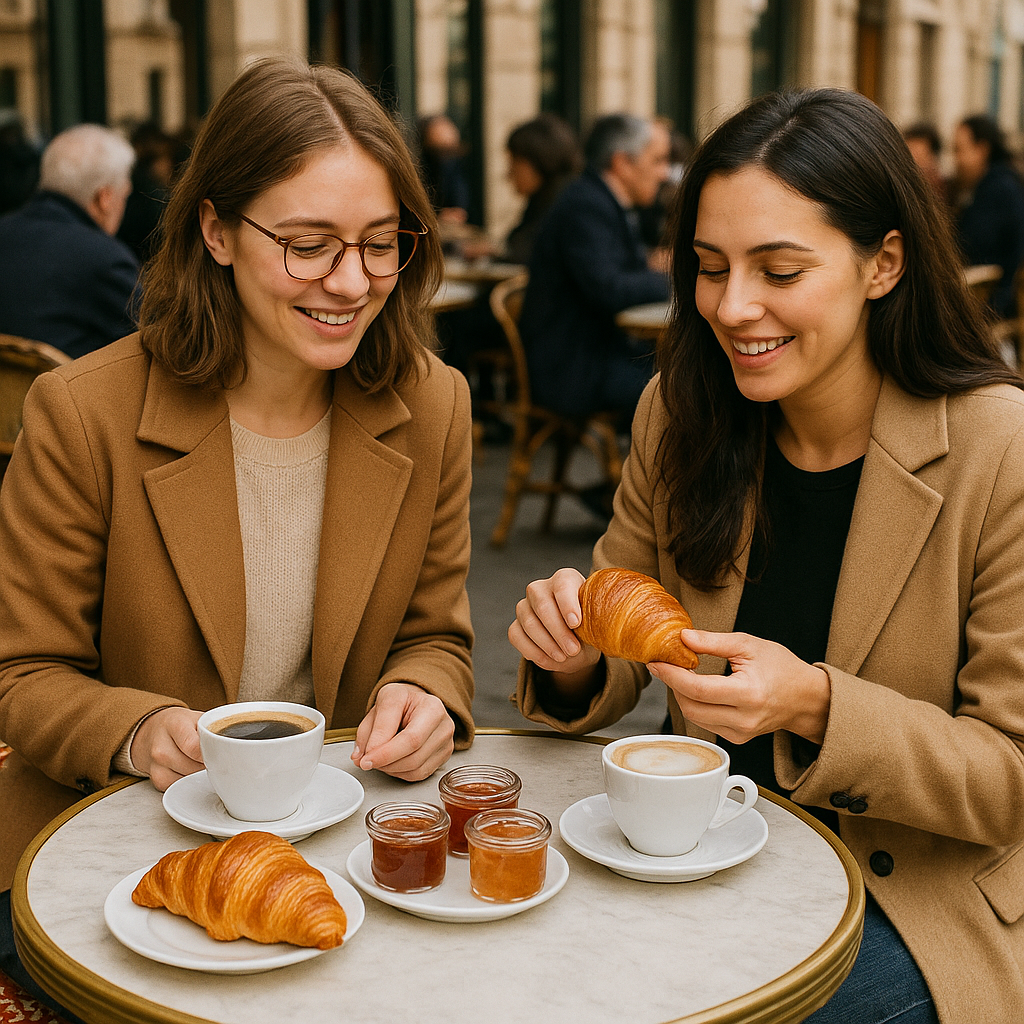
Imagine slipping into a wrought-iron chair on a Parisian sidewalk, the aroma of fresh espresso mingling with the crisp morning air. Sunlight glints off tiny spoons resting on saucers. Around you, a quiet ballet unfolds: a businessman gestures animatedly into his phone, a group of friends debates politics, an elderly woman flips through her newspaper, pausing only to greet the passing waiter with a knowing “Bonjour, Monsieur.” Nearby, a young couple, oblivious to the world, sits side by side, nursing tiny cups of coffee and whispering in French.
Here, time seems to stretch. Minutes drift into hours. Conversations ripple through the air in a seamless mix of laughter, philosophy, and small talk. The café isn’t simply a place to drink coffee—it’s a stage where life plays out, a hub of culture, community, and language.
Many travelers dream of this quintessential French café scene. Yet to fully experience it—and to avoid the awkwardness of rookie mistakes—it’s crucial to understand that cafés in France are not just eateries. They’re living cultural classrooms, places where etiquette, language, and the very rhythm of life come together in fascinating ways.
Whether you’re an aspiring French speaker, a cultural enthusiast, or simply a traveler who wants to savor your coffee like a local, the French café is your perfect entry point. It’s where you can observe, participate, and practice—learning the subtle dance of words, gestures, and social codes that define French daily life.
So settle in, sip slowly, and join us as we explore how the humble French café becomes your personal school for language and living well.
The Café as a Social Hub
Since the 17th century, French cafés have been more than just businesses—they’ve been vital threads in the fabric of community life.
Unlike coffee shops in many other countries, which sometimes cater to quick transactions and takeaway cups, French cafés are designed for staying. They’re the ultimate “third place”—not home, not work, but a communal refuge where people of all backgrounds come together.
Why is the café so central?
A Meeting Point: Friends arrange to catch up at cafés. Couples go for dates. Even solo visitors feel at home, surrounded by the low hum of conversation.
People-Watching Paradise: The café terrace offers a front-row seat to the theatre of urban life. Parisians, in particular, have turned people-watching into an art form.
Intellectual Hubs: Historically, cafés were breeding grounds for revolutionary ideas, artistic movements, and literary works. Voltaire, Sartre, Hemingway—all found inspiration in cafés.
A Sense of Belonging: Whether you’re a regular or a visitor, the café makes you feel connected. It’s public yet intimate, bustling yet personal.
In France, stepping into a café is like stepping into the rhythm of local life—a gentle reminder that life is not just about moving forward, but also about pausing to savor the moment.
Language Lessons in Real Time
Think of the French café as your free language laboratory. It’s an extraordinary place to practice listening, speaking, and absorbing the natural flow of French speech.
Here’s how:
Greet Properly
Always, always greet staff and fellow patrons. Failing to do so is considered rude.
✅ Say “Bonjour, Monsieur/Madame” when entering.
✅ When leaving, always say “Au revoir” or “Bonne journée.”
These small courtesies set the tone for all your interactions.
Ordering with Politeness
Never bark your order like a command. The French favor polite phrasing:
🚫 Je veux un café. → too blunt.
✅ Je voudrais un café, s’il vous plaît. → polite and respectful.
Even if your accent isn’t perfect, polite phrases open doors and earn you goodwill.
Use Formality
Address strangers and café staff formally:
Use vous instead of tu unless invited otherwise.
Always include Monsieur or Madame when speaking to staff.
Listen and Learn
Cafés are perfect for eavesdropping—politely, of course. You’ll pick up:
Everyday vocabulary
Local slang
French intonation and rhythm
Idiomatic expressions
Consider bringing a notebook to jot down words or phrases you hear.
Café Etiquette: Life Tips for Blending In
While the French café is welcoming, it’s also governed by subtle social codes. Here’s how to blend in like a local:
Seating
Outdoors? Generally, seat yourself at any empty table.
Indoors or crowded places? Ask politely:
“Une table pour deux, s’il vous plaît.”
Choosing the right seat is part of the café ritual—outdoors for people-watching, indoors for coziness or conversation.
Take Your Time
Unlike fast-paced American coffee shops, the French café experience is about lingering. Don’t rush your drink or meal. It’s perfectly normal to sit for hours over one espresso.
✅ Read a book
✅ Write in a journal
✅ Simply watch the world go by
There’s no pressure to leave quickly—your table is your space for as long as you wish.
Tipping
Service is already included in your bill (look for “service compris”). But:
✅ Rounding up the bill or leaving €1–€2 is appreciated for good service.
✅ Cash tips are preferred for small amounts.
Expect Space
French servers won’t hover. They respect your privacy, checking in only when signaled. It’s not neglect—it’s courtesy.
Need service? Catch the server’s eye or raise your hand slightly.
No Laptop Villages
Cafés are not coworking spaces. While you might write postcards or read on a laptop briefly, working for hours on end is frowned upon. The café is for conversation and relaxation.
Conversation and Connection
One of the greatest joys of a French café is conversation. The French see dialogue as an art form, and cafés are ideal stages for it.
Topics often discussed:
Art and literature
Films and culture
Music
Local news
Travel
What to Avoid
Unless you know your companions well, steer clear of:
🚫 Politics
🚫 Religion
🚫 Personal finances
These subjects can quickly become heated or intrusive in casual café settings.
How to Engage
Try phrases like:
✅ “Qu’est-ce que vous pensez de… ?” (What do you think about…?)
✅ “Est-ce que vous connaissez… ?” (Are you familiar with…?)
French conversations thrive on curiosity and shared knowledge. Asking thoughtful questions shows interest and respect.
Dress and Demeanor
The French café is a public stage, and appearance matters. You don’t need designer clothes, but you should look neat and presentable.
Aim for smart casual over ultra-casual.
Good shoes matter—a true French obsession.
Maintain polite body language. Loud, boisterous behavior is considered disruptive.
Café Life as a Cultural Mirror
The café encapsulates many French cultural values:
Savoring life’s moments rather than rushing.
The art of polite interaction.
Respect for personal space.
Appreciation for quality over quantity.
Conversation as a form of connection and entertainment.
By embracing café culture, you’re not just drinking coffee—you’re stepping into the flow of French daily life.
Key Takeaways
✅ Always greet staff and fellow patrons.
✅ Use polite, formal French when ordering.
✅ Sit where you wish outdoors, but ask inside.
✅ Linger and savor your time—there’s no rush.
✅ Keep laptops away; cafés are for conversation and observation.
✅ Dress neatly and act with consideration.
✅ Practice listening and speaking French in real-life contexts.
✅ The café is your cultural classroom—embrace it!
Frequently Asked Questions (FAQs)
Q1: Can I stay for hours with just one drink?
Yes! The French café tradition encourages lingering. One coffee can buy you hours of people-watching or reading.
Q2: Should I tip in cafés?
Service is included, but leaving a euro or two for good service is appreciated.
Q3: Can I work on my laptop?
Short bursts are acceptable, but extended laptop sessions are discouraged. Cafés are social spaces, not remote offices.
Q4: Do I need to speak perfect French?
Not at all! Even simple phrases earn respect. Politeness matters more than perfection.
Q5: Is it rude to call the server immediately?
Yes. French servers give you space and will approach when you’re ready. Catch their eye or subtly raise your hand when you want to order.
Q6: How do I order coffee properly?
Use polite forms:
“Je voudrais un café, s’il vous plaît.”
Q7: Can I take my coffee to go?
Many cafés offer takeout now, but traditionally, coffee is enjoyed in-house. Lingering is part of the experience.
Q8: Are cafés open all day?
Mostly, yes, though hours vary. Many open early for breakfast and stay open through dinner or later.
Make the French Café Part of Your Story!
The next time you find yourself in France—or in any French-speaking city—step into a café and stay a while. Order your coffee with care, listen to conversations, and observe how language and culture intertwine. Every café visit is a chance to practice speaking, pick up new phrases, and connect with the heart of French life.
At Polyglottist Language Academy, we believe that language learning should be immersive, joyful, and culturally rich. Our French classes don’t just teach vocabulary—they help you navigate real-life settings like cafés, markets, and social gatherings.
Ready to bring your French to life? Join us and make your next café visit an adventure in language and culture!
Check Out More Articles On Our Blog!
Want more insights into French culture and language? Explore these reads:
Learning French For Travel: The Fast-Track Plan For Last-Minute Trips
When French Gets Philosophical: How To Talk About Life, Love, And Meaning
French For Abstract Thinkers: Expressing Complex Ideas Like A Native
Why Fluent French Isn’t Perfect French—And Why That’s A Good Thing
Street French Vs. School French: What You’ll Hear Vs. What You Learn
What Learning French Teaches You About English (Yes, Really!)
10 “Invisible Words” In Spoken French That Aren’t In Your Textbook
From Oui To Oops: The Funniest Mistakes French Learners Make (And What They Teach Us)