
Introduction: More Than Just Hours on a Clock
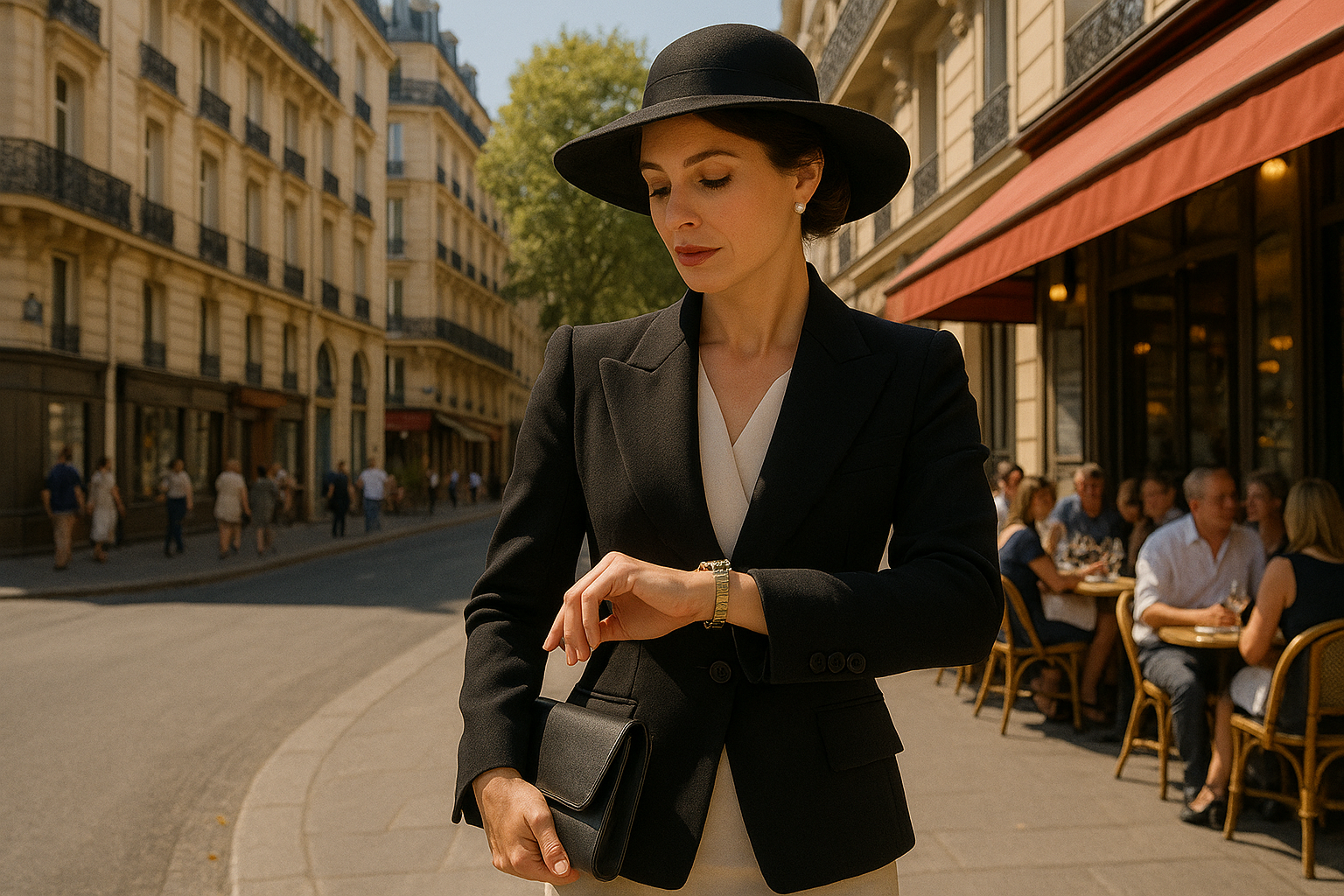
Picture this: It’s a sunny Tuesday afternoon in Paris. Outside a brasserie on a bustling boulevard, clusters of people linger over tiny cups of espresso. Conversation flows, laughter erupts, and the clink of cutlery against porcelain is music against the hum of passing traffic. Time seems to stretch, suspended in the gentle rhythm of life. Across the Atlantic, meanwhile, in a high-rise office in New York, a clock ticks loudly on a wall, counting down minutes to the next meeting. Lunch is a sandwich eaten over spreadsheets, and the notion of lingering is a luxury few can afford.
Two worlds. Two philosophies of time.
Many people arrive in France armed with stereotypes: that the French are chronically late, that schedules mean nothing, and that chaos reigns supreme. Yet these notions are oversimplified—and often deeply misleading. The reality is far more fascinating and nuanced.
The French certainly care about time. They value efficiency and precision—witness the widespread use of the 24-hour clock and the precision with which chefs time their sauces. Yet woven into the national character is a profound belief that life is to be lived, not merely scheduled. There’s an art to time in France: it’s measured, but it’s also elastic. It’s structured, yet leaves room for spontaneity and pleasure.
This article is your invitation to step behind the scenes of how the French perceive time and schedules. We’ll explore laws, traditions, and everyday habits that make French time management unique—from leisurely meals and protected vacation time to the celebrated “right to disconnect.”
So whether you’re planning to live, work, or simply travel in France—or you’re a language lover fascinated by cultural insights—pour yourself a coffee, slow down for a moment, and join us as we explore how the French view time differently.
A Sophisticated Yet Flexible Approach to Time
The French relationship with time is like fine tailoring: precise where it matters, flowing where it counts. Unlike some cultures where “time is money,” the French perspective sees time as both practical and philosophical—a resource to be respected, but never to overshadow life’s joys.
Consider the 24-hour clock, a staple of French life. While Americans typically say “3 p.m.,” the French will say “15 heures.” This habit reflects a cultural preference for clarity and avoiding misunderstandings. Yet even with this precision, the French language is filled with fluid expressions—maintenant (now), tout de suite (right away), or bientôt (soon)—that can feel delightfully imprecise to outsiders.
This duality—the respect for schedules, coupled with linguistic and cultural flexibility—is a key feature of how the French approach time.
Work Schedules and the Value of Leisure
One of the most striking differences for many foreigners is the French approach to work hours. Since the early 2000s, French law has capped the official workweek at 35 hours for most employees. The goal? Work-life balance and reduced unemployment.
Of course, in practice, things vary:
Managers (les cadres) often work longer, but earn additional rest days called RTT (Réduction du Temps de Travail) as compensation.
French law mandates at least 11 consecutive hours of rest between workdays—a regulation designed to protect health and personal time.
Overtime is strictly regulated, and employees enjoy strong protections against exploitation.
Perhaps most tellingly, vacation in France is a right, not a perk. Workers are entitled to at least five weeks of paid vacation annually, and many take even more. Extended summer holidays—particularly in July and August—are a cultural institution. Businesses slow down or even shutter for weeks, prompting newcomers to wonder if the entire country has disappeared.
This approach reflects the French conviction that life is not meant to be consumed entirely by work. Time off is sacred, and leisure is not indulgence—it’s necessity.
The Right to Disconnect
One of the most revolutionary expressions of the French philosophy of time is the Right to Disconnect. Instituted in 2017, this law grants employees at companies with more than 50 people the legal right to ignore work emails and calls outside working hours.
Imagine the shock this induces in cultures where “available 24/7” is practically a badge of honor. For the French, however, constant availability is not a virtue. Boundaries are essential. Personal time is inviolable.
This law acknowledges the dangers of modern technology in blurring work-life lines and underlines that while the French can be industrious, they refuse to let work consume their identity.
Punctuality: Flexible Yet Respectful
It’s a persistent stereotype that the French are always late. Like many cultural clichés, it’s partly rooted in truth—but only partly.
In professional settings, punctuality is important. Being late for a business meeting, especially with unfamiliar partners, risks appearing disrespectful. However, there’s also tolerance for small delays. A five-minute wait isn’t viewed as catastrophic but as a normal fluctuation of life.
Socially, the rules become even more flexible. When invited to dinner, arriving exactly on time can actually be awkward; arriving 10-15 minutes late is often polite, giving hosts extra time to prepare.
As one French saying goes:
“Cinq minutes, ça ne gâche pas la vie.”
Five minutes doesn’t ruin your life.
Time matters in France—but so does context.
Meals as a Reflection of Time Values
Perhaps nowhere is the French attitude toward time more visible than in the way they dine.
In many Anglo-American workplaces, lunch is a pragmatic affair: 30 minutes, maybe an hour, often spent at a desk. In France, lunch is a social ritual. Even a basic lunch can stretch over an hour or two, accompanied by conversation, laughter, and perhaps a small glass of wine.
Key features:
Duration: Lunch typically lasts 1-2 hours. Dinners can be longer.
Quality over speed: Meals are savored, not rushed.
Conversation: Dining is as much about human connection as sustenance.
For the French, food and time are intertwined. Meals are moments to pause, connect, and experience pleasure. Rushing through them is almost a cultural taboo.
Seasonal Rhythms and Business Decisions
Another profound way the French manage time is through their seasonal rhythms.
May: Bursting with public holidays, from Labor Day (Fête du Travail) to Ascension and Pentecost. Many people take extra days to create “les ponts” (bridges), turning single-day holidays into long weekends.
July-August: Summer vacation season. Cities like Paris partially empty, and business slows significantly.
December: Another slowdown as people focus on family and festivities.
This rhythm impacts business. Meetings and big decisions are often scheduled around these holidays. Foreign partners sometimes struggle with what feels like sudden, widespread disappearances of colleagues for weeks at a time.
In contrast, North American business tends to hum along steadily all year, with shorter breaks and less seasonal ebb and flow.
Why the Difference?
Why do the French view time so differently?
Philosophy of Life: Rooted in existentialism and a long cultural tradition, the French believe in enjoying life’s small pleasures. Time is a medium for living, not merely a commodity to spend.
Historical Roots: Agricultural cycles and Catholic feast days historically shaped French life, creating a culture attuned to seasonal rhythms.
Labor Laws: Strong worker protections have enshrined work-life balance in law, reinforcing cultural values.
In France, time is something to respect—but not to let rule your life. It’s both a framework for order and a canvas for joy.
What It Means for Learners and Visitors
Understanding how the French view time is crucial if:
You’re working with French colleagues: Recognize the importance of vacation periods and respect boundaries around personal time.
You’re traveling in France: Don’t expect 24/7 business. Enjoy the slower pace, especially during meals.
You’re learning French: Language and culture are inseparable. Knowing cultural time habits makes your communication smoother and your experience richer.
Frequently Asked Questions (FAQs)
Q1: Are the French really always late?
No, not exactly. In professional contexts, punctuality is respected, though minor delays are tolerated. Socially, arriving slightly late can even be polite.
Q2: Will I have trouble finding places open in August?
Some businesses, especially smaller ones, close in August. Major tourist attractions remain open, but plan ahead for regional closures.
Q3: Is it rude to check my phone during a meal?
Very! French meals are social occasions. Constant phone-checking is considered impolite and disruptive.
Q4: Do I need to use the 24-hour clock?
It’s wise, especially for schedules, tickets, and formal contexts. It helps avoid confusion.
Q5: Will people get annoyed if I’m early for social events?
Arriving exactly on time can sometimes feel intrusive. For dinners, a 10-15 minute delay is often expected.
Q6: Can I schedule meetings during French holidays?
It’s risky. May, July, August, and December are packed with holidays and vacations. Best to confirm availability well in advance.
Q7: Why are meals so long in France?
Eating is a cultural ritual, not just refueling. Meals are times for social connection, relaxation, and pleasure.
Q8: What’s the “Right to Disconnect”?
It’s a French law allowing employees to ignore work emails or calls outside of working hours, protecting personal time.
Embrace Time the French Way!
Learning about the French relationship with time gives you more than facts—it offers you a glimpse into how an entire culture savors life. Whether it’s enjoying an unhurried lunch, respecting the sacredness of vacation, or simply learning to slow down, the French remind us that time isn’t only about productivity—it’s about living.
At Polyglottist Language Academy, we believe language learning should open doors to cultural understanding. Join our French classes and discover not just words, but the world behind them. Our small, engaging groups and passionate teachers will help you learn to speak—and think—like a true Francophone.
Ready to start your own French adventure? Sign up today and bring a bit of France’s beautiful relationship with time into your own life!
Check Out More Articles On Our Blog!
Curious to dive deeper into French language and culture? Explore these reads:
Learning French For Travel: The Fast-Track Plan For Last-Minute Trips
When French Gets Philosophical: How To Talk About Life, Love, And Meaning
French For Abstract Thinkers: Expressing Complex Ideas Like A Native
Why Fluent French Isn’t Perfect French—And Why That’s A Good Thing
Street French Vs. School French: What You’ll Hear Vs. What You Learn
What Learning French Teaches You About English (Yes, Really!)
10 “Invisible Words” In Spoken French That Aren’t In Your Textbook
From Oui To Oops: The Funniest Mistakes French Learners Make (And What They Teach Us)