
From Sacramento to Paris: One Student’s Online French Learning Journey
Introduction: When Dreams Speak Another Language
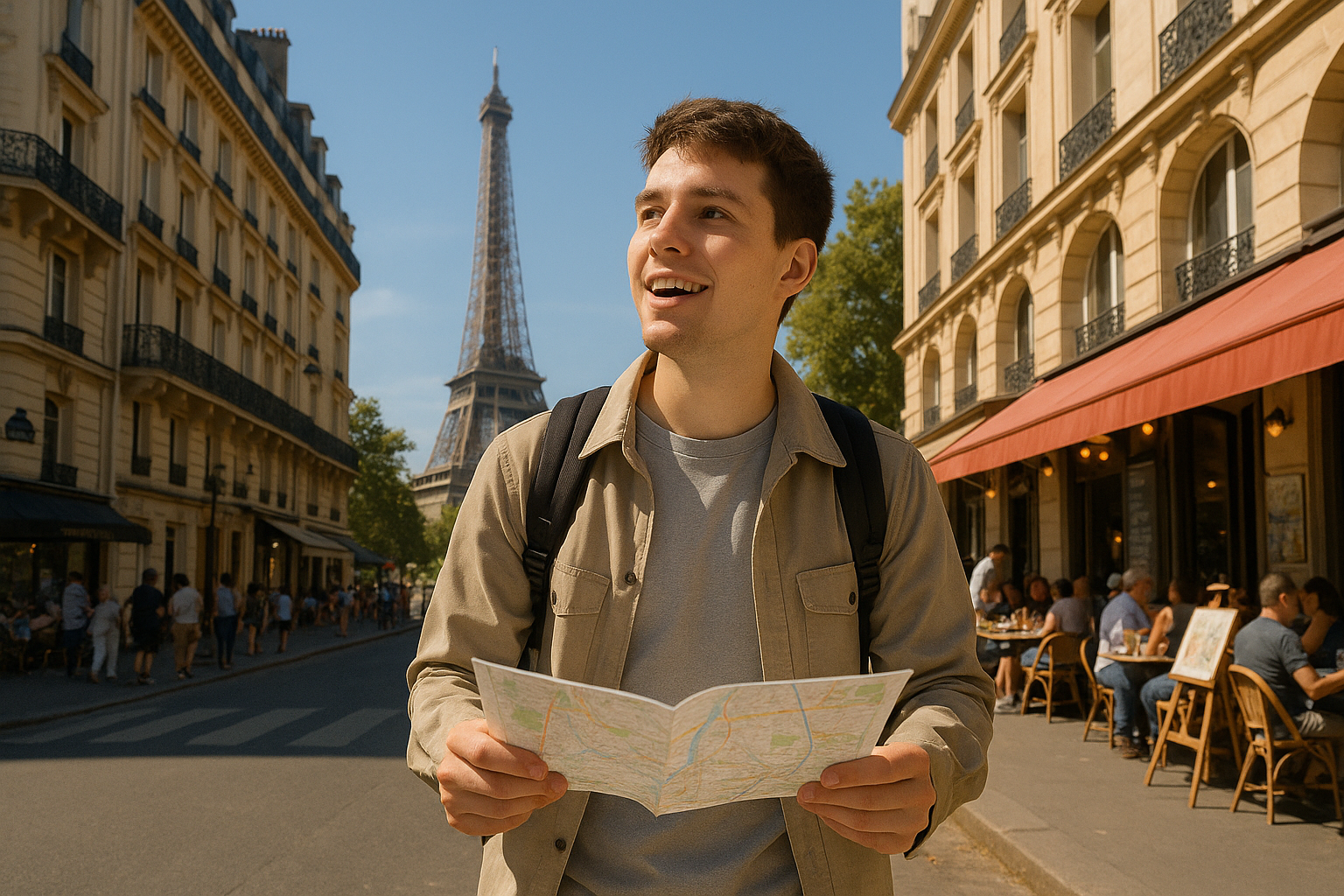
Imagine standing under the Eiffel Tower, the scent of warm crepes wafting through the air, as a street musician plays an accordion tune that seems pulled straight from a movie. The crowd around you chatters in rapid French, each phrase flowing like music. You lean in, eager to catch the words… and suddenly realize—you understand them.
For countless people across the globe, French is more than a language. It’s the key to another life. It’s a passport to literature, travel, art, cuisine, new friendships, and an entire world view. Yet for many, the idea of learning French feels intimidating or out of reach, a task reserved for polyglots or lifelong academics.
But what if I told you that even from your living room in Sacramento—or anywhere else in the world—you could learn to speak French confidently, and open doors you never imagined?
This is the story of Alex, a student from Sacramento who decided that his dream of experiencing Paris wasn’t going to wait for “someday.” With nothing but a laptop, determination, and a deep love of French culture, Alex embarked on an online learning journey that would transform his life, sentence by sentence, until he finally landed in Paris with the confidence to speak his mind—and his heart.
This isn’t just Alex’s story—it’s a window into how modern language learning, fueled by technology and passionate teaching, is changing lives in profound and very human ways. It’s proof that French isn’t merely a subject you study—it’s a bridge to becoming a different version of yourself.
So pour yourself a café, settle in, and follow Alex from Sacramento to Paris. Because who knows? By the end of this article, you might be ready to start your own journey too.
Chapter 1: Why French?
When Alex first decided he wanted to learn French, it wasn’t for a job requirement, a test, or academic prestige. It was because Paris was calling.
He’d grown up enchanted by the city’s portrayal in films and novels—cobblestone streets glowing under lamplight, smoky jazz clubs, people in chic coats sipping espresso at sidewalk cafés. And while he loved the beauty of these images, Alex wanted something more real. He wanted to connect. To speak to Parisians in their own language. To not just visit Paris—but to belong there, even briefly.
Many learners begin like Alex. French appeals because it feels elegant, romantic, and cultured. It’s the language of Molière and Edith Piaf, of fine wine and philosophy, of revolutions and love letters. But it’s also simply practical: spoken on five continents, used in diplomacy, business, and tourism. For Alex, though, it was personal. French was the language of his dream life.
Yet, there was a problem: Alex had zero French.
Chapter 2: The Online Learning Leap
Alex’s first instinct was to enroll in a community college class, but the rigid schedule clashed with his work as a freelance graphic designer. He explored apps, but quickly felt lonely and frustrated. “I kept hearing the same robotic voices,” he recalls. “I didn’t know if I was saying things correctly or if a real person would understand me.”
Then he stumbled onto Polyglottist Language Academy’s online French classes.
What appealed to him:
Small group sizes (3-6 students)
Live, interactive sessions with a native-speaking instructor
A curriculum that balanced conversation, grammar, and cultural insights
Flexible scheduling to fit his freelance lifestyle
A vibrant community of learners from all over the world
Most importantly, Alex wanted a human connection. He wanted someone to answer his questions, correct his pronunciation, and explain not just how to say things—but why they were said that way.
Chapter 3: Starting From Scratch
Alex joined a beginner group class. His instructor, Camille, greeted each student warmly, speaking slowly and encouragingly. Right away, Alex felt a huge difference from learning alone.
“At first, I was terrified even to say ‘Bonjour,’” Alex admits. “But Camille made us speak from Day 1. She’d ask me simple questions:
Comment tu t’appelles ? (What’s your name?)
Tu habites où ? (Where do you live?)
Qu’est-ce que tu aimes ? (What do you like?)
We’d respond in French, even if we stumbled over words. It made me feel brave.”
His classmates were diverse: a nurse from Denver, a retiree from Toronto, a college student from Seoul. But all shared a single goal—to communicate in French. Camille crafted exercises that mimicked real life: ordering coffee, making small talk, describing family, and navigating a Parisian market.
Alex’s confidence began to grow.
Chapter 4: Conquering the Pronunciation Beast
French pronunciation can be daunting. Silent letters lurk everywhere, nasal vowels twist the tongue, and that notorious French “R” sounds like a gargle gone awry.
Alex struggled. “At first, I felt ridiculous trying to say words like ‘rue’ or ‘croissant.’ I kept sounding like a cartoon character.”
Camille offered targeted practice:
Short drills focused on tricky sounds
Repetition with feedback
Breaking words into syllables
Laughing together when mistakes happened
Instead of feeling embarrassed, Alex realized that even native speakers once struggled as kids. Camille taught him that mistakes weren’t failures—they were stepping stones.
“Eventually, I could say ‘rue de Rivoli’ without feeling like my tongue was in a knot,” Alex laughs.
Chapter 5: Culture as Language
Alex’s classes weren’t just grammar charts and vocabulary lists. Camille integrated culture into every lesson:
French dining etiquette
How to greet strangers formally or informally
The art of the French shrug
Parisian slang and filler words (genre, quoi, bah, etc.)
Understanding humor and irony
“The cultural tips were gold,” Alex says. “I realized learning French wasn’t just about words—it was about mindset.”
He learned why saying bonjour matters so much before asking a question in a shop, and how French people view politeness differently than Americans.
Chapter 6: Hitting the Intermediate Wall
Like many learners, Alex hit what’s often called the Intermediate Plateau. He could handle conversations—but speaking smoothly felt elusive.
“I knew the words,” he explains, “but real conversations were so fast. I’d freeze.”
Camille introduced strategies:
Listening to authentic French podcasts
Watching French YouTubers with subtitles
Practicing summarizing news articles aloud
Doing role plays of spontaneous conversations
Slowly, Alex’s comprehension and speaking agility improved. He stopped translating in his head and started thinking in French.
Chapter 7: Building Confidence for Paris
After a year, Alex booked a ticket to Paris.
He was nervous—but determined. He practiced travel scenarios:
Checking into hotels
Ordering meals
Asking directions
Chatting casually with strangers
Polyglottist Language Academy even offered him a private coaching session focused on Paris-specific language. Camille drilled him on polite phrases for various situations, local expressions, and cultural do’s and don’ts.
“I felt prepared. I knew I wouldn’t be perfect, but I’d be able to connect.”
Chapter 8: Paris at Last
Standing in the middle of Paris, Alex finally tested his skills. He ordered a coffee without switching to English. He chatted with a vendor at a marché about strawberries from Provence. He asked for metro directions and understood the response.
Were there moments he stumbled? Of course. But the joy outweighed the mistakes.
“I felt like I’d stepped into the movie I’d watched all my life—but this time, I was in the story,” Alex says.
By his last day, he was joking with waiters, complimenting a chef, and navigating conversations he never thought possible.
Chapter 9: Beyond Language—A New Identity
Learning French gave Alex more than words. It gave him:
Confidence in speaking up
A deeper appreciation of another culture
Friends across continents
The courage to travel solo
“I feel like a new version of myself,” Alex reflects. “French opened my world.”
Chapter 10: Lessons for Future Learners
Alex wants others to know:
✅ Don’t wait for perfect circumstances. Start now.
✅ Find a human connection—classes or tutors who make you speak.
✅ Embrace mistakes. They’re proof you’re learning.
✅ Immerse yourself outside class: music, podcasts, YouTube, French TikTok.
✅ Set a real goal (like a trip!) to stay motivated.
✅ Celebrate your progress—even the small victories.
Frequently Asked Questions (FAQs)
Q1: Can I really learn French online if I’ve never studied it before?
Absolutely! Alex started with zero French. A structured online class provides guidance, accountability, and real-life practice—something apps alone can’t give.
Q2: How long before I’m conversational?
It varies, but many students reach basic conversation in 4-6 months with regular practice. Alex was confidently speaking after a year.
Q3: Is French pronunciation really that hard?
It’s tricky at first—but not impossible! Good teachers break it down and help you practice until it feels natural.
Q4: I’m shy about speaking. How do I get over it?
Start in a safe environment with supportive teachers and classmates. Speaking early and often builds confidence fast.
Q5: Do online classes feel impersonal?
Not at all! Small groups and live interaction create community and friendships—even virtually.
Q6: How much time should I study weekly?
Even 20-30 minutes daily makes a difference. Consistency matters more than long, occasional sessions.
Q7: Can I learn French just for travel?
Yes! Many students learn enough for basic interactions on vacation, then keep going because they fall in love with the language.
Q8: What’s the best tip Alex would give new learners?
“Speak from Day One. Even if it’s just ‘Bonjour’ or ‘Ça va?’. You’ll be amazed how quickly you improve.”
Your French Adventure Awaits!
Alex’s journey proves that learning French online is not only possible—it’s transformational. Whether your goal is travel, new friendships, cultural exploration, or personal growth, French can be your gateway.
At Polyglottist Language Academy, we’re passionate about helping students like Alex unlock new worlds through language. Our small classes, experienced instructors, and lively community make learning French fun, practical, and inspiring.
Ready to begin your own French journey? Sign up today and let’s turn your “someday” into aujourd’hui.
Check Out More Articles On Our Blog!
Want more inspiration and practical tips? Explore these great reads:
Learning French For Travel: The Fast-Track Plan For Last-Minute Trips
When French Gets Philosophical: How To Talk About Life, Love, And Meaning
French For Abstract Thinkers: Expressing Complex Ideas Like A Native
Why Fluent French Isn’t Perfect French—And Why That’s A Good Thing
Street French Vs. School French: What You’ll Hear Vs. What You Learn
What Learning French Teaches You About English (Yes, Really!)
10 “Invisible Words” In Spoken French That Aren’t In Your Textbook
From Oui To Oops: The Funniest Mistakes French Learners Make (And What They Teach Us)