
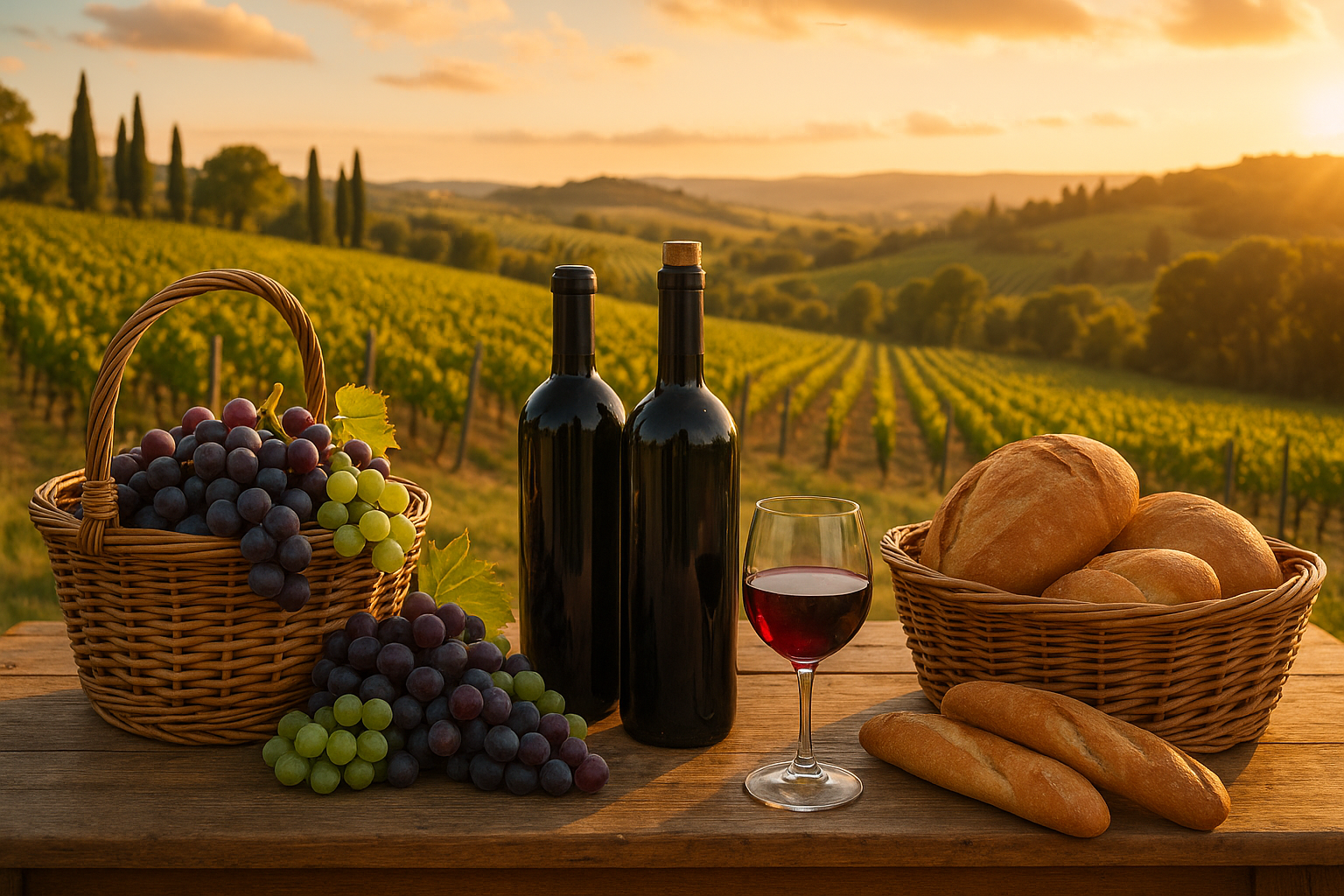
In Italy, wine is not simply a drink—it is a language, a ritual, and a mirror of the country’s history and identity. To Italians, a glass of wine is more than fermented grapes: it is geography you can taste, ancestry you can sip, and culture you can share at the table. Unlike many places in the world where wine is a luxury or a weekend indulgence, in Italy it is an everyday companion, woven seamlessly into meals, conversations, and celebrations. Every bottle carries with it the story of a region, a climate, and a community. It is impossible to understand Italy fully without understanding its wines, because wine is one of the most enduring expressions of how Italians connect to the land, to one another, and to life itself.
Italy is the world’s largest wine producer, but sheer volume tells only part of the story. What makes Italian wine so remarkable is its staggering variety. There are more than 350 officially recognized grape varieties, and countless local ones cultivated in small valleys and hillsides that never appear in export lists. The crisp, alpine whites of Alto Adige taste nothing like the bold, volcanic reds of Sicily, and neither resembles the elegant Tuscan Sangiovese or the sparkling joy of Veneto’s Prosecco. Each region tells its own tale through wine, and those tales are as diverse as Italy’s dialects, cuisines, and landscapes. To travel from north to south is to move through an ever-changing tapestry of flavors, textures, and traditions.
Italian wines are also deeply tied to geography and tradition. Unlike in countries where wines are marketed primarily by grape varietal—Cabernet, Chardonnay, Pinot Noir—in Italy, wines are inseparable from the soil and the region they come from. To say Chianti is to evoke Tuscany, Barolo is to summon Piedmont, Etna Rosso is to point directly to the volcanic slopes of Sicily’s famous mountain. Italians think of wine as something rooted in place, inseparable from the identity of the land and the people who cultivate it. For this reason, ordering wine in Italy often feels like ordering a piece of geography in a glass.
But wine is not only about terroir; it is also about words. Italians use vocabulary that is essential for navigating menus, wine lists, and everyday conversations. Asking for un bicchiere di vino rosso della casa (a glass of the house red) or inquiring whether a wine is secco (dry) or dolce (sweet) does more than get you a drink—it signals that you understand the rhythm of Italian dining, where wine and language are paired together. For learners of Italian, wine is an ideal gateway into the language: its vocabulary is vivid, practical, and tied to joyful experiences. Words like cantina (cellar), degustazione (tasting), or vitigno (grape variety) are not abstract terms but things you encounter directly when traveling through Italy.
Wine culture also reveals something profound about Italian values: patience, balance, and community. A vineyard is an investment in time—grapes ripen over months, vines mature over years, and some wines are aged for decades before reaching their peak. Italians live in harmony with this rhythm of waiting, savoring, and appreciating. Sharing wine at the table reflects another key value: community. Wine is rarely consumed alone in Italy; it is meant to be shared, to spark conversation, to accompany food. In this sense, wine is less about intoxication and more about connection. It fosters the conviviality that Italians prize so highly, the convivialità that makes a meal more than just eating.
For travelers, exploring Italian wine regions means stepping into living classrooms of language and culture. Standing in a Tuscan vineyard, you not only taste Sangiovese—you hear the words Italians use to describe it. Visiting a Sicilian winery near Mount Etna, you don’t just drink Etna Bianco—you understand why locals speak with pride about their terroir vulcanico. Every glass offers an opportunity to learn, both linguistically and culturally.
In this article, we’ll explore the Italian wine regions every traveler and wine lover should know, highlighting not only the iconic wines they produce but also the vocabulary that will help you order with confidence, connect with locals, and deepen your cultural experience. From Piedmont’s regal Barolo to Veneto’s sparkling Prosecco, from Tuscany’s historic Chianti to Sicily’s volcanic reds, you’ll discover how to navigate Italy’s wine culture like a local—and how each glass can bring you closer to the heart of Italy itself.
The Major Italian Wine Regions
1. Piedmont (Piemonte)
Nestled in the northwestern corner of Italy, Piedmont is famous for its foggy hills, truffles, and some of the country’s most prestigious wines. The kings here are Barolo and Barbaresco, both made from the Nebbiolo grape—wines renowned for their depth, tannins, and complexity. But Piedmont also produces approachable wines like Barbera and Dolcetto, as well as sparkling Asti.
Key Vocabulary:
Nebbiolo – the grape behind Barolo and Barbaresco
Cantina – wine cellar
Secco – dry
Degustazione – tasting
2. Tuscany (Toscana)
Few regions are as internationally recognized as Tuscany, with its rolling hills, cypress trees, and medieval villages. Chianti is the region’s most famous wine, made predominantly from the Sangiovese grape. Tuscany also gives us Brunello di Montalcino and Vino Nobile di Montepulciano, powerful reds that age beautifully. Super Tuscans—modern blends that break traditional rules—have also gained worldwide fame.
Key Vocabulary:
Rosso – red
Sangiovese – the dominant Tuscan grape
Annata – vintage
Riserva – wine aged longer than usual before release
3. Veneto
In northeastern Italy, Veneto is home to two wildly different yet equally iconic wines: sparkling Prosecco and the rich Amarone della Valpolicella. Prosecco is light, bubbly, and celebratory, while Amarone is bold, made from grapes dried before fermentation to intensify their flavors. The region also produces Soave, a refreshing white wine.
Key Vocabulary:
Frizzante – lightly sparkling
Spumante – fully sparkling
Dolce – sweet
Vitigno – grape variety
4. Sicily (Sicilia)
Italy’s largest island offers wines shaped by volcanic soils, Mediterranean sun, and diverse microclimates. Nero d’Avola is Sicily’s flagship red grape, producing bold, fruity wines. Meanwhile, Mount Etna’s volcanic slopes yield elegant reds and whites that have gained international acclaim. Marsala, a fortified wine, also originates here.
Key Vocabulary:
Vino bianco – white wine
Vino rosso – red wine
Etna Rosso – wine from Mount Etna
Secco/Dolce – dry/sweet, important for Marsala wines
5. Lombardy (Lombardia)
Best known for Franciacorta, a sparkling wine made in the traditional Champagne method, Lombardy is a region where bubbles reign supreme. The region also produces excellent Nebbiolo-based wines in Valtellina.
Key Vocabulary:
Metodo classico – traditional sparkling wine method
Brut – very dry sparkling wine
Spumante – sparkling wine
Cantina sociale – cooperative winery
6. Emilia-Romagna
Known for food as much as for wine, Emilia-Romagna is the land of Lambrusco—a sparkling red wine that pairs perfectly with local cured meats and cheeses. While once dismissed as overly sweet, quality Lambrusco has made a strong comeback.
Key Vocabulary:
Lambrusco secco – dry Lambrusco
La bottiglia – the bottle
Alla spina – on tap (sometimes wine is served this way)
Il bicchiere – the glass
7. Trentino-Alto Adige
Bordering Austria and Switzerland, this region blends Italian and Germanic traditions. Its crisp whites—Pinot Grigio, Gewürztraminer, Sauvignon Blanc—are fresh and aromatic. The region also produces elegant sparkling wines.
Key Vocabulary:
Vino frizzante – lightly sparkling wine
Bianco secco – dry white wine
La vigna – vineyard
Produttore – producer
8. Campania
Home to Naples, Campania produces wines rooted in ancient history. Grapes like Aglianico, Greco, and Fiano date back to Roman times. Taurasi, made from Aglianico, is often called the “Barolo of the South.”
Key Vocabulary:
Aglianico – historic grape of Campania
Rosato – rosé
Annata storica – historic vintage
Bottiglia di riserva – reserve bottle
9. Liguria
This coastal region produces refreshing white wines like Vermentino, perfect with seafood. Its vineyards are often perched dramatically on hillsides overlooking the Mediterranean.
Key Vocabulary:
Vermentino – signature Ligurian grape
Secco – dry
La costa – the coast
Abbinamento – pairing (with food)
10. Sardinia (Sardegna)
On this island, the most famous grape is Cannonau, producing strong, rustic reds. Vermentino di Sardegna is the standout white, crisp and aromatic. Sardinia’s wines reflect the island’s independent spirit and unique culture.
Key Vocabulary:
Cannonau – Sardinia’s bold red grape
Vermentino – Sardinia’s crisp white grape
Rosso corposo – full-bodied red
Assaggio – taste/sample
How to Order Wine Like a Local
Knowing the right words helps you navigate wine lists and conversations with confidence.
Vorrei un bicchiere di vino rosso/bianco. – I’d like a glass of red/white wine.
Qual è il vino della casa? – What’s the house wine?
Posso avere una bottiglia di Prosecco? – Can I have a bottle of Prosecco?
Mi consiglia un vino della regione? – Could you recommend a local wine?
Asciutto o dolce? – Dry or sweet?
FAQs About Italian Wine
Q: Do Italians really drink wine every day?
A: Not always, but wine is a common part of meals. Italians often enjoy small quantities with lunch or dinner.
Q: What’s the difference between DOC and DOCG on Italian wine labels?
A: These are quality designations: DOC (Denominazione di Origine Controllata) ensures controlled origin, while DOCG (Denominazione di Origine Controllata e Garantita) is the highest level of regulation.
Q: Do Italians drink wines from other countries?
A: Italians are proud of their own wines and mostly drink local, though international wines are available.
Q: Is Prosecco the same as Champagne?
A: No. Prosecco is Italian, made primarily from the Glera grape using a different method than French Champagne.
Q: What’s the best way to experience Italian wine regions?
A: Visit wineries (cantine), join tastings (degustazioni), and talk with local producers.
Q: Are house wines in Italy good quality?
A: Often yes. Many restaurants serve simple, affordable local wines as their vino della casa.
Q: How do Italians pair wine with food?
A: Pairings often follow regional logic: Tuscan reds with steak, Ligurian whites with seafood, Piedmont reds with truffles.
Q: Can I order just a glass instead of a bottle?
A: Absolutely. Most trattorias offer un bicchiere (a glass) or mezzo litro (a half liter) of local wine.
Conclusion
Italian wine is more than a beverage—it is a cultural mirror, reflecting the diversity, history, and artistry of the nation. Each region tells its own story, and each glass of wine is an opportunity to taste not only flavors but traditions. Learning the language of Italian wine enriches not just your vocabulary but your entire cultural experience.
If you want to dive deeper into the language of Italian life—from food and fashion to festivals and family life—Polyglottist Language Academy is the perfect place to start. Our Italian classes bring culture into every lesson, giving you the tools to connect authentically with Italians whether you’re ordering a glass of Chianti in Florence or a bottle of Nero d’Avola in Palermo. Sign up today and let the journey begin.
Explore More from Our Blog
If you enjoyed this article, check out our other posts:
Why Italians Live With Their Parents Longer (And What It Says About Culture)
How Italians Really Eat Pasta (And The Rules Tourists Break)
How Italians Really Speak: Street Italian Vs. Textbook Italian
Italian Language Meets Italian Lifestyle: What You Can Only Learn On The Ground
Learning Italian In San Francisco: Best Places, Classes, And Meetups