
The Evolution of Dutch: From Old Frankish to Modern Nederlands
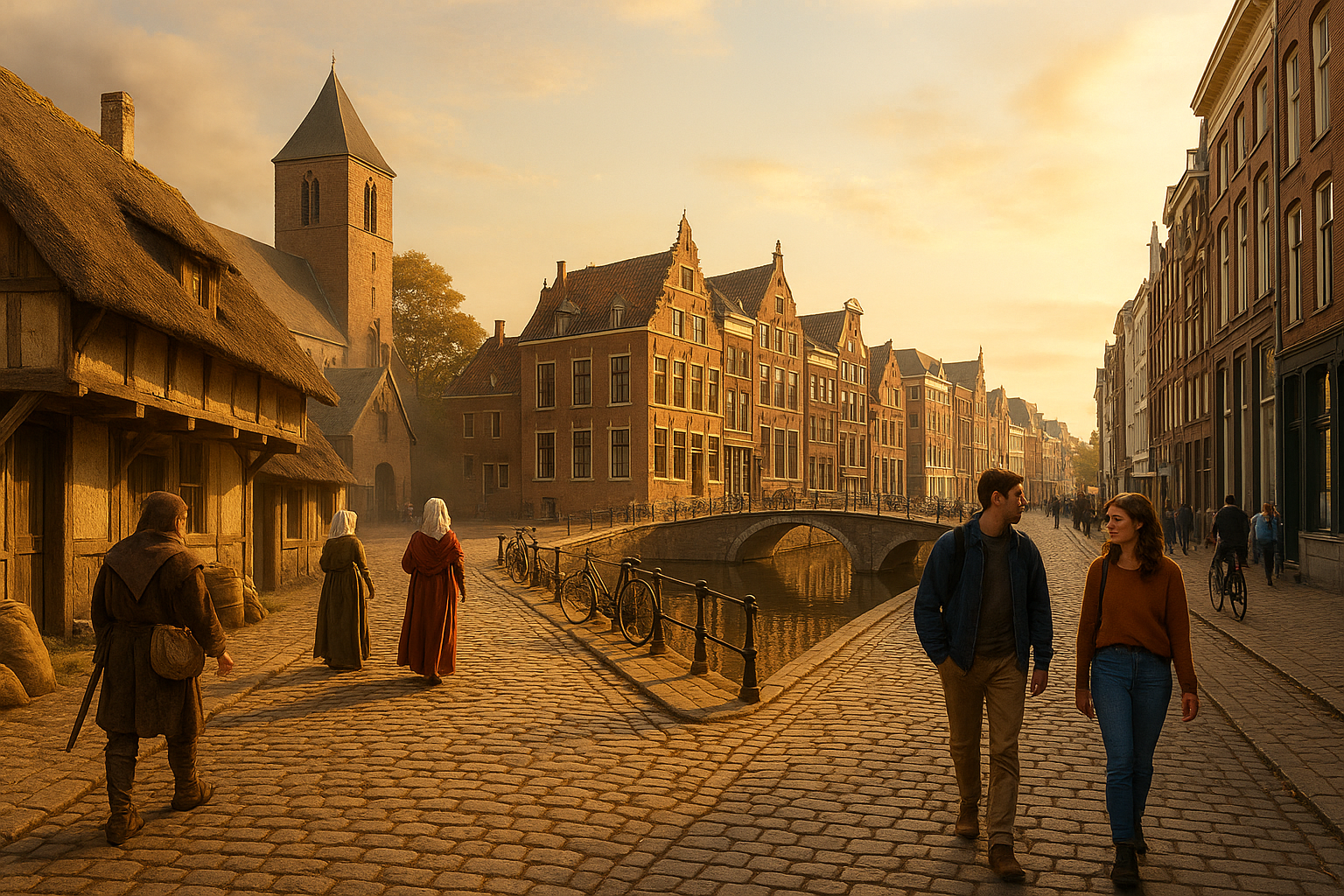
Languages, much like rivers, rarely remain static—they twist, fork, and meander through time, shaped by the landscape of history, the climate of politics, and the unexpected storms of cultural contact. The Dutch you hear today in bustling Amsterdam cafés, Rotterdam markets, or a quiet Zeeland fishing village is not a fixed creation but the latest chapter in a story more than a thousand years in the making. It has survived the rise and fall of empires, absorbed the influence of trade routes that stretched from Java to New Amsterdam, and adapted to the relentless tides of technology and globalization.
What makes the evolution of Dutch particularly fascinating is that it has always existed at a crossroads. The Low Countries have, for centuries, been a meeting point between the Romance languages of the south and the Germanic languages of the north and east. Merchants from the Hanseatic League brought in Low German influences; French aristocrats and clergy left behind a wealth of vocabulary; colonial ventures introduced words from Malay, Portuguese, and even Japanese. Every era left its fingerprint on the language, turning Dutch into a living museum of history hidden in plain sight—embedded in its words, sounds, and grammar.
The transformation from Old Frankish to Modern Nederlands is not simply a sequence of sound shifts and grammar simplifications; it is a reflection of human movement, of power struggles, of technological leaps, and of cultural identity. Old Frankish was once the tongue of powerful tribal leaders; Old Dutch emerged alongside the first literary works in the Low Countries; Middle Dutch thrived in the marketplaces and guild halls of prosperous medieval towns; and Standard Dutch grew strong during the Golden Age, carried across oceans by ships flying the orange, white, and blue.
Today, Dutch is spoken by over 23 million people worldwide and is one of the few European languages with an official presence on four continents. Yet, for all its global reach, it remains deeply tied to the cultural heartbeat of the Netherlands and Flanders. Understanding how it came to be—how gheven became geven, how th disappeared, how Vlaams and Hollands became parts of one linguistic whole—is like peeling back layers of time.
This journey will take us through medieval scriptoria where monks carefully copied religious texts in an early form of Dutch, to 17th-century shipyards where sailors shouted commands that would later be borrowed into other languages, to 20th-century classrooms where spelling reforms simplified centuries-old orthography. By the end, you’ll see Modern Dutch not as a static, “finished” product, but as a language still in motion—continuing to adapt, shift, and respond to the world around it.
1. Before Dutch Was Dutch: The Old Frankish Roots
The earliest ancestor of Dutch isn’t called “Dutch” at all—it’s known to linguists as Old Frankish, a West Germanic language spoken by the Franks around the 5th to 9th centuries. This was the language of the powerful Frankish tribes who dominated large parts of modern-day Netherlands, Belgium, Luxembourg, and western Germany.
Old Frankish didn’t exist in isolation. It developed in contact with other Germanic languages and, crucially, with Latin, thanks to the influence of the Roman Empire and later the Christian Church. This early blend of Latin vocabulary into Germanic roots is one of the first hints of Dutch’s mixed heritage.
Notably, Old Frankish is also the language from which modern French borrowed heavily—yes, French owes much of its vocabulary to the Franks who settled in Gaul. In the Low Countries, however, Old Frankish followed a different path, gradually evolving into Old Dutch.
2. Old Dutch (c. 500–1150): The Birth of a Language
Old Dutch is the first stage where we start to see something that could be considered distinctly Dutch. Surviving texts from this period are rare, but the most famous example is the Wachtendonck Psalms—a translation of Latin religious texts into Old Dutch.
Key features of Old Dutch:
Still heavily Germanic in vocabulary and grammar.
Lacked standardized spelling—words could be written multiple ways.
Sound changes began separating it from Old High German (spoken further south).
By the end of this period, the language was already diverging into regional dialects, influenced by geography and political boundaries.
3. Middle Dutch (c. 1150–1500): The Age of Dialects
If you were transported to the Low Countries in 1300, you wouldn’t hear “one Dutch”—you’d hear a patchwork of dialects: Flemish in the west, Brabantian in the south, Hollandic in the northwest, Limburgish in the southeast, and others.
Middle Dutch was marked by:
The loss of certain old case endings, simplifying grammar.
Strong regional variation—speakers from Bruges and Utrecht might struggle to understand each other fully.
A blossoming of literature, especially poetry and religious texts.
This was also the era when the Hanseatic League’s trading networks brought contact with Low German, which left its mark on Dutch vocabulary. Words related to trade, shipping, and commerce often entered Dutch during this period.
4. Standardization and the Golden Age (1500–1700)
The Renaissance brought printing presses to the Low Countries, and with them came the need for a more standardized language. Printers wanted to sell books that could be read by as many people as possible, so they favored certain dialects—especially Brabantian and Hollandic—as the basis for “Standard Dutch.”
During the Dutch Golden Age, the Netherlands became a world power in trade, science, and the arts. Dutch ships sailed to Asia, Africa, and the Americas, and with this global reach came the absorption of loanwords from languages like Malay, Portuguese, and Japanese (kat, pinda, soja).
In 1637, the Statenbijbel (States Bible) was published—this official Bible translation fixed many aspects of grammar and spelling, influencing Dutch for centuries.
5. Modern Dutch Emerges (1700–1900)
By the 18th and 19th centuries, Dutch grammar and spelling had become more uniform, though spelling reforms would continue well into the modern era. This was also when Dutch nationalism grew, and language became a symbol of cultural identity.
Important developments:
Expansion of Dutch overseas meant the language took root in colonies like Suriname, Indonesia, and South Africa (where it evolved into Afrikaans).
Education reforms increased literacy rates, spreading Standard Dutch even to rural areas.
6. 20th and 21st Century: The Dutch We Speak Today
The 20th century brought:
Spelling reforms to simplify writing (most notably in 1947, 1954, and 1995).
Media (radio, TV, and later the internet) that promoted Standard Dutch across all regions.
A surge of English loanwords, especially in technology, business, and pop culture.
Today’s Dutch is remarkably standardized, though regional accents and words still thrive. The influence of English is stronger than ever—some linguists even worry about “Anglicization.” Yet Dutch remains robust, spoken by over 23 million people worldwide.
7. From Old Frankish to Modern Nederlands: Key Changes Summarized
Sound shifts: Gradual vowel changes, loss of certain consonants.
Grammar simplification: Loss of many case endings, fewer verb forms.
Vocabulary growth: Borrowing from Latin, French, Low German, Malay, and English.
Standardization: Driven by printing, education, and media.
FAQs
1. Is Dutch closer to German or English?
Linguistically, Dutch sits between the two—it’s closer to German in grammar but shares vocabulary and simplicity with English.
2. Did Dutch influence other languages?
Yes—Afrikaans developed directly from Dutch, and Dutch loanwords exist in Indonesian, Japanese, and even American English.
3. Why are there still so many dialects in the Netherlands?
Because regional speech persisted for centuries before mass media and compulsory education promoted Standard Dutch.
4. Is Flemish a separate language?
No—it’s a regional variety of Dutch spoken in Belgium, with its own pronunciation and vocabulary.
5. How much Old Dutch can modern speakers understand?
Almost none—Old Dutch is as far removed from Modern Dutch as Old English is from today’s English.
6. Has Dutch grammar become easier over time?
In some ways, yes—case endings and verb forms have been simplified—but word order and pronunciation still present challenges.
7. What’s the biggest modern influence on Dutch?
English, especially in technology, entertainment, and youth culture.
8. Will Dutch change a lot in the next 100 years?
Most likely—if trends continue, expect more English borrowings, simplified spelling, and possibly more digital slang.
Learn Dutch the Smart Way
At Polyglottist Language Academy, we don’t just teach you vocabulary lists—we help you understand the story behind the words. Our Dutch classes combine language learning with cultural insights so you can speak confidently and understand the why behind the language’s quirks. Whether you’re starting from scratch or polishing your skills, we have courses for every level.
Ready to start your Dutch journey?
👉 Sign up for our Dutch classes today and bring the history of the language to life in your own speech.
Explore More on Our Blog
A Brief History Of The Dutch Language (And Why It Matters Today)
Is Dutch Easier To Learn If You Already Speak German Or Afrikaans?
Why Dutch Pronunciation Trips Up So Many Learners (And How To Master It)
How Similar Is Dutch To English? Surprising Linguistic Overlaps
Dutch Classes In Oakland: Learn Dutch Online With Local Instructors
How Long Does It Take To Learn Dutch – Realistic Timelines By Level