
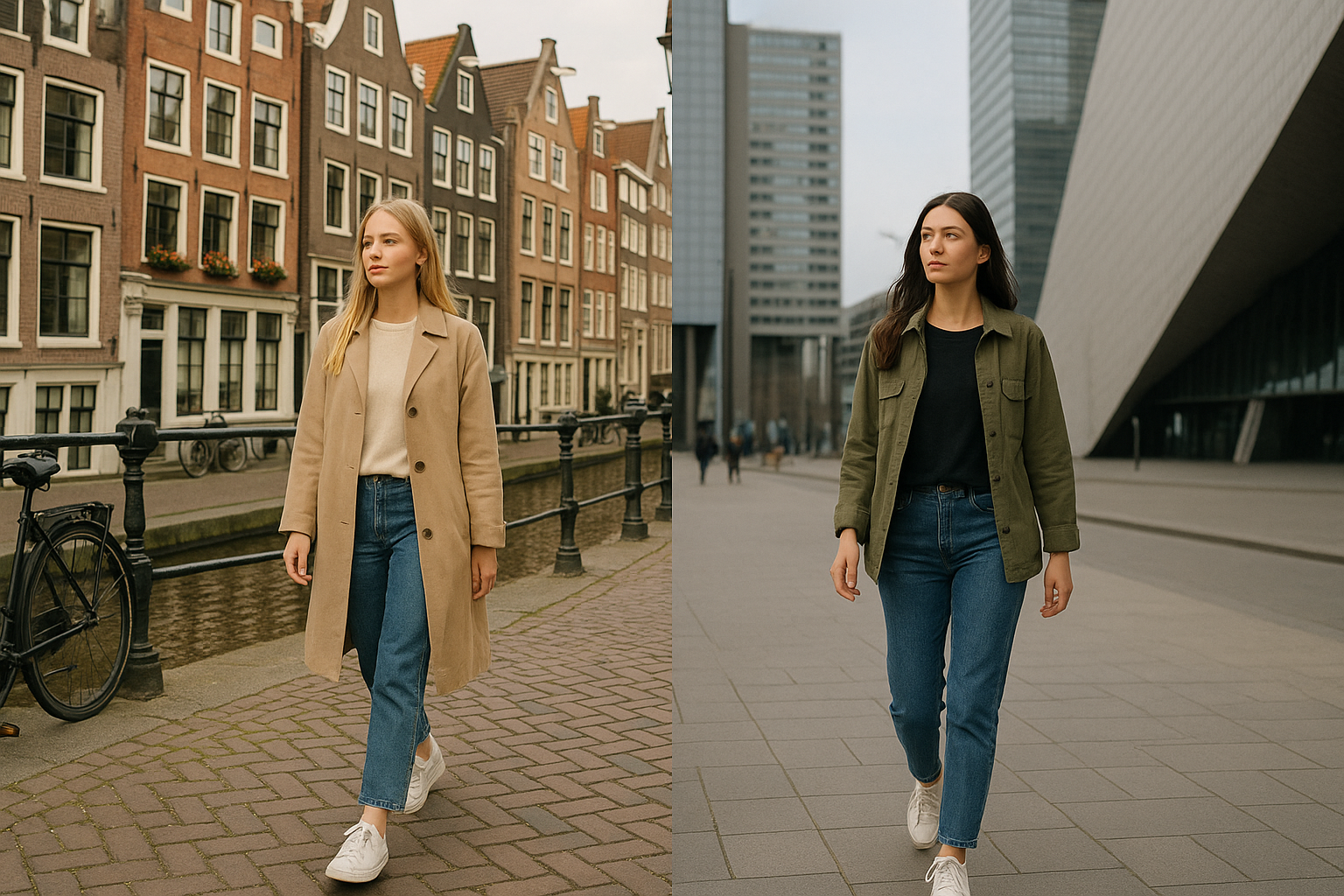
The experience of learning Dutch can change dramatically depending on where you are in the Netherlands, and nowhere is this more evident than in its two most iconic cities—Amsterdam and Rotterdam. Both are bustling urban centers with their own energy, history, and character, yet they feel like two different worlds when you’re on the ground. Amsterdam carries the weight of centuries, with its narrow 17th-century houses leaning slightly over the canals, bicycles gliding past at every hour, and an air of internationalism that draws millions of visitors each year. The city has long been a meeting point for cultures, ideas, and languages, making it as cosmopolitan as it is historic. Rotterdam, on the other hand, feels like the Netherlands in fast-forward: sleek high-rises pierce the skyline, street art bursts from the walls, and the hum of the largest port in Europe forms a constant backdrop to daily life. Its post-war reconstruction gave it a bold, modern identity, and its no-nonsense reputation shows in everything from its architecture to the way people speak.
These differences don’t just color your everyday life—they shape the way you learn Dutch. In Amsterdam, you might start your day at a language school with classmates from five continents, then step outside to grab a coffee where the barista greets you in perfect English before you’ve had a chance to reply in Dutch. In Rotterdam, your morning class might be smaller, and when you walk into a neighborhood bakery afterward, the conversation will almost certainly start in Dutch, whether you’re ready for it or not. The pace, the people, and even the accents you hear on the street will influence how quickly you pick up the language and how confident you become using it.
Choosing between Amsterdam and Rotterdam for your Dutch studies isn’t simply about picking a city you like—it’s about choosing a learning environment that matches your personality, your lifestyle, and your goals. Do you thrive in a busy, international atmosphere where support for newcomers is everywhere but Dutch can be hard to practice unless you’re intentional? Or do you prefer a more immersive setting where English is less dominant, forcing you to stretch your skills in everyday situations? Will you be more inspired by the historic charm of Amsterdam’s canal belts, or by the energy of Rotterdam’s forward-looking skyline?
In the following sections, we’ll look at how these two cities compare when it comes to language environment, cultural attitudes, opportunities to practice, cost of living, and much more. Whether you’re drawn to the polished internationalism of Amsterdam or the grounded authenticity of Rotterdam, understanding the differences will help you make a choice that not only suits your lifestyle but also maximizes your success in learning Dutch.
1. Language Environment: Who You’ll Hear and How They Speak
Amsterdam
Amsterdam is one of the most international cities in Europe, which is both a blessing and a curse for Dutch learners. You’ll hear English everywhere—on trams, in cafés, and even at the supermarket checkout. While this makes life easier for newcomers, it can slow your Dutch progress if you’re not intentional about using it. Locals, used to a constant influx of tourists, often switch to English as soon as they hear a foreign accent.
The Dutch spoken in Amsterdam generally aligns closely with the “standard” variety you’ll find in textbooks, but you’ll also encounter local expressions and a particular Amsterdam accent. It’s subtle, but you might hear a slightly different pronunciation of certain vowels, such as a more open aa.
Pros for learners:
Exposure to clear, standard Dutch in formal settings.
Many language schools with experienced teachers used to working with expats.
Cons:
English often dominates casual interactions.
You might have to actively seek out Dutch-only environments.
Rotterdam
Rotterdam is less tourist-saturated and has a more working-class, no-frills reputation. The locals are friendly but more direct in conversation. You’re more likely to find yourself in situations where Dutch is the default language, especially in neighborhoods outside the city center. This can push you to improve faster.
The Rotterdam accent is distinctive—more clipped, with different vowel sounds compared to standard Dutch. For some learners, this adds an extra challenge; for others, it’s an opportunity to develop strong listening skills early on.
Pros for learners:
More opportunities to use Dutch in daily life.
Immersion in authentic, everyday speech.
Cons:
Accent differences can be challenging for beginners.
Fewer “soft landings” in English compared to Amsterdam.
2. Cultural Attitudes Toward Learners
Amsterdam
Amsterdam residents are accustomed to dealing with people from every corner of the globe. They’re generally open-minded and patient, but also efficient—meaning they might switch to English to save time. If you push through and continue speaking Dutch, most will follow your lead.
Rotterdam
Rotterdammers tend to appreciate straightforwardness. If you’re making an effort to speak Dutch, they’ll respect it—and they may be less inclined to switch to English unless necessary. This can be incredibly motivating for learners, as it forces you to operate in Dutch in more contexts.
3. Opportunities to Practice Outside the Classroom
Amsterdam: Language exchange meetups, international cafés, and cultural events are plentiful. However, because so many participants are non-native speakers, you may end up practicing more English than Dutch unless you set clear boundaries.
Rotterdam: Fewer international meetups, but more opportunities to practice in daily transactions—shops, public transport, neighborhood markets—especially if you live outside the expat-heavy zones.
4. Cost of Living and Classes
Amsterdam
Higher overall living costs: rent, food, and leisure activities can add up quickly.
More competition among language schools can mean a wider range of prices, from premium private lessons to affordable group classes.
Rotterdam
Generally more affordable housing and everyday expenses.
Fewer language schools, but still a solid selection of high-quality options.
5. Accent and Dialect Considerations
Amsterdam Dutch: Close to standard Dutch, minimal regional slang in formal contexts.
Rotterdam Dutch: Influenced by the South Holland dialect, noticeable vowel shifts, and unique expressions like niet lullen maar poetsen (“don’t talk, just get on with it”).
6. Social Life and Integration
Amsterdam: Easy to find expat communities, which can be both supportive and insulating. You can live in Amsterdam for years without needing much Dutch—though this depends on your personal choices.
Rotterdam: Smaller expat community overall, which can push you toward Dutch-speaking social circles faster.
7. Job and Career Opportunities for Learners
Amsterdam’s economy leans heavily on international business, tourism, and creative industries. Many jobs—especially in startups—are English-first. Rotterdam’s economy is more industrial and logistics-focused, and certain roles (especially customer-facing ones) require solid Dutch skills.
8. Pace of Life and Learning Mindset
Amsterdam’s constant tourist buzz can be energizing or distracting, depending on your personality. Rotterdam’s atmosphere is more relaxed in some ways but also more work-focused, which can help with study discipline.
9. Which City Helps You Learn Faster?
The answer depends on your personality and goals:
If you need a gentler introduction to the language with lots of structured support, Amsterdam’s range of schools and international comfort may suit you.
If you thrive in immersive, real-world learning situations where you must use Dutch daily, Rotterdam might accelerate your progress.
10. Tips for Success in Either City
Set clear Dutch-only times—in class, at cafés, or with friends.
Join local clubs where English is rare.
Practice active listening by watching Dutch news from NOS or RTV Rijnmond.
Don’t be afraid to sound imperfect—confidence builds fluency.
FAQs
1. Is it easier to learn Dutch in Rotterdam than Amsterdam?
Not necessarily—it depends on your lifestyle and whether you’re comfortable pushing yourself into Dutch-only environments.
2. Will the local accent make a big difference?
In the beginning, accents can be challenging, but exposure early on will improve your listening skills long-term.
3. Are there more language schools in Amsterdam?
Yes, Amsterdam has a greater number and variety, but Rotterdam’s schools often offer smaller, more personalized classes.
4. Will I need Dutch to live in either city?
Technically no—you can get by with English in both—but your experience will be richer and more integrated if you learn Dutch.
5. Which city is more affordable for students?
Rotterdam generally offers lower rent and living costs.
Check Out Our Other Articles:
A Brief History Of The Dutch Language (And Why It Matters Today)
Is Dutch Easier To Learn If You Already Speak German Or Afrikaans?
Why Dutch Pronunciation Trips Up So Many Learners (And How To Master It)
How Similar Is Dutch To English? Surprising Linguistic Overlaps
Dutch Classes In Oakland: Learn Dutch Online With Local Instructors
How Long Does It Take To Learn Dutch – Realistic Timelines By Level