
Japanese Classes in Los Angeles: A Practical Guide to Learning Japanese as an Adult
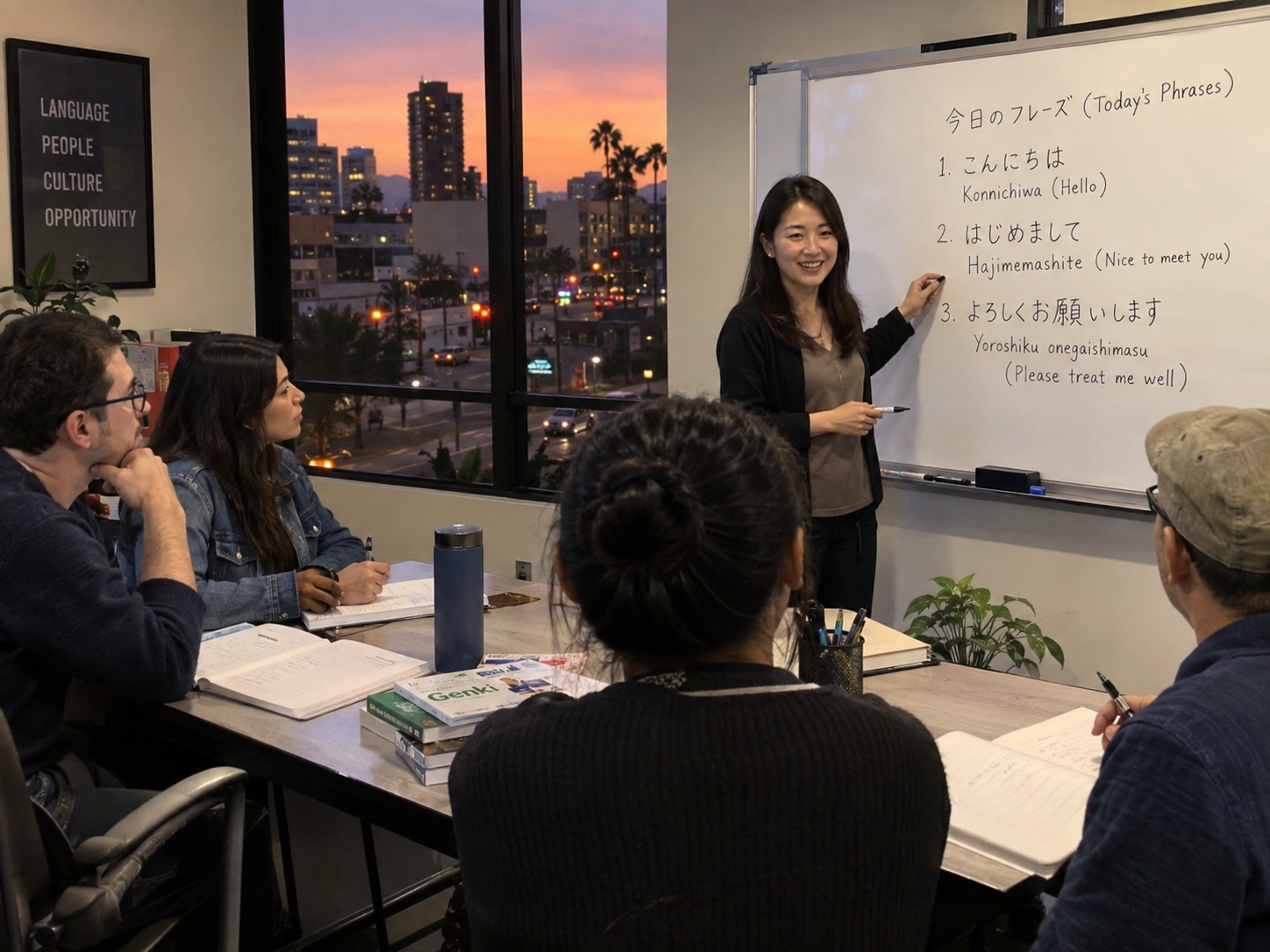
Los Angeles is one of the best U.S. cities for encountering Japanese culture and one of the easiest cities in which to choose a language class that is completely impractical for your life.
A course can look perfect on paper and still fail if it requires crossing Los Angeles at 6 p.m. every Tuesday. For adult learners here, location and schedule are not secondary details. They are part of the learning method.
Start with the kind of Japanese you want to build
Most adults say they want to “learn Japanese,” but that can mean very different things. A traveler may mainly need listening and speaking. Someone planning to take the JLPT needs systematic reading, grammar, and kanji. An anime fan may have strong listening recognition but almost no reading. A heritage learner may understand family speech while lacking formal grammar.
A good class should match that profile rather than simply putting everyone who is “not fluent” into the same room.
Japan Foundation Los Angeles
The Japan Foundation, Los Angeles is one of the city's most visible resources for adult learners. Its current language courses are entry-level and organized around practical communication goals rather than purely grammatical sequencing. The foundation also runs cultural events, lectures, conversation activities, film programming, and arts events, which gives learners a way to connect language study with contemporary Japanese culture.
For an adult who wants an organized introduction without committing to a university-style course, it is an especially useful place to watch. Because offerings rotate, check the current course listing rather than relying on an old blog post or schedule screenshot.
Community-based classes in Pasadena
The Japanese Language School Unified System, often called the Kyodo System, also runs adult Japanese classes in Pasadena. Its 2026 summer session lists Saturday beginner and intermediate classes. A weekend schedule can be far easier for adults who cannot reliably reach a weekday evening class across the city.
The program's long connection to Japanese community education gives it a different feel from an app or generic online course. That can be valuable if you want language and cultural context to develop together.
College and university Japanese: excellent, but intense
Los Angeles-area colleges and universities offer strong Japanese programs, but a credit course is a different commitment from adult continuing education. University Japanese often meets several times per week and expects substantial preparation outside class. That intensity produces progress, but it may not fit a full-time professional's schedule.
Before enrolling as an extension, visiting, or community student, ask exactly how many weekly hours are expected. A four- or five-unit language course can function like a second job during busy periods.
Los Angeles gives you practice opportunities that many cities do not
Language learning improves when the language begins to appear outside the lesson. Little Tokyo remains an obvious cultural hub, but it should not be treated as a theme park for practicing random Japanese on strangers. A better approach is to attend public cultural events, exhibits, lectures, conversation gatherings, bookstores, or community programs where Japanese language and culture are already part of the setting.
Sawtelle, Torrance, Gardena, and other parts of the metro area also have strong Japanese and Japanese American cultural presence. Even passive exposure matters: reading menus, noticing packaging, recognizing katakana loanwords, or hearing how greetings are used gives classroom material more context.
In-person classes versus online classes in LA
The main advantage of in-person study is immediacy. You hear classmates hesitate, respond without a mute button, and learn to manage real conversational timing. It is harder to mentally “check out.”
The disadvantage is Los Angeles itself. If attending a 90-minute class requires a 75-minute commute each way, the format may not be sustainable. Online classes can preserve structure and live interaction while removing the biggest barrier to consistency.
A learner in Santa Monica, Pasadena, Torrance, or the Valley may rationally make a different choice even when the same school is available to all four.
What should a complete beginner look for?
A good first course should combine speaking, listening, hiragana, basic grammar, and gradually introduced kanji. Be cautious of courses that promise conversational fluency without reading, or courses that spend weeks on writing systems before students learn to say anything useful.
A beginner should be able to introduce themselves, ask simple questions, talk about likes and routines, and understand basic classroom Japanese while steadily building literacy.
Teachers often notice that adults who rely entirely on self-study know more than they think but cannot retrieve it quickly. Live classes help because they turn recognition into response.
What if you already learned from anime, apps, or travel?
Do not automatically register for an intermediate class. Uneven learners are common. Someone may understand casual phrases but not know particles; another learner may read hiragana smoothly but freeze in conversation.
A placement conversation is more useful than counting how many months you have studied.
A workable plan for an LA adult
For many learners, the best routine is one live class per week plus short daily contact with Japanese. Ten or fifteen minutes of kana, vocabulary review, or listening most days usually works better than a single three-hour study session on Sunday.
Polyglottist Language Academy offers live online Japanese classes for adults, which can be especially practical for Los Angeles learners who want a small group without a long commute. Whatever program you choose, consistency should outrank prestige. The “best” Japanese class in Los Angeles is the one whose level, teaching style, and travel time make it possible for you to keep attending after the initial enthusiasm wears off.