
Learning Spanish in Oakland: Connecting with the City Through Language
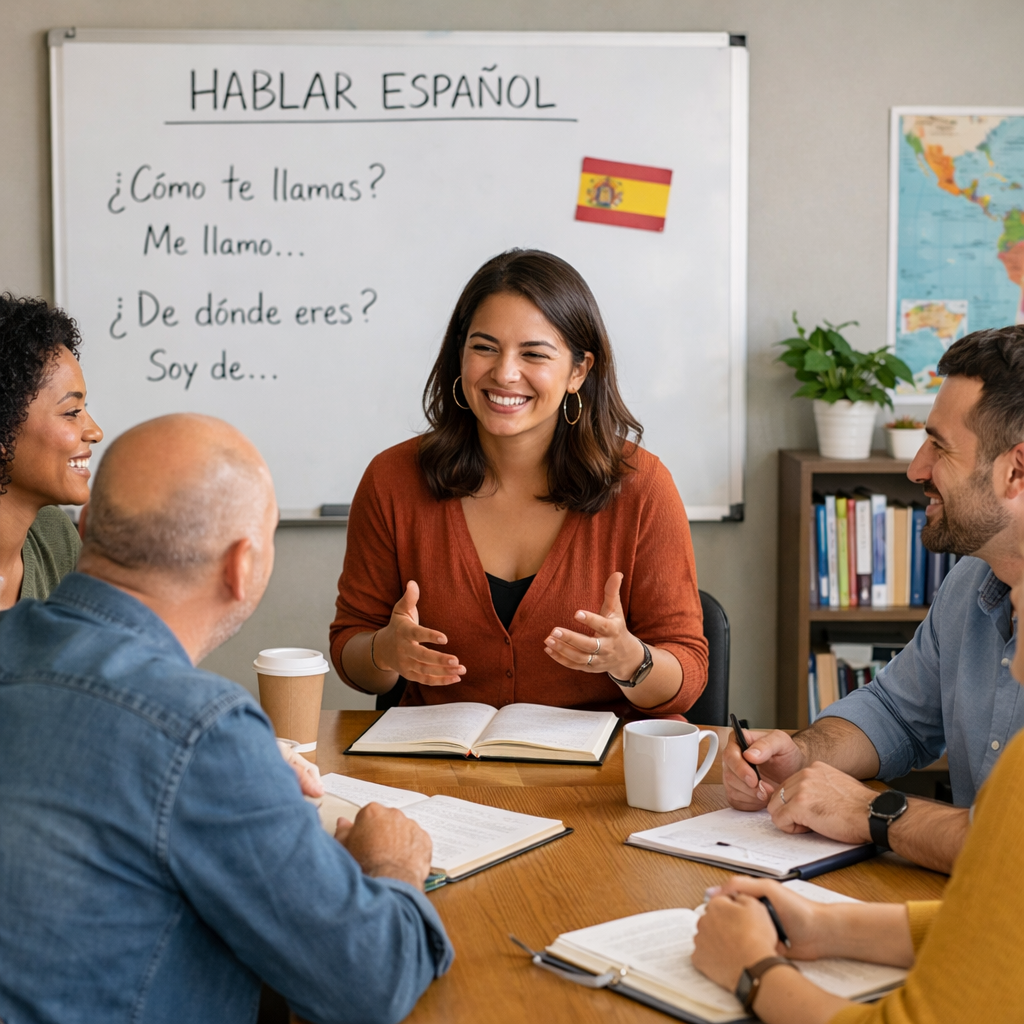
Learning Spanish in Oakland isn’t just about memorizing verbs and vocabulary lists. It’s about finding a new way to belong in a city where English and Spanish live side by side—in classrooms and clinics, in mercados and murals, in the everyday rhythm of neighborhoods like Fruitvale and East Oakland. For adult professionals in the Bay Area, Spanish can be both a competitive edge and a meaningful bridge into the communities that give Oakland its character.
Spanish in Oakland: More Than a Second Language
Walk down International Boulevard on a Saturday afternoon and it’s obvious: Spanish is not a niche language in Oakland. It’s part of the city’s soundtrack. You hear it in shopfront radio stations, from street vendors, in conversations between parents and kids heading home from school. In many parts of Oakland, especially Fruitvale and East Oakland, Spanish is as common as English—and in some blocks, even more so.
Oakland has a large Latino population, with strong roots in Mexico and Central America. Decades of migration, family reunification, and community-building have made Spanish a daily reality for tens of thousands of residents. That means Spanish shows up everywhere: on flyers in laundromats, in church announcements, in small-business signage, and in public information about health and social services.
Public schools mirror this linguistic diversity. A significant share of Oakland Unified School District students come from Spanish-speaking homes. For teachers, counselors, and school staff, Spanish is not a “nice extra”—it’s often the key to reaching families and understanding students’ reality. In other civic spaces, too—libraries, clinics, community centers—Spanish is central to how the city communicates with its residents.
Seen from this angle, learning Spanish in Oakland isn’t just an academic project. It’s a way of stepping into a language that is already fully alive around you.
Neighborhoods Where Spanish Lives: Fruitvale, East Oakland, and Beyond
If you’re learning Spanish in Oakland, some neighborhoods give you a built‑in immersion setting.
Fruitvale, anchored around the Fruitvale BART station and International Boulevard, is one of the city’s most vibrant Latino districts. Here you’ll find panaderías with handwritten signs in Spanish, taquerías with menus entirely en español, and markets selling everything from fresh tortillas to dried chiles. Walk a few blocks and you’ll hear Spanish spoken in every direction—between shopkeepers and customers, parents and kids, barbers and regulars.
East Oakland has similar pockets where Spanish dominates everyday interactions. Even simple errands—buying groceries, picking up lunch, getting your car checked—can become mini listening exercises. If you’re willing to use your Spanish, they can turn into real conversations.
Libraries and community organizations amplify this daily presence. Spanish-language storytimes, bilingual information desks, and flyers for workshops—citizenship, workers’ rights, parenting—are common. For someone actively studying Spanish, this means you never have to go far to hear authentic language in action. You only have to start listening differently.
The Historical and Cultural Roots of Spanish in Oakland
The current soundscape of Spanish in Oakland is the result of long historical processes. Since the mid-20th century, waves of immigrants from Mexico, El Salvador, and other parts of Latin America have made the East Bay home. Many came for work in industry, agriculture, and services; others arrived fleeing political violence and economic crises. Over time, these communities built institutions, businesses, churches, and cultural organizations.
These roots show up clearly in Oakland’s festivals and public life. The Fruitvale Día de los Muertos Festival, for instance, has been running for decades and now attracts crowds in the tens of thousands. For one day each fall, several blocks in Fruitvale become a pedestrian-only celebration filled with ofrendas (altars), live bands, street vendors, and families honoring their loved ones. Spanish flows naturally throughout the event—from stage announcements to casual conversations between visitors and vendors.
Hispanic Heritage Month is another moment when the city’s Latino heritage comes to the forefront. Local campaigns spotlight Latin American restaurants, art exhibits, concerts, and film showings. For learners, these aren’t just colorful events. They’re opportunities to see the cultural world that Spanish opens up—humor, spirituality, family traditions, political history, and more.
When you commit to Spanish in Oakland, you’re not just gaining a skill for your résumé. You’re stepping into a story that’s already being written in the city’s streets and public spaces.
Why Learn Spanish in Oakland?
Professional Advantages
For Oakland and Bay Area professionals, Spanish has clear, concrete benefits at work:
Healthcare and social services
Doctors, nurses, therapists, and social workers often serve patients and clients more effectively when they can speak directly in Spanish. Instead of relying exclusively on interpreters, you can build rapport, catch nuances in a patient’s description of symptoms, and explain treatment plans in a way that feels personal and respectful.Education and youth work
Teachers, school administrators, after-school coordinators, and youth workers who speak Spanish can communicate directly with families who might be less comfortable in English. That makes parent-teacher conferences smoother, discipline conversations less tense, and community-building events more inclusive.Public sector and nonprofits
City staff, legal aid lawyers, case managers, and outreach workers regularly interact with Spanish-speaking residents. Being bilingual allows you to provide information directly, collect more accurate details, and ensure people actually understand their rights and options.Business, tech, and entrepreneurship
In customer-facing roles—from retail to client success in tech—Spanish opens doors to a bigger customer base across the Bay Area. For entrepreneurs, it can mean serving untapped markets, customizing products, and building trust with Spanish-speaking clients and partners.
When you’re competing for jobs or promotions in the Bay Area, Spanish can be a differentiator that signals both skill and cultural competence.
Community and Networking Benefits
Learning Spanish also changes how you show up in your own city:
You can chat with the barista at your favorite panadería in their first language.
You can actually understand the conversations happening around you on BART or at the park.
You can build friendships and professional relationships that would never fully develop in English alone.
For many Oakland residents, especially those in mixed workplaces or mixed neighborhoods, Spanish becomes a powerful tool for solidarity. It tells your neighbors, colleagues, and clients: “I’m making an effort to meet you where you are.”
Personal and Cultural Growth
On a personal level, Spanish gives you a new perspective on Oakland’s culture:
You can follow local Spanish-language media and social media accounts.
You can appreciate the humor in a joke that doesn’t quite translate.
You can learn directly from the stories of people whose lives might otherwise remain at a polite distance.
In that sense, learning Spanish in Oakland is not just an investment in your career. It’s a way of deepening your relationship with the place you live.
Best Ways to Learn Spanish in Oakland
There is no single “right” way to learn Spanish. Instead, Oakland offers a menu of options that you can combine: group classes, private lessons, online courses, and immersion in the community. Each has distinct strengths and weaknesses—especially for busy adults.
1. Group Classes
Group classes are the classic choice. In Oakland, you’ll find them at:
Community-based language schools
Community colleges and adult schools
Cultural centers and sometimes churches or nonprofits
Pros:
Structure and progression: Good group programs follow a clear curriculum, often aligned with levels like A1–C1 (beginner to advanced). You know what you’re covering each week, and you can see your progress over a semester or a multi-month course.
Peer motivation: When you recognize faces in the classroom and know others are keeping up with homework, it’s easier to stay committed.
Lower cost per hour: Group rates are usually more affordable than one‑to‑one lessons.
Cons:
Fixed schedule: If you have an unpredictable workweek, a strict Tuesday/Thursday schedule can be stressful.
Mixed pace: You might feel the class moves too slowly or too fast for your learning style.
Limited speaking time: In larger groups, you might only get a few minutes of real speaking practice per class.
For many Oakland professionals, small-group classes (rather than very large ones) offer the best balance between structure, interaction, and cost.
2. Private Lessons
Private lessons—whether online or in person—are all about customization.
Pros:
Fully tailored lessons: Want to focus on medical Spanish, real-estate Spanish, or Spanish for parent-teacher meetings? A private tutor can design sessions around your exact needs.
Flexible scheduling: You can often shift lessons to match your changing calendar.
Intensive speaking practice: Almost the entire session is about you speaking and getting feedback.
Cons:
Higher hourly cost: You pay for the teacher’s undivided attention.
Fewer peers: You don’t get the group dynamic, which some learners find energizing.
Risk of drift: Without a curriculum, lessons can become a series of random conversations unless your tutor is structured.
Private lessons shine when you have specific goals, specialized vocabulary needs, or a learning style that doesn’t thrive in larger groups.
3. Online Classes and Platforms
Online learning has become central for Bay Area adults. Between Zoom-based classes, self-paced platforms, and library-provided language-learning software, you can do a lot without commuting.
Pros:
Flexible access: Study from home, during lunch breaks, or on business trips.
Rewatchable content: Recorded lessons and online exercises can be revisited whenever you forget a concept.
Wider pool of teachers: You’re not limited to who happens to be teaching in your neighborhood.
Cons:
Less physical immersion: You’re surrounded by English at home, even if your screen is in Spanish.
More self-discipline required: It’s easier to skip a video or log in late when no one is physically waiting for you.
Screen fatigue: If your job is already online, adding more screen time can feel draining.
Online classes work best when they’re not your only contact with the language—when you also bring Spanish into your offline life in Oakland.
4. Immersion in Daily Life
Immersion doesn’t have to mean moving to Mexico or Spain. In Oakland, you can build a local immersion routine:
Do your grocery shopping at a Latin American market and ask for help in Spanish.
Attend cultural events—Día de los Muertos, Latin music nights, film festivals—and make a point of interacting in Spanish.
Spend time in cafés and plazas in Fruitvale or East Oakland where Spanish is commonly spoken.
Pros:
Authentic language: You hear the pace, slang, and rhythm of real conversations.
Cultural learning: You absorb gestures, politeness strategies, humor, and body language.
Motivation: Real interactions are more rewarding than answering multiple-choice questions on an app.
Cons:
Overwhelming at first: Native-speed Spanish can feel impossibly fast.
Unstructured: There is no built-in curriculum or correction.
Inconsistent: You might go days or weeks without meaningful interaction if you’re not intentional.
Immersion is powerful, but as an adult learner, you’ll get the most benefit when you pair it with a structured course that prepares you for what you’ll encounter.
Common Challenges for Adult Learners (and How to Overcome Them)
Adult learners in Oakland share a set of challenges, regardless of how motivated they are. Recognizing them early can save you from disappointment and burnout.
The Intermediate Plateau
The “intermediate plateau” is that frustrating stage where you understand a lot of Spanish, can get by in basic conversations, but feel stuck. You can’t quite follow fast speech and you struggle to express more complex ideas.
This plateau often appears when:
You rely mostly on passive input (reading, listening) and avoid speaking.
You repeat easy study routines instead of tackling harder, messy tasks.
You never push beyond topics you already know how to talk about.
To move past this level, you need deliberate challenges:
Take classes that require extended speaking about real topics, not just drilling verb charts.
Use Oakland itself as a motivator: aim to hold a full conversation at a Fruitvale café, or attend a community event and introduce yourself to three people in Spanish.
Switch some of your Netflix, podcasts, or YouTube time to Spanish content that stretches your comprehension.
The goal is to move from “I can survive” to “I can participate.”
Fear of Speaking
Many adults have a deep fear of sounding foolish, especially in a city where native speakers are everywhere. You don’t want to waste people’s time, or you’re worried they’ll switch to English the moment you stumble.
To manage this:
Start in a safe environment: a small class where everyone is clearly learning and mistakes are expected.
Practice set phrases you can fall back on—“Lo siento, estoy aprendiendo español, ¿puede hablar un poco más despacio?”—so you’re not left speechless the first time you don’t understand.
Remind yourself that many Oakland residents are used to bilingual environments and often appreciate the effort you’re making.
Over time, your fear becomes a useful signal: it tells you you’re stepping outside your comfort zone—which is exactly where progress happens.
Time Constraints and Consistency
Bay Area life is busy. Long commutes, demanding jobs, family obligations, and side projects can make language learning feel like one more task on a crowded list.
To build consistency:
Choose a format that realistically fits your life (evening small group, early‑morning online, weekend intensives).
Commit to a fixed minimum—like “three 30‑minute blocks per week”—instead of vague goals like “study more.”
Combine structured study (class or tutor) with micro‑habits: listening to a Spanish podcast while driving, switching your phone or a few apps to Spanish, or reviewing vocabulary on BART.
Think of Spanish as a lifestyle shift rather than a short-term project. Your goal is sustainability, not perfection.
How Structured Programs Help
A well-designed program does a few crucial things for adult learners:
Provides a roadmap: You know what skills you’ll have after each level and how long it takes to get there.
Builds in accountability: Classes start at specific times. Other people are expecting you. You’re not learning alone.
Balances skills: You’re not just memorizing words; you’re listening, speaking, reading, and writing in a balanced way.
Anticipates plateaus: Teachers know when learners typically get stuck and design activities to push you past those points.
In a city as rich in Spanish as Oakland, a structured program acts like scaffolding. It supports you while you start climbing into the real-world language around you.
What Makes a Good Spanish Program for Oakland Professionals?
Not all Spanish classes are created equal. When you’re investing your time and money, especially as a working adult, it’s worth choosing carefully.
Small Groups vs. Large Classes
Small groups (often 3–8 students) are ideal for:
Maximizing speaking time per person
Getting individualized feedback from the instructor
Building comfortable rapport where you’re less afraid to make mistakes
Large classes can work if:
You’re on a tight budget and need the lowest cost per hour
You’re satisfied with a more academic, less conversational focus
You want college credit or a specific credential
For someone in Oakland whose main aim is to use Spanish professionally or in the community, small groups often give you much more value per hour, because you’re actively talking instead of just listening.
The Central Role of Speaking Practice
A good program centers speaking and listening, not just grammar explanations. In practice, this means:
Every class includes plenty of pair and group activities.
You regularly do role‑plays that mirror real Oakland situations—talking to a neighbor, dealing with a landlord, checking in a patient.
The teacher corrects mistakes, but not in a way that shuts down conversation.
Grammar still matters. It’s your structure. But it should be taught in service of communication, especially if you’re using Spanish in a bilingual city like Oakland.
Clear Curriculum and Progression
Look for programs that:
Divide their courses into levels (e.g. Beginner 1, Beginner 2, Intermediate 1, etc.).
Explain the focus of each level: what grammar, what vocabulary, what real‑world tasks.
Offer a pathway from absolute beginner all the way to advanced conversation or professional Spanish.
This clarity helps you set realistic expectations. You’re less likely to give up at the first hurdle when you can see, in advance, that reaching conversational comfort is a multi-step journey—not a 10‑week miracle.
Native-Speaking and Well-Trained Instructors
Native Spanish-speaking teachers bring authentic pronunciation, cultural references, and a feel for how language is used in real life. But native fluency alone isn’t enough. You also want instructors who:
Understand adult learning and can explain complex grammar in clear, simple terms.
Are familiar with Bay Area and Californian Spanish, including code-switching and local slang.
Know Oakland well enough to connect classroom topics with local realities.
The sweetest spot is a program where instructors combine native-level Spanish with solid teaching skills and local insight.
Why a Hybrid Approach Works Best in Oakland
If you live and work in the Bay Area, you probably already know: flexibility is everything. That’s why a hybrid approach—combining online learning with in‑person, local practice—often works best.
The Best of Online
Online learning gives you:
Freedom from traffic and parking.
The option to catch up from home when you’ve had a long day.
Access to teachers and classmates from across the wider Bay Area.
You can use online sessions for structured lessons, grammar practice, reading, and listening exercises. When you’re tired or short on time, it’s simply easier to log into a Zoom room than drive across town.
The Power of Local Immersion
Oakland itself provides what a purely online program never can:
The experience of hearing Spanish in real-life situations—shops, buses, clinics, schools.
The chance to build local relationships in Spanish, not just practice with classmates.
Cultural immersion through festivals, art exhibits, food, and music.
When you combine these two—online for consistency and depth, Oakland for real-world immersion—you get a learning ecosystem that’s both realistic and powerful.
Learning Spanish in Oakland with Polyglottist Language Academy
If you’re looking for a program built specifically around these realities—busy professional schedules, the need for real conversation, and the richness of Oakland’s Spanish-speaking communities—Polyglottist Language Academy is designed with you in mind.
Small, Conversation-Driven Classes
Polyglottist’s Spanish classes focus on small groups, so you’re not just one more face in a crowded room. With limited class sizes, you spend a large portion of each session actively speaking, listening, and interacting with classmates. Mistakes are expected and welcomed as part of the learning process, not something to be embarrassed about.
Instructors guide you through real-life scenarios: ordering food in Fruitvale, talking to a Spanish-speaking colleague, introducing yourself at a community event. The goal is not just to “know Spanish,” but to actually use it—comfortably and confidently—here in the Bay Area.
A Hybrid, Oakland-Friendly Format
Polyglottist offers flexible Spanish classes that blend online convenience with local relevance. You can attend in-person or live online sessions during the week, then take what you’ve learned into real Oakland settings: a neighborhood café, a festival, a meetup, or an informal conversation with Spanish-speaking neighbors.
Because the school understands the pressures of Bay Area work life, schedules are tailored to adults: evening and weekend options, clear course lengths, and structured progression from beginner to more advanced levels.
You can explore current offerings and schedules here:
Spanish Classes | Polyglottist Language Academy
Whether you’re starting from zero or dusting off high‑school Spanish, Polyglottist helps you build a consistent routine and connect your studies directly to life in Oakland.
FAQs: Learning Spanish in Oakland
How long does it take to become conversational in Spanish?
For most adults studying consistently (two to three focused sessions per week, plus real-life practice), reaching a basic conversational level can take 6–12 months. “Conversational” here means handling everyday situations—ordering food, small talk, simple work interactions. Becoming truly comfortable in a wide range of topics usually takes longer, but the first big jump often comes in the first year of steady study.
Is it better to take in-person or online classes in Oakland?
It depends on your schedule and learning style. In-person classes offer more organic interaction and can feel more immersive, especially if they’re located in or near Spanish-speaking neighborhoods. Online classes offer greater flexibility and are easier to fit around a busy workweek. For many Oakland learners, a hybrid model—online classes plus local immersion in daily life—works best.
I’m shy and afraid of speaking Spanish. Can I still learn?
Absolutely. Many learners start out shy. Small, supportive classes are particularly helpful because you get used to speaking in a safe environment where everyone is learning. Over time, you can transfer that confidence to real-life situations in Oakland—starting with simple interactions, like greeting someone or placing an order, and gradually building up.
I don’t live in Fruitvale or East Oakland. Can I still get immersion?
Yes. While those neighborhoods offer especially rich Spanish environments, Spanish is present all over the city and broader Bay Area. You can seek out Latin American restaurants, cultural events, meetups, and classes near you. And you can always plan regular visits to more Spanish-heavy districts as part of your practice routine.
Are group classes worth it if I already know some Spanish?
If you’ve plateaued at an intermediate level, a well-structured group class can be exactly what you need. It provides accountability, more speaking practice than you’d get from apps alone, and feedback to correct fossilized mistakes. Look for a class that offers a placement process so you end up at the right level.
Can Spanish really help my career in the Bay Area?
Yes. In sectors like healthcare, social services, education, public administration, hospitality, and customer-facing roles in tech, Spanish is a clear asset. It can make you a more attractive hire, open up new responsibilities, and deepen your connection with clients and colleagues.
Further Reading: Other Spanish Articles to Explore
If you’d like to dive deeper into Spanish learning strategies and culture, here are some suggested follow-up articles you can link at the end of your blog: