
Why Spanish Is Spoken in So Many Countries (And How It Spread)
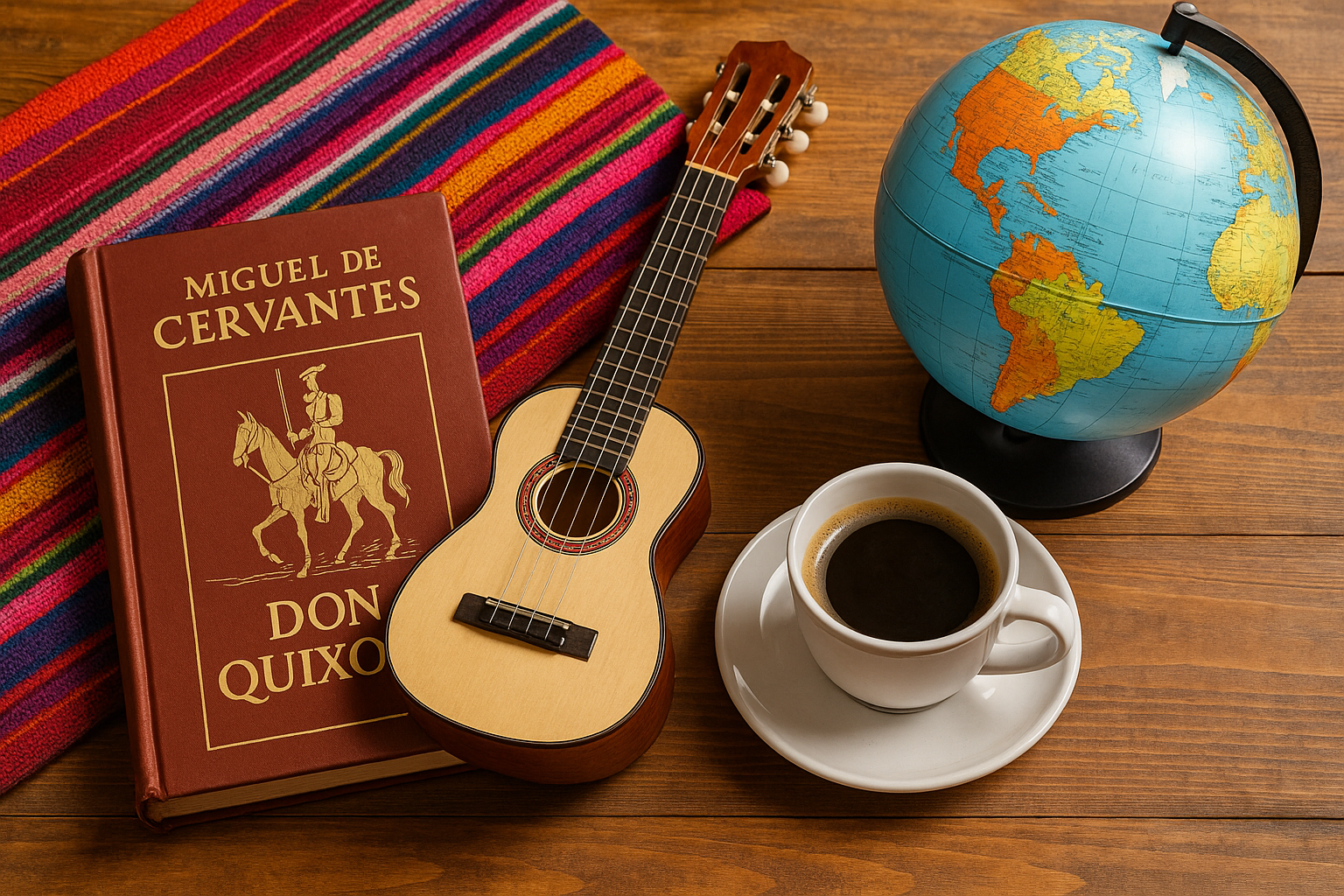
Few languages have traveled as far, shaped as many identities, and left such an indelible mark on world history as Spanish—a language that began in a modest corner of the Iberian Peninsula and today resonates across more than 21 countries and 500 million speakers worldwide. From the vibrant streets of Mexico City to the tango halls of Buenos Aires, from the Caribbean islands to the high plateaus of the Andes, Spanish has become a language of poetry, politics, business, and pop culture. But how did this happen? How did a regional dialect, once overshadowed by Latin and Arabic, transform into one of the most widely spoken languages on Earth?
The story of Spanish is not just about words—it is about power, ambition, and cultural exchange. Its journey began in the rugged landscapes of medieval Spain, where Latin morphed into regional dialects and eventually gave birth to what we now call Castilian. Then came a turning point that changed everything: the end of the Reconquista and the dawn of the Age of Exploration. In 1492, Spain didn’t just reclaim its last Muslim-ruled territory—it also set sail to discover new worlds. Ships left Spanish ports carrying explorers, settlers, missionaries, and soldiers, but they carried something even more powerful than swords: they carried a language.
What followed was a period of unprecedented expansion. Spanish crossed the Atlantic and planted roots in the Americas, where it adapted and evolved in dialogue with indigenous tongues. It sailed across the Pacific, reaching the distant shores of the Philippines. It even touched parts of Africa, making Spanish one of the earliest truly global languages. Centuries later, even as the Spanish Empire crumbled, the language endured, thriving as a symbol of identity and unity for newly independent nations. Unlike other colonial languages that faded after empires fell, Spanish stayed—and grew stronger.
Today, Spanish is not just a relic of empire. It is dynamic, vibrant, and more relevant than ever. It’s the language of international diplomacy, global trade, literature, cinema, and music that dominates global charts. It’s a language of massive geographic reach and astonishing diversity, with distinct regional varieties and rich cultural nuances that make learning it a thrilling experience. Understanding why Spanish spread so far is not just a history lesson—it’s the key to appreciating its global role today and why learning it opens more doors than almost any other language.
The Birth of Spanish: From Latin to a Global Language
Spanish, or Castellano, originated as a dialect of Vulgar Latin spoken by settlers in Hispania after the Roman conquest of the Iberian Peninsula. Over centuries, this Latin evolved, absorbing words from the Visigoths and, later, from Arabic, during the long period of Muslim rule in Spain (711–1492). By the late Middle Ages, Castilian emerged as the dominant dialect, thanks largely to political consolidation under the Kingdom of Castile.
In 1492—a year every Spanish learner eventually hears about—two monumental events occurred: the Reconquista ended with the fall of Granada, and Christopher Columbus set sail across the Atlantic under the sponsorship of Ferdinand and Isabella. That same year, Antonio de Nebrija published the first grammar of the Spanish language, declaring famously to the monarchs, “Language has always been the companion of empire.” His words turned out to be prophetic.
The Spanish Empire: A Language on the Move
The Age of Exploration transformed Spain from a European kingdom into the center of a vast empire. Spanish ships crossed the Atlantic and the Pacific, carrying not only soldiers and settlers but also their language and culture. Here’s how it happened:
The Americas
Following Columbus, Spain established colonies from Mexico and the Caribbean down to Chile and Argentina, eventually controlling most of South and Central America (except Brazil, which went to Portugal). Spanish became the language of administration, religion, and trade, although indigenous languages like Quechua, Nahuatl, and Guarani persisted and influenced Spanish vocabulary.The Philippines
In 1565, Spanish explorers claimed the Philippines, making it a crucial link in the trans-Pacific trade between Asia and the Americas. While Spanish never became the dominant language there, its impact remains visible in Filipino vocabulary and naming conventions.Africa
Spanish reached Equatorial Guinea and parts of North Africa, where it still has official or significant regional status today.
At its height, the Spanish Empire was truly global, with colonies in the Americas, Asia, and Africa, making Spanish one of the first languages to circle the world.
Why Spanish Stayed After the Empire Fell
By the 19th century, most Spanish colonies had gained independence. So why didn’t Spanish disappear, the way Latin did after the fall of Rome? Three key reasons:
Institutional Power: Spanish was the language of government, education, and religion for centuries. Post-independence leaders often kept it as the unifying national language.
Cultural Identity: For many nations, Spanish had become deeply embedded in literature, music, and daily life, creating a sense of shared cultural identity.
Practicality: In multilingual regions, Spanish often served as a lingua franca, connecting diverse ethnic and linguistic groups.
As a result, Spanish not only survived—it flourished, giving birth to distinct regional varieties.
The Many Faces of Spanish
Today, Spanish is spoken in Europe, Latin America, the United States, Africa, and parts of Asia. Each region has its unique flavor:
Spain: Castilian is standard, but regional languages like Catalan, Galician, and Basque coexist.
Mexico: The largest Spanish-speaking country, with rich indigenous influences.
Caribbean Spanish: Fast-paced, melodic, with unique pronunciations.
Rioplatense Spanish (Argentina, Uruguay): Famous for its Italian intonation and use of vos instead of tú.
Andean Spanish: Preserves older forms and indigenous words.
U.S. Spanish: A vibrant mix influenced by English and immigration waves.
This diversity is one reason Spanish is so fascinating to learn—each variety reflects a piece of history.
How Spanish Continues to Spread Today
Far from being a relic of colonial times, Spanish is growing faster than ever:
Second Most Spoken Native Language: Over 500 million native speakers.
Rising Influence in the U.S.: More than 40 million speakers and counting.
Globalization: Spanish is an official language of the UN, the EU, and countless international organizations.
Pop Culture Power: From Reggaeton beats to Netflix series, Spanish dominates global entertainment.
For learners, this means Spanish opens doors to 21 countries officially—and countless communities worldwide.
What This Means for Language Learners
Understanding the global journey of Spanish helps you appreciate why learning it is so rewarding:
Cultural Access: From Cervantes to García Márquez, Almodóvar to Shakira.
Travel Opportunities: Spanish unlocks entire continents.
Career Advantages: International business, diplomacy, education, and more.
Connection: Spanish is a bridge language for millions of people across borders.
FAQs About Spanish and Its Spread
1. How many people speak Spanish today?
Over 500 million people speak Spanish as a native or second language, making it the second most spoken native language in the world.
2. Why is Spanish spoken in the Philippines if it’s in Asia?
Spain colonized the Philippines for over 300 years. While Spanish is no longer widely spoken there, its influence on the Filipino language remains strong.
3. Which country has the most Spanish speakers?
Mexico, with more than 120 million speakers.
4. Are there big differences between Spanish in Spain and Latin America?
Yes, but they are similar enough that speakers can understand each other easily. The main differences are in pronunciation, vocabulary, and some grammatical features.
5. Is Spanish still growing globally?
Yes! Spanish is expanding in the U.S. and gaining popularity as a second language worldwide.
6. What other languages influenced Spanish?
Arabic had a huge impact during Muslim rule in Spain, and indigenous languages influenced Latin American Spanish.
7. How hard is Spanish for English speakers?
It’s considered one of the easiest languages for English speakers, thanks to similar alphabets and shared Latin roots.
8. Where does Spanish rank among world languages?
It’s in the top five globally, both in terms of native speakers and international influence.
Ready to Start Your Own Spanish Journey?
At Polyglottist Language Academy, we believe learning Spanish is more than memorizing verbs—it’s unlocking a global community. Our expert instructors offer interactive online and in-person classes that immerse you in both the language and the culture. Whether you’re preparing for travel, business, or personal enrichment, we have the right program for you.
👉 Sign up today and start speaking Spanish with confidence!