
Spanish vs. Mexican Cuisine: Beyond Paella and Tacos
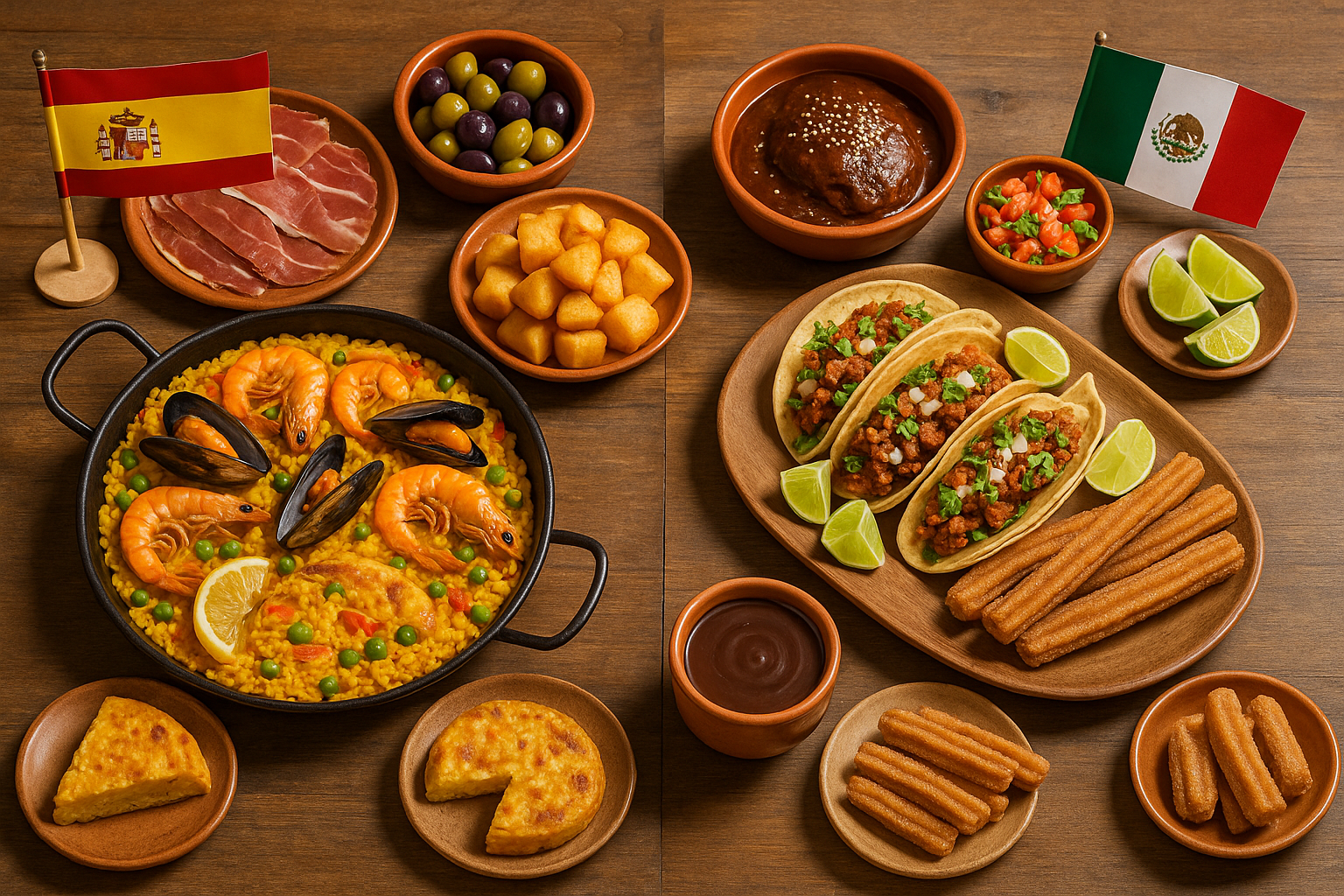
Introduction
Food is never just food—it’s history on a plate, geography in a bite, and culture simmered into flavors. And when it comes to Spanish and Mexican cuisine, the story is as layered and fascinating as the dishes themselves. Yet, most people sum them up in two words: paella and tacos. It’s an easy shortcut, but one that does a disservice to the incredible diversity of both culinary traditions. Spanish food is not only about saffron-stained rice and seafood feasts, just as Mexican food is far more than tortillas and spicy fillings. These cuisines carry the imprint of empires, indigenous resilience, trade routes, and migration—and if you follow the trail of flavors, you uncover a shared past that diverged into two culinary worlds.
The connection between Spanish and Mexican cuisine runs deep, forged in the fire of conquest and cultural fusion during the 16th century. Spain arrived in Mexico with ships full of wheat, rice, olive oil, and livestock, meeting a land where corn, beans, chilies, and cacao reigned supreme. Out of this encounter came new dishes, new techniques, and, over centuries, two culinary identities that could not be more different. Spanish cuisine stayed loyal to its Mediterranean roots, celebrating simplicity and balance with an almost reverent respect for natural flavors. Mexican cuisine, on the other hand, evolved into an explosion of contrasts—earthy and spicy, rich and tangy—where complexity is not just a choice but a cultural signature.
Why does this matter? Because food is a lens into everything: history, politics, climate, even language. Understanding the difference between Spanish and Mexican food means understanding why Spaniards drizzle extra virgin olive oil like liquid gold, while Mexicans grind chilies into intricate moles that take days to prepare. It explains why bread anchors the Spanish table and corn tortillas remain sacred in Mexico. These choices aren’t random—they tell us who these people were, where they came from, and how they adapted to the world around them.
And here’s the best part: diving into these culinary traditions makes you a better language learner. Every dish you taste, every ingredient you learn to pronounce, adds a layer of cultural understanding that no textbook can provide. So, in this article, we’re going far beyond paella and tacos to explore the flavors, stories, and cultural meanings behind two of the world’s most beloved cuisines. Get ready to discover the shared roots, the striking differences, and why both Spanish and Mexican food deserve a place on your plate—and in your heart.
The Historical Connection: How Colonization Shaped Two Cuisines
The story of Spanish and Mexican cuisine begins long before they ever met.
Spain Before 1492: Spanish cooking was already a mix of influences. The Romans brought wheat, olives, and wine. The Moors introduced rice, citrus, almonds, and spices like cumin and saffron.
Mexico Before 1492: Mexican food had its own sophistication, built around the Three Sisters—corn, beans, and squash—along with chilies, cacao, and native herbs. Techniques like nixtamalization (treating corn with lime) were revolutionary.
When Spanish ships landed in Mexico, these two culinary worlds collided. Spaniards brought wheat, rice, dairy, and livestock like pigs and cows, which had never existed in the Americas. In exchange, they took back tomatoes, chocolate, vanilla, and chili peppers—ingredients that would forever change European cuisine. This exchange created dishes like mole poblano, where indigenous chilies and chocolate blended with Spanish-introduced almonds and spices.
Core Philosophies of Each Cuisine
Spanish Cuisine: Mediterranean simplicity. Emphasis on letting natural flavors shine. Olive oil is the base of nearly every dish. Fresh seafood, cured meats, and seasonal vegetables dominate the table.
Mexican Cuisine: Complexity and boldness. Layered flavors, deep sauces, and vibrant spices. Corn is sacred. Chilies aren’t just for heat—they create depth and smokiness.
Key Differences Between Spanish and Mexican Food
1. Staple Ingredients
Spain: Olive oil, garlic, saffron, rice, seafood.
Mexico: Corn, beans, avocado, chili peppers.
2. Flavor Profiles
Spain: Subtle and earthy. Think grilled fish, garlic, and paprika.
Mexico: Intense and layered. Smoky moles, tangy salsas, spicy stews.
3. Heat Factor
Spain uses paprika (pimentón) for mild warmth.
Mexico embraces 50+ chili varieties for complexity.
4. Bread vs. Tortilla
Spain: Wheat bread anchors the table.
Mexico: Corn tortillas remain essential.
5. Eating Culture
Spain: Tapas culture, long midday meals, wine pairings.
Mexico: Street food thrives—tacos, tamales, elotes in every corner.
Signature Dishes Beyond the Clichés
Spanish Highlights
Pulpo a la Gallega: Octopus with paprika and olive oil.
Fabada Asturiana: Hearty bean stew with chorizo.
Churros con Chocolate: A breakfast classic.
Mexican Highlights
Mole Poblano: A sauce blending chocolate, nuts, and chilies.
Pozole: Hominy-based soup with meat and garnishes.
Chiles en Nogada: A patriotic dish reflecting Mexican flag colors.
Shared Ingredients, Different Stories
Tomatoes, chocolate, and chili peppers went from Mexico to Europe and became culinary staples. Rice and wheat traveled the other way. Yet, Spanish cuisine stayed loyal to Mediterranean restraint, while Mexican food embraced spice and intensity.
Food as a Cultural Language
Every bite speaks. Spanish and Mexican dishes carry centuries of history—colonization, resilience, and adaptation. Learning the language behind the food enriches not only your vocabulary but also your cultural perspective.
FAQs
1. Are Spanish and Mexican foods similar?
They share historical roots but differ in ingredients, flavor, and style.
2. Why is Spanish food mild and Mexican food spicy?
Spain favors subtlety; Mexico celebrates chili complexity.
3. Did Spain bring tortillas to Mexico?
No. Tortillas are indigenous; Spain introduced wheat bread.
4. What drinks define each culture?
Spain: Wine and sangria. Mexico: Tequila and mezcal.
5. Which is older?
Mexican cuisine dates to ancient civilizations; Spanish cuisine evolved later under Mediterranean influences.
6. Is olive oil used in Mexico?
Not traditionally—Mexico relies more on lard and vegetable oils.
7. Are tapas Mexican?
No. Tapas are a Spanish concept; Mexico has antojitos (street snacks).
8. What ingredient changed Europe forever?
Tomatoes, from Mexico, transformed Italian and Spanish cooking.
Ready to Taste and Speak Spanish?
At Polyglottist Language Academy, we know that language learning isn’t just about words—it’s about living the culture. When you learn Spanish with us, you dive into the world of tapas and tortillas, history and heritage, and conversations that go far beyond the textbook. Our expert instructors offer online and in-person classes tailored to your goals.
👉 Sign up today and start your Spanish journey with confidence!