
Castilian vs. Latin American Spanish: What’s the Real Difference?
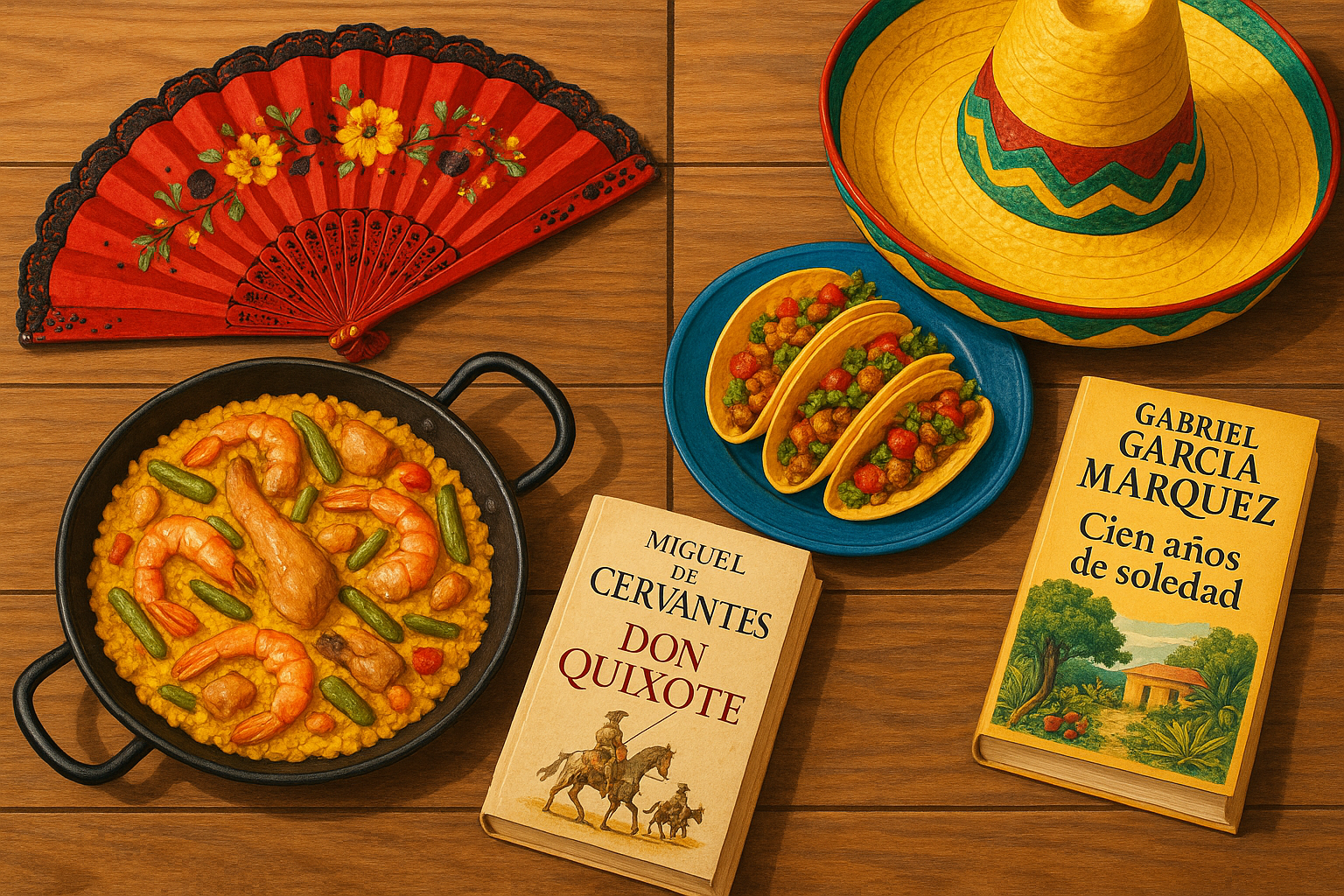
Spanish isn’t just a language—it’s an entire universe of sounds, words, and cultural subtleties that change depending on where you are. Spoken by more than 500 million people across 21 countries, Spanish is the second most spoken native language in the world. But here’s where it gets interesting: the Spanish you hear in Madrid is not the same as the Spanish you’ll hear in Mexico City, Buenos Aires, or Bogotá. It’s the same language, yes, but with distinct variations in pronunciation, vocabulary, grammar, and cultural flavor.
If you’ve ever wondered why a word like ordenador (computer) in Spain becomes computadora in Mexico—or why Spaniards say vosotros when Latin Americans don’t—you’re not alone. These differences often spark debates among learners: Which Spanish should I learn? Will people understand me if I pick the “wrong” one?
The truth? There’s no wrong choice. Both Castilian Spanish (from Spain) and Latin American Spanish are equally correct, widely understood, and rich in culture. But understanding the differences helps you:
✔ Choose the variety that matches your goals
✔ Avoid misunderstandings (like asking for a straw in Mexico vs. Spain)
✔ Sound more natural when speaking
In this comprehensive guide, we’ll unpack everything you need to know about Castilian vs. Latin American Spanish, from pronunciation quirks to slang, from grammar tweaks to cultural context.
1. The Origins of the Split: Why Are There Two Main Varieties?
Spanish, or español, began in the Castile region of Spain, which is why the term “Castilian” is often used for the standard European variety. When Spanish explorers and settlers crossed the Atlantic during the Age of Exploration in the late 15th and early 16th centuries, they brought their language with them.
Over centuries, Spanish in the Americas evolved in its own unique ways, influenced by:
Indigenous languages (Nahuatl, Quechua, Guaraní) → Words like tomate, chocolate, puma
African languages → Rhythmic influences in Caribbean Spanish
Immigration waves → Italian influence in Argentina (chau from “ciao”)
Meanwhile, in Spain, regional languages (Catalan, Basque, Galician) and Arabic influence left their mark. The result? Two main branches of Spanish:
Castilian Spanish (spoken in Spain, especially central and northern regions)
Latin American Spanish (which itself contains multiple regional dialects)
2. Pronunciation Differences: How to Spot Them Instantly
a) Ceceo vs. Seseo
Spain: The famous “th” sound (like in English think) for z and soft c (before e or i).
Gracias → GRA-thias
Latin America: Always an “s” sound.
Gracias → GRA-sias
Tip: This is the #1 giveaway for European Spanish.
b) Pronouncing “LL” and “Y”
Spain: Pronounced like English “y” (lluvia = “yoo-via”).
Argentina & Uruguay: Sh sound (lluvia = “shoo-via”).
Other Latin America: Similar to Spain, but softer.
c) “Vosotros” and Its Sound
Spain uses vosotros for informal plural “you,” with its own endings (-áis, -éis):
Vosotros habláis español.
Latin America avoids this entirely, using ustedes for both formal and informal.
3. Vocabulary: Words That Will Trip You Up
Here’s a quick-reference table of words that differ:
English Spain Mexico Argentina
Car coche carro auto
Cellphone móvil celular celular
Juice zumo jugo jugo
Bus autobús camión colectivo
Straw pajita popote sorbete
Pro Tip: Be careful with “pajita” in some Latin American countries—it can have a very inappropriate meaning!
4. Grammar Tweaks That Matter
Vosotros: Only Spain uses it. Latin America sticks to ustedes.
Vos: In Argentina, Uruguay, and parts of Central America, tú becomes vos, with unique conjugations:
Vos hablás (instead of tú hablas).
Past Tenses:
Spain prefers present perfect for recent actions (he comido = I have eaten).
Latin America often uses preterite (comí = I ate).
5. Idioms and Slang: Where It Gets Really Fun
Spanish slang is highly regional. Here are some must-know phrases:
Spain Meaning Latin America Equivalent
¡Vale!Okay!¡Está bien! / ¡Dale!Tío / TíaDude, guyTipo / Chavo¿Qué pasa?
What’s up?¿Qué onda? (Mexico) / ¿Qué tal?¡Guay!Cool!¡Chevere! / ¡Bacán!
6. Media, Music, and Pop Culture Differences
Spain: Popular TV shows like La Casa de Papel (Money Heist) and singers like Rosalía.
Latin America: Telenovelas, reggaetón (Bad Bunny, J Balvin), and Mexican cinema.
Watching media from both regions can expose you to different accents and slang.
7. Which Should You Learn?
Choose based on your goals:
Spain: Moving there, studying abroad, reading European literature? Learn Castilian.
Latin America: Traveling in Mexico, working in the U.S., enjoying Latin music? Learn Latin American Spanish.
Either way, you’ll understand both varieties after enough exposure.
FAQs (Expanded)
1. Can I mix Castilian and Latin American Spanish?
Yes, most learners naturally mix at first. Over time, exposure to one region helps you adapt.
2. Will my accent sound “weird” to natives?
Not at all. Spanish speakers are used to hearing different accents.
3. Is “neutral Spanish” a real thing?
Yes, it’s often used in international news or dubbing, avoiding regional slang.
4. What’s the hardest difference to learn?
Probably vosotros forms and some slang terms.
5. Which is easier for English speakers?
Latin American Spanish might feel simpler because it avoids vosotros and uses more straightforward pronunciation.
Ready to Learn Spanish the Right Way?
At Polyglottist Language Academy, we make learning Spanish fun, practical, and personalized. Whether you want to master Castilian Spanish for your trip to Madrid or Latin American Spanish for business in Mexico, we’ve got classes for you.
✅ Live online or in-person classes
✅ Native instructors from Spain AND Latin America
✅ Small groups or private lessons
📌 Sign up today and start speaking Spanish with confidence!