
The Russian Love for Tragic Beauty
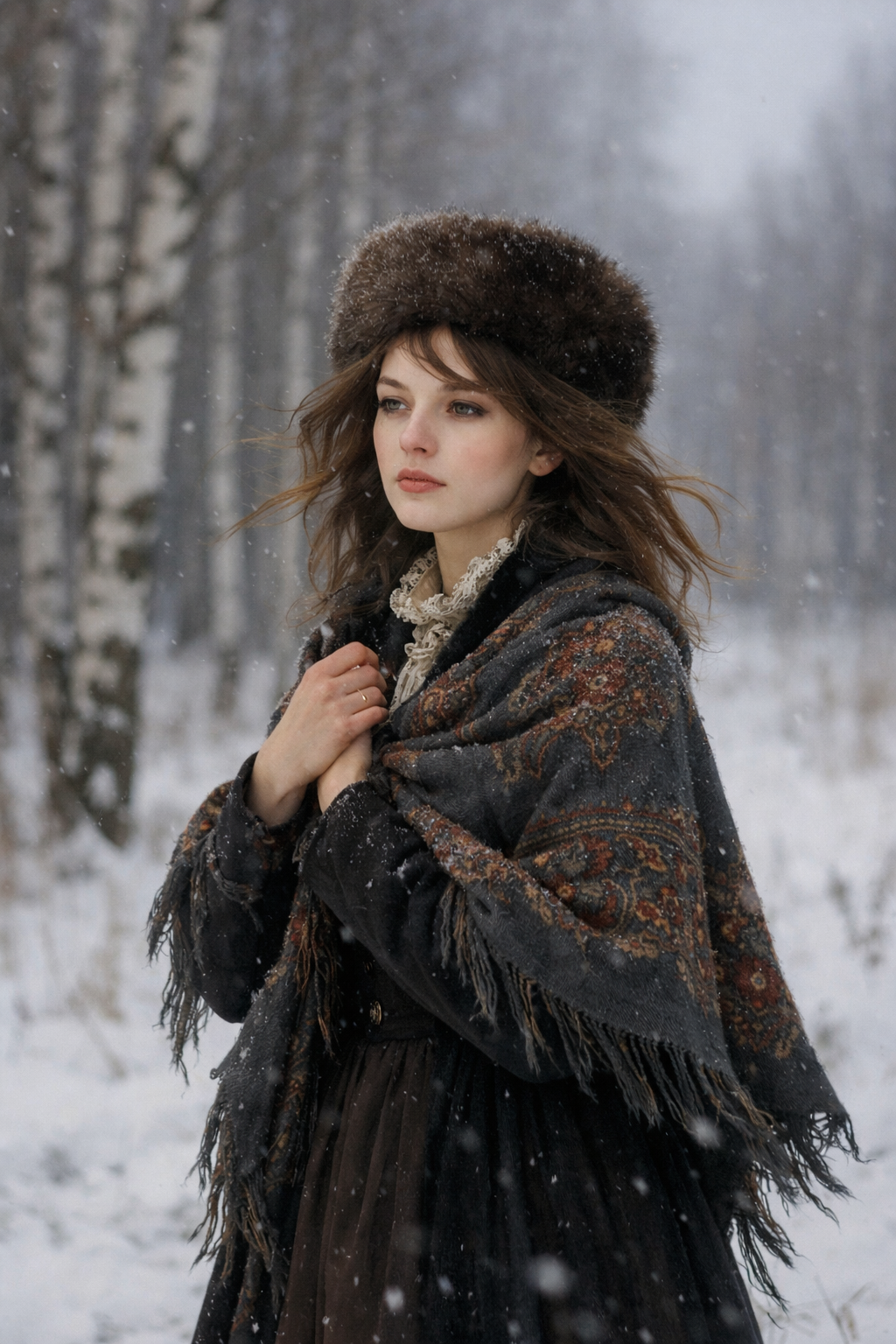
There are cultures that are drawn to brightness, lightness, and emotional ease. They admire optimism, celebrate cheerful resilience, and prefer beauty that comforts. Russian culture has often moved in a different direction. Again and again, its greatest novels, poems, songs, paintings, and films return to sorrow, longing, sacrifice, doomed love, silence, memory, and spiritual struggle. In Russia, beauty is often most powerful when it is touched by suffering.
This does not mean Russians “love misery.” That would be a shallow reading. What Russian culture has long been fascinated by is something more complex and more moving: tragic beauty. This is the idea that pain can deepen perception, that sorrow can reveal truth, and that what is fragile, impossible, or broken can sometimes feel more beautiful than what is easy, cheerful, and whole.
To many foreigners, this can seem excessive. Why would a culture so often turn toward the melancholy rather than away from it? Why do so many Russian works of art feel heavy with loss, winter, moral conflict, and emotional intensity? Why do Russian writers so often distrust easy happiness?
The answer lies in history, climate, religion, language, and national temperament. Russia has been shaped by long winters, invasions, serfdom, authoritarian rule, exile, repression, and repeated encounters with suffering on both a personal and collective level. In such a world, emotional depth is not a luxury. It becomes a way of making sense of life. If joy is fleeting, then one learns to look for meaning elsewhere — in endurance, in sacrifice, in the soul under pressure, in the strange beauty of sadness honestly faced.
This is one reason Russian literature and culture can feel so intense to outsiders. Russian art often asks bigger questions and goes to darker places. It does not always rush to soothe the audience. Instead, it lingers in contradiction: beauty and pain, love and ruin, faith and despair, longing and resignation. Tragic beauty in Russian culture is not simply about sadness. It is about the conviction that sorrow, when seen clearly, can become profound, poetic, and even redemptive.
What Does “Tragic Beauty” Mean in a Russian Context?
In Russian culture, tragic beauty is the beauty found in things that are wounded, temporary, morally difficult, or marked by loss. It is the beauty of a snow-covered city at dusk, of a love story that cannot survive, of a soul broken open by guilt, of a song that aches because it knows happiness cannot last. It is not cheerful beauty. It is beauty made deeper by pain.
This is why Russian culture so often treats melancholy not as something embarrassing to hide, but as something revealing. Sadness is not always seen as failure. It can be a path to sincerity. It can strip away illusion. It can expose what is deepest in a person.
That helps explain why Russian tragic beauty often feels spiritual. Suffering is not just physical discomfort or emotional pain. It is often tied to moral awakening, inner struggle, sacrifice, and a longing for truth. In this tradition, pain is not automatically meaningless. It can purify, illuminate, and transform.
This sensibility appears in one of the most famous ideas associated with Dostoevsky: “Beauty will save the world.” In Russian culture, beauty is not merely decorative. It is bound up with suffering, conscience, redemption, and moral seriousness. Beauty is powerful because it emerges from a world that is wounded.
A Culture Forged in Hardship
It is impossible to understand this Russian attraction to tragic beauty without looking at history. Russian culture did not develop in conditions of stability and softness. It was shaped by centuries of adversity.
Serfdom tied millions of peasants to the land until the nineteenth century, training generations in obedience, endurance, and submission to forces larger than themselves. Repeated invasions and political upheavals reinforced a sense that life is precarious and often ruled by necessity rather than free choice. Then came revolution, civil war, Soviet repression, censorship, famine, labor camps, purges, and surveillance. Even for people who did not directly endure the worst of these events, they formed the emotional background of national memory.
Climate intensified all of this. Long winters, vast distances, and months of darkness and cold did more than shape daily routines. They shaped mood, imagery, and rhythm. In the Russian imagination, winter is not just weather. It is atmosphere. It stands for endurance, stillness, loneliness, severity, and beauty stripped to essentials.
Orthodox Christianity also played a role. In the Russian Orthodox tradition, suffering has often been linked to humility, purification, spiritual trial, and compassion. This does not mean suffering is glorified in a simplistic way, but it does mean Russian culture has long been more willing than many Western cultures to see pain as spiritually meaningful.
All of this helped create a civilization unusually comfortable with emotional depth. In many places, people are encouraged to move quickly past sorrow, smooth over discomfort, and remain positive. Russian culture has often done the opposite. It lingers. It interrogates. It allows pain to remain in view long enough to become art.
Why Russians Often Distrust Easy Happiness
One of the deepest differences between Russian and Western aesthetics is that Russian culture often distrusts easy happiness. Happiness that is too simple can feel shallow. A cheerful ending may look false if it ignores moral complexity, loss, or the tragic nature of life.
This is why Russian culture often values sincerity over emotional comfort. A painful truth may be preferable to a pleasant illusion. A heartbreaking novel may feel more “real” than a reassuring one. A person who suffers deeply may be seen as more human, more spiritually awake, or more honest than someone who merely stays upbeat.
This sensibility also explains why public positivity can sometimes seem superficial from a Russian perspective. In many Western cultures, especially in the United States, optimism is treated as a virtue in itself. In Russia, forced positivity can look naïve or insincere. Russians often prefer emotional seriousness, irony, and restraint. A smile is meaningful precisely because it is not automatic.
That does not mean Russians are always gloomy. It means they are less likely to treat brightness as the highest form of truth. They know that life is unstable, love can fail, beauty fades, and suffering arrives uninvited. In such a worldview, tragic beauty becomes more convincing than cheerful fantasy.
The Russian Vocabulary of Pain and Longing
One of the clearest signs of this cultural sensibility is language. Russian has a remarkable emotional vocabulary for sorrow, longing, and inner rupture.
The most famous example is toska (тоска). Vladimir Nabokov described it as a dull ache of the soul, a longing with nothing definite to long for. It can mean sadness, anguish, yearning, spiritual restlessness, or existential emptiness, depending on context. English has no exact equivalent. That alone tells you something about Russian emotional culture. A feeling so central requires its own word.
Then there is sud’ba (судьба), fate. In Russian culture, fate is not always a neutral concept. It often carries a sense of inevitability, tragic design, or impersonal force. People do not merely make choices; they are also carried by currents larger than themselves.
Another powerful word is nadryv (надрыв), a term deeply associated with Dostoevsky. It refers to an emotional tearing, an exaggerated yet genuine wound of the soul — a kind of painful overexposure in which a person tears themselves open emotionally. In Dostoevsky’s world, people do not simply feel; they rupture.
Even quieter words such as pechal’ (печаль), sorrow, and other shades of melancholy reveal a culture finely attuned to emotional nuance. Russian does not merely name sadness. It differentiates its textures.
Tragic Beauty in Russian Literature
No literature embodies tragic beauty more powerfully than Russian literature.
Dostoevsky is perhaps the clearest example. His novels are full of spiritual struggle, guilt, pity, humiliation, moral torment, and the terrifying possibility that suffering may either destroy a person or remake them. In The Brothers Karamazov, Ivan’s rebellion against innocent suffering is both philosophical and deeply emotional. He rejects easy religious consolation, yet cannot stop longing for meaning. That tension — rage against pain and yearning for transcendence — is pure Russian tragic beauty.
In Crime and Punishment, Raskolnikov does not simply commit a crime and get punished. He enters a spiritual and psychological ordeal. His suffering matters because it reveals the lie at the center of his pride. His breakdown becomes a path to conscience. The beauty of the novel lies not in pleasure but in moral exposure.
Tolstoy gives tragic beauty a different form. In Anna Karenina, Anna’s love is passionate, intoxicating, and doomed. The novel does not treat her merely as a sinner or victim. It renders her with painful fullness. Her destruction is what gives the story its devastating beauty. Tolstoy understood that love becomes more intense when shadowed by impossibility, pride, isolation, and fate.
Chekhov often worked more quietly, but his tragic beauty is just as powerful. In stories like “The Lady with the Dog,” longing is subdued, refined, and unresolved. There is no melodramatic catastrophe, yet the sadness is piercing. Chekhov specialized in lives that are not shattered by one dramatic event, but slowly shaped by disappointment, habit, and the knowledge that real happiness may have come too late.
Then there is Anna Akhmatova, whose Requiem transforms private and collective suffering into witness. Writing out of the terror of Stalinist repression, she captured grief that is almost too large for language. Yet the result is not chaos. It is disciplined, dignified, unforgettable beauty. Her sorrow does not collapse into despair. It becomes form.
Marina Tsvetaeva and Boris Pasternak also reveal how Russian poetry turns loss, exile, and doomed love into a kind of radiance. Their work is emotionally charged but never trivial. Tragedy becomes lyrical without becoming sentimental.
Music, Film, and the Wider Russian Aesthetic
Russian tragic beauty does not stop with literature. It runs through music, cinema, painting, and folklore.
Rachmaninoff is one of its great musical voices. His music often feels suspended between grandeur and sorrow, tenderness and fate. Even at its most sweeping and romantic, it carries weight. His melodies do not float lightly. They seem to remember something lost.
Russian film, especially Tarkovsky, takes tragic beauty into the visual realm. In films like Mirror and Nostalghia, rain, silence, water, snow, ruins, memory, and slowness become emotional languages of their own. Tarkovsky does not simply tell stories. He creates spaces where grief, time, and longing can be felt physically. His cinema trusts melancholy. It allows beauty to emerge from stillness, decay, and spiritual ache.
Russian folklore, too, often contains this doubleness. Folk songs can be tender and sorrowful at once. Laments mingle with irony. Tales of love, exile, winter, poverty, and endurance are often told with a tone that is neither fully hopeless nor fully consoled. The tragic and the beautiful are intertwined.
Even Russian visual culture often reflects this preference for gravity over brightness. Snowy landscapes, dim interiors, fading light, onion domes in winter fog, old apartment blocks, dark forests, candlelit icons, and worn faces all participate in an aesthetic where severity becomes strangely moving.
The Russian Soul: Useful Idea or Empty Cliché?
Any discussion of this topic eventually reaches the famous idea of the “Russian soul,” or dusha (душа). This term can easily become cliché, and it should be handled carefully. Not every intense feeling is proof of some mystical national essence.
Still, the concept exists for a reason. It points to something real in the Russian self-image: the idea that a person’s inner life is deep, contradictory, passionate, wounded, and spiritually significant. The soul is not flat. It is a battleground.
Used carefully, the idea of the Russian soul helps explain why Russian culture so often treats suffering as revealing rather than merely unfortunate. Pain strips away surfaces. It tests character. It exposes what is authentic. Tragic beauty belongs to this worldview because it suggests that the most beautiful things are often those that have been tested.
The danger comes when the idea is romanticized too much. Russians are not mystical creatures uniquely born to suffer beautifully. They are human beings shaped by specific historical and cultural conditions. The point is not that Russians are naturally tragic. It is that Russian culture has developed extraordinary artistic forms for expressing tragedy with dignity, intensity, and depth.
Why Tragedy and Beauty Are Not Opposites in Russia
In some cultures, beauty and tragedy stand on opposite sides. Beauty comforts; tragedy wounds. In Russian culture, they often intensify each other.
A thing can become beautiful because it is fragile. A person can become moving because they endure. Love can become unforgettable because it fails. A winter landscape can feel sublime because it is empty, cold, and indifferent. A song can become haunting because it carries the memory of loss.
That is why Russian culture so often links suffering with truth. Tragedy removes illusion. It humbles pride. It brings human beings face to face with mortality, conscience, and longing. From that exposure comes a more serious kind of beauty — one that does not flatter, but transforms.
This is also why Russians often resist purely decorative beauty. Beauty without suffering can seem superficial. Beauty touched by loss feels earned.
What Foreigners Often Get Wrong
The biggest misconception is that Russian attraction to tragic beauty means Russians are simply depressed, pessimistic, or emotionally unhealthy. That is not accurate.
Russian tragic beauty is not about wallowing. It is about depth. It is about taking sorrow seriously enough to transform it into something meaningful. It is about refusing fake cheerfulness. It is about believing that pain, honestly confronted, can reveal courage, compassion, conscience, tenderness, and spiritual truth.
Another misconception is that Russians never laugh. In reality, Russian humor is rich, sharp, ironic, and often dark. Tragic beauty and humor are not enemies. In Russian culture, they often live side by side. People joke because life is hard, not because it is easy.
A final misconception is that this sensibility belongs only to the past. In fact, it remains alive in contemporary Russian cultural memory, language, and taste. Even today, many people respond more strongly to emotional seriousness than to polished positivity.
What the Russian Love for Tragic Beauty Can Teach Us
The Russian love for tragic beauty reminds us that not all beauty is light. Some beauty emerges from endurance, honesty, and emotional courage. Some of the most unforgettable works of art do not make us feel safe; they make us feel seen. They tell us that grief is not meaningless, that longing has dignity, and that brokenness can still contain grace.
This sensibility may feel unfamiliar in a culture obsessed with self-improvement, positivity, and emotional management. But that is exactly why it matters. Russian tragic beauty insists that life is not diminished by sorrow alone. Sometimes sorrow deepens life. Sometimes what is most painful is also what makes us most human.
That is why Russian novels, poems, songs, and films continue to haunt readers far beyond Russia. They understand something many modern cultures try to avoid: that beauty is often closest to truth when it carries the shadow of loss.
Why This Matters for Learning Russian
If you want to understand Russian culture deeply, learning the language helps enormously. Words like toska, sud’ba, dusha, and nadryv are not just vocabulary items. They open doors into the Russian emotional world. They reveal how Russians name experience, how they think about fate and suffering, and why their literature and art feel so powerful.
At Polyglottist Language Academy, Russian classes do more than teach grammar and conversation. They also help students enter the cultural logic of the language — the emotional nuances, literary depth, and worldview that make Russian so compelling. If you have ever been captivated by Dostoevsky, Akhmatova, Rachmaninoff, or Tarkovsky, learning Russian will bring you much closer to the heart of what they are expressing.
Russian is one of the richest languages in the world for discussing emotion, morality, literature, memory, and soul. Studying it can deepen not only your language skills, but your understanding of one of the world’s most profound cultural traditions.
If tragic beauty is what first drew you toward Russia, Russian classes at Polyglottist Language Academy are a wonderful next step.
Russian Classes at Polyglottist Language Academy
FAQs
What does “tragic beauty” mean in Russian culture?
It refers to beauty that is deepened by sorrow, loss, longing, moral struggle, or fragility. In Russian culture, sadness is often seen not as the opposite of beauty, but as something that can intensify it.
Why is Russian culture so drawn to melancholy?
Partly because of history, climate, religion, and literature. Centuries of hardship and emotional seriousness helped create a culture that values depth, endurance, and sincerity over easy optimism.
What is toska?
Toska is a famous Russian word that describes a deep ache of the soul, a longing, sadness, or spiritual restlessness that cannot be translated neatly into English.
Is the “Russian soul” a real thing?
It is better understood as a cultural idea than a literal essence. It points to the Russian tendency to value emotional depth, contradiction, spiritual struggle, and inner seriousness.
Which Russian writers best express tragic beauty?
Dostoevsky, Tolstoy, Chekhov, Akhmatova, Tsvetaeva, Pasternak, and Bulgakov are all powerful examples, though they each express it differently.
Is tragic beauty the same as pessimism?
No. It is not simply negativity. It is an aesthetic and philosophical sensibility that finds meaning, dignity, and truth in sorrow.
Why do Russians sometimes seem less outwardly positive than Americans?
Russian culture tends to prize sincerity and emotional restraint more than constant visible positivity. Smiling and optimism are often seen as more meaningful when they are genuine rather than automatic.
Can learning Russian help me understand this better?
Absolutely. Many of these concepts are carried directly in the language. Learning Russian gives you access to the emotional, literary, and cultural nuances that translations can only partly convey.
Continue Reading on the Polyglottist Blog
If you enjoyed this article, here are some other blog topics that connect naturally to it