
10 Russian Superstitions That Russians Actually Believe (And Some That Are Surprisingly Logical)
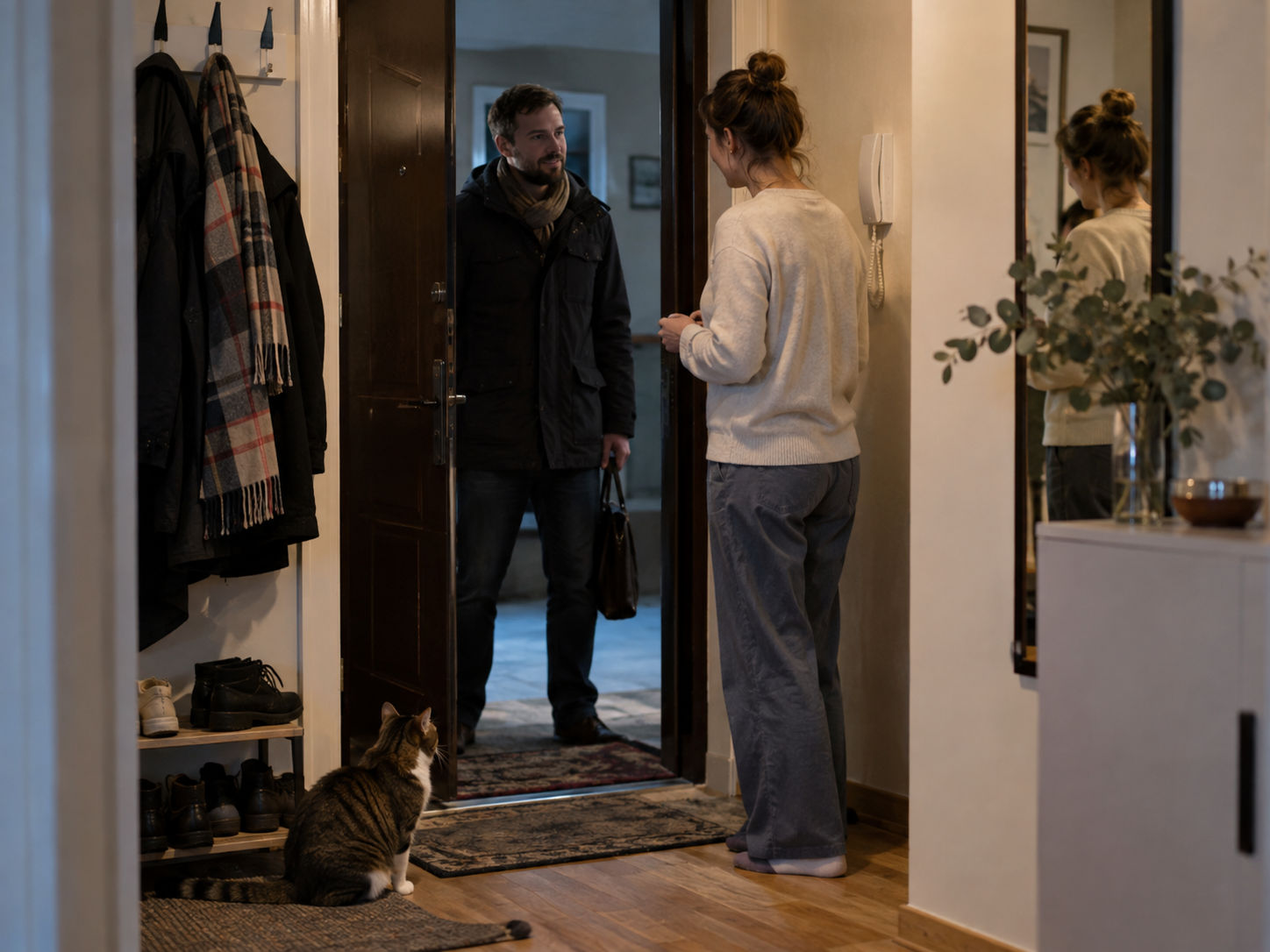
Ask a Russian whether they believe in superstitions and you may hear “Of course not”—followed immediately by a refusal to shake hands across a doorway.
That contradiction is normal. Superstitions often survive as habits, jokes, etiquette, or little rituals that people perform without making a serious claim about supernatural cause and effect. The interesting question is not “Do Russians literally believe this?” but “Which behaviors are familiar enough that ignoring them can feel strange?”
1. Sit down before a trip
Before leaving for a journey, people may pause and sit quietly for a moment with their bags packed.
This is one of the superstitions with an obvious practical benefit. Everyone stops moving long enough to remember whether the passport, keys, tickets, or phone charger were forgotten. A ritual moment of stillness genuinely reduces departure chaos.
2. Do not shake hands or pass things across a threshold
The doorway is traditionally treated as a boundary. People may step fully inside before greeting with a handshake or exchanging an object.
Visitors sometimes discover this when a Russian host says, in effect, “Come in first.” Whether the person frames it as superstition or manners, the behavior is recognizable.
3. An even number of flowers is for funerals
This one matters. Bouquets for birthdays, dates, teachers, and ordinary celebrations normally contain an odd number of flowers. Even-numbered bouquets are associated with graves and funerals.
A foreign visitor who buys twelve roses can therefore create an awkward moment despite having entirely good intentions. Florists in Russia know the convention well.
4. Knock on wood—and sometimes spit symbolically three times
Russian has expressions used to avoid tempting fate after saying something positive. People may knock on wood and make a symbolic тьфу-тьфу-тьфу gesture, as if spitting three times.
The modern version is usually playful. Someone says a child has not been sick all winter, then immediately performs the anti-jinx ritual.
5. Do not whistle indoors
The warning is that whistling inside the house will cause money to disappear: Не свисти — денег не будет (“Don’t whistle; there won’t be any money”).
Even people who do not believe it may find indoor whistling irritating because they grew up hearing the rule. The superstition thus reinforces a social preference.
6. A black cat crossing your path is bad luck
The black cat exists in many European superstition systems, and Russia has its own version. Some people may change direction or pause after a black cat crosses the road.
In modern city life this is often more joke than genuine fear, but the symbol remains immediately recognizable.
7. If you return home after leaving, look in the mirror
You leave the apartment, remember your wallet, and come back. According to a common superstition, returning after starting a journey is unlucky, so you should look at yourself in the mirror before departing again.
Like the “sit before a trip” custom, this can create a useful reset. You have interrupted your departure; the mirror ritual marks a second start.
8. An itchy palm predicts money
Popular versions associate an itching hand with money coming in or going out. Which hand means which can vary by telling.
This is the sort of superstition people mention casually when the physical sensation happens. It survives because ordinary events give it endless opportunities to be remembered.
9. Do not celebrate a birthday early
Congratulating someone before the actual birthday can feel wrong or unlucky. If you will not see the person on the day, many Russians prefer a later greeting to an early one.
This is less dramatic than it sounds. It functions as a strong convention around when congratulations are appropriate.
10. Broken dishes can mean good luck
Breaking a glass or plate at an emotionally important moment may be reframed as к счастью—“for good luck.” That phrase turns an accident into something positive.
Psychologically, this may be one of the most sensible superstitions on the list. Something has already broken. You can be upset, or you can declare it lucky and clean it up.
Superstition often works like social language
A visitor does not need to adopt these beliefs, but recognizing them helps interpret small moments. Why did everyone object to the even-numbered bouquet? Why did the host refuse a handshake until you stepped inside? Why did the family sit silently on their suitcases for ten seconds before leaving?
These practices are part of cultural fluency. They also give learners useful phrases because superstition language appears in jokes and ordinary conversation: на удачу (for luck), к счастью (fortunately/for good luck), сглазить (to jinx or give the evil eye), примета (omen/superstition).
A culture class or Russian lesson can use these situations without presenting Russians as irrational. People everywhere keep rituals that are only partly believed. The Russian versions are simply local examples of a very human habit: turning uncertainty into small rules.
Explore Russian Classes at Polyglottist Language Academy