
Russian New Year (Novy God): Why It's Bigger Than Christmas in Russia[
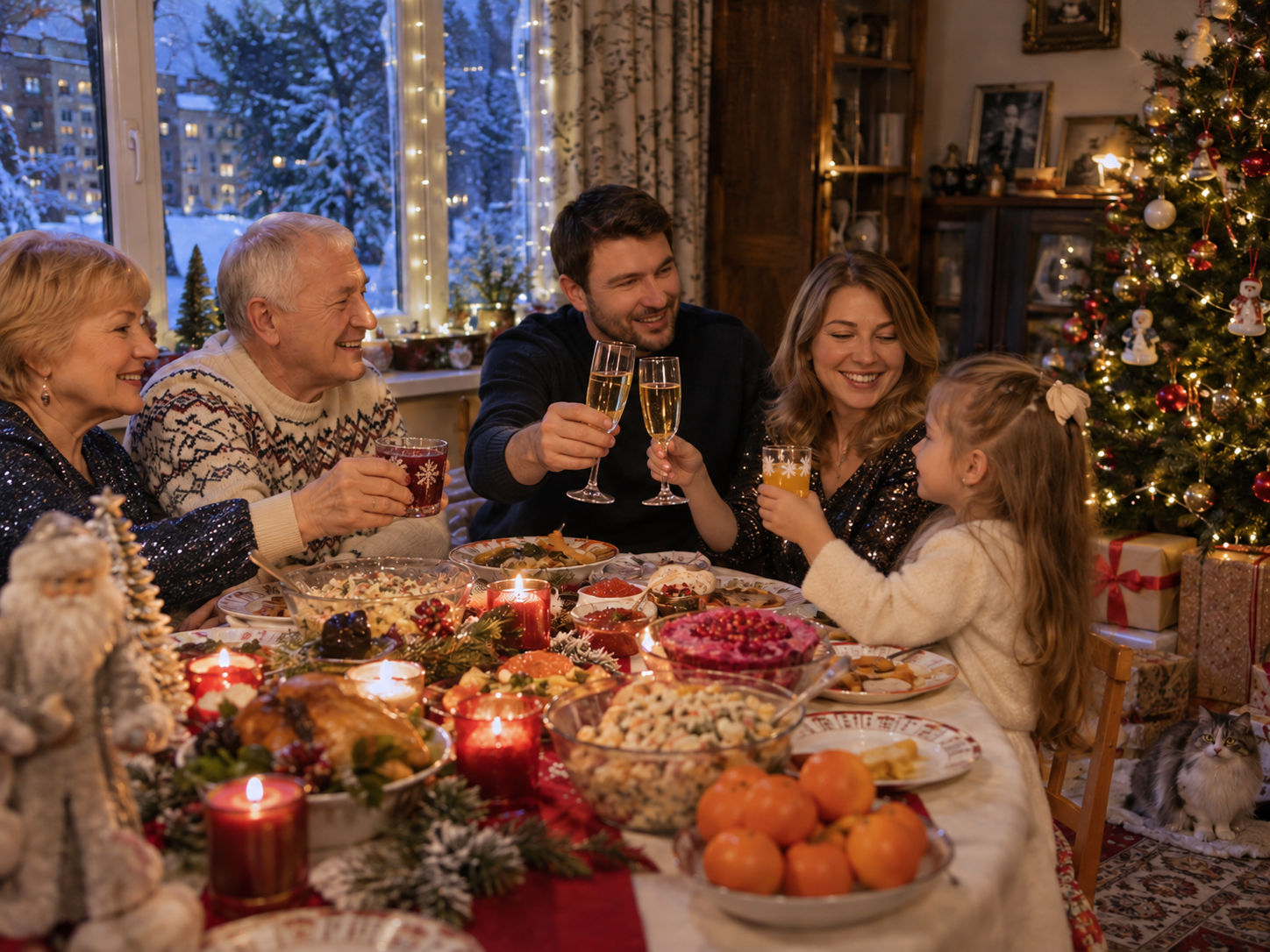
Visitors sometimes assume that a decorated fir tree, presents, a grandfather figure in a red coat, and a family feast in late December must be Russian Christmas. In Russia, those symbols usually belong first to Новый год—New Year.
For much of the twentieth century, New Year absorbed the emotional and domestic role that Christmas plays in many Western countries. The reason is historical rather than theological.
Before the Soviet period, Christmas was a major religious holiday
Imperial Russia followed the Orthodox Christian calendar. Christmas was part of a religious cycle that included fasting, church services, and traditional customs. Decorated trees also became fashionable in Russia during the nineteenth century, especially among urban families influenced by Central European traditions.
After the Bolshevik Revolution, the new Soviet state attacked organized religion and religious public life. Christmas celebrations were discouraged and at times suppressed. The Christmas tree itself became politically suspect as a religious and bourgeois custom.
Then something interesting happened: the tree returned, but under a different holiday.
The New Year tree became Soviet rather than religious
In the mid-1930s, authorities rehabilitated the decorated fir tree as a secular ёлка for children and New Year celebrations. Religious associations were stripped away. Stars, lights, ornaments, gifts, and winter characters were reinterpreted as part of a state-approved secular holiday.
This was culturally powerful because people did not have to give up the pleasure of a winter family celebration. They simply celebrated it on New Year’s Eve.
Over time, December 31 became the great domestic holiday: the night when families gathered, tables filled with food, gifts appeared, and children waited for Дед Мороз (Ded Moroz, Grandfather Frost).
Ded Moroz is not exactly Santa Claus
The comparison is inevitable, but Russian children do not traditionally imagine Ded Moroz as merely the local name for Santa. He comes from different folklore and Soviet holiday traditions. He is commonly accompanied by Снегурочка (Snegurochka), the Snow Maiden, often described as his granddaughter.
They may appear at school celebrations, public holiday events, and family gatherings. Children recite poems, sing, or perform before receiving gifts. The scene is culturally closer to New Year than to Christmas morning.
The New Year table matters almost as much as midnight
A Russian New Year is difficult to imagine without food. Common dishes include Olivier salad, herring under a fur coat, sandwiches with caviar, pickles, mandarins, cold cuts, and sparkling wine, though actual menus vary by family and generation.
The abundance has its own logic. The table stays active for hours. People eat before midnight, toast at midnight, continue after midnight, and often spend much of the evening watching television or talking.
Certain foods have become tied to memory. A person may joke about Olivier salad and still make an enormous bowl every year because the taste is part of what makes the evening feel like New Year.
Television created a shared national ritual
New Year is one of the moments when private family life and national media overlap. Soviet and post-Soviet television traditions include holiday variety programs, familiar films, concerts, and the head of state’s televised address shortly before midnight.
At the final minutes of the year, many households watch the Kremlin clock, pour champagne, make a wish, and toast as the date changes.
The film The Irony of Fate became so strongly associated with December 31 that generations of viewers have watched it as part of the holiday routine. Even people who can quote large sections may keep it on in the background because repetition is part of ritual.
Where does Christmas fit now?
The Russian Orthodox Church celebrates Christmas on January 7 according to the Julian calendar used for its liturgical dates. Since the end of the Soviet Union, Orthodox Christmas has returned visibly to public life and is a national holiday.
Yet its social role is not identical to Western Christmas. Some Russians attend church and observe the religious holiday seriously. Others acknowledge it culturally, visit family, or do relatively little. New Year remains the broader secular celebration that crosses religious commitment.
That difference matters for language learners. If a Russian person asks what you are doing for Новый год, they are usually asking about the central winter celebration: plans, guests, food, travel, gifts, and midnight. Christmas is a separate conversation.
A light cultural lesson in a Russian class can make familiar words—*ёлка*, подарки, шампанское, куранты, Дед Мороз—far easier to remember because they belong to a coherent evening rather than a vocabulary list.
Polyglottist Language Academy’s Russian classes often connect language to this kind of cultural context, especially when a holiday explains why an everyday word carries more significance than its dictionary translation suggests.
New Year became larger than Christmas in Russia not because Russians simply preferred one party to another, but because twentieth-century history moved winter ritual from a religious calendar into a secular one. The Soviet system changed the holiday’s official meaning; families then filled the new date with traditions strong enough to outlive the system itself.