
Maslenitsa: Russia's Pancake Week and What It Celebrates
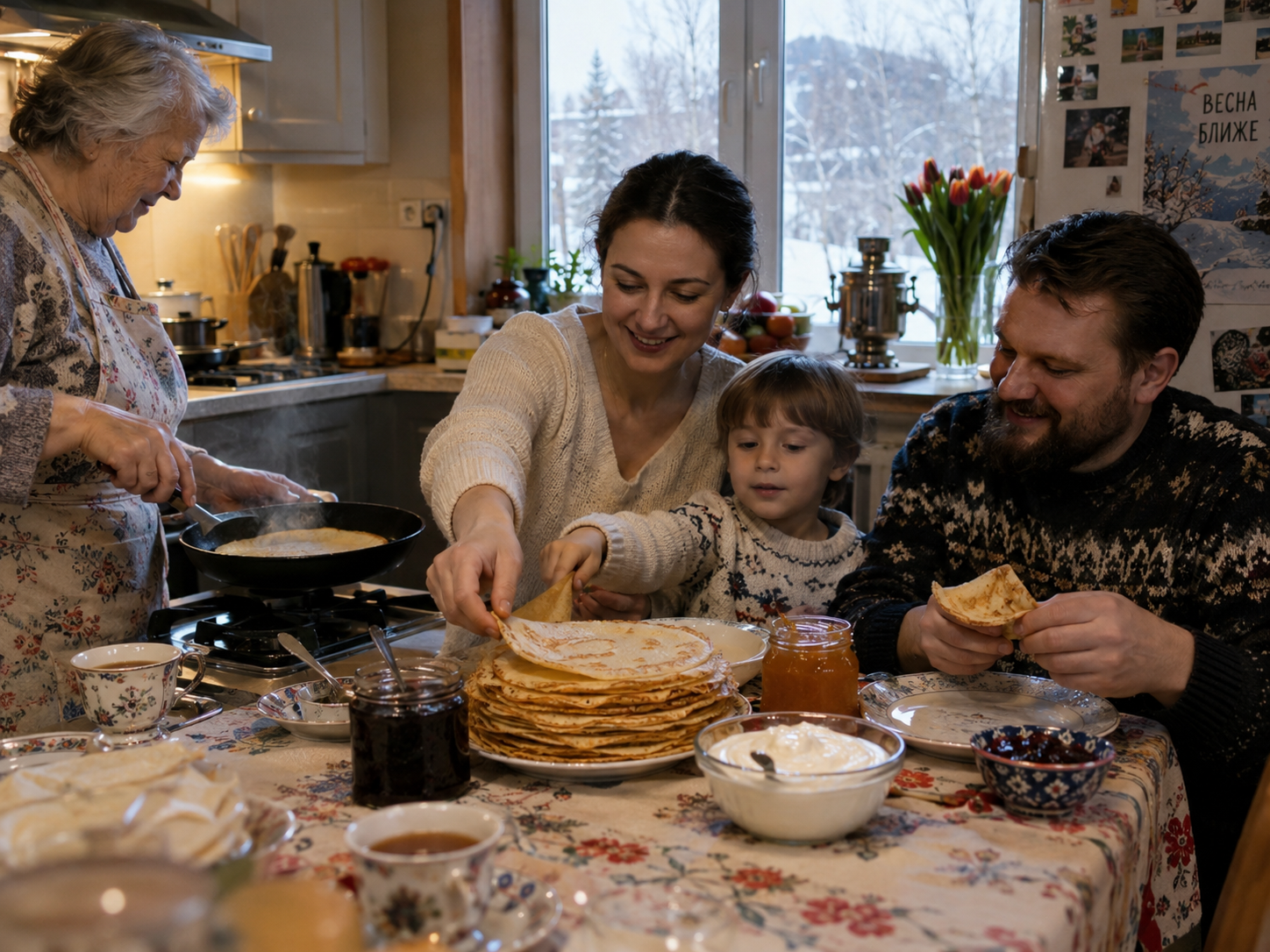
Maslenitsa is usually introduced to foreigners with one irresistible detail: for a week, people eat блины—thin pancakes or crêpes—before the Orthodox Great Lent begins. That is true, but the pancakes make more sense once you understand what kind of week this is.
Maslenitsa sits at the border between winter and spring, feasting and fasting, noisy public celebration and the quieter discipline of Lent. Its customs combine Orthodox calendar structure with folk traditions whose origins are older and harder to date precisely.
Why pancakes?
Blini are round, golden, hot, inexpensive, and easy to serve with both savory and sweet fillings. They became the food most strongly associated with Maslenitsa.
A popular explanation says their round shape symbolizes the sun and the return of spring. That interpretation is deeply embedded in modern descriptions of the holiday, though historians are cautious about treating every symbolic explanation as a directly preserved pagan ritual. Folk traditions evolve, and later generations often reinterpret older customs.
Whatever their exact symbolic history, blini are now inseparable from Maslenitsa. They may be served with butter, sour cream, jam, honey, fish, caviar, mushrooms, condensed milk, or other fillings.
Maslenitsa comes before Lent
In the Orthodox calendar, Maslenitsa is the final week before Great Lent. Meat is already excluded during this period, while dairy products and eggs are traditionally still allowed—one reason pancakes fit the week so naturally.
The religious logic is a gradual transition toward fasting. The social logic is almost the opposite: visit, eat, gather, and enjoy rich foods while you still can.
That tension gives the week its character.
Each day acquired its own customs
Traditional descriptions of Maslenitsa assign themes to different days of the week: welcoming the holiday, courtship, visiting in-laws, broad public festivities, and family visits. Not every modern Russian follows this schedule literally, but the names and customs remain part of cultural knowledge.
One recurring idea is visiting. Maslenitsa food is social food. You make blini for other people, go to relatives’ homes, and receive guests.
For language learners, this is a useful reminder that holiday vocabulary often consists of verbs rather than only nouns: печь блины (to bake/make blini), ходить в гости (to visit people), угощать (to treat someone to food), прощать (to forgive).
Outdoor Maslenitsa is loud and physical
Public celebrations may include sledding, folk music, dancing, games, snow activities, fairs, costumes, and staged traditional competitions. In some places, the week culminates in the burning of a straw effigy associated with Maslenitsa or winter.
The effigy-burning is the image that travel photography loves, but it should not be mistaken for what every family does. Many people experience Maslenitsa primarily through food, school events, city festivals, or a few pancakes at home.
Forgiveness Sunday changes the tone
The final Sunday is Прощёное воскресенье—Forgiveness Sunday. People traditionally ask forgiveness from relatives, friends, and others before Lent.
The standard exchange can sound unusually solemn to an English speaker: one person asks to be forgiven, and the other responds with forgiveness. Even people who are not deeply observant may recognize the custom.
This is the part of Maslenitsa that complicates the image of a carefree pancake carnival. The week ends not with ever-larger celebration but with a shift toward self-examination and fasting.
Is Maslenitsa religious or folk?
The most accurate answer is both, depending on the context and the person. The timing belongs to the Christian pre-Lenten calendar. Many customs reflect folk seasonal traditions. Soviet public culture weakened the explicitly religious framework, while post-Soviet Russia has seen both religious revival and a commercial festival version of Maslenitsa.
A city square may advertise folk performances and pancakes without asking visitors to think about Lent at all. An Orthodox family may see the same week primarily as preparation for fasting.
Cultural traditions do not always have one meaning at one time.
Polyglottist Language Academy’s Russian culture lessons can make holidays like Maslenitsa especially useful because the vocabulary connects food, family, weather, religion, and everyday verbs in one memorable context.
Maslenitsa survives because it can hold many experiences at once: pancakes at home, a public festival, an old family custom, a religious transition, or simply a cheerful interruption near the end of winter. The blini are the easiest part to photograph. The more interesting part is the week’s movement from abundance toward restraint.